
Udo Schenk
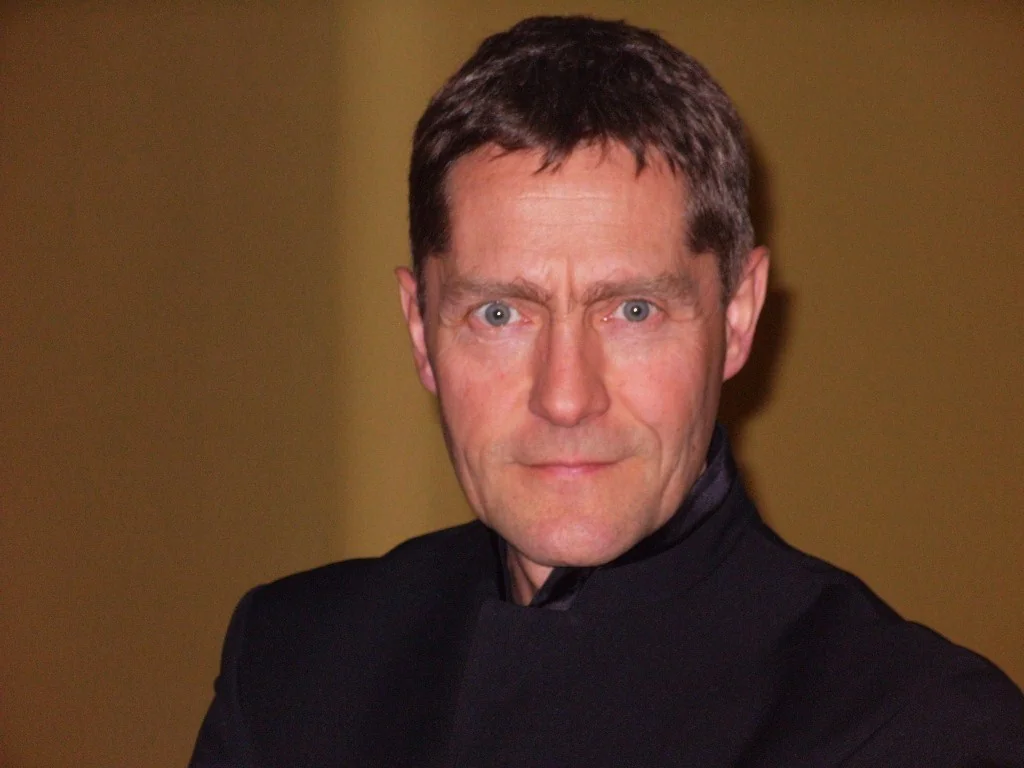
Image from Wikipedia
Image from Wikipedia
Udo Schenk – The Distinctive Voice and Precise Performance of a German Character Actor
An Artist Between Stage, Television, and Unmistakable Vocal Art
Udo Jürgen Schenk, born on April 11, 1953, in Wittenberge, is one of the most prominent German actors and voice artists of his generation. His career began in the GDR at the Städtisches Theater Karl-Marx-Stadt and later took him through the Maxim-Gorki-Theater and the Deutsches Theater Berlin, leading to a nationwide career that made him known mainly through television, dubbing, as well as audio play and audiobook work. His role as Dr. Rolf Kaminski in In aller Freundschaft has been particularly influential, imprinting him in the minds of a wide audience since 2007. ([de.wikipedia.org](https://de.wikipedia.org/wiki/Udo_Schenk))
Early Years and Artistic Shaping in the GDR
Udo Schenk's artistic development is closely tied to the East German theater scene. Between 1971 and 1975, he completed his acting training at the Theaterhochschule Leipzig, and then debuted at the Städtisches Theater Karl-Marx-Stadt in a fairy tale production. In the following years, he was a permanent member of the Maxim-Gorki-Theater in Berlin and made guest appearances at the Deutsches Theater Berlin, allowing him to early on build a repertoire that ranged from classic stage performances to popular formats. This phase laid the foundation for a career characterized by discipline, adaptability, and a strong stage presence. ([de.wikipedia.org](https://de.wikipedia.org/wiki/Udo_Schenk))
Even his first television and film roles emerged during the GDR era. Starting as early as 1974, he appeared on camera in productions such as Der Zylinder and Im Schlaraffenland; 1978 marked his film debut in the DEFA production Rotschlipse. Other early works included Für Mord kein Beweis and Dach überm Kopf, which showcased his ability to portray different character types with fine psychological detail. Thus, his career evolved not from nothing but from a solid foundation of theater, television, and film. ([de.wikipedia.org](https://de.wikipedia.org/wiki/Udo_Schenk))
Turning Point, New Beginnings, and Profiling in Reunited Germany
In 1985, Schenk distanced himself from the ensemble during a theater guest performance in West Germany and began a new professional phase there. Following this separation, he received engagements at acting stages in Cologne and Berlin while remaining active in the film and television industry. This biographical break lends a special range to his career: Schenk represents the continuity of an East German theater professional who repositioned himself in reunified Germany while further sharpening his characteristic role profile. ([de.wikipedia.org](https://de.wikipedia.org/wiki/Udo_Schenk))
He became well-known to a wide television audience primarily from 2007 as Dr. Rolf Kaminski in the ARD series In aller Freundschaft; since 2015, he has also appeared in the same role in In aller Freundschaft – Die jungen Ärzte. The agency has reported further appearances in Praxis mit Meerblick – Neun Leben and Die jungen Ärzte for 2024, indicating that Schenk remains a sought-after character actor even in the later years of his career. His presence in long-running series formats underscores a central characteristic of his work: reliability, recognizability, and precision in character portrayal. ([de.wikipedia.org](https://de.wikipedia.org/wiki/Udo_Schenk))
Dubbing Work: The Art of Voice as Its Own Art Form
Since 1985, Udo Schenk has worked extensively in film dubbing and has carved out an exceptionally noticeable position in this field. He is regarded as the German voice of Gary Oldman, Ralph Fiennes, and Ray Liotta; additionally, he has lent his voice to actors like Kevin Bacon, Brad Dourif, Kevin Spacey, Kenneth Branagh, Jeffrey Combs, Michael Emerson, and David Morrissey. The recurrence of complex, often dark characters demonstrates how strongly Schenk focuses on vocal nuances, controlled intonation, and precise emotional gradation. ([de.wikipedia.org](https://de.wikipedia.org/wiki/Udo_Schenk))
In the German dubbing landscape, he possesses a high level of recognizability. His voice not only shapes cinema hits like The Dark Knight, The English Patient, Harry Potter, or The Darkest Hour, but also television roles in Lost, Person of Interest, Supernatural, and The Walking Dead. This range illustrates Schenk as a voice artist who does not merely synchronize characters but audibly captures their psychological temperature. ([de.wikipedia.org](https://de.wikipedia.org/wiki/Udo_Schenk))
The Distinctive Type: Between Authority, Threat, and Ambivalence
Udo Schenk is frequently cast in roles embodying authority, coldness, or latent threat. His portrayal of Adolf Hitler in several productions, including Stauffenberg, Netaji Subhas Chandra Bose: The Forgotten Hero, and Die Kinder von Paris, reflects his sensitivity towards historically charged figures. At the same time, his career in theater, film, and dubbing shows that he cannot be reduced to a single role type. This blend of strictness and variation makes his artistic signature so memorable. ([de.wikipedia.org](https://de.wikipedia.org/wiki/Udo_Schenk))
Notably, he frequently appears in productions with clear genre profiles: crime dramas, historical films, family dramas, and long-running TV series form a dense network of his work. This creates the image of an actor who never relies on spectacular gestures but instead emphasizes clean technique, timing, and credibility. This quality has granted him continuity over decades and strengthened his profile in German television. ([de.wikipedia.org](https://de.wikipedia.org/wiki/Udo_Schenk))
Current Projects and Artistic Presence
In the present, Schenk remains relevant as an active voice artist and actor. The agency documents for 2024, alongside his ongoing role in In aller Freundschaft, also engagements in Praxis mit Meerblick – Neun Leben and Die jungen Ärzte. This way, he not only remains part of a beloved series world but also maintains contact with an audience that has long associated his voice and performance with authenticity. ([marinaschramm.de](https://www.marinaschramm.de/index.php/udo-schenk.html))
In dubbing, Schenk has focused since 2021 on his main actors Ralph Fiennes, Gary Oldman, and Kevin Bacon, as well as on Ray Liotta until 2023. This focus speaks to a consciously condensed artistic presence: less mass, more recognizability and quality. This is a significant part of his ongoing strength. ([de.wikipedia.org](https://de.wikipedia.org/wiki/Udo_Schenk))
Discography, Audio Plays, and Acoustic Work
Udo Schenk does not have a classical music career in the stricter sense; nevertheless, his work in the audio field is remarkably extensive. As a voice artist for audio plays and audiobooks, he is present in numerous productions, and the audio play researchers' database as well as Spotify list him in various audio play and series contexts. This trail of acoustic work significantly expands his artistic profile beyond television. ([de.wikipedia.org](https://de.wikipedia.org/wiki/Udo_Schenk))
This becomes particularly evident in the large audio play series and character universes where his voice recurs. Whether in crime, fantasy, or adventure genres, Schenk brings the same precision that also characterizes his dubbing roles. This makes him a voice artist who does not just convey texts but also builds atmospheres and brings characters to life in the audience's mind. ([open.spotify.com](https://open.spotify.com/track/6i9XtfAGHohhIAn8q6u5Gw?utm_source=openai))
Cultural Influence and Artistic Significance
Udo Schenk represents a rare dual competence in acting and voice. In the German-speaking cultural sphere, he belongs to those artists whose work often operates in the background, and for that reason, it seeps deeply into the collective memory. His dubbing of Gary Oldman and Ralph Fiennes, in particular, has shaped the listening experience of many films over the years, securing him a fixed place in the German dubbing canon. ([de.wikipedia.org](https://de.wikipedia.org/wiki/Udo_Schenk))
His journey from the GDR stage through the television landscape of the post-reunification era to continued presence in series illustrates a career of remarkable endurance. Schenk combines theater tradition, media adaptability, and a clear role profile into an unmistakable artistic identity. It is exactly this blend that makes him intriguing: he works without loud self-presentation but with lasting impact. ([de.wikipedia.org](https://de.wikipedia.org/wiki/Udo_Schenk))
Conclusion: An Artist with Voice, Attitude, and Presence
Udo Schenk captivates with precision, versatility, and a voice that is immediately recognizable. His career narrates a story of East German theater culture, a successful new beginning in reunified Germany, and a consistently progressive development as an actor and voice artist. To experience him is to discover an artist who not only plays characters but also infuses them with inner tension and clear contours. ([de.wikipedia.org](https://de.wikipedia.org/wiki/Udo_Schenk))
It is precisely for this reason that it is worthwhile to follow Udo Schenk in current television productions, audio plays, or dubbing roles. His work demonstrates how strongly vocal artistry, understanding of roles, and stage presence can interplay. Anyone who appreciates high-level German acting and voice artistry should definitely keep an eye on him. ([de.wikipedia.org](https://de.wikipedia.org/wiki/Udo_Schenk))
Official Channels of Udo Schenk:
- Instagram: no official profile found
- Facebook: no official profile found
- YouTube: no official profile found
- Spotify: https://open.spotify.com/artist/71qNmZtvVbsIzoSyil1vw9
- TikTok: no official profile found
Sources:
- Wikipedia – Udo Schenk
- Speaker Agency Marina Schramm – Udo Schenk
- Ardapedia – Udo Schenk
- IMDb – Udo Schenk
- Spotify – Udo Schenk
- Wikipedia: Image and text source