
Najem Wali
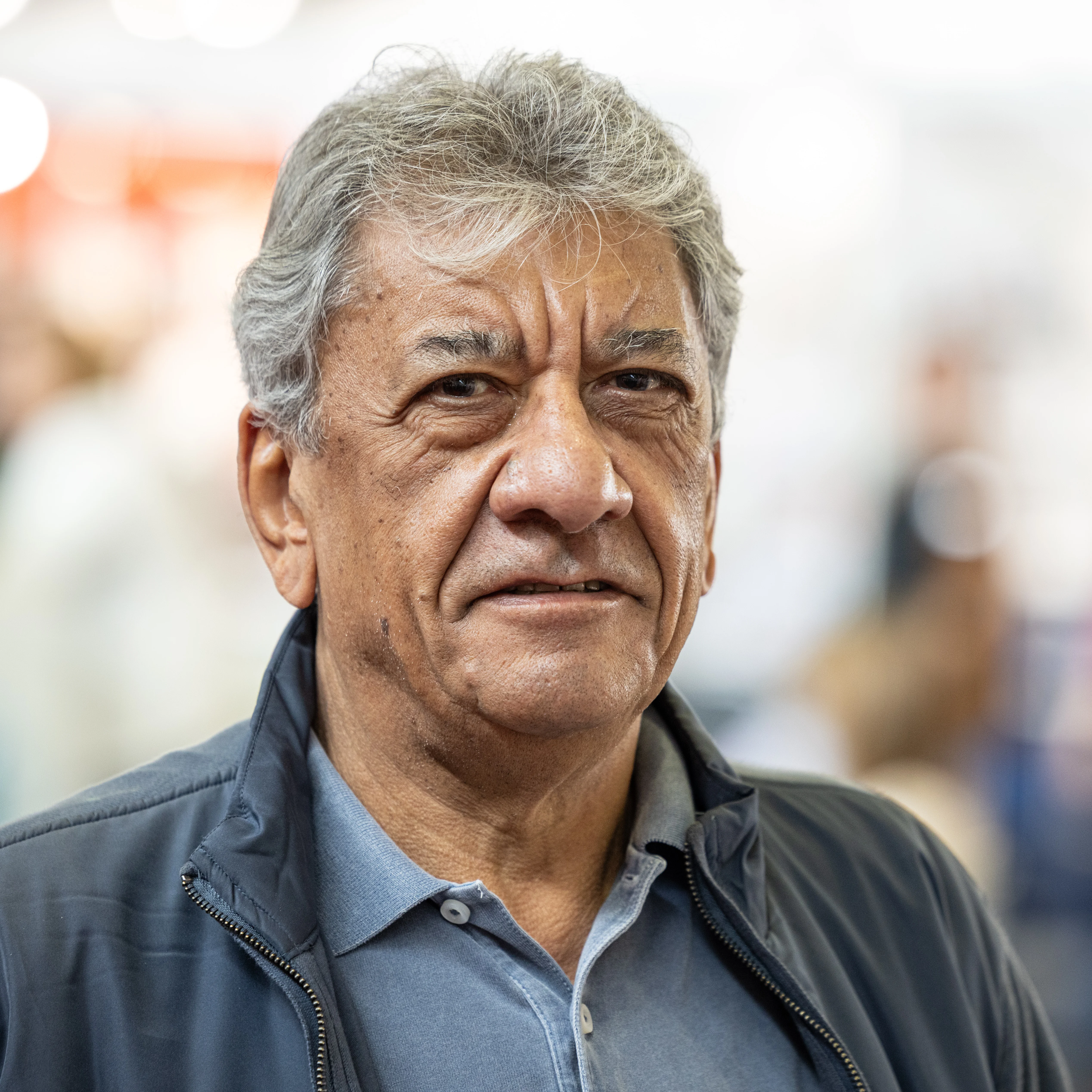
Image from Wikipedia
Image from Wikipedia
Najem Wali: Exile, Memory, and the Power of Free Speech
An Iraqi Author Between Basra, Baghdad, Hamburg, and Berlin
Najem Wali is an Iraqi writer and journalist living in Germany, whose work is shaped by exile, memory, political violence, and cultural self-assertion. He was born in 1956 in Basra and has lived in Germany since 1980 after fleeing Iraq; his own website describes him as an author who explores the reality of the present from the perspectives of migration, loss, and identity in novels, stories, and essays. ([najemwali.de](https://najemwali.de/?utm_source=openai))
His life path is closely tied to the political fault lines of the 20th and 21st centuries. After studying German literature in Baghdad and later German studies in Hamburg, as well as spending time in Madrid for Spanish literature, he developed a literary voice that intricately weaves together Arab and European perspectives with great intellectual tension. This biography explains why Najem Wali is regarded as a precise chronicler of war, displacement, and cultural memory in contemporary German literature. ([dewiki.de](https://dewiki.de/Lexikon/Najem_Wali?utm_source=openai))
Biographical Shaping: From Basra to the Diaspora
The early years in Basra and Baghdad form the foundation of his writing. On his official website, Wali recounts growing up in a region where familial, political, and historical stories intertwine inseparably. Even his studies in German literature in Baghdad reflect an early inclination towards linguistic and cultural transgression, which later became his literary hallmark. ([najemwali.de](https://najemwali.de/?utm_source=openai))
The decisive turning point came with the outbreak of the Iran-Iraq War in 1980. Wali evaded a second conscription, fled to Germany, and remained in exile because defection under Saddam Hussein was punishable by death. This historical rupture not only shapes his biography but also the inner dramatic structure of his books: for him, home is never portrayed as a sentimental place but as a fragile, contested memory. ([najemwali.de](https://najemwali.de/najem-wali-ich-schreibe-immer-aus-der-erinnerung?utm_source=openai))
Literary Career: Novels, Essays, and Journalistic Interventions
Najem Wali's career did not develop as a linear success story but as a multifaceted literary endeavor spanning novels, essays, reportage, and public debate. His website documents a broad journalistic presence, including texts on political conflicts, literary reflections, and contributions to issues of exile and freedom. In this sense, Wali is less to be read as an author of a single genre but as an intellectual storyteller who engages with historical and societal conflicts with narrative precision. ([najemwali.de](https://najemwali.de/?utm_source=openai))
The German-speaking press particularly highlights the complexity of his narrative style. A review in the Süddeutsche Zeitung describes his novels as highly complex literary constructions where temporal levels intertwine, and the experience of war and trauma does not appear straightforward but as condensed memory. It is precisely this form that makes his prose so distinctive: it is political without being superficial, and poetic without losing the historical seriousness. ([najemwali.de](https://najemwali.de/rezension-sueddeutsche-zeitung?utm_source=openai))
Important Works and Thematic Lines
Among the books documented on his official website are "Baghdad: Memories of a World City," "Baghdad Marlboro," "Sara's Hour," and "The Balkan Route – Curse and Blessing of the Millennia." These titles mark central themes of his work: the lost grandeur of Baghdad, the burdens of war, the moral and social deformation of societies, and the question of how history lives on in personal biographies. ([najemwali.de](https://najemwali.de/bagdad-erinnerungen-an-eine-weltstadt?utm_source=openai))
"Baghdad: Memories of a World City" is more than just a book of memories; it portrays the Iraqi metropolis as a place of merchants, scholars, and artists before destruction and terror transformed the city. "Baghdad Marlboro," on the other hand, has been read as a novel about a country at war and, according to the author’s website, garnered attention both in Iraq and in the West. In both cases, Wali's strength is evident: he connects historical experience with narrative condensation and thus opens the view to an Arab modernity often depicted solely through violence. ([najemwali.de](https://najemwali.de/bagdad-erinnerungen-an-eine-weltstadt?utm_source=openai))
Style and Literary Signature
Wali's style is characterized by a politics of memory, political accuracy, and formal agility. His texts leap between times, intertwining personal and collective experience, and make visible how war itself changes the act of storytelling. This creates prose that is at once documentary and literary, analytical and emotional. ([najemwali.de](https://najemwali.de/rezension-sueddeutsche-zeitung?utm_source=openai))
Particularly striking is his handling of perspective. Wali does not narrate from an external viewpoint about Iraq but from a biographically condensed internal perspective, which is, however, complemented by exile and European education. This dual anchoring gives him authority: he knows the language of origin and the distance of the observer. This duality makes him an important voice when it comes to the literary representation of war, migration, and memory. ([najemwali.de](https://najemwali.de/?utm_source=openai))
Cultural Influence and Public Role
Najem Wali is not only a writer but also a journalistic commentator and engaged intellectual. His official website refers to his work in the context of PEN Germany, where he serves as vice president and Writers-in-Prison representative. This expands his cultural influence beyond literature: he stands for free speech, the protection of persecuted authors, and a public space where writing is understood as a responsibility. ([najemwali.de](https://najemwali.de/?utm_source=openai))
His significance also lies in his ability to open the Arab world to German debates without exoticizing it. In interviews and essays, he reflects on war, dictatorship, exile, and societal contradictions with a clarity that resists simplification. His enduring cultural value lies precisely in this: Wali writes not only about history but makes its scars legible. ([najemwali.de](https://najemwali.de/najem-wali-ich-durfte-den-feind-nicht-als-mensch-zeigen?utm_source=openai))
Current Projects and Publications
In the years 2024 and 2025, Najem Wali continues to be active in publishing. His website features current contributions and indications of new publications, including texts and appearances in the context of political and literary themes. The website documents an ongoing active authorship that does not merely observe the present but comments on it and processes it literarily. ([najemwali.de](https://najemwali.de/?utm_source=openai))
This relevance becomes particularly apparent in his texts about the Middle East, about war experiences, and about how societies deal with memory. Wali's work remains significant because it combines historical depth with contemporary relevance. His books and essays demonstrate that literature, at its best, does not flee but rather confronts reality. ([najemwali.de](https://najemwali.de/die-balkanroute?utm_source=openai))
Conclusion: An Author Who Transforms History into Language
Najem Wali is fascinating because his work emerges from the tension of origin, exile, and political experience. He belongs to those authors who translate personal biography into literary form and from that create a sharp image of Arab and European contemporary realities. Those who read his books encounter not just a storyteller but a precise witness to history. ([najemwali.de](https://najemwali.de/?utm_source=openai))
For this reason, engaging with Najem Wali on stage, in readings, and in discussions is worthwhile. His texts carry the intensity of a life marked by loss and resistance, and his literary voice remains of rare clarity. Anyone interested in contemporary literature, exile narratives, and political prose should undoubtedly read and experience Najem Wali live. ([najemwali.de](https://najemwali.de/?utm_source=openai))
Official Channels of Najem Wali:
- Instagram: No official profile found
- Facebook: No official profile found
- YouTube: No official profile found
- Spotify: No official profile found
- TikTok: No official profile found
Sources:
- Najem Wali - Writer and Journalist - Official Website
- Najem Wali, Iraqi writer and journalist - Official Website
- Najem Wali - Baghdad: Memories of a World City
- Najem Wali - A visit to the house of dreams
- Najem Wali - I always write from memory
- Najem Wali - Süddeutsche Zeitung Review
- Wikipedia: Najem Wali - Image and Text Source