
Mascha Kaléko
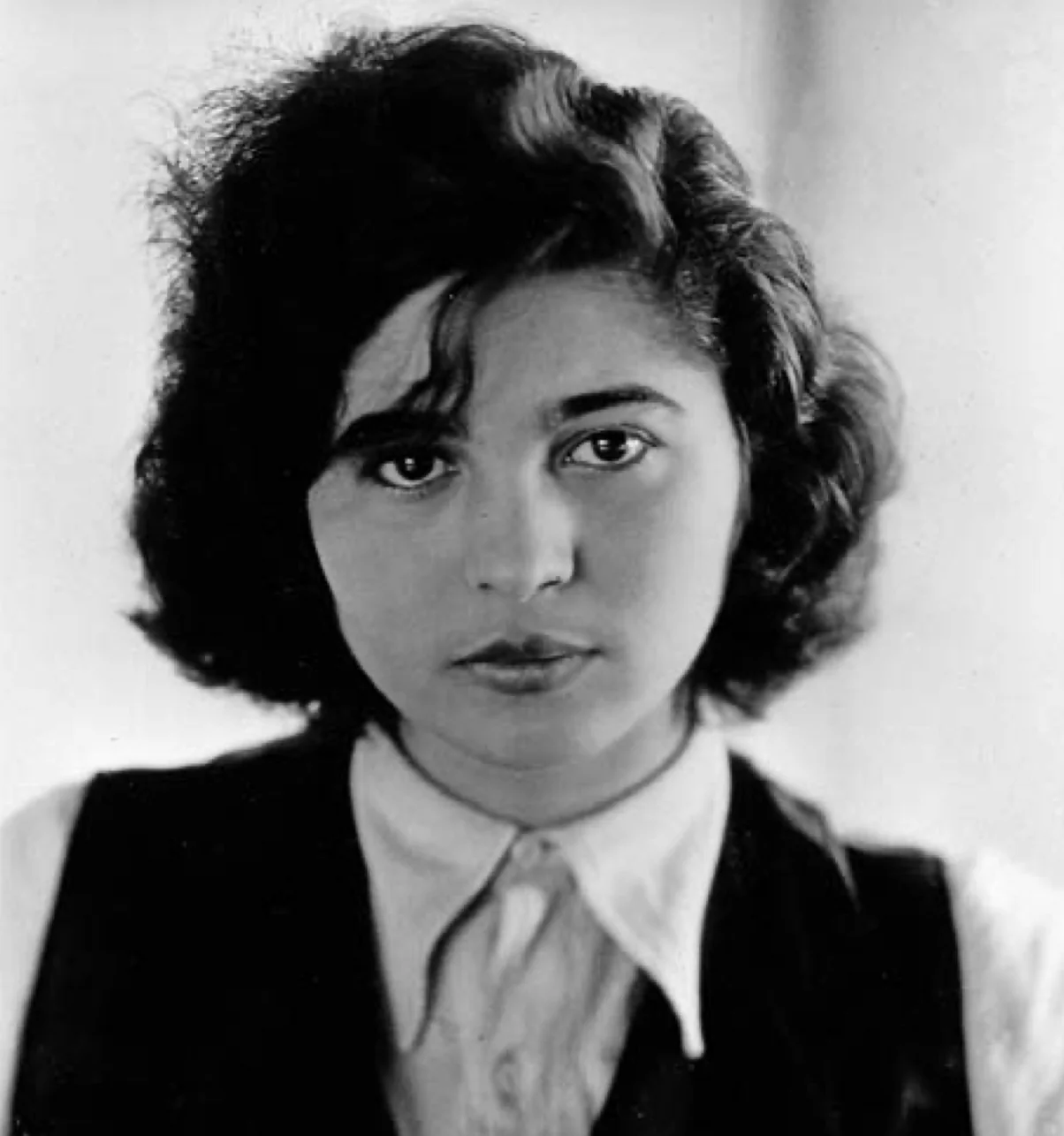
Image from Wikipedia
Image from Wikipedia
Mascha Kaléko – the great voice of modern German-language poetry
A poet between Berlin's tempo, exile, and timeless poetry
Mascha Kaléko, born Golda Malka Aufen on June 7, 1907, in Chrzanów and died on January 21, 1975, in Zurich, is one of the most distinctive voices in German literature of the 20th century. Her work is associated with the New Objectivity and blends urban observation, fine wit, melancholy, and social sensitivity into a unique lyrical signature. She was recognized early on in Berlin as an author who captured the spirit of urban life with precise language and musical rhythm. ([en.wikipedia.org](https://en.wikipedia.org/wiki/Mascha_Kal%C3%A9ko?utm_source=openai))
Biographical roots and early influences
Kaléko's journey began in Galicia and led her, as a child, with her family to Germany. The experience of migration, cultural dislocation, and later expulsion deeply shaped her perspective. In Berlin, she found in the atmosphere of the Weimar Republic the ideal resonance for her observational talents: cafés, streets, ordinary people, longings, and the comedy of everyday life became her literary material. It is precisely this combination of biographical vulnerability and urban sovereignty that forms the core of her oeuvre. ([jwa.org](https://jwa.org/encyclopedia/article/kaleko-mascha?utm_source=openai))
Breakthrough in the Berlin of the Weimar Republic
Mascha Kaléko experienced her literary breakthrough in the early 1930s. With the 1933 publication of Lyrical Stenogram Notebook, she quickly made a name for herself in the literary scene. Her poems combined pointed brevity with a tone that was at once relaxed, precise, and elegiac. Contemporary descriptions highlight that her verses seemed to eavesdrop on everyday life while achieving poetic condensation at a high level. ([dtv.de](https://www.dtv.de/specials/mascha-kaleko?utm_source=openai))
Her success was no accident, but the result of a clear literary profile. Kaléko wrote about employees, small-town longings, love, loss, and social inequality without ever slipping into pathos. The texts often read like precise miniatures, whose elegance arises from the balance of irony and feeling. For this reason, she was early on compared to authors like Kästner, Ringelnatz, or Tucholsky, even though her voice remained unique. ([jwa.org](https://jwa.org/encyclopedia/article/kaleko-mascha?utm_source=openai))
Persecution, exile, and the break of a career
Everything changed with the rise of the National Socialists. Kaléko was increasingly pressured due to her Jewish heritage and her literary position; publication bans and the pressure of a uniform public destroyed the continuity of her career in Germany. In 1938, she emigrated to New York with her second husband, Chemjo Vinaver, and their son. Exile for her meant not only the loss of home but also a profound cut in literary productivity. ([dtv.de](https://www.dtv.de/specials/mascha-kaleko?utm_source=openai))
The years in the USA were marked by uprootedness. While she remained actively writing, everyday life, the language, and the cultural familiarity of her Berlin origin were lost. Nevertheless, her work remained dynamic: Kaléko’s poems preserved that blend of distance and engagement, which would later be regarded as a central reason for their enduring readability. Her exile is thus not only a biographical background but also a key to the depth of her poetry. ([jwa.org](https://jwa.org/encyclopedia/article/kaleko-mascha?utm_source=openai))
Return to recognition and late acknowledgment
After the war, Mascha Kaléko gradually returned to the literary public. An important moment was the republication of the Lyrical Stenogram Notebook in the mid-1950s, which sparked renewed success with the audience. Reports of reading tours through Europe show that her texts could not only have literary but also immediate emotional impact. The late recognition made it clear just how modern her tone remained. ([fembio.org](https://www.fembio.org/biographie.php/frau/biographie/mascha-kaleko/?utm_source=openai))
In her later years, her poetry became increasingly infused with melancholy, memory, and existential reflection. Works such as Verses in Major and Minor, The Sky-Gray Poetry Album of Mascha Kaléko, and Everything Has Its Two Sides mark this maturation. At the same time, she also wrote for children, such as The Parrot, the Mamagei, and Other Comical Animals, highlighting her linguistic ease and versatility. Kaléko was never one-dimensional; it is precisely the breadth of her work that solidifies her position in literature. ([snl.no](https://snl.no/Mascha_Kal%C3%A9ko?utm_source=openai))
Discography in a broader sense: publications, editions, and legacy
Although Mascha Kaléko left no discography in the musical sense, her work forms a remarkable publication history. Alongside her early books, later collections, legacy volumes, and complete editions are crucial for her present perception. The repeated publication of her poems and epigrams shows how vibrant and accessible her writing has remained. After her death, her legacy was managed by Gisela Zoch-Westphal, whose work has sustainably secured the reception of her oeuvre. ([dtv.de](https://www.dtv.de/magazin/Wir-trauern-um-Gisela-Zoch-Westphal?utm_source=openai))
The critical reception particularly highlights the connection between formal economy and content precision. Kaléko's poetry reads as a chronicle of modern life: urbanity, the world of work, love, social insecurity, and Jewish experience coexist without becoming didactic. In this regard, her work possesses a clarity that continues to stand out today and is often emphasized in current editions as well as literary honors. ([jwa.org](https://jwa.org/encyclopedia/article/kaleko-mascha?utm_source=openai))
Poetic handwriting, style, and cultural significance
Mascha Kaléko's style is concise, musical, and pointed. Her verses work with rhythm, internal rhyme, irony, and a seemingly casual precision that transforms everyday observation into great literature. The language feels close to spoken tone, yet remains strictly composed. This combination of lightness and structure gives her poems the durability found primarily in very great poets. ([ceryx.de](https://www.ceryx.de/literatur/kaleko_mascha.htm?utm_source=openai))
Culturally, Kaléko is a bridging figure between cabaret, urban poetry, exile literature, and modern everyday poetry. Her texts reflect the urban life of the 1920s and 1930s without becoming historically stagnant. In the present, she is being read, quoted, and set to music again because her themes have remained remarkably relevant: isolation, migration, ambivalence, dignity in everyday life, and the fragile beauty of the moment. The timeliness of her work is evidenced by the fact that it does not need to shout to have a lasting impact. ([kuenste-im-exil.de](https://kuenste-im-exil.de/KIE/Web/DE/Navigation/Junges-Museum/Mascha-Kaleko-online/mascha-kaleko-online.html?utm_source=openai))
What makes Mascha Kaléko so intriguing today
Mascha Kaléko fascinates because she combines literary elegance with emotional truthfulness. She wrote about the small without becoming small, and about the heavy without losing her tone. Her work represents a literature that is urban, clever, witty, and deeply vulnerable at the same time. Whoever reads her poems encounters an author whose artistic journey from Berlin to exile and late recognition forms one of the most impressive biographies of German-language modernism. ([rowohlt.de](https://www.rowohlt.de/magazin/aus-dem-verlag/rowohlt-history-mascha-kaleko?utm_source=openai))
That is why revisiting Mascha Kaléko is worthwhile: her poetry offers a view of the 20th century that is human, precise, and unforgettable. She belongs to those voices that one does not only read, but also hears internally. Those who appreciate literature with rhythm, stance, and emotional depth will find in her a distinctive artist of lasting brilliance. ([ceryx.de](https://www.ceryx.de/literatur/kaleko_mascha.htm?utm_source=openai))
Official channels of Mascha Kaléko:
- Instagram: no official profile found
- Facebook: no official profile found
- YouTube: no official profile found
- Spotify: no official profile found
- TikTok: no official profile found
Sources:
- Wikipedia – Mascha Kaléko
- dtv Verlag – Mascha Kaléko, author special
- Rowohlt Verlag – Rowohlt History: Mascha Kaléko
- Jewish Women’s Archive – Mascha Kaléko
- Künste im Exil – Mascha Kaléko online
- Store Norske Leksikon – Mascha Kaléko
- FemBio – Biography of Mascha Kaléko
- Journal for Culture and Society – Dota and the Rediscovery of Mascha Kaléko
Upcoming Events
The Suitcases Full of Longing. Poems by Mascha Kaléko
We Have No Other Time Than This
We Have No Other Time Than This