
Jaroslav Rudiš
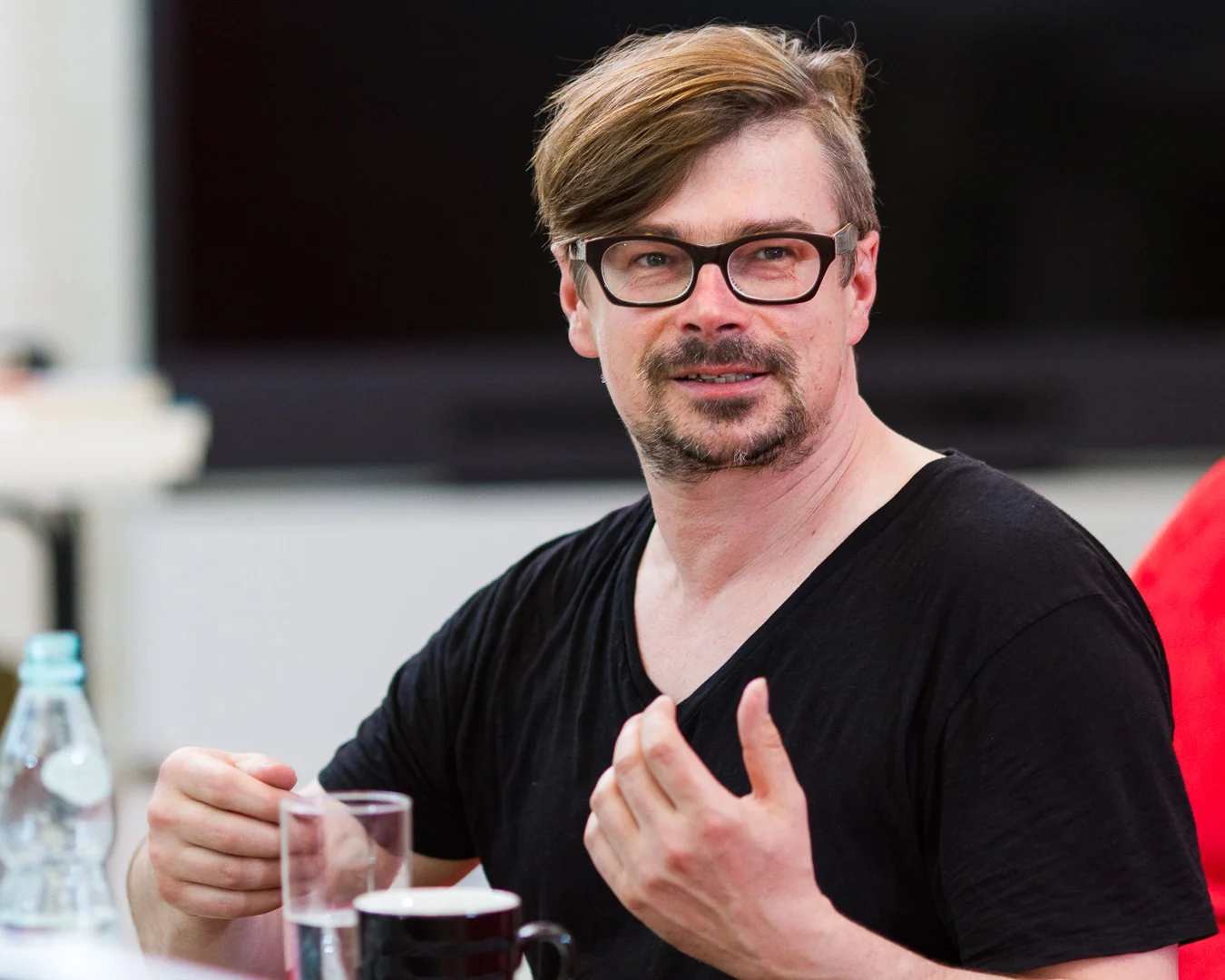
Image from Wikipedia
Image from Wikipedia
Jaroslav Rudiš: The Border Crosser Between Literature, Stage, and Music
A Czech author who combines European history, urban melancholy, and musical energy into a unique art form
Jaroslav Rudiš, born on June 8, 1972, in Turnov, is one of the defining Czech-German authors of contemporary literature. His work spans novels, dramas, screenplays, radio plays, and music projects, continuously narrating stories of border regions, train stations, pubs, memories, and the vibrant life of Central Europe. He writes in both Czech and German, carving out an exceptional literary dual role for himself. ([de.wikipedia.org](https://de.wikipedia.org/wiki/Jaroslav_Rudi%C5%A1?utm_source=openai))
Biography: From Turnov to Berlin and a Literary Dual Homeland
Rudiš studied German studies, history, and journalism in Liberec, Zurich, and Prague. A scholarship took him to Berlin, where he wrote his first novel Nebe pod Berlínem, published in 2002, which early on showcased his sensitivity to urban atmospheres and European transitions. After returning to Prague, he worked as a newspaper editor, freelance journalist, and author. The Goethe Institute highlights this international education and his path to Berlin as central milestones in his artistic development. ([goethe.de](https://www.goethe.de/ins/cz/cs/kul/ser/uak/per.cfm?personId=7144&utm_source=openai))
His biography is closely tied to the question of how literature responds to history. Rudiš tells the stories of Czech lives, the 20th century, displacement, war, normalization, and the aftermath of political upheavals. This historical depth lends his writing authority and weight. In interviews and portraits, he is described as an author who narrates with both intellectual precision and closeness to everyday life. ([staatsschauspiel-dresden.de](https://www.staatsschauspiel-dresden.de/ensemble/jaroslav_rudis/?utm_source=openai))
Career: Breakthrough with Novels, Comics, and Stage Works
Rudiš cemented his breakthrough with novels such as Grandhotel and Vom Ende des Punks in Helsinki. His second novel Grandhotel was adapted into a film, in which he even appeared in a minor role. Later, Národní třída or Nationalstraße developed into another important work that also served as a film basis. The Goethe Institute also points to his collaboration with Petr Pýcha on plays as well as a German radio play and a libretto with Martin Becker. ([goethe.de](https://www.goethe.de/ins/cz/cs/kul/ser/uak/per.cfm?personId=7144&utm_source=openai))
A central chapter of his career is Alois Nebel, created in collaboration with the illustrator Jaromír Švejdík alias Jaromír 99. The comic character became one of the most well-known phenomena in Czech pop culture and literature over the past decades, making Rudiš visible beyond classical literary circles. This fusion of graphic novel, film aesthetics, and literary condensation showcases how skillfully Rudiš intertwines different media forms. ([de.wikipedia.org](https://de.wikipedia.org/wiki/Jaroslav_Rudi%C5%A1?utm_source=openai))
Musical Development: When Texts Become Songs
Although Rudiš is primarily known as a writer, music plays a remarkably significant role in his work. Together with Jaromír 99 and Joachim Dvořák, he founded the band The Bombers in winter 2007; later, in 2014, the Kafka Band emerged, where literature is directly translated into music. The band interprets texts by Franz Kafka musically and presents them in both Czech and German on stage. Thus, Rudiš becomes a rare example of an author whose literary voice has become part of a musical project. ([de.wikipedia.org](https://de.wikipedia.org/wiki/Jaroslav_Rudi%C5%A1?utm_source=openai))
The Kafka Band is described by official and cultural journalism sources as a unique music project that combines music, recitation, and storytelling. According to the official band page, the group will present a concert series in 2026 titled "Kafka Band plays Kafka," which compiles songs from all previous albums. This illustrates that Rudiš's musical work is not a marginal aspect, but rather a continuously evolving chapter of his artistic development. ([kafkaband.eu](https://kafkaband.eu/?utm_source=openai))
Discography and Sound World: The Kafka Band as a Literary Soundtrack
The discographic line of Rudiš's musical creations is closely connected to Franz Kafka. The Kafka Band released projects based on Das Schloss (2014), Amerika (2019), and Der Process (2023); several sources describe this as a kind of trilogy that translates Kafka's work into a musical experience. The concerts and recordings incorporate both German and Czech languages, with spoken passages, singing, and arrangement-rich rock elements. ([de.wikipedia.org](https://de.wikipedia.org/wiki/Jaroslav_Rudi%C5%A1?utm_source=openai))
In 2024 and 2025, Winterbergova poslední cesta or Winterberg's Last Journey moved back to the musical center: Jaroslav Rudiš wrote and recorded several songs with the Kafka Band inspired by this novel. Czech news sources explicitly mention new musical projects from this context, and the label Indies Scope confirms the release of Winterberg ztracený ve vánici. Thus, Rudiš expands his discography beyond the Kafka cycles and continues his interest in train travel, European history, and musical narration. ([ceskenoviny.cz](https://www.ceskenoviny.cz/zpravy/2535357?utm_source=openai))
Current Projects: Literature, Stage, and New Songs in 2024/2025
Recent publications also demonstrate how productive Rudiš is. The Goethe Institute's page lists titles from 2021 to 2024 including Winterbergova poslední cesta, Noční chodci, Návod k použití železnice and Vánoce v Praze. Thus, Rudiš remains an author who consistently develops his themes: trains, cities, memories, language, and the cultural transitions between the Czech Republic and Germany. ([goethe.de](https://www.goethe.de/ins/cz/cs/kul/ser/uak/per.cfm?personId=7144&utm_source=openai))
In parallel, the Kafka Band remains active, touring with new programs. GoOut mentions a current concert cycle for 2026, while other event sites and reports refer to the ongoing live presence of the project. Rudiš is thus not only an author on paper, but also a stage artist whose texts gain an additional emotional dimension in the concert format. ([kafkaband.eu](https://kafkaband.eu/?utm_source=openai))
Style and Language: Melancholy, Humor, and Central European Expansiveness
Rudiš’s literary style connects a foundation of melancholy with dry humor and a strong sense of place. The Goethe Institute describes recurring constants in his writing as an interest in history, love for beer and trains, a penchant for eccentrics, and a clear, often immediate dialogue style. This blend makes his prose highly relatable: it is popular without being banal, and literary without creating distance. ([goethe.de](https://www.goethe.de/ins/sk/sk/kul/sup/bud/bud/21553475.html?utm_source=openai))
Cultural criticism portraits also emphasize Rudiš as an author who balances intellectual insight and popular storytelling. His characters often emerge from marginal zones, transitional situations, or environments where politics and biography are inextricably linked. This explains why his texts are frequently read as panoramas with references to Central Europe and why his books appeal to both readers and audiences in the theater and music. ([staatsschauspiel-dresden.de](https://www.staatsschauspiel-dresden.de/ensemble/jaroslav_rudis/?utm_source=openai))
Cultural Influence: An Author Who Artistically Transcends Boundaries
Rudiš has established himself as one of the most visible Czech authors in the German-speaking world. The Goethe Institute refers to his German-language works and the strong reception in Germany; in 2021, he was awarded the Cross of Honor for Science and Art of the Republic of Austria for his cross-border literary activities. His books, theatrical works, and music projects create a representation of Central Europe that is historically conscious, emotionally open, and culturally mobile. ([the-berliner.com](https://www.the-berliner.com/books/jaroslav-rudis-interview/?utm_source=openai))
His special significance lies in the connection between literature and performance. With the Kafka Band, comic projects, and stage adaptations, Rudiš creates works that do not remain confined to a single medium. He tells stories that can be read, heard, seen, and experienced live. This is precisely where the strength of his artistic development lies: from literature comes sound, from sound comes memory, and from memory comes presence. ([kafkaband.eu](https://kafkaband.eu/?utm_source=openai))
Conclusion: Why Jaroslav Rudiš Remains Engaging
Jaroslav Rudiš is engaging because he not only describes European history but translates it into form, language, and music. His music career in a broader sense, his stage presence, and his literary precision make him an extraordinary storyteller bridging the arts. Anyone who reads Rudiš or experiences him live encounters an artist who transforms train journeys, cities, memories, and abysses into intense cultural moments. A visit to his readings, concerts, or projects is worthwhile because here literature is not explained but experienced. ([kafkaband.eu](https://kafkaband.eu/?utm_source=openai))
Official Channels of Jaroslav Rudiš:
- Instagram: no official profile found
- Facebook: no official profile found
- YouTube: no official profile found
- Spotify: no official profile found
- TikTok: no official profile found
Sources:
- Wikipedia - Jaroslav Rudiš
- Goethe-Institut Czech Republic - Jaroslav Rudiš
- Goethe-Institut Slovakia - Winterberg's Last Journey
- Goethe-Institut - Is Rváč a New National Hero?
- Goethe-Institut Czech Republic - Jaroslav Rudiš and Jaromír 99
- Piper Publishing - Jaroslav Rudiš
- Kafka Band - Official Website
- ČTK / ČeskéNoviny - New Music Project by Rudiš
- Indies Scope - Winterberg ztracený ve vánici
- Goethe-Institut Slovakia - Kafka Band on Jaroslav Rudiš
Upcoming Events
The Last Beer, Jaroslav Rudiš
The Last Beer, Jaroslav Rudis - for the last time
Open Air Reading: User Manual for Beer
New Czech Literature
WHERE THE DEAD SPEAK – Reading with Jaroslav Rudiš