
Gisela von Arnim
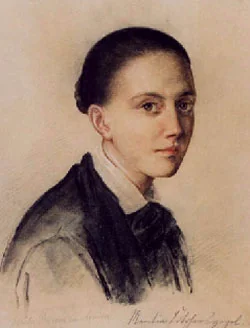
Image from Wikipedia
Image from Wikipedia
Gisela von Arnim: Romantic Storyteller Between Family Heritage, Fairy Tale World, and Literary Independent Voice
An Author from the Heart of German Romanticism
Gisela von Arnim, whose full name was Ottilie Beate Gisela Walburgis von Arnim, was born on August 30, 1827, in Berlin and passed away on April 4, 1889, in Florence. She was the youngest daughter of Bettina and Achim von Arnim, and grew up in one of the most formative literary environments of the 19th century. Her name still stands for a special form of romantic storytelling, where family history, fairy tale poetry, and intellectual independence are closely interconnected. ([de.wikipedia.org](https://de.wikipedia.org/wiki/Gisela_von_Arnim?utm_source=openai))
Although Gisela von Arnim was not a musician, her biography is worth examining, particularly for readers interested in cultural networks, artistic development, and the language of Romanticism. Her life story touches upon literature, salon culture, circles of friendship, and the intellectual debates of her time. This makes her a figure that transcends a simple biography and unfolds a unique literary aura. ([de.wikipedia.org](https://de.wikipedia.org/wiki/Gisela_von_Arnim?utm_source=openai))
Childhood in the House of Romanticism
As the youngest of seven children of a famous poet couple, Gisela von Arnim grew up in an environment where literature, art, and education were part of daily life. The von Arnim family was closely connected to German Romanticism, and this background profoundly influenced her early development. Contemporary and later portrayals highlight that she was considered highly gifted and lived in a house where intellectual discussions and cultural networks were a given. ([de.wikipedia.org](https://de.wikipedia.org/wiki/Achim_von_Arnim?utm_source=openai))
The atmosphere of her childhood was imbued with the great names of the era: the Brothers Grimm, Ludwig Tieck, Friedrich Schlegel, and other figures from the Romantic circle were part of her broader heritage. This proximity to central voices in German literary history explains why Gisela von Arnim must not be perceived as a marginal figure but as part of a vibrant cultural context. Her heritage was not only a privilege but also an artistic obligation and inspiration. ([de.wikipedia.org](https://de.wikipedia.org/wiki/Achim_von_Arnim?utm_source=openai))
Early Literary Work and the Fairy Tale as a Form
Among the most notable works associated with Gisela von Arnim is The Life of the Countess Gritta of Rattenzuhausbeiuns, which she co-authored with her mother, Bettina von Arnim. The work was prepared but only published much later and is now regarded as a significant contribution to the romantic fairy tale tradition, characterized by its idiosyncratic, playful, and simultaneously socially critical tone. The text already exhibits the connection of fantasy, narrative wit, and symbolic condensation that typifies her literary style. ([projekt-gutenberg.org](https://projekt-gutenberg.org/authors/gisela-von-arnim/?utm_source=openai))
This particular fairy tale underscores how deeply rooted Gisela von Arnim was in a narrative culture where the marvelous represents a form of knowledge rather than escape. Her collaboration with Bettina von Arnim points to a rare intergenerational dialogue within literary history. This gives her work a special position: it melds familial continuity with a unique, unmistakable perspective. ([projekt-gutenberg.org](https://projekt-gutenberg.org/authors/gisela-von-arnim/?utm_source=openai))
Friendships, Intellectual Networks, and Cultural Proximity to Music
Throughout her life, Gisela von Arnim moved in circles that extended far beyond literature. She was connected with personalities such as Joseph Joachim and was in contact with Robert and Clara Schumann; furthermore, Johanna Kinkel was her music teacher. These connections illustrate how closely literature, music, and salon culture intertwined in the 19th century and how intellectual friendships were readily formed across disciplines. ([de.wikipedia.org](https://de.wikipedia.org/wiki/Gisela_von_Arnim?utm_source=openai))
Particularly interesting is her relationship with Joseph Joachim, the famous violinist and composer. The preserved letters and musicological research portray her as a woman who not only participated but also critically and directly influenced artistic processes. In this sense, Gisela von Arnim appears as a literary conversation partner with a keen sensitivity for artistic form, expression, and discipline. ([cambridge.org](https://www.cambridge.org/core/books/abs/music-of-joseph-joachim/ciphers-in-disguise-gisela-von-arnim-and-compositional-memories/51C8D66D2F520496DBFFD28F49AD8E09?utm_source=openai))
Personal Life, Marriage, and Later Years
In 1849, Gisela von Arnim met the violinist and composer Joseph Joachim in Weimar; in 1853, she married the art historian Herman Grimm. The marriage remained childless, but it marked a close connection between two intellectuals who navigated a shared cultural space. Her life was thus characterized by a tension between familial heritage, her own writing, and the intellectual demands of a bourgeois-intellectual world. ([de.wikipedia.org](https://de.wikipedia.org/wiki/Gisela_von_Arnim?utm_source=openai))
In later years, she maintained close relationships within her family and friendship networks alongside her sister Armgart. The death in Florence on April 4, 1889, concluded a life that influenced not through external loudness but through cultural richness and quiet presence. This very restraint makes her biography particularly appealing from today’s perspective: she represents a form of intellectual impact that transcends public performance. ([de.wikipedia.org](https://de.wikipedia.org/wiki/Gisela_von_Arnim?utm_source=openai))
Work, Reception, and Literary Significance
Gisela von Arnim is primarily recognized as a writer of the Romantic era and as a co-author of the fairy-tale Gritta text. Besides this, she is perceived in biographical and scholarly contexts as a personality whose manuscripts, letters, and legacies provide insights into the literary life of the 19th century. Research is interested in her not only because of individual works but also because of the cultural role she played within a network of significant artists. ([weber-gesamtausgabe.de](https://weber-gesamtausgabe.de/en/A003115.html?utm_source=openai))
The reception of her name is inextricably linked to the romantic legacy of the von Arnim family. At the same time, her repeated examination of her surroundings, her letters, and the Gritta fairy tale gives her a distinct contour. Her significance lies both in the work itself and in how it reveals the literary and social history of an era. ([enotes.com](https://www.enotes.com/topics/bettina-von-arnim/criticism/criticism/jeannine-blackwell-essay-date-1997?utm_source=openai))
Style and Cultural Influence
Gisela von Arnim's literary impact unfolds primarily through the interplay of romantic imagination, narrative ease, and cultural sensitivity. Her name stands for a writing style that not only tells stories but creates atmospheres: fairy tales, memories, intellectual intimacy, and symbolic condensation intertwine. This is of particular significance for the history of women's writing in the 19th century because it makes the role of a female author visible within a male-dominated canon. ([enotes.com](https://www.enotes.com/topics/bettina-von-arnim/criticism/criticism/jeannine-blackwell-essay-date-1997?utm_source=openai))
Her cultural influence is also evident in how contemporary readers discover her: as a voice from a network of Romanticism, as a co-author of an unusual fairy tale text, and as a personality who mediated between literature, music, and society. It is precisely this complexity that makes her intriguing. She embodies not a loud but a subtle authority, whose lasting impact stems from context, quality, and intellectual independence. ([projekt-gutenberg.org](https://projekt-gutenberg.org/authors/gisela-von-arnim/?utm_source=openai))
Conclusion: Why Gisela von Arnim Fascinates to This Day
Gisela von Arnim is a fascinating figure in German cultural history because she originates from the center of Romanticism while still developing her own distinct outline. Her biography connects heritage, education, friendship, literary collaboration, and a fine sense of poetic detail. Those interested in romantic literature, family stories of the 19th century, and the intersections of literature and music will find in her an extraordinarily multifaceted personality. ([de.wikipedia.org](https://de.wikipedia.org/wiki/Gisela_von_Arnim?utm_source=openai))
Anyone who reads or rediscovers Gisela von Arnim today encounters an author whose quiet presence carries great weight. She is worth rediscovery because she unites cultural depth, historical richness, and literary sensitivity. Her work and life invite us to experience Romanticism not as a past trend but as a vibrant realm of thought. ([projekt-gutenberg.org](https://projekt-gutenberg.org/authors/gisela-von-arnim/?utm_source=openai))
Official Channels of Gisela von Arnim:
- Instagram: no official profile found
- Facebook: no official profile found
- YouTube: no official profile found
- Spotify: no official profile found
- TikTok: no official profile found
Sources:
- Wikipedia - Gisela von Arnim
- Wikipedia (English) - Gisela von Arnim
- Projekt Gutenberg - Gisela von Arnim
- Weber-Gesamtausgabe - Biographical information from the WeGA
- Deutsche Digitale Bibliothek - Gisela von Arnim
- Cambridge University Press - Ciphers in Disguise: Gisela von Arnim and Compositional Memories
- eNotes - Criticism: Laying the Rod to Rest
- vonarnim.com - Portraits / Family Archive