
Edgar Krapp
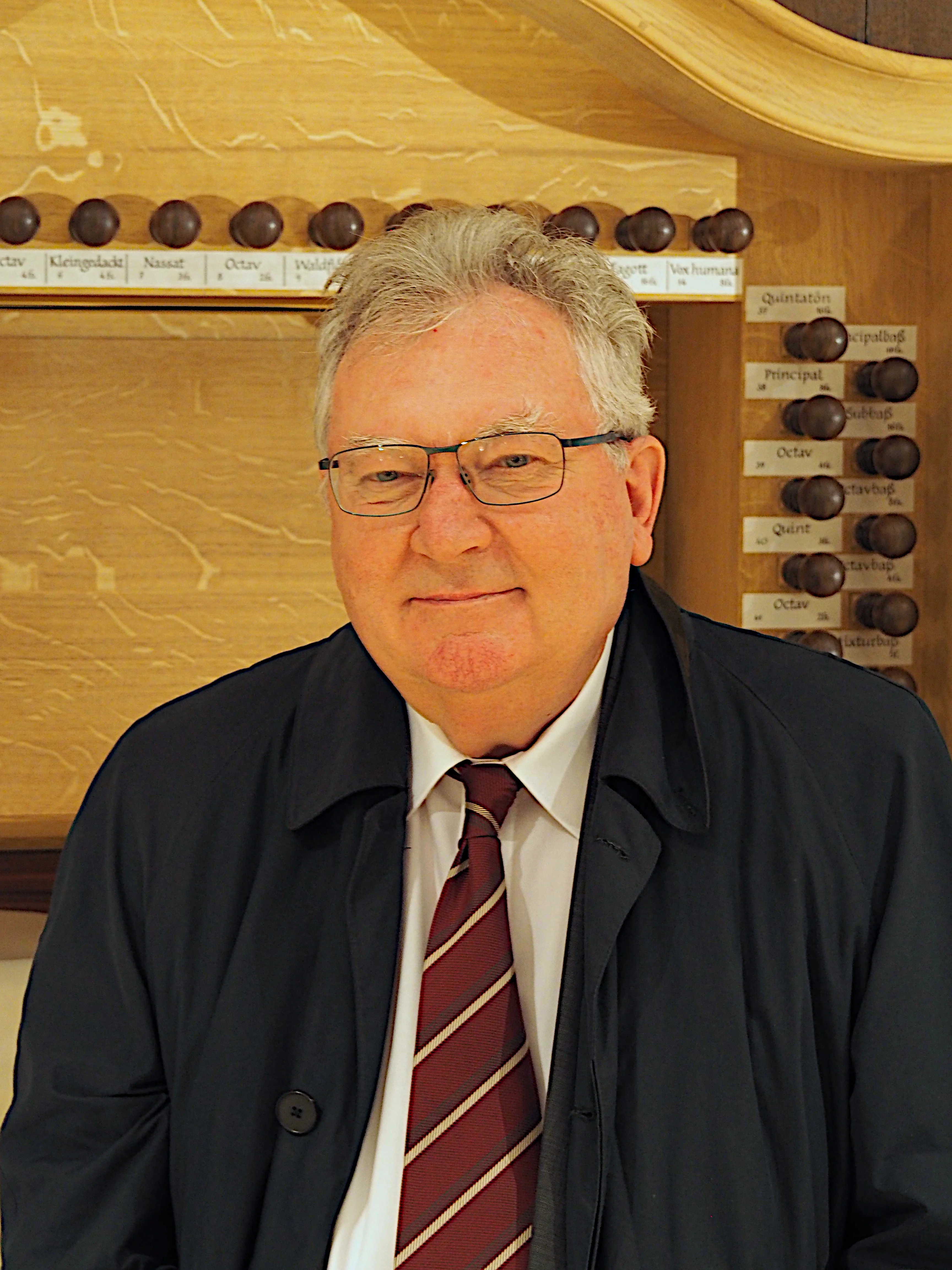
Image from Wikipedia
Image from Wikipedia
Edgar Krapp – A German Organ Virtuoso between Bach Interpretation, Higher Education, and International Concert Stage
Edgar Krapp: Sound Fantasy, Precision, and a Music Career with Great Radiance
Edgar Krapp, born on June 3, 1947, in Bamberg, is one of the defining German organists of his generation. His career blends a solid artistic education, international concert activity, pioneering academic work, and a close connection to his hometown of Bamberg. Early on, he developed a profile that combines technical brilliance with stylistic depth, making him a permanent figure in the world of organ music. ([de.wikipedia.org](https://de.wikipedia.org/wiki/Edgar_Krapp))
Biography: From Bamberg to Munich, Paris, and the Grand Stages
Krapp received his first organ lessons as a member of the Regensburger Domspatzen. After graduating from the Franz-Ludwig-Gymnasium in Bamberg in 1966, he studied organ in Munich with Franz Lehrndorfer and furthered his training in Paris with Marie-Claire Alain. This dual influence of German organ tradition and French sound culture forms an important foundation of his artistic development. Even during his studies, he received multiple awards at international music competitions. ([de.wikipedia.org](https://de.wikipedia.org/wiki/Edgar_Krapp))
The Munich ARD Competition in 1971 marked a decisive turning point: Krapp won the 1st prize there, opening the door to an international concert career. From that moment, he performed in Europe, America, and Japan, establishing himself as a highly acclaimed concert organist. The early recognition and subsequent presence on international stages quickly made him a prominent figure in concert life. ([de.wikipedia.org](https://de.wikipedia.org/wiki/Edgar_Krapp))
Concert Career: Collaborating with Great Conductors and Orchestras
Krapp's musical career is closely linked to notable conductors and renowned orchestras. He worked with conductors including Rafael Kubelík, Georges Prêtre, Colin Davis, Lorin Maazel, Vladimir Fedoseyev, Horst Stein, and Christoph Eschenbach. The orchestras he performed with include the Chicago Symphony Orchestra, the Bavarian Radio Symphony Orchestra, the Munich Philharmonic, the Bamberg Symphony, the German Symphony Orchestra Berlin, and the Vienna Symphony Orchestra. This collaboration highlights the extraordinary adaptability of his playing in the symphonic context. ([de.wikipedia.org](https://de.wikipedia.org/wiki/Edgar_Krapp))
Krapp's profile as an interpreter of Johann Sebastian Bach's organ works is particularly prominent. He performed the complete organ works of the composer multiple times; in Munich, all 14 concerts were broadcast live on the radio. The organ concertos of Handel, as well as all of his harpsichord works, were also part of his repertoire, documented through radio and record recordings. This cyclical work points to an artistic stance that does not rely on individual effects but rather on large connections and historically informed repertoire management. ([de.wikipedia.org](https://de.wikipedia.org/wiki/Edgar_Krapp))
Teaching and Impact: A Shaping Educator at Central Music Universities
Alongside his stage career, Krapp gained significant influence as a university lecturer. From 1974 to 1993, he led an organ class at the Frankfurt University of Music and Performing Arts, succeeding Helmut Walcha. Between 1982 and 1991, he was a guest professor at the Salzburg Mozarteum, before being appointed to the Munich University of Music in 1993, again succeeding his teacher Franz Lehrndorfer. He taught there until 2012, shaping a generation of organists. ([de.wikipedia.org](https://de.wikipedia.org/wiki/Edgar_Krapp))
His students include numerous well-known names today, such as Wolfgang Kleber, Markus Karas, Torsten Laux, Ludwig Ruckdeschel, Martin Sander, Michael Schöch, Dan Zerfaß, Angela Gehann-Dernbach, Georg Hagel, and Josef Hauber. Krapp’s pedagogical authority stemmed not only from his stage practice but also from a clear musical language, technical demands, and stylistic reliability. Thus, he significantly influenced the German organ landscape far beyond his own concerts. ([de.wikipedia.org](https://de.wikipedia.org/wiki/Edgar_Krapp))
Discography and Repertoire: Historical Instruments, Vast Range, Bach at the Center
Krapp's discography and documented recordings reflect a broad repertoire from Baroque music to contemporary works. Solo Musica describes numerous records, radio, and television recordings, primarily made on significant historical instruments. The focus is on Bach's organ works, but Krapp also comfortably navigated works from other periods and performed several concert cycles at renowned venues such as Frankfurt, Nuremberg, the Rheingau Music Festival, and Munich. ([solo-musica.de](https://solo-musica.de/edgar-krapp/))
Among his world premieres are works by Harald Genzmer, Günter Bialas, and Hans-Jürgen von Bose. Thus, Krapp became significant not only as an interpreter of the canon but also as a partner of contemporary composers. His artistic range is particularly evident in this dual role: a guardian of historical tradition and an advocate of new music. ([de.wikipedia.org](https://de.wikipedia.org/wiki/Edgar_Krapp))
Style and Artistic Signature: Sound Fantasy, Virtuosity, and Structural Thinking
A profile text from Solo Musica highlights in Krapp's playing "spiritual and manual power," combined with "eminent sound fantasy" and technical brilliance. This description captures the core of his artistic self-understanding: the organ appears not merely as a monument but as a colorful, dramaturgically shapeable instrument. Particularly in large concert programs, his ability to unite registration, phrasing, and architecture into a convincing overall form unfolds. ([solo-musica.de](https://solo-musica.de/edgar-krapp/))
His long-standing engagement with historical instruments further underscores this approach. Krapp preferred to work with organs of strong character and took their particularities seriously rather than smoothing them out. This attitude explains why his interpretations are perceived not only as academically precise but also as vibrant and distinctive. His artistic development thus shows a rare balance of analytical rigor and musical fantasy. ([solo-musica.de](https://solo-musica.de/edgar-krapp/))
Awards, Authority, and Cultural Influence
Krapp’s authority in the organ world is also institutionally secure. He is a member of the board of the New Bach Society Leipzig and the Bavarian Academy of Fine Arts; he also serves as a jury member for the ARD Music Competition. His awards include the 1st prize at the Munich ARD Competition in 1971, the Frankfurt Music Prize in 1983, the E.-T.-A.-Hoffmann Prize from the City of Bamberg in 1994, and the Friedrich Baur Prize for Music in 2000. These milestones mark a career that holds weight in concert life, teaching, and cultural relevance. ([de.wikipedia.org](https://de.wikipedia.org/wiki/Edgar_Krapp))
His connection to Bamberg is more than just biographical origin. Krapp was significantly involved in the conception of the new Jann organ in Bamberg and directed the organ series of the Bamberg Symphony Orchestra from 1993 to 2012. Thus, the city honored not only a musician but a shaping voice in the local music scene, successfully intertwining international reputation with regional responsibility. ([de.wikipedia.org](https://de.wikipedia.org/wiki/Edgar_Krapp))
Current Presence and Ongoing Concert Culture
Even after his retirement, Krapp remains present in the public eye. The city of Bamberg has announced an organ concert by Edgar Krapp at St. Michael on November 5, 2026; the event text emphasizes that he played his first public concerts there between 1964 and 1980. This shows a remarkable continuity: an artist returns to the locations of his early career and connects musical heritage with vibrant present. ([bamberg.info](https://www.bamberg.info/veranstaltungen/orgelkonzert_von_edgar_krapp-869289/))
This connection of tradition, pedagogical influence, interpretative authority, and local roots makes Edgar Krapp captivating. One who views his career sees not just an organ virtuoso, but a bearer of culture with significance: shaped by Bach, rooted in Bamberg, recognized in Europe, America, and Japan. His concerts and his work at the organ remain an impressive testament to musical depth, sound fantasy, and the power of live experience. ([de.wikipedia.org](https://de.wikipedia.org/wiki/Edgar_Krapp))
Conclusion: Why Edgar Krapp Continues to Fascinate
Edgar Krapp represents an organ art that combines technical sovereignty, stylistic breadth, and intellectual concentration. His career spans from early successes and international concert tours to a shaping role as a teacher and repertoire designer. This multifacetedness makes him a personality of lasting importance in German music history. Those who have the opportunity to experience him live encounter an artistic stance that takes sound seriously and understands the organ as a grand narrative instrument. ([de.wikipedia.org](https://de.wikipedia.org/wiki/Edgar_Krapp))
Official Channels of Edgar Krapp:
- Instagram: No official profile found
- Facebook: No official profile found
- YouTube: No official profile found
- Spotify: No official profile found
- TikTok: No official profile found