
Christiane Rösinger
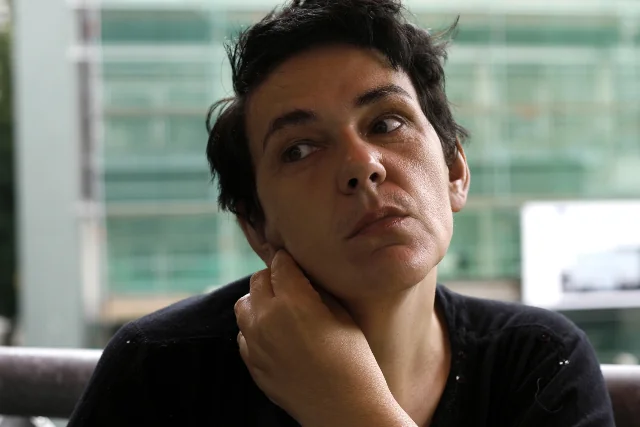
Image from Wikipedia
Image from Wikipedia
Christiane Rösinger – the astute voice between indie pop, literature, and contemporary Berlin
An artist who not only sings pop but dissects it
Christiane Rösinger, born on January 6, 1961, in Rastatt, is one of the most prominent voices in German-speaking pop culture. As a musician, author, and journalist, she has developed an artistic stance since the 1980s that intertwines contradiction, wit, analysis, and emotional accuracy. Her music career is closely linked to Berlin, the independent pop scene of the 1990s, and an unmistakable literary language that works equally well on stage as it does on paper. (de.wikipedia.org)
From Baden to West Berlin: the beginning of an unconventional biography
Rösinger grew up in Hügelsheim near Rastatt and moved to West Berlin in 1985, where she studied General and Comparative Literature and worked at the Peter Szondi Institute. During this time, she immersed herself in the "Fischbüro," an intellectual and cultural milieu that sharpened her perspective on language, society, and art early on. This biographical shift from a Baden upbringing to the Berlin subculture remains a core aspect of her artistic identity to this day. (de.wikipedia.org)
In 1988, she co-founded the Lassie Singers with Almut Klotz and Funny van Dannen, a band that redefined German indie pop with ironic sharpness, a feminist perspective, and pointed observations of daily life. The tone was laconic, the lyrics were biting, yet it was not merely a pose, but a precise form of musical depiction of the present. The Lassie Singers became a band that combined pop, attitude, and linguistic wit in an unusually intelligent way. (de.wikipedia.org)
Lassie Singers and Britta: two chapters of German indie history
With the Lassie Singers, Rösinger established a style that sang against romantic glorification and bourgeois relationship norms. The band released several albums between 1991 and 1998, including Die Lassie Singers helfen Dir, Sei À Go Go, Stadt, Land, Verbrechen, and Hotel Hotel. Even these early releases mark an artistic development in which pop appears as a form of social commentary: accessible, but never harmless. (de.wikipedia.org)
After the disbandment of the Lassie Singers, Rösinger founded the band Britta in 1998 with Britta Neander and Julie Miess, becoming the head of another important chapter in German independent music. Britta released albums including Irgendwas ist immer, Kollektion Gold, Lichtjahre voraus, and Das schöne Leben; a Best of Britta was released in 2018. The band continued the blend of social observation, interpersonal friction, and melodic pop, with a sound that later became denser and more melancholic. (de.wikipedia.org)
Flittchen Records, Flittchenbar, and the idea of pop as public space
In 1998, Rösinger co-founded Flittchen Records with Almut Klotz, a significant step towards her independence as an artist and producer. The label symbolizes her practice of thinking about artistic production and cultural positioning together. Her event series Flittchenbar, which she ran in the 1990s at Maria am Ostbahnhof and continued monthly at Südblock from December 2010, exemplifies this ambition: pop as not just sound, but as a social event. (de.wikipedia.org)
In this work, experience intertwines with authority: Rösinger was never just a frontwoman but also an organizer, curator, and commentator of a scene. This is where her significance for the Berlin cultural landscape lies. She created spaces in which music, discourse, and public life intersect, without losing her individuality. (de.wikipedia.org)
Solo career: between melancholy, bitterness, and compositional precision
In 2010, her first solo album, Songs of L. and Hate, was released, arranged by Andreas Spechtl of Ja, Panik. The album shifted the focus more onto her voice and narrative presence; the pieces revolve around failure, sadness, abandonment, and the allure of the melancholic. Musically, Rösinger opened up to a more reduced, piano- and guitar-driven sound that made the lyrics stand out even more. (de.wikipedia.org)
In 2017, Lieder ohne Leiden followed, again with Andreas Spechtl as a central collaborator. The work was described as a return to another form of pop: less band gesture, more chamber pop, more internal movement, and more refined instrumentation. Thematically, the album circles around aging, time, balance, and self-observation; the piece Joy Of Ageing crystallizes this perspective particularly clearly. (de.wikipedia.org)
The two solo albums show a consistent musical development: Rösinger uses pop as a carrier of world interpretation. The appeal lies not in genre experiments for their own sake but in the precision of composition, texture, and tone. Her songs thrive on a strong authorial position that makes form and content inseparable. (de.wikipedia.org)
Discography: shaping songs, chart presence, and critical reception
The official discography includes not only the albums of the Lassie Singers and Britta but mainly the solo albums Songs of L. and Hate and Lieder ohne Leiden. Lieder ohne Leiden reached number 99 in the German charts, a visible indication that Rösinger's solo work was recognized beyond the core indie audience. On Spotify, songs like Berlin, Joy of Ageing, Sinnlos, and Ich muss immer an dich denken are among her most popular titles. (de.wikipedia.org)
The reception has been largely very respectful. The music magazine Musikexpress described the combination of lyrical sharpness and musical attitude as remarkable, while other reviews highlighted the dark yet comforting quality of the pieces. Rösinger's work is seen as a reference point for German-language indie pop that cannot be reduced to irony, but which merges emotional and political depth. (musikexpress.de)
Style, language, and cultural influence
Christiane Rösinger's artistic fingerprint is characterized by laconic observation, social accuracy, and a keen sense for pop arrangements. Her songs deal with relationships, aging, work, urban life, and political reality without tipping into dry statement songwriting. It is precisely in the combination of emotional directness and analytical perspective that her uniqueness lies. (de.wikipedia.org)
Her influence extends far beyond her own discography. Music press and cultural institutions describe her as a central figure in the Berlin indie scene and one of the most important German-speaking songwriters of her generation. That other artists and groups, such as Die Heiterkeit or various curated pop contexts, refer to Rösinger demonstrates her lasting cultural imprint. (musikexpress.de)
Additionally, her work as a journalist and author enriches her music career with a literary perspective that fuels her songwriting and vice versa. Rösinger embodies a rare form of artistic authority: a voice that powerfully resonates in music, text, and public discourse alike. (de.wikipedia.org)
Theater, musicals, and current projects 2024/2025
In recent years, Rösinger has increasingly expanded her work into the theater and musical context. For HAU Hebbel am Ufer, she developed Der Spielmacher – Ein Fussical, Feminista Baby!, Stadt unter Einfluss, Planet Egalia – Ein feministisches Singspiel, Die große Klassenrevue, and in 2025 Leben im Liegen. These works show that her artistic development does not linger in retrospection but continuously seeks new forms of expression. (de.wikipedia.org)
Particularly, Stadt unter Einfluss made her stance on contemporary politics evident: Rösinger addressed issues of rent, displacement, and the conditions of urban life in Berlin. The project combined composition, direction, and performance into a form of political musical theater that only a few can master so incisively in the German-speaking world. She remained present and relevant with new stage works in 2023 and 2025. (musicboard-berlin.de)
Recent accolades include the Rio-Reiser Special Scholarship from Musicboard Berlin in 2020 and the Göttingen Elk in 2025. Both underline her status as a significant figure in German music and cultural history. Anyone who listens to Christiane Rösinger today or experiences her on stage encounters an artist who has transformed her experiences into stance, form, and language. (de.wikipedia.org)
Conclusion: Why Christiane Rösinger remains intriguing to this day
Christiane Rösinger is intriguing because she understands pop music not as a surface but as a space for thought. Her songs are intelligent, compositionally precise, and emotionally direct; her books and stage works expand this profile into a body of work that reaches far beyond a single scene. This is precisely where her significance lies: she connects a music career, literary voice, and social observation into an unmistakable overall aesthetic. (de.wikipedia.org)
Anyone who experiences her live does not get a nostalgic retrospective but a diagnosis of the present filled with melody, bite, and charisma. Christiane Rösinger remains an artist whose stage is never just a concert space but a place for attitude, contradiction, and smart pop culture. This is why it is worthwhile to experience her live. (the-berliner.com)
Official channels of Christiane Rösinger:
- Instagram: no official profile found
- Facebook: no official profile found
- YouTube: no official profile found
- Spotify: https://open.spotify.com/artist/271LW7GJQOUhbo7PZnS8jM
- TikTok: no official profile found
Sources:
- Wikipedia – Christiane Rösinger
- Christiane-Roesinger.de – Songs of L. and Hate / Reviews & Archive
- Musicboard Berlin – Christiane Rösinger
- Musicboard Berlin – Stadt unter Einfluss
- HAU Hebbel am Ufer – Christiane Rösinger Biography
- Spotify – Christiane Rösinger
- Musikexpress – Review: Christiane Rösinger – Liebe wird oft überwertet
- Musikexpress – Review: Christiane Rösinger – Lieder ohne Leiden
- The Berliner – Rösinger returns
Upcoming Events
Christiane Rösinger
Christiane Rösinger – The Joy of Ageing
THE JOY OF AGEING – Musical Reading with Christiane Rösinger