
Andreas Herzau
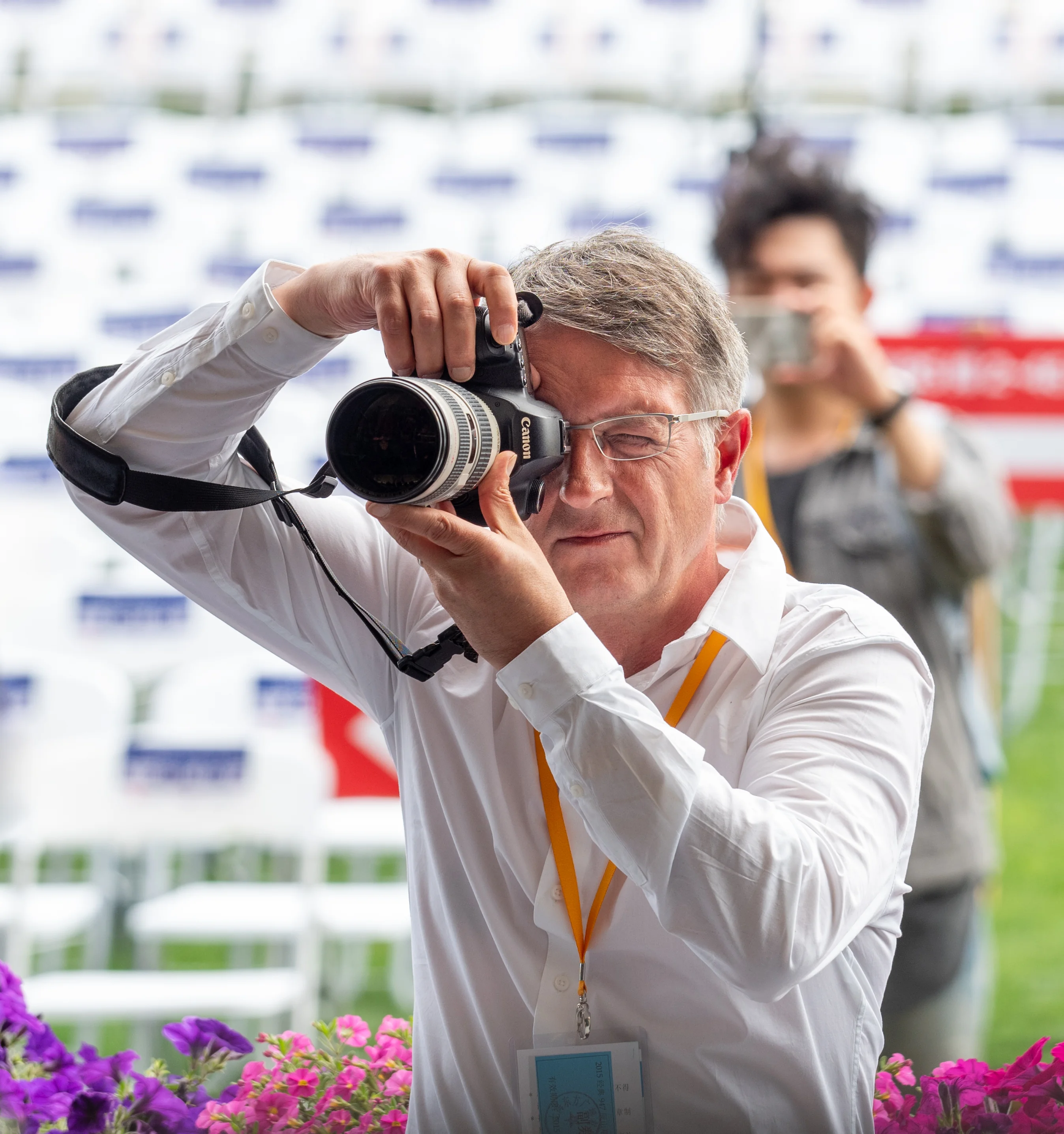
Image from Wikipedia
Image from Wikipedia
Andreas Herzau – Photography with Attitude, Depth of Field, and a Human Perspective
A photographer who not only depicted reality but questioned it
Andreas Herzau (* May 29, 1962; † February 6, 2024) was one of those German photographers whose work blends documentation and authorship. He worked globally, lived in Hamburg, and understood photography as a precise, analytical, and narrative medium. On his own website, he is described as a photographer and author, focusing on documentary and journalistic photography. ([andreasherzau.de](https://www.andreasherzau.de/vita/))
Herzau's artistic development did not begin directly with image production, but through typography, editing, and text. This background shaped his perspective: he thought in sequences, motifs, rhythmic image series, and journalistic contexts. It was from this that a photography emerged that not only collected scenes but made societal structures visible. ([andreasherzau.de](https://www.andreasherzau.de/vita/))
Biographical Roots and the Path to Photography
After training as a typographer in Tübingen from 1980 to 1983, Herzau worked as a typesetter in Stuttgart. In 1986, he completed an internship at the Hamburg magazine Konkret and became an editor there in 1987; from 1988 to 1990, he worked as an editor for Hamburger Rundschau. It was not until 1990 that he increasingly turned to photography and worked as a freelance author for various daily newspapers before the camera became the central instrument of his expression. ([andreasherzau.de](https://www.andreasherzau.de/vita/))
This journalistic preconditioning remained crucial throughout his work. Herzau did not move through the world as a detached image supplier but as an observing chronicler with editorial intuition. He sought not pleasing surfaces, but social tensions, historical ruptures, and the moment when a theme crystallized in an image. ([andreasherzau.de](https://www.andreasherzau.de/vita/))
Career, Networks, and Professional Assertion
In 1991, Andreas Herzau co-founded the photo agency Signum, and in 1995 he was one of over a hundred founders of the professional association Freelens, which aimed to strengthen the working conditions for photographers. Since 1999, he had been a member of the agency laif and later became a founding and board member of the laif cooperative established in 2023. These milestones showcase a photographer who not only worked individually but actively helped shape the organizational foundations of independent image production. ([de.wikipedia.org](https://de.wikipedia.org/wiki/Andreas_Herzau))
In his public role, Herzau also appeared as a teaching, mediating, and reflective photographer. His website biography lists him as a guest lecturer and visiting professor at various institutions; he also wrote about photography. In doing so, he stood in a rare tradition of image authors who not only practice the medium but also accompany it theoretically and journalistically. ([andreasherzau.de](https://www.andreasherzau.de/vita/))
The Work: Documentary Photography, Essays, and Precise Image Series
Herzau's work focused on photojournalism and photographic essays. His website emphasizes that he interrogated stereotypical image patterns and broke them open in intense images; he combined essayistic-narrative with analytical-abstract elements. The result was dense visual stories that he preferred to publish as book projects. ([andreasherzau.de](https://www.andreasherzau.de/vita/))
The themes of his series ranged from migration and urban spaces to political and cultural observations. The exhibition overview on his website shows a development from early works like Flucht – 50 Millionen Menschen ohne Heimat to NY 00/02, Deutschland.Deutschland., and Sputnik, up to later projects like #francke and AM. This creates a portrait of a photographer who translated social reality into recognizable, sharply contoured series over the years. ([andreasherzau.de](https://www.andreasherzau.de/exhibitions/))
Discography in Book Form: Key Publications and Projects
As Andreas Herzau was a photographer and not a musician, his "discography" in terms of a work chronicle consists of photo books and image projects. This is particularly evident in his international and German-language series: New York, Moscow | Moskau | Mockba Street, Helvetica, and AM mark central nodes of his oeuvre. The website and professional press show that he understood photo books as an artistic final form, not as mere documentation. ([profifoto.de](https://www.profifoto.de/szene/ausstellungen/2017/03/27/andreas-herzau-helvetica/))
His collaboration with the Bamberg Symphony Orchestra is also part of his later body of work: over several years, a long-term photographic project developed there, born from tours and the orchestra's everyday life, which later resonated in publications and exhibitions. The 2025/26 season brochure designates one of these images as the last orchestra photo by the photographer; thus, the work also acquires the character of an artistic legacy. ([bamberger-symphoniker.de](https://www.bamberger-symphoniker.de/fileadmin/pdf/BS_Saisonbroschu__re_2025-2026_INTERNET_korrigiert.pdf?utm_source=openai))
Style, Technique, and Artistic Signature
A defining characteristic of Herzau's style was the conscious switch between color and black and white. The visual language worked with fine blurriness, clear compositions, and a sense of spatial and social constellations. Journal21 describes how he mixed black and white and color photos and thought about the choice for each appearance even during the shoot. ([journal21.ch](https://www.journal21.ch/artikel/andreas-herzau-untersuchungen-mit-der-kamera))
This controlled openness made his works particularly strong. Herzau sought not the loud single image, but the tension between closeness and distance, observation and interpretation. In the series Helvetica, for example, he reflected on his own role as an outsider while cleverly playing with clichés and contradictions; ProfiFoto describes the work as a "spectacular series of images" about Switzerland and its self-images. ([profifoto.de](https://www.profifoto.de/szene/ausstellungen/2017/03/27/andreas-herzau-helvetica/))
Awards, Resonance, and Cultural Relevance
Herzau received multiple awards for his reports. Important accolades include the Euro Press Photo Award 1997 for Die Vertreibung aus dem Paradies, the Hansel-Mieth Prize 1999 for Menschliche Überreste, 110 Kilogramm, another Hansel-Mieth Prize in 2001, the Euro Press Photo Award 2002 for Die andere Stadt – New York nach dem 11. September, the PDN Award 2004 for the book Andreas Herzau – New York, the German Photo Book Prize 2013 for Moscow Moskau Mockba Street, and the Rückblende 2017 for the best political photography of the year 2017. ([de.wikipedia.org](https://de.wikipedia.org/wiki/Andreas_Herzau))
His cultural significance lies not only in the number of honors but in his attitude towards documentary photography. According to his website, Herzau was among those committed photographers who expanded the boundaries of classical photojournalism in independent and often surprising ways. This is precisely where his resonance lies: in the combination of observational talent, social consciousness, and a visual language that is never decorative but always argumentative. ([andreasherzau.de](https://www.andreasherzau.de/vita/))
Current Projects, Estate, and Posthumous Visibility
Even after his death, Andreas Herzau remains present. The F.C. Gundlach Foundation took over his estate, and large-scale exhibitions of his work are planned and documented in Bamberg for 2026/2027. An event page announces Lichtakkord, an exhibition about the photographic accompaniment of the Bamberg Symphony Orchestra; a municipal funding note also mentions a special exhibition titled Andreas Herzau: Die Bamberger Symphoniker. ([dfa.photography](https://dfa.photography/post/zum-tod-von-andreas-herzau))
The view of his estate shows a photographer whose work does not seem complete but continues to be read. The combination of political reportage, European city and country images, and long-term musical observations creates a body of work with lasting relevance. His images remain relevant because they not only show events but condense attitudes, environments, and historical atmospheres. ([dfa.photography](https://dfa.photography/post/zum-tod-von-andreas-herzau))
Conclusion: Why Andreas Herzau Remains Important
Andreas Herzau was a photographer who looks closely, who does not simplify social reality but organizes it precisely. His career remarkably connects editing, documentary photography, book art, and institutional engagement. Those who view his works encounter a clear perspective on people, spaces, and political contexts – calm, analytical, and of great intensity. ([andreasherzau.de](https://www.andreasherzau.de/vita/))
For this reason, it is worthwhile to rediscover his books, exhibitions, and series. Andreas Herzau's photography possesses substance, patience, and rhythm; it tells of an artistic development that shaped attitude from observation. Those who have the opportunity should experience his works in exhibition or book form and read this independent, humane image author anew, both live and in retrospect. ([andreasherzau.de](https://www.andreasherzau.de/exhibitions/))
Official Channels of Andreas Herzau:
- Instagram: https://instagram.com/andreasherzau/
- Facebook: https://www.facebook.com/Andreas-Herzau-at-work-296966596997919/
- YouTube: No official profile found
- Spotify: No official profile found
- TikTok: No official profile found
- Twitter/X: https://twitter.com/AndreasHerzau
Sources:
- Andreas Herzau Photography – Official Website
- Andreas Herzau Photography – Biography
- Andreas Herzau Photography – Exhibitions
- Andreas Herzau Photography – Blog/About the Blog
- Wikipedia – Andreas Herzau
- LFI – Obituary: Andreas Herzau
- German Photographic Academy – On the death of Andreas Herzau
- ProfiFoto – Andreas Herzau: Helvetica
- Journal21 – Investigations with the Camera
- Bamberg Tourism – Exhibition "Lichtakkord"
- Wikipedia: Image and Text Source