
Bamberg
Austraße 29, 96047 Bamberg, Deutschland
The Bumiller Collection Bamberg | Photos & Opening Hours
The Bumiller Collection in Bamberg is a real surprise for many visitors because it hides a scientifically significant and visually striking collection in a rather inconspicuous old town address. Behind the historic house at Austraße 29, whose entrance is reached via Hasengasse, the University Museum of Islamic Art primarily displays early Islamic metalwork from the Iranian region, complemented by ceramics, glass, manuscripts, and other materials. The collection was originally built privately, opened in 1995, and has been further developed since 2008 in close cooperation with the University of Bamberg as a university museum. After a redesign of the permanent exhibition, the museum reopened on October 1, 2025, and today offers a particularly concentrated view of Islamic art, urban history, and research in the midst of the UNESCO World Heritage City of Bamberg. Especially those looking for photos, images, historical spaces, and an unusual cultural venue will find a location here that goes far beyond a classic museum visit. ([uni-bamberg.de](https://www.uni-bamberg.de/islamart/universitaetsmuseum-fuer-islamische-kunst/?utm_source=openai))
Photos and Collection Online
Those looking for photos of the Bumiller Collection will quickly find what they need online, as the official online collection offers a representative selection of objects and organizes them by material groups. This is particularly helpful for visitors because one does not only see individual exhibits but immediately understands the breadth of the collection. Metal, ceramics, and stone are the most important categories, supplemented by objects made from other materials. The online presentation includes bowls, incense burners, padlocks, jugs, mirrors, and tombstones, among others. This already creates a vivid picture of what kind of art and everyday culture will be visible in the museum before the visit. The collection is continuously updated, making a look at the website worthwhile even for returning guests. Those looking for photos for their travel planning, for social media, or simply for orientation will not only receive beautiful images but also a first substantive understanding of the collection. ([the-bumiller-collection.com](https://the-bumiller-collection.com/sammlung-online/?utm_source=openai))
Even on-site, the location thrives on its visual language. The University of Bamberg describes the Bumiller Collection as probably the largest collection of Islamic metalwork from the 6th to 13th centuries in the world, and it is precisely this extraordinary density that makes the place so photogenic. Instead of a single spectacular showcase, one encounters a series of forms, surfaces, and functions that have developed over centuries. The official museum website also emphasizes the serial character of the collection: It is not the singular masterpiece that is at the center, but the typological development of artistic forms. For photos, this means that motifs are repeated multiple times yet always show new details. An overview image tells of abundance and systematics, close-ups reveal material, patina, and craftsmanship, and the historical interiors provide a warm, authentic setting. This mixture of collection, space, and research logic makes the Bumiller Collection particularly interesting for visual content. ([uni-bamberg.de](https://www.uni-bamberg.de/islamart/universitaetsmuseum-fuer-islamische-kunst/?utm_source=openai))
Opening Hours, Address, and Visits
The practical planning for the Bumiller Collection is pleasantly clear. The museum is located at Austraße 29 in 96047 Bamberg, with access via Hasengasse. According to official visitor information, the house is regularly open Tuesday, Wednesday, and Thursday from 10 AM to 2 PM, as well as Saturday and Sunday from 10 AM to 4 PM. The museum is not accessible during standard operations on Mondays and Fridays. Those who wish to plan their visit flexibly can book tours and visits outside of opening hours by appointment. For a small, specialized collection, this is a significant advantage as it allows for better coordination of individual appointments, group visits, and scientific inquiries. It is also important to note the recent change: Due to the redesign of the permanent exhibition, the house was closed until the end of September 2025 and reopened on October 1, 2025. These dates are relevant for anyone looking for current opening hours, tickets, or appointment options. ([the-bumiller-collection.com](https://the-bumiller-collection.com/planen-sie-ihren-aufenthalt/?utm_source=openai))
The contact structure is intentionally kept personal. Dr. Verena Daiber is named as the contact person on the visitor page, with a direct email address and phone number. This not only facilitates group inquiries but also spontaneous follow-up questions about special opening hours, tours, or research visits. In combination with the entrance via Hasengasse, this is helpful because the old town of Bamberg, while central, is somewhat winding in places. Those visiting the location for the first time should therefore not only enter the address into their navigation device but also pay attention to the exact access. Especially in narrow alleys and historic buildings, this information is often crucial to whether the visit begins relaxed or is associated with searching. The museum itself is compact but feels very accessible due to clear visitor communication. For inquiries such as opening hours, address, appointments, or tours, the official site provides exactly the information that interested parties need immediately. ([the-bumiller-collection.com](https://the-bumiller-collection.com/planen-sie-ihren-aufenthalt/))
History of the House on Austraße
The history of the museum is closely linked to the history of the house. The property at Austraße 29 is located in the heart of the UNESCO World Heritage City of Bamberg and dates back to the late Middle Ages. The official house page describes that Manfred Bumiller acquired the property in 1992 and subsequently had it extensively renovated for two years to permanently house his collection there. The house had previously served various purposes and was used as a sales shop from 1911; later, it was used as a bakery for many years. In 1950, it received a new entrance on Hasengasse to better organize the then-current operation. Such details make it clear that the museum location was not chosen randomly but is based on a long history of everyday use. This is precisely why the visit is also exciting for people interested in urban development, monument preservation, and historical forms of trade. ([the-bumiller-collection.com](https://the-bumiller-collection.com/haus-zum-benedikt/?utm_source=openai))
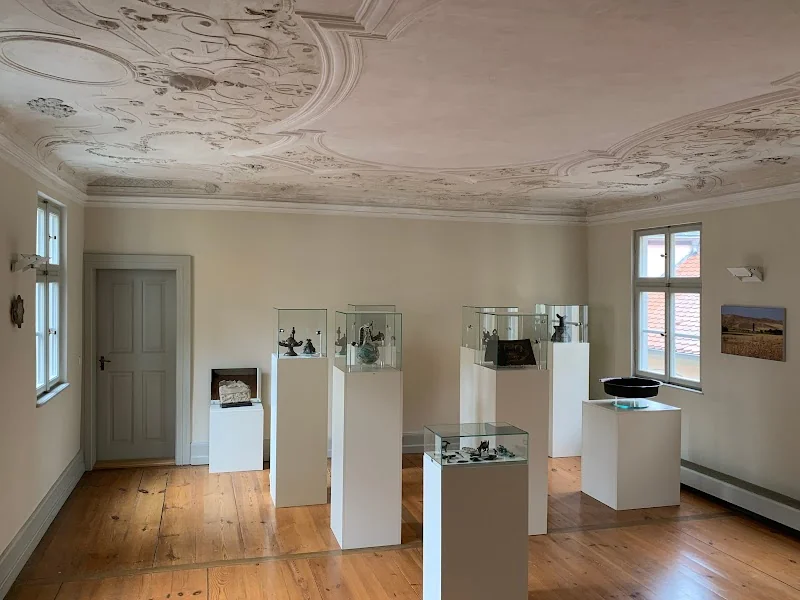
Additionally, there is a special atmosphere in the interiors. The historic rooms of the houses Austraße 29 and 27 jointly serve as a museum, and the house page refers to the garden hall on the first floor and the fest hall on the second floor. These rooms received stucco ceilings from Johann Jakob Vogel around 1710 and 1725, respectively. This gives the museum an additional aesthetic framework: Islamic art is not displayed in a neutral white cube but in a house with baroque furnishings and a visibly lived history. For visitors, this is a real added value because architecture, space, and exhibit reinforce each other. This is also important photographically, as the surfaces of the showcases, the historical substance of the house, and the carefully presented objects together create a very unique visual language. The Bumiller Collection is thus not only a museum about Islamic art but also an example of how a historic townhouse can become a cultural-historical experience space. ([the-bumiller-collection.com](https://the-bumiller-collection.com/wp-content/uploads/Haus_Benedikt_TBC.pdf?utm_source=openai))
Exhibition, Objects, and Scientific Significance
Content-wise, the Bumiller Collection is primarily a collection of early Islamic metal art from the Iranian region. What is special about it is its serial character: Manfred Bumiller did not want to build a pure series of individual rarities but to make the typological development of artistic forms visible. Therefore, everyday objects, functional items, and technically demanding objects stand side by side. The metal art is complemented by ceramics, glass, coins, manuscripts, and pieces made of stone, wood, and bone. The official figures mention around 6,500 to 7,000 objects in total; about 4,000 of these are bronzes, along with around 500 ceramics, 500 glass objects, 300 coins, and 200 stone objects. For visitors, this means: There are not just a few highlights but a dense material and form history that can be traced over centuries. This mixture of overview and detail makes the museum attractive to both culturally interested guests and professional audiences. ([the-bumiller-collection.com](https://the-bumiller-collection.com/sammlung-online/?utm_source=openai))
Spatially, the museum is also unusually well-equipped. The majority of the objects are displayed over two floors with a total of about 400 square meters of exhibition space, and there is also a walk-in depot in the attic of Austraße 27, which is accessible for research purposes. A presence library with about 900 subject-related titles and a seminar room support the scientific work on-site. Particularly interesting is also the Luschey Collection, which is presented in its own room and supplemented with an installation. Additionally, there is a gallery of contemporary art on the second-floor hallway, featuring works by artists who exhibited at Studio X in Berlin between 2014 and 2019. This connects the museum's historical objects, research infrastructure, and current art positions. Therefore, those looking for a location with depth of content will find here not only photos and showcases but a finely tuned overall concept of exhibition, teaching, and communication. ([the-bumiller-collection.com](https://the-bumiller-collection.com/das-museum/))
Getting There and Parking in Bamberg
Getting to the Bumiller Collection is particularly uncomplicated because the museum is very centrally located in the old town. At the same time, one should keep in mind the special structure of Bamberg: narrow alleys, historic cobblestones, and limited areas make the city center a place that is better visited with some planning. For drivers, the tips from Bamberg Tourism are therefore valuable. Several parking options for the city center are mentioned, including Park & Ride Bahnhof/Brennerstraße, Heinrichsdamm, and Kronacher Straße, as well as central parking spaces like Tiefgarage City-Altstadt, Parkplatz Schillerplatz, Parkplatz Altes Hallenbad, and Parkhaus Zentrum-Süd. The city explicitly recommends Park & Ride so that visitors can conveniently reach the city center without a long search for parking. Those who want to combine their visit to the Bumiller Collection with a tour of the old town will usually find this solution the most relaxing. From there, the path to the historic center is short, and the museum visit can be easily combined with other cultural destinations in Bamberg. ([bamberg.info](https://www.bamberg.info/parkplaetze/))
For travel buses, there are specific regulations in Bamberg. Bamberg Tourism mentions the bus stop in Mußstraße for boarding and alighting; buses are parked at the bus parking lot Margaretendamm. This is particularly important for group trips, such as for school classes, professional groups, or cultural trips with multiple stops. Those visiting the Bumiller Collection as part of a larger Bamberg tour should definitely consider this logistics, as the old town is historically tightly structured and not designed for spontaneous large vehicles. The surrounding area is also worth seeing on foot because the museum is located in the middle of a dense network of alleys, historic facades, and other cultural destinations. For visitors looking for information on getting there, parking, or directions, clear information is therefore crucial to ensure that the start of the stay is as pleasant as the museum visit itself. The central location is an advantage but also requires a bit of planning, especially when arriving by car. ([bamberg.info](https://www.bamberg.info/reisebus/?utm_source=openai))
Guided Tours, Research, and Visitor Tips
The Bumiller Collection is not only an exhibition site but has also been a place for research and teaching from the beginning. The proximity to the Institute for Oriental Studies at the University of Bamberg played an important role in the choice of location. Since 2008, a cooperation agreement between the foundation and the university regulates the scientific use and academic support of the museum, which has since officially been named the University Museum of Islamic Art. This connection explains why the house not only displays objects but also systematically elucidates, documents, and publishes them. This fits with the own series Studies on the Bumiller Collection, which was established in 2019 and documents the ongoing processing of selected objects. For visitors, this means: Behind each showcase is a professional context, and the museum visit is also a small introduction to Islamic art history, material research, and object biography. ([the-bumiller-collection.com](https://the-bumiller-collection.com/kooperationen/?utm_source=openai))
Especially for groups, students, and culturally interested travelers, the flexible visiting options are interesting. Tours and visits outside of regular opening hours can be booked by appointment, and the official visitor information names Dr. Verena Daiber as the contact person for this. Those planning photos benefit from this in two ways: First, the visit can be well timed, and second, the collection can already be used online in advance for one's thematic choice. This makes the Bumiller Collection particularly exciting for content creators, travel blogs, educational projects, or anyone looking for a quiet, detailed, and scientifically grounded museum environment. In the end, it is precisely this combination of historical architecture, clear collection idea, scientific depth, and photogenic atmosphere that makes the location in Bamberg stand out. It is compact but very rich in content; quiet but full of stories; and it appears surprisingly present both digitally in photos and in reality on-site. ([the-bumiller-collection.com](https://the-bumiller-collection.com/planen-sie-ihren-aufenthalt/))
Sources:
- The Bumiller Collection – Official Website
- Plan Your Stay – Visitor Information
- The Museum – Rooms, Collection, and Equipment
- Collection Online – Objects and Photos
- University Museum of Islamic Art – University of Bamberg
- Parking and RV Parking Spaces – Bamberg Tourism
- Information for Travel Buses – Bamberg Tourism
Mehr anzeigenWeniger anzeigen
The Bumiller Collection Bamberg | Photos & Opening Hours
The Bumiller Collection in Bamberg is a real surprise for many visitors because it hides a scientifically significant and visually striking collection in a rather inconspicuous old town address. Behind the historic house at Austraße 29, whose entrance is reached via Hasengasse, the University Museum of Islamic Art primarily displays early Islamic metalwork from the Iranian region, complemented by ceramics, glass, manuscripts, and other materials. The collection was originally built privately, opened in 1995, and has been further developed since 2008 in close cooperation with the University of Bamberg as a university museum. After a redesign of the permanent exhibition, the museum reopened on October 1, 2025, and today offers a particularly concentrated view of Islamic art, urban history, and research in the midst of the UNESCO World Heritage City of Bamberg. Especially those looking for photos, images, historical spaces, and an unusual cultural venue will find a location here that goes far beyond a classic museum visit. ([uni-bamberg.de](https://www.uni-bamberg.de/islamart/universitaetsmuseum-fuer-islamische-kunst/?utm_source=openai))
Photos and Collection Online
Those looking for photos of the Bumiller Collection will quickly find what they need online, as the official online collection offers a representative selection of objects and organizes them by material groups. This is particularly helpful for visitors because one does not only see individual exhibits but immediately understands the breadth of the collection. Metal, ceramics, and stone are the most important categories, supplemented by objects made from other materials. The online presentation includes bowls, incense burners, padlocks, jugs, mirrors, and tombstones, among others. This already creates a vivid picture of what kind of art and everyday culture will be visible in the museum before the visit. The collection is continuously updated, making a look at the website worthwhile even for returning guests. Those looking for photos for their travel planning, for social media, or simply for orientation will not only receive beautiful images but also a first substantive understanding of the collection. ([the-bumiller-collection.com](https://the-bumiller-collection.com/sammlung-online/?utm_source=openai))
Even on-site, the location thrives on its visual language. The University of Bamberg describes the Bumiller Collection as probably the largest collection of Islamic metalwork from the 6th to 13th centuries in the world, and it is precisely this extraordinary density that makes the place so photogenic. Instead of a single spectacular showcase, one encounters a series of forms, surfaces, and functions that have developed over centuries. The official museum website also emphasizes the serial character of the collection: It is not the singular masterpiece that is at the center, but the typological development of artistic forms. For photos, this means that motifs are repeated multiple times yet always show new details. An overview image tells of abundance and systematics, close-ups reveal material, patina, and craftsmanship, and the historical interiors provide a warm, authentic setting. This mixture of collection, space, and research logic makes the Bumiller Collection particularly interesting for visual content. ([uni-bamberg.de](https://www.uni-bamberg.de/islamart/universitaetsmuseum-fuer-islamische-kunst/?utm_source=openai))
Opening Hours, Address, and Visits
The practical planning for the Bumiller Collection is pleasantly clear. The museum is located at Austraße 29 in 96047 Bamberg, with access via Hasengasse. According to official visitor information, the house is regularly open Tuesday, Wednesday, and Thursday from 10 AM to 2 PM, as well as Saturday and Sunday from 10 AM to 4 PM. The museum is not accessible during standard operations on Mondays and Fridays. Those who wish to plan their visit flexibly can book tours and visits outside of opening hours by appointment. For a small, specialized collection, this is a significant advantage as it allows for better coordination of individual appointments, group visits, and scientific inquiries. It is also important to note the recent change: Due to the redesign of the permanent exhibition, the house was closed until the end of September 2025 and reopened on October 1, 2025. These dates are relevant for anyone looking for current opening hours, tickets, or appointment options. ([the-bumiller-collection.com](https://the-bumiller-collection.com/planen-sie-ihren-aufenthalt/?utm_source=openai))
The contact structure is intentionally kept personal. Dr. Verena Daiber is named as the contact person on the visitor page, with a direct email address and phone number. This not only facilitates group inquiries but also spontaneous follow-up questions about special opening hours, tours, or research visits. In combination with the entrance via Hasengasse, this is helpful because the old town of Bamberg, while central, is somewhat winding in places. Those visiting the location for the first time should therefore not only enter the address into their navigation device but also pay attention to the exact access. Especially in narrow alleys and historic buildings, this information is often crucial to whether the visit begins relaxed or is associated with searching. The museum itself is compact but feels very accessible due to clear visitor communication. For inquiries such as opening hours, address, appointments, or tours, the official site provides exactly the information that interested parties need immediately. ([the-bumiller-collection.com](https://the-bumiller-collection.com/planen-sie-ihren-aufenthalt/))
History of the House on Austraße
The history of the museum is closely linked to the history of the house. The property at Austraße 29 is located in the heart of the UNESCO World Heritage City of Bamberg and dates back to the late Middle Ages. The official house page describes that Manfred Bumiller acquired the property in 1992 and subsequently had it extensively renovated for two years to permanently house his collection there. The house had previously served various purposes and was used as a sales shop from 1911; later, it was used as a bakery for many years. In 1950, it received a new entrance on Hasengasse to better organize the then-current operation. Such details make it clear that the museum location was not chosen randomly but is based on a long history of everyday use. This is precisely why the visit is also exciting for people interested in urban development, monument preservation, and historical forms of trade. ([the-bumiller-collection.com](https://the-bumiller-collection.com/haus-zum-benedikt/?utm_source=openai))
Additionally, there is a special atmosphere in the interiors. The historic rooms of the houses Austraße 29 and 27 jointly serve as a museum, and the house page refers to the garden hall on the first floor and the fest hall on the second floor. These rooms received stucco ceilings from Johann Jakob Vogel around 1710 and 1725, respectively. This gives the museum an additional aesthetic framework: Islamic art is not displayed in a neutral white cube but in a house with baroque furnishings and a visibly lived history. For visitors, this is a real added value because architecture, space, and exhibit reinforce each other. This is also important photographically, as the surfaces of the showcases, the historical substance of the house, and the carefully presented objects together create a very unique visual language. The Bumiller Collection is thus not only a museum about Islamic art but also an example of how a historic townhouse can become a cultural-historical experience space. ([the-bumiller-collection.com](https://the-bumiller-collection.com/wp-content/uploads/Haus_Benedikt_TBC.pdf?utm_source=openai))
Exhibition, Objects, and Scientific Significance
Content-wise, the Bumiller Collection is primarily a collection of early Islamic metal art from the Iranian region. What is special about it is its serial character: Manfred Bumiller did not want to build a pure series of individual rarities but to make the typological development of artistic forms visible. Therefore, everyday objects, functional items, and technically demanding objects stand side by side. The metal art is complemented by ceramics, glass, coins, manuscripts, and pieces made of stone, wood, and bone. The official figures mention around 6,500 to 7,000 objects in total; about 4,000 of these are bronzes, along with around 500 ceramics, 500 glass objects, 300 coins, and 200 stone objects. For visitors, this means: There are not just a few highlights but a dense material and form history that can be traced over centuries. This mixture of overview and detail makes the museum attractive to both culturally interested guests and professional audiences. ([the-bumiller-collection.com](https://the-bumiller-collection.com/sammlung-online/?utm_source=openai))
Spatially, the museum is also unusually well-equipped. The majority of the objects are displayed over two floors with a total of about 400 square meters of exhibition space, and there is also a walk-in depot in the attic of Austraße 27, which is accessible for research purposes. A presence library with about 900 subject-related titles and a seminar room support the scientific work on-site. Particularly interesting is also the Luschey Collection, which is presented in its own room and supplemented with an installation. Additionally, there is a gallery of contemporary art on the second-floor hallway, featuring works by artists who exhibited at Studio X in Berlin between 2014 and 2019. This connects the museum's historical objects, research infrastructure, and current art positions. Therefore, those looking for a location with depth of content will find here not only photos and showcases but a finely tuned overall concept of exhibition, teaching, and communication. ([the-bumiller-collection.com](https://the-bumiller-collection.com/das-museum/))
Getting There and Parking in Bamberg
Getting to the Bumiller Collection is particularly uncomplicated because the museum is very centrally located in the old town. At the same time, one should keep in mind the special structure of Bamberg: narrow alleys, historic cobblestones, and limited areas make the city center a place that is better visited with some planning. For drivers, the tips from Bamberg Tourism are therefore valuable. Several parking options for the city center are mentioned, including Park & Ride Bahnhof/Brennerstraße, Heinrichsdamm, and Kronacher Straße, as well as central parking spaces like Tiefgarage City-Altstadt, Parkplatz Schillerplatz, Parkplatz Altes Hallenbad, and Parkhaus Zentrum-Süd. The city explicitly recommends Park & Ride so that visitors can conveniently reach the city center without a long search for parking. Those who want to combine their visit to the Bumiller Collection with a tour of the old town will usually find this solution the most relaxing. From there, the path to the historic center is short, and the museum visit can be easily combined with other cultural destinations in Bamberg. ([bamberg.info](https://www.bamberg.info/parkplaetze/))
For travel buses, there are specific regulations in Bamberg. Bamberg Tourism mentions the bus stop in Mußstraße for boarding and alighting; buses are parked at the bus parking lot Margaretendamm. This is particularly important for group trips, such as for school classes, professional groups, or cultural trips with multiple stops. Those visiting the Bumiller Collection as part of a larger Bamberg tour should definitely consider this logistics, as the old town is historically tightly structured and not designed for spontaneous large vehicles. The surrounding area is also worth seeing on foot because the museum is located in the middle of a dense network of alleys, historic facades, and other cultural destinations. For visitors looking for information on getting there, parking, or directions, clear information is therefore crucial to ensure that the start of the stay is as pleasant as the museum visit itself. The central location is an advantage but also requires a bit of planning, especially when arriving by car. ([bamberg.info](https://www.bamberg.info/reisebus/?utm_source=openai))
Guided Tours, Research, and Visitor Tips
The Bumiller Collection is not only an exhibition site but has also been a place for research and teaching from the beginning. The proximity to the Institute for Oriental Studies at the University of Bamberg played an important role in the choice of location. Since 2008, a cooperation agreement between the foundation and the university regulates the scientific use and academic support of the museum, which has since officially been named the University Museum of Islamic Art. This connection explains why the house not only displays objects but also systematically elucidates, documents, and publishes them. This fits with the own series Studies on the Bumiller Collection, which was established in 2019 and documents the ongoing processing of selected objects. For visitors, this means: Behind each showcase is a professional context, and the museum visit is also a small introduction to Islamic art history, material research, and object biography. ([the-bumiller-collection.com](https://the-bumiller-collection.com/kooperationen/?utm_source=openai))
Especially for groups, students, and culturally interested travelers, the flexible visiting options are interesting. Tours and visits outside of regular opening hours can be booked by appointment, and the official visitor information names Dr. Verena Daiber as the contact person for this. Those planning photos benefit from this in two ways: First, the visit can be well timed, and second, the collection can already be used online in advance for one's thematic choice. This makes the Bumiller Collection particularly exciting for content creators, travel blogs, educational projects, or anyone looking for a quiet, detailed, and scientifically grounded museum environment. In the end, it is precisely this combination of historical architecture, clear collection idea, scientific depth, and photogenic atmosphere that makes the location in Bamberg stand out. It is compact but very rich in content; quiet but full of stories; and it appears surprisingly present both digitally in photos and in reality on-site. ([the-bumiller-collection.com](https://the-bumiller-collection.com/planen-sie-ihren-aufenthalt/))
Sources:
- The Bumiller Collection – Official Website
- Plan Your Stay – Visitor Information
- The Museum – Rooms, Collection, and Equipment
- Collection Online – Objects and Photos
- University Museum of Islamic Art – University of Bamberg
- Parking and RV Parking Spaces – Bamberg Tourism
- Information for Travel Buses – Bamberg Tourism
The Bumiller Collection Bamberg | Photos & Opening Hours
The Bumiller Collection in Bamberg is a real surprise for many visitors because it hides a scientifically significant and visually striking collection in a rather inconspicuous old town address. Behind the historic house at Austraße 29, whose entrance is reached via Hasengasse, the University Museum of Islamic Art primarily displays early Islamic metalwork from the Iranian region, complemented by ceramics, glass, manuscripts, and other materials. The collection was originally built privately, opened in 1995, and has been further developed since 2008 in close cooperation with the University of Bamberg as a university museum. After a redesign of the permanent exhibition, the museum reopened on October 1, 2025, and today offers a particularly concentrated view of Islamic art, urban history, and research in the midst of the UNESCO World Heritage City of Bamberg. Especially those looking for photos, images, historical spaces, and an unusual cultural venue will find a location here that goes far beyond a classic museum visit. ([uni-bamberg.de](https://www.uni-bamberg.de/islamart/universitaetsmuseum-fuer-islamische-kunst/?utm_source=openai))
Photos and Collection Online
Those looking for photos of the Bumiller Collection will quickly find what they need online, as the official online collection offers a representative selection of objects and organizes them by material groups. This is particularly helpful for visitors because one does not only see individual exhibits but immediately understands the breadth of the collection. Metal, ceramics, and stone are the most important categories, supplemented by objects made from other materials. The online presentation includes bowls, incense burners, padlocks, jugs, mirrors, and tombstones, among others. This already creates a vivid picture of what kind of art and everyday culture will be visible in the museum before the visit. The collection is continuously updated, making a look at the website worthwhile even for returning guests. Those looking for photos for their travel planning, for social media, or simply for orientation will not only receive beautiful images but also a first substantive understanding of the collection. ([the-bumiller-collection.com](https://the-bumiller-collection.com/sammlung-online/?utm_source=openai))
Even on-site, the location thrives on its visual language. The University of Bamberg describes the Bumiller Collection as probably the largest collection of Islamic metalwork from the 6th to 13th centuries in the world, and it is precisely this extraordinary density that makes the place so photogenic. Instead of a single spectacular showcase, one encounters a series of forms, surfaces, and functions that have developed over centuries. The official museum website also emphasizes the serial character of the collection: It is not the singular masterpiece that is at the center, but the typological development of artistic forms. For photos, this means that motifs are repeated multiple times yet always show new details. An overview image tells of abundance and systematics, close-ups reveal material, patina, and craftsmanship, and the historical interiors provide a warm, authentic setting. This mixture of collection, space, and research logic makes the Bumiller Collection particularly interesting for visual content. ([uni-bamberg.de](https://www.uni-bamberg.de/islamart/universitaetsmuseum-fuer-islamische-kunst/?utm_source=openai))
Opening Hours, Address, and Visits
The practical planning for the Bumiller Collection is pleasantly clear. The museum is located at Austraße 29 in 96047 Bamberg, with access via Hasengasse. According to official visitor information, the house is regularly open Tuesday, Wednesday, and Thursday from 10 AM to 2 PM, as well as Saturday and Sunday from 10 AM to 4 PM. The museum is not accessible during standard operations on Mondays and Fridays. Those who wish to plan their visit flexibly can book tours and visits outside of opening hours by appointment. For a small, specialized collection, this is a significant advantage as it allows for better coordination of individual appointments, group visits, and scientific inquiries. It is also important to note the recent change: Due to the redesign of the permanent exhibition, the house was closed until the end of September 2025 and reopened on October 1, 2025. These dates are relevant for anyone looking for current opening hours, tickets, or appointment options. ([the-bumiller-collection.com](https://the-bumiller-collection.com/planen-sie-ihren-aufenthalt/?utm_source=openai))
The contact structure is intentionally kept personal. Dr. Verena Daiber is named as the contact person on the visitor page, with a direct email address and phone number. This not only facilitates group inquiries but also spontaneous follow-up questions about special opening hours, tours, or research visits. In combination with the entrance via Hasengasse, this is helpful because the old town of Bamberg, while central, is somewhat winding in places. Those visiting the location for the first time should therefore not only enter the address into their navigation device but also pay attention to the exact access. Especially in narrow alleys and historic buildings, this information is often crucial to whether the visit begins relaxed or is associated with searching. The museum itself is compact but feels very accessible due to clear visitor communication. For inquiries such as opening hours, address, appointments, or tours, the official site provides exactly the information that interested parties need immediately. ([the-bumiller-collection.com](https://the-bumiller-collection.com/planen-sie-ihren-aufenthalt/))
History of the House on Austraße
The history of the museum is closely linked to the history of the house. The property at Austraße 29 is located in the heart of the UNESCO World Heritage City of Bamberg and dates back to the late Middle Ages. The official house page describes that Manfred Bumiller acquired the property in 1992 and subsequently had it extensively renovated for two years to permanently house his collection there. The house had previously served various purposes and was used as a sales shop from 1911; later, it was used as a bakery for many years. In 1950, it received a new entrance on Hasengasse to better organize the then-current operation. Such details make it clear that the museum location was not chosen randomly but is based on a long history of everyday use. This is precisely why the visit is also exciting for people interested in urban development, monument preservation, and historical forms of trade. ([the-bumiller-collection.com](https://the-bumiller-collection.com/haus-zum-benedikt/?utm_source=openai))
Additionally, there is a special atmosphere in the interiors. The historic rooms of the houses Austraße 29 and 27 jointly serve as a museum, and the house page refers to the garden hall on the first floor and the fest hall on the second floor. These rooms received stucco ceilings from Johann Jakob Vogel around 1710 and 1725, respectively. This gives the museum an additional aesthetic framework: Islamic art is not displayed in a neutral white cube but in a house with baroque furnishings and a visibly lived history. For visitors, this is a real added value because architecture, space, and exhibit reinforce each other. This is also important photographically, as the surfaces of the showcases, the historical substance of the house, and the carefully presented objects together create a very unique visual language. The Bumiller Collection is thus not only a museum about Islamic art but also an example of how a historic townhouse can become a cultural-historical experience space. ([the-bumiller-collection.com](https://the-bumiller-collection.com/wp-content/uploads/Haus_Benedikt_TBC.pdf?utm_source=openai))
Exhibition, Objects, and Scientific Significance
Content-wise, the Bumiller Collection is primarily a collection of early Islamic metal art from the Iranian region. What is special about it is its serial character: Manfred Bumiller did not want to build a pure series of individual rarities but to make the typological development of artistic forms visible. Therefore, everyday objects, functional items, and technically demanding objects stand side by side. The metal art is complemented by ceramics, glass, coins, manuscripts, and pieces made of stone, wood, and bone. The official figures mention around 6,500 to 7,000 objects in total; about 4,000 of these are bronzes, along with around 500 ceramics, 500 glass objects, 300 coins, and 200 stone objects. For visitors, this means: There are not just a few highlights but a dense material and form history that can be traced over centuries. This mixture of overview and detail makes the museum attractive to both culturally interested guests and professional audiences. ([the-bumiller-collection.com](https://the-bumiller-collection.com/sammlung-online/?utm_source=openai))
Spatially, the museum is also unusually well-equipped. The majority of the objects are displayed over two floors with a total of about 400 square meters of exhibition space, and there is also a walk-in depot in the attic of Austraße 27, which is accessible for research purposes. A presence library with about 900 subject-related titles and a seminar room support the scientific work on-site. Particularly interesting is also the Luschey Collection, which is presented in its own room and supplemented with an installation. Additionally, there is a gallery of contemporary art on the second-floor hallway, featuring works by artists who exhibited at Studio X in Berlin between 2014 and 2019. This connects the museum's historical objects, research infrastructure, and current art positions. Therefore, those looking for a location with depth of content will find here not only photos and showcases but a finely tuned overall concept of exhibition, teaching, and communication. ([the-bumiller-collection.com](https://the-bumiller-collection.com/das-museum/))
Getting There and Parking in Bamberg
Getting to the Bumiller Collection is particularly uncomplicated because the museum is very centrally located in the old town. At the same time, one should keep in mind the special structure of Bamberg: narrow alleys, historic cobblestones, and limited areas make the city center a place that is better visited with some planning. For drivers, the tips from Bamberg Tourism are therefore valuable. Several parking options for the city center are mentioned, including Park & Ride Bahnhof/Brennerstraße, Heinrichsdamm, and Kronacher Straße, as well as central parking spaces like Tiefgarage City-Altstadt, Parkplatz Schillerplatz, Parkplatz Altes Hallenbad, and Parkhaus Zentrum-Süd. The city explicitly recommends Park & Ride so that visitors can conveniently reach the city center without a long search for parking. Those who want to combine their visit to the Bumiller Collection with a tour of the old town will usually find this solution the most relaxing. From there, the path to the historic center is short, and the museum visit can be easily combined with other cultural destinations in Bamberg. ([bamberg.info](https://www.bamberg.info/parkplaetze/))
For travel buses, there are specific regulations in Bamberg. Bamberg Tourism mentions the bus stop in Mußstraße for boarding and alighting; buses are parked at the bus parking lot Margaretendamm. This is particularly important for group trips, such as for school classes, professional groups, or cultural trips with multiple stops. Those visiting the Bumiller Collection as part of a larger Bamberg tour should definitely consider this logistics, as the old town is historically tightly structured and not designed for spontaneous large vehicles. The surrounding area is also worth seeing on foot because the museum is located in the middle of a dense network of alleys, historic facades, and other cultural destinations. For visitors looking for information on getting there, parking, or directions, clear information is therefore crucial to ensure that the start of the stay is as pleasant as the museum visit itself. The central location is an advantage but also requires a bit of planning, especially when arriving by car. ([bamberg.info](https://www.bamberg.info/reisebus/?utm_source=openai))
Guided Tours, Research, and Visitor Tips
The Bumiller Collection is not only an exhibition site but has also been a place for research and teaching from the beginning. The proximity to the Institute for Oriental Studies at the University of Bamberg played an important role in the choice of location. Since 2008, a cooperation agreement between the foundation and the university regulates the scientific use and academic support of the museum, which has since officially been named the University Museum of Islamic Art. This connection explains why the house not only displays objects but also systematically elucidates, documents, and publishes them. This fits with the own series Studies on the Bumiller Collection, which was established in 2019 and documents the ongoing processing of selected objects. For visitors, this means: Behind each showcase is a professional context, and the museum visit is also a small introduction to Islamic art history, material research, and object biography. ([the-bumiller-collection.com](https://the-bumiller-collection.com/kooperationen/?utm_source=openai))
Especially for groups, students, and culturally interested travelers, the flexible visiting options are interesting. Tours and visits outside of regular opening hours can be booked by appointment, and the official visitor information names Dr. Verena Daiber as the contact person for this. Those planning photos benefit from this in two ways: First, the visit can be well timed, and second, the collection can already be used online in advance for one's thematic choice. This makes the Bumiller Collection particularly exciting for content creators, travel blogs, educational projects, or anyone looking for a quiet, detailed, and scientifically grounded museum environment. In the end, it is precisely this combination of historical architecture, clear collection idea, scientific depth, and photogenic atmosphere that makes the location in Bamberg stand out. It is compact but very rich in content; quiet but full of stories; and it appears surprisingly present both digitally in photos and in reality on-site. ([the-bumiller-collection.com](https://the-bumiller-collection.com/planen-sie-ihren-aufenthalt/))
Sources:
- The Bumiller Collection – Official Website
- Plan Your Stay – Visitor Information
- The Museum – Rooms, Collection, and Equipment
- Collection Online – Objects and Photos
- University Museum of Islamic Art – University of Bamberg
- Parking and RV Parking Spaces – Bamberg Tourism
- Information for Travel Buses – Bamberg Tourism
Upcoming Events

Backgrounds of a Gardener's Daughter
Discover colors, forms, and poetic visual worlds in Bamberg: Ingrid Tadje presents painting full of calm and strength. June 7–September 30, 2026. #Art
Exhibition "Ingrid Tadje - Backgrounds of a Gardener's Daughter"
Vibrant painting meets Islamic art in Bamberg: Ingrid Tadje showcases over 15 works in a captivating museum space. 30.09.2026, free admission. #Art
Frequently Asked Questions
Reviews
Dániel Balogh
19. September 2025
A small but excellent collection tastefully displayed. Well worth a visit for those who have the inclination.
Martin Wagner
15. August 2019
Top
B L
2. November 2025
Very nice museum, really well renovated! Highly recommended in the beautiful old building! Free!!!
J.-P. Wimmer
21. December 2019
Jewelry, plates, vases, etc., 9th-13th century, Persian Empire. A real insider tip and absolutely worth seeing! Attention: The entrance is on a narrow side street and you need to ring the bell.
Irmak Alpyürük
1. June 2024
No comment