
Bamberg
Hainstraße 39, 96047 Bamberg, Deutschland
State Archive Bamberg | Finding Aids & Opening Hours
The State Archive Bamberg is the central state archive institution for Upper Franconia and at the same time a place where history is not only preserved but actively explored. Those looking for finding aids, online research, opening hours, contact information, or the special archive building at Hainstraße 39 will find here an institution with clear professional responsibility and impressive historical depth. The archive is responsible for the government district of Upper Franconia, with the exception of the city and district of Coburg, and manages the records from former bishoprics, margravial territories, and state authorities of the 19th and 20th centuries. At the same time, it is a modern working archive with a virtual reading room, electronic finding aids, and digitized holdings, making research today significantly faster and more targeted than just a few years ago. ([gda.bayern.de](https://www.gda.bayern.de/de/archives/staatsarchiv-bamberg/))
How do finding aids and online search work at the State Archive Bamberg?
The search terms related to finding aids, search, and online finding aids clearly show what many users need first: a quick entry into the holdings. For this reason, the State Archive Bamberg refers to the virtual reading room of the State Archives of Bavaria. There, online finding aids and digitized materials are available, allowing archival documents to be identified not only on-site but often even before the visit. The finding aid database is structured as a central research database of the State Archives of Bavaria; it explicitly invites searches in all archives and provides information on the structure of the database as well as the note that one should contact the responsible archive for further questions. For Bamberg, this means: Those searching for holdings, signatures, durations, or organizational points can prepare their research from their desk and then use the reading room much more efficiently. ([gda.bayern.de](https://www.gda.bayern.de/de/archives/staatsarchiv-bamberg/))
The classic archival exploration remains important at the State Archive Bamberg. The archive page explicitly mentions that, in addition to conventional finding aids in book form, card files and electronic databases are also used. For the older holdings, some inventories were adopted that were created as early as the 17th and 18th centuries. This is particularly valuable for family research, local history, administrative, and legal history, as it opens up very different research paths: from the old bound finding aid to card index registers to the electronic database. At the same time, the description of the holdings shows that important parts of the records have already been digitized and can be reviewed together with professional staff. For search terms like state archive bamberg search, state archive bamberg finding aids, or state archive bamberg online finding aids, this is exactly the type of service that significantly facilitates research. ([gda.bayern.de](https://www.gda.bayern.de/de/archives/staatsarchiv-bamberg/))
In practice, it is therefore worthwhile to start online research always with a clear goal. Those inquiring about specific authorities, maps, plans, certificates, or files should first check the online available finding aids and then consolidate the bibliographic and archival information. The State Archive Bamberg has good conditions for this because its records include both historical and more recent administrative holdings. The better the finding aids are used, the more likely it is to find the appropriate file, the right inventory, or the relevant file block. Especially for topics with a regional reference to Upper Franconia, Bamberg, Bayreuth, or the former territories of the Franconian Imperial Circle, research in the virtual reading room is often the fastest and most factual way. ([gda.bayern.de](https://www.gda.bayern.de/de/archives/staatsarchiv-bamberg/))
What are the opening hours for the reading room and consultation?
The keyword group related to opening hours is particularly important for an archive because good research often only works when the visit is well planned. For the State Archive Bamberg, the official page states clear times: Monday to Thursday, the archive is open from 8:00 AM to 4:00 PM, and on Friday from 8:00 AM to 12:30 PM. Additionally, there is an opening of the reading room on Tuesday and Wednesday from 4:00 PM to 6:00 PM. The archive explicitly states that it is available for consultation and usage purposes during the mentioned opening hours. This directly connects the search queries state archive bamberg opening hours and state archive bamberg contact with a reliable core of information. Those who arrive prepared can make their visit significantly more effective. ([gda.bayern.de](https://www.gda.bayern.de/de/archives/staatsarchiv-bamberg/))
Particularly helpful is the note that prior registration for the reading room is not mandatory but is strongly recommended for reasons of targeted and effective preparation. This is a practical advantage for researchers: one can also come with a specific concern at short notice, but ideally, one should define the topic, the time frame, and the sought records in advance. In the reading room, users are also allowed to take digital photographs of archival materials, with the conditions regulated in the usage guidelines. For scientific projects, term papers, genealogical research, or local historical work, this is an important added value, as it saves working time and allows for better structuring of access to sources. The opening hours are therefore not just a pure service information but part of a well-organizable research process. ([gda.bayern.de](https://www.gda.bayern.de/de/archives/staatsarchiv-bamberg/))
Also relevant for the question of exhibitions, encounters, and archive visits is the logic of opening hours. Archives are no longer just closed storage places, but also places of consultation, mediation, and historical education. The State Archive Bamberg fits into this approach by offering not only classic usage but also clear online research, a reading room-related service, and reliable contact with authorities. Those who work with the archive benefit the most when opening hours, reading room appointments, and research preparation are considered together. Especially in an archive with extensive historical records, an orderly visit is often more productive than a spontaneous, unprepared trip on-site. ([gda.bayern.de](https://www.gda.bayern.de/de/archives/staatsarchiv-bamberg/))
How can I reach the State Archive Bamberg by contact and access?
For the search terms contact, email, phone number, and access, it is usually about the direct way to the right contact point. The State Archive Bamberg is located at Hainstraße 39, 96047 Bamberg. It can be reached by phone at 0951/98622-0, by fax at 0951/98622-250, and by email at poststelle@staba.bayern.de. The archive is led by Archive Director Dr. Klaus Rupprecht. This makes the most important contact routes clear and officially documented, which is particularly important for inquiries about usage, research, file information, or general archival questions. Those who know the search intention behind state archive bamberg contact or state archive bamberg email are usually looking for exactly this central point to place a concern correctly. ([gda.bayern.de](https://www.gda.bayern.de/de/archives/staatsarchiv-bamberg/))
The transport connections are also officially described. From Bamberg train station, bus lines 901, 902, 911, 914, 931, and 935 take two stops to the central bus station. There, one can transfer to bus line 909, which runs every half hour, or walk the distance in about 15 minutes. This information is particularly useful for archive visits because many users want to view files, maps, or old administrative documents not just once but multiple times. A good access saves time and makes the visit planable. Those arriving by train can therefore easily combine their archive visit with a walk through the city center or further research in Bamberg. The fact that no speculative parking information is provided is also an advantage: only what is officially documented is mentioned here. ([gda.bayern.de](https://www.gda.bayern.de/de/archives/staatsarchiv-bamberg/))
The contact structure also shows that the State Archive Bamberg is not just a storage place but a service-oriented specialist authority. The archive answers consultation questions, supports usage projects, and also offers the opportunity to familiarize oneself with the digital aids before a visit. Therefore, those who combine access, contact, and research avoid unnecessary trips and can work purposefully on-site. Especially for archival inquiries related to family research, authority records, or local history, this coordination between contact and research is almost always the key to a successful visit. ([gda.bayern.de](https://www.gda.bayern.de/de/archives/staatsarchiv-bamberg/))
How has the State Archive Bamberg historically developed?
The history of the State Archive Bamberg is closely linked to the history of Franconia and the early Kingdom of Bavaria. The official account describes that the archive of the former bishopric of Bamberg was initially placed under the royal general imperial archive in Munich as an external archive after its incorporation into Bavarian administration. This assignment began in 1812, before further significant archival bodies from the Bayreuth and Plassenburg areas arrived in Bamberg between 1813 and 1818. They were stored together with the bishop's secret registry in the dissolved Carmelite monastery and subsequently merged with the archive in the New Residence. In 1852, it was renamed the Royal Archive Conservatory, in 1875 to the Royal District Archive Bamberg, and since 1921, the institution has borne its current name, State Archive Bamberg. This development makes it clear that the archive is not only regionally anchored but also embedded in state administrative and reorganization processes. ([gda.bayern.de](https://www.gda.bayern.de/de/archives/staatsarchiv-bamberg/))
The historical jurisdiction of the archive is also precisely described. The State Archive Bamberg is responsible for the territories located in the eastern part of the former Franconian Imperial Circle, particularly for the bishopric and cathedral chapter of Bamberg as well as the margraviate of Brandenburg-Kulmbach-Bayreuth. For the 19th and 20th centuries, this primarily includes state middle and lower authorities as well as courts in the government district of Upper Franconia. This clear jurisdiction structure is important for any archival research because it determines where which records can be expected. For example, those searching for authority files, office series, court documents, or historical administrative series will find a central access to Upper Franconia at the State Archive Bamberg. The combination of old imperial estates and more recent state authority records makes the archive interesting for historians, genealogists, local researchers, and lawyers. ([gda.bayern.de](https://www.gda.bayern.de/de/archives/staatsarchiv-bamberg/))
The development of the holdings has never been static. The official texts refer to later returns, inventory consolidations, and acquisitions, such as documents before 1401 that returned to Bamberg in 1993, as well as redistributions between Bamberg, Nuremberg, Würzburg, Amberg, and other state archives. As a result, the jurisdiction framework has been increasingly refined over time. This is relevant for users because the search for a specific document can often extend across several archives. At the same time, the history of the State Archive Bamberg shows that archival order is a dynamic process that balances historical provenances, administrative structures, and later additions to the holdings. Therefore, those searching for the name Dr. Klaus Rupprecht or the location Hainstraße 39 are not just looking for an address but for access to an archive with a very deep and multifaceted record. ([gda.bayern.de](https://www.gda.bayern.de/de/archives/staatsarchiv-bamberg/))
What makes the archive building on Hain- and Sodenstraße special?
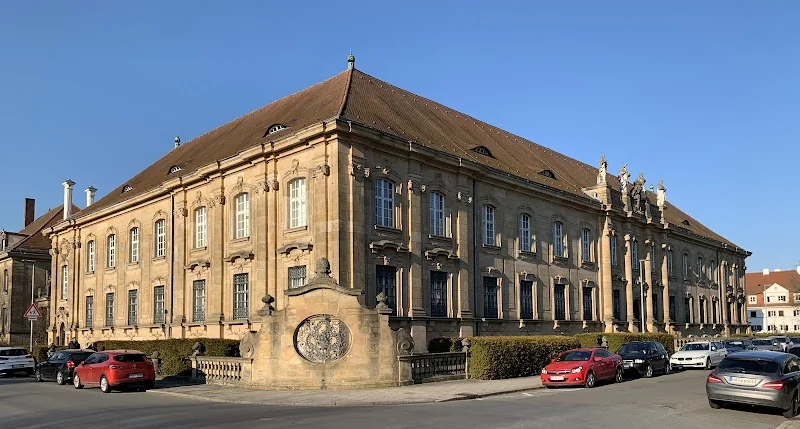
The architecture is one of the most striking reasons why search queries like state archive bamberg architecture, state archive bamberg building, or state archive bamberg construction plans appear so frequently. The official archive profile describes the neo-baroque archive buildings on Hain- and Sodenstraße as a three-winged, castle-like storage building with an administrative building connected by a corridor. They were built from 1902 to 1905 according to designs by the Supreme Building Authority in Munich under Chief Building Officer Eduard Reuter and with temporary collaboration from the Munich architect Julius Beeckmann. The storage was designed according to the so-called cabinet system, meaning it is a particularly suitable, structured, and secure building form for archival purposes. The representative exterior design was oriented, among other things, to palace buildings by Balthasar Neumann, giving the house a distinctly monumental character. ([gda.bayern.de](https://www.gda.bayern.de/de/archives/staatsarchiv-bamberg/))
A particularly strong visual feature is the southern front on Sodenstraße. It was designed as a showcase facade opposite an area that was still undeveloped at the time and adorned with four monumental figures from the studio of Anton Hess in Munich. Depicted are, alongside Balthasar Neumann, Prince Bishop Lothar Franz von Schönborn, Margrave Friedrich von Brandenburg-Kulmbach, and Eugen Montag, the last abbot of the Ebrach monastery. These figures symbolically represent significant historical funds and show that the building is not only a functional archive but also a deliberately designed place of remembrance. For users interested in architecture and building history, the State Archive Bamberg is therefore much more than an administrative address. It is a monument of modern archival architecture with a strong historicist expression and clear historical symbolism. ([gda.bayern.de](https://www.gda.bayern.de/de/archives/staatsarchiv-bamberg/))
The building history continued in the 20th century. In 1959/61, the ensemble was expanded by a new storage building on Sodenstraße. In 1992/93, the user area was newly designed, and subsequently, the administrative and staff building was gradually renovated until 2002. Particularly interesting is also the extension building documented by the Bavarian Chamber of Architects: The project was presented as part of the Architect Tours 2020, with completion noted as February 2019, and the usable area amounts to 3,469 square meters. Peter W. Schmidt was responsible for the project as the architect; the client was the State Building Authority Bamberg. Thus, the State Archive Bamberg combines a historical core with contemporary architectural development. Therefore, those visiting the building experience several layers of construction and use at once: the representative core from the turn of the century, later expansions, and the functional modernization of a lively research archive. ([gda.bayern.de](https://www.gda.bayern.de/de/archives/staatsarchiv-bamberg/))
What holdings, library, and service areas shape usage?
The State Archive Bamberg is not only impressive externally but also extremely extensive in content. According to official information, it comprises around 2.75 million archival units, including about 75,000 documents and 18,000 maps and plans; the total extent is nearly 28,301 running meters. This makes the archive a heavyweight of regional records in Upper Franconia. For users with search queries like state archive bamberg construction plans, state archive bamberg search, or state archive bamberg finding aids, the reference to maps and plans is particularly important, as such materials often play a central role in construction, local, genealogy, and ownership issues. The holdings follow archival typological selection principles and cover, among other things, the bishopric, the margraviate, the knighthood, and the Bavarian authorities. ([gda.bayern.de](https://www.gda.bayern.de/de/archives/staatsarchiv-bamberg/))
The exploration is supported by various finding aids. In addition to bound finding aids and card files, electronic databases are available. The archive explicitly mentions card files, for example, for emigrants of the 19th and 20th centuries as well as for maps and plans. It is also important that the staff have already recorded parts of the holdings in an electronic database and can review them together with users. This is particularly helpful for complex research because not every question can be answered immediately with a single hit. Rather, the gain in knowledge often arises from the interplay of archival experience, finding aids, and the researcher's prior knowledge. This is exactly where the strength of a state archive lies: it not only enables access to sources but also their contextualization in historical contexts. ([gda.bayern.de](https://www.gda.bayern.de/de/archives/staatsarchiv-bamberg/))
The office library is also noteworthy. It has been built up since the archive's incorporation into Bavarian administration in 1803 and comprises around 20,000 volumes and special prints. Its focus is on journal series, source and register editions, auxiliary scientific literature, and official publications of the intermediate level. In the reading room's reference library, the most frequently used works are available on about 60 running meters, including reference works, archive inventories, and literature important for Franconian history. In addition, the archive page offers sections for ongoing and completed exhibitions, for publications, as well as for jobs and careers within the network of the State Archives of Bavaria. Therefore, those searching for state archive bamberg exhibition or state archive bamberg job offers are moving in a service environment that connects archival work, mediation, and professional development. ([gda.bayern.de](https://www.gda.bayern.de/de/archives/staatsarchiv-bamberg/))
For daily use, this means: The State Archive Bamberg is both a research location and an information and competence center. The combination of documents, maps, plans, files, library, and electronic finding aids makes the institution relevant for very different target groups. Family researchers benefit from preserved inventories and emigrant card files, local historians from the authority and territorial holdings, lawyers from administrative files, and construction enthusiasts from maps, plans, and the visible building stock. This quickly makes it clear why this archive plays such an important role not only in search engines but also in scientific and regional contexts. ([gda.bayern.de](https://www.gda.bayern.de/de/archives/staatsarchiv-bamberg/))
Sources:
Mehr anzeigenWeniger anzeigen
State Archive Bamberg | Finding Aids & Opening Hours
The State Archive Bamberg is the central state archive institution for Upper Franconia and at the same time a place where history is not only preserved but actively explored. Those looking for finding aids, online research, opening hours, contact information, or the special archive building at Hainstraße 39 will find here an institution with clear professional responsibility and impressive historical depth. The archive is responsible for the government district of Upper Franconia, with the exception of the city and district of Coburg, and manages the records from former bishoprics, margravial territories, and state authorities of the 19th and 20th centuries. At the same time, it is a modern working archive with a virtual reading room, electronic finding aids, and digitized holdings, making research today significantly faster and more targeted than just a few years ago. ([gda.bayern.de](https://www.gda.bayern.de/de/archives/staatsarchiv-bamberg/))
How do finding aids and online search work at the State Archive Bamberg?
The search terms related to finding aids, search, and online finding aids clearly show what many users need first: a quick entry into the holdings. For this reason, the State Archive Bamberg refers to the virtual reading room of the State Archives of Bavaria. There, online finding aids and digitized materials are available, allowing archival documents to be identified not only on-site but often even before the visit. The finding aid database is structured as a central research database of the State Archives of Bavaria; it explicitly invites searches in all archives and provides information on the structure of the database as well as the note that one should contact the responsible archive for further questions. For Bamberg, this means: Those searching for holdings, signatures, durations, or organizational points can prepare their research from their desk and then use the reading room much more efficiently. ([gda.bayern.de](https://www.gda.bayern.de/de/archives/staatsarchiv-bamberg/))
The classic archival exploration remains important at the State Archive Bamberg. The archive page explicitly mentions that, in addition to conventional finding aids in book form, card files and electronic databases are also used. For the older holdings, some inventories were adopted that were created as early as the 17th and 18th centuries. This is particularly valuable for family research, local history, administrative, and legal history, as it opens up very different research paths: from the old bound finding aid to card index registers to the electronic database. At the same time, the description of the holdings shows that important parts of the records have already been digitized and can be reviewed together with professional staff. For search terms like state archive bamberg search, state archive bamberg finding aids, or state archive bamberg online finding aids, this is exactly the type of service that significantly facilitates research. ([gda.bayern.de](https://www.gda.bayern.de/de/archives/staatsarchiv-bamberg/))
In practice, it is therefore worthwhile to start online research always with a clear goal. Those inquiring about specific authorities, maps, plans, certificates, or files should first check the online available finding aids and then consolidate the bibliographic and archival information. The State Archive Bamberg has good conditions for this because its records include both historical and more recent administrative holdings. The better the finding aids are used, the more likely it is to find the appropriate file, the right inventory, or the relevant file block. Especially for topics with a regional reference to Upper Franconia, Bamberg, Bayreuth, or the former territories of the Franconian Imperial Circle, research in the virtual reading room is often the fastest and most factual way. ([gda.bayern.de](https://www.gda.bayern.de/de/archives/staatsarchiv-bamberg/))
What are the opening hours for the reading room and consultation?
The keyword group related to opening hours is particularly important for an archive because good research often only works when the visit is well planned. For the State Archive Bamberg, the official page states clear times: Monday to Thursday, the archive is open from 8:00 AM to 4:00 PM, and on Friday from 8:00 AM to 12:30 PM. Additionally, there is an opening of the reading room on Tuesday and Wednesday from 4:00 PM to 6:00 PM. The archive explicitly states that it is available for consultation and usage purposes during the mentioned opening hours. This directly connects the search queries state archive bamberg opening hours and state archive bamberg contact with a reliable core of information. Those who arrive prepared can make their visit significantly more effective. ([gda.bayern.de](https://www.gda.bayern.de/de/archives/staatsarchiv-bamberg/))
Particularly helpful is the note that prior registration for the reading room is not mandatory but is strongly recommended for reasons of targeted and effective preparation. This is a practical advantage for researchers: one can also come with a specific concern at short notice, but ideally, one should define the topic, the time frame, and the sought records in advance. In the reading room, users are also allowed to take digital photographs of archival materials, with the conditions regulated in the usage guidelines. For scientific projects, term papers, genealogical research, or local historical work, this is an important added value, as it saves working time and allows for better structuring of access to sources. The opening hours are therefore not just a pure service information but part of a well-organizable research process. ([gda.bayern.de](https://www.gda.bayern.de/de/archives/staatsarchiv-bamberg/))
Also relevant for the question of exhibitions, encounters, and archive visits is the logic of opening hours. Archives are no longer just closed storage places, but also places of consultation, mediation, and historical education. The State Archive Bamberg fits into this approach by offering not only classic usage but also clear online research, a reading room-related service, and reliable contact with authorities. Those who work with the archive benefit the most when opening hours, reading room appointments, and research preparation are considered together. Especially in an archive with extensive historical records, an orderly visit is often more productive than a spontaneous, unprepared trip on-site. ([gda.bayern.de](https://www.gda.bayern.de/de/archives/staatsarchiv-bamberg/))
How can I reach the State Archive Bamberg by contact and access?
For the search terms contact, email, phone number, and access, it is usually about the direct way to the right contact point. The State Archive Bamberg is located at Hainstraße 39, 96047 Bamberg. It can be reached by phone at 0951/98622-0, by fax at 0951/98622-250, and by email at poststelle@staba.bayern.de. The archive is led by Archive Director Dr. Klaus Rupprecht. This makes the most important contact routes clear and officially documented, which is particularly important for inquiries about usage, research, file information, or general archival questions. Those who know the search intention behind state archive bamberg contact or state archive bamberg email are usually looking for exactly this central point to place a concern correctly. ([gda.bayern.de](https://www.gda.bayern.de/de/archives/staatsarchiv-bamberg/))
The transport connections are also officially described. From Bamberg train station, bus lines 901, 902, 911, 914, 931, and 935 take two stops to the central bus station. There, one can transfer to bus line 909, which runs every half hour, or walk the distance in about 15 minutes. This information is particularly useful for archive visits because many users want to view files, maps, or old administrative documents not just once but multiple times. A good access saves time and makes the visit planable. Those arriving by train can therefore easily combine their archive visit with a walk through the city center or further research in Bamberg. The fact that no speculative parking information is provided is also an advantage: only what is officially documented is mentioned here. ([gda.bayern.de](https://www.gda.bayern.de/de/archives/staatsarchiv-bamberg/))
The contact structure also shows that the State Archive Bamberg is not just a storage place but a service-oriented specialist authority. The archive answers consultation questions, supports usage projects, and also offers the opportunity to familiarize oneself with the digital aids before a visit. Therefore, those who combine access, contact, and research avoid unnecessary trips and can work purposefully on-site. Especially for archival inquiries related to family research, authority records, or local history, this coordination between contact and research is almost always the key to a successful visit. ([gda.bayern.de](https://www.gda.bayern.de/de/archives/staatsarchiv-bamberg/))
How has the State Archive Bamberg historically developed?
The history of the State Archive Bamberg is closely linked to the history of Franconia and the early Kingdom of Bavaria. The official account describes that the archive of the former bishopric of Bamberg was initially placed under the royal general imperial archive in Munich as an external archive after its incorporation into Bavarian administration. This assignment began in 1812, before further significant archival bodies from the Bayreuth and Plassenburg areas arrived in Bamberg between 1813 and 1818. They were stored together with the bishop's secret registry in the dissolved Carmelite monastery and subsequently merged with the archive in the New Residence. In 1852, it was renamed the Royal Archive Conservatory, in 1875 to the Royal District Archive Bamberg, and since 1921, the institution has borne its current name, State Archive Bamberg. This development makes it clear that the archive is not only regionally anchored but also embedded in state administrative and reorganization processes. ([gda.bayern.de](https://www.gda.bayern.de/de/archives/staatsarchiv-bamberg/))
The historical jurisdiction of the archive is also precisely described. The State Archive Bamberg is responsible for the territories located in the eastern part of the former Franconian Imperial Circle, particularly for the bishopric and cathedral chapter of Bamberg as well as the margraviate of Brandenburg-Kulmbach-Bayreuth. For the 19th and 20th centuries, this primarily includes state middle and lower authorities as well as courts in the government district of Upper Franconia. This clear jurisdiction structure is important for any archival research because it determines where which records can be expected. For example, those searching for authority files, office series, court documents, or historical administrative series will find a central access to Upper Franconia at the State Archive Bamberg. The combination of old imperial estates and more recent state authority records makes the archive interesting for historians, genealogists, local researchers, and lawyers. ([gda.bayern.de](https://www.gda.bayern.de/de/archives/staatsarchiv-bamberg/))
The development of the holdings has never been static. The official texts refer to later returns, inventory consolidations, and acquisitions, such as documents before 1401 that returned to Bamberg in 1993, as well as redistributions between Bamberg, Nuremberg, Würzburg, Amberg, and other state archives. As a result, the jurisdiction framework has been increasingly refined over time. This is relevant for users because the search for a specific document can often extend across several archives. At the same time, the history of the State Archive Bamberg shows that archival order is a dynamic process that balances historical provenances, administrative structures, and later additions to the holdings. Therefore, those searching for the name Dr. Klaus Rupprecht or the location Hainstraße 39 are not just looking for an address but for access to an archive with a very deep and multifaceted record. ([gda.bayern.de](https://www.gda.bayern.de/de/archives/staatsarchiv-bamberg/))
What makes the archive building on Hain- and Sodenstraße special?
The architecture is one of the most striking reasons why search queries like state archive bamberg architecture, state archive bamberg building, or state archive bamberg construction plans appear so frequently. The official archive profile describes the neo-baroque archive buildings on Hain- and Sodenstraße as a three-winged, castle-like storage building with an administrative building connected by a corridor. They were built from 1902 to 1905 according to designs by the Supreme Building Authority in Munich under Chief Building Officer Eduard Reuter and with temporary collaboration from the Munich architect Julius Beeckmann. The storage was designed according to the so-called cabinet system, meaning it is a particularly suitable, structured, and secure building form for archival purposes. The representative exterior design was oriented, among other things, to palace buildings by Balthasar Neumann, giving the house a distinctly monumental character. ([gda.bayern.de](https://www.gda.bayern.de/de/archives/staatsarchiv-bamberg/))
A particularly strong visual feature is the southern front on Sodenstraße. It was designed as a showcase facade opposite an area that was still undeveloped at the time and adorned with four monumental figures from the studio of Anton Hess in Munich. Depicted are, alongside Balthasar Neumann, Prince Bishop Lothar Franz von Schönborn, Margrave Friedrich von Brandenburg-Kulmbach, and Eugen Montag, the last abbot of the Ebrach monastery. These figures symbolically represent significant historical funds and show that the building is not only a functional archive but also a deliberately designed place of remembrance. For users interested in architecture and building history, the State Archive Bamberg is therefore much more than an administrative address. It is a monument of modern archival architecture with a strong historicist expression and clear historical symbolism. ([gda.bayern.de](https://www.gda.bayern.de/de/archives/staatsarchiv-bamberg/))
The building history continued in the 20th century. In 1959/61, the ensemble was expanded by a new storage building on Sodenstraße. In 1992/93, the user area was newly designed, and subsequently, the administrative and staff building was gradually renovated until 2002. Particularly interesting is also the extension building documented by the Bavarian Chamber of Architects: The project was presented as part of the Architect Tours 2020, with completion noted as February 2019, and the usable area amounts to 3,469 square meters. Peter W. Schmidt was responsible for the project as the architect; the client was the State Building Authority Bamberg. Thus, the State Archive Bamberg combines a historical core with contemporary architectural development. Therefore, those visiting the building experience several layers of construction and use at once: the representative core from the turn of the century, later expansions, and the functional modernization of a lively research archive. ([gda.bayern.de](https://www.gda.bayern.de/de/archives/staatsarchiv-bamberg/))
What holdings, library, and service areas shape usage?
The State Archive Bamberg is not only impressive externally but also extremely extensive in content. According to official information, it comprises around 2.75 million archival units, including about 75,000 documents and 18,000 maps and plans; the total extent is nearly 28,301 running meters. This makes the archive a heavyweight of regional records in Upper Franconia. For users with search queries like state archive bamberg construction plans, state archive bamberg search, or state archive bamberg finding aids, the reference to maps and plans is particularly important, as such materials often play a central role in construction, local, genealogy, and ownership issues. The holdings follow archival typological selection principles and cover, among other things, the bishopric, the margraviate, the knighthood, and the Bavarian authorities. ([gda.bayern.de](https://www.gda.bayern.de/de/archives/staatsarchiv-bamberg/))
The exploration is supported by various finding aids. In addition to bound finding aids and card files, electronic databases are available. The archive explicitly mentions card files, for example, for emigrants of the 19th and 20th centuries as well as for maps and plans. It is also important that the staff have already recorded parts of the holdings in an electronic database and can review them together with users. This is particularly helpful for complex research because not every question can be answered immediately with a single hit. Rather, the gain in knowledge often arises from the interplay of archival experience, finding aids, and the researcher's prior knowledge. This is exactly where the strength of a state archive lies: it not only enables access to sources but also their contextualization in historical contexts. ([gda.bayern.de](https://www.gda.bayern.de/de/archives/staatsarchiv-bamberg/))
The office library is also noteworthy. It has been built up since the archive's incorporation into Bavarian administration in 1803 and comprises around 20,000 volumes and special prints. Its focus is on journal series, source and register editions, auxiliary scientific literature, and official publications of the intermediate level. In the reading room's reference library, the most frequently used works are available on about 60 running meters, including reference works, archive inventories, and literature important for Franconian history. In addition, the archive page offers sections for ongoing and completed exhibitions, for publications, as well as for jobs and careers within the network of the State Archives of Bavaria. Therefore, those searching for state archive bamberg exhibition or state archive bamberg job offers are moving in a service environment that connects archival work, mediation, and professional development. ([gda.bayern.de](https://www.gda.bayern.de/de/archives/staatsarchiv-bamberg/))
For daily use, this means: The State Archive Bamberg is both a research location and an information and competence center. The combination of documents, maps, plans, files, library, and electronic finding aids makes the institution relevant for very different target groups. Family researchers benefit from preserved inventories and emigrant card files, local historians from the authority and territorial holdings, lawyers from administrative files, and construction enthusiasts from maps, plans, and the visible building stock. This quickly makes it clear why this archive plays such an important role not only in search engines but also in scientific and regional contexts. ([gda.bayern.de](https://www.gda.bayern.de/de/archives/staatsarchiv-bamberg/))
Sources:
State Archive Bamberg | Finding Aids & Opening Hours
The State Archive Bamberg is the central state archive institution for Upper Franconia and at the same time a place where history is not only preserved but actively explored. Those looking for finding aids, online research, opening hours, contact information, or the special archive building at Hainstraße 39 will find here an institution with clear professional responsibility and impressive historical depth. The archive is responsible for the government district of Upper Franconia, with the exception of the city and district of Coburg, and manages the records from former bishoprics, margravial territories, and state authorities of the 19th and 20th centuries. At the same time, it is a modern working archive with a virtual reading room, electronic finding aids, and digitized holdings, making research today significantly faster and more targeted than just a few years ago. ([gda.bayern.de](https://www.gda.bayern.de/de/archives/staatsarchiv-bamberg/))
How do finding aids and online search work at the State Archive Bamberg?
The search terms related to finding aids, search, and online finding aids clearly show what many users need first: a quick entry into the holdings. For this reason, the State Archive Bamberg refers to the virtual reading room of the State Archives of Bavaria. There, online finding aids and digitized materials are available, allowing archival documents to be identified not only on-site but often even before the visit. The finding aid database is structured as a central research database of the State Archives of Bavaria; it explicitly invites searches in all archives and provides information on the structure of the database as well as the note that one should contact the responsible archive for further questions. For Bamberg, this means: Those searching for holdings, signatures, durations, or organizational points can prepare their research from their desk and then use the reading room much more efficiently. ([gda.bayern.de](https://www.gda.bayern.de/de/archives/staatsarchiv-bamberg/))
The classic archival exploration remains important at the State Archive Bamberg. The archive page explicitly mentions that, in addition to conventional finding aids in book form, card files and electronic databases are also used. For the older holdings, some inventories were adopted that were created as early as the 17th and 18th centuries. This is particularly valuable for family research, local history, administrative, and legal history, as it opens up very different research paths: from the old bound finding aid to card index registers to the electronic database. At the same time, the description of the holdings shows that important parts of the records have already been digitized and can be reviewed together with professional staff. For search terms like state archive bamberg search, state archive bamberg finding aids, or state archive bamberg online finding aids, this is exactly the type of service that significantly facilitates research. ([gda.bayern.de](https://www.gda.bayern.de/de/archives/staatsarchiv-bamberg/))
In practice, it is therefore worthwhile to start online research always with a clear goal. Those inquiring about specific authorities, maps, plans, certificates, or files should first check the online available finding aids and then consolidate the bibliographic and archival information. The State Archive Bamberg has good conditions for this because its records include both historical and more recent administrative holdings. The better the finding aids are used, the more likely it is to find the appropriate file, the right inventory, or the relevant file block. Especially for topics with a regional reference to Upper Franconia, Bamberg, Bayreuth, or the former territories of the Franconian Imperial Circle, research in the virtual reading room is often the fastest and most factual way. ([gda.bayern.de](https://www.gda.bayern.de/de/archives/staatsarchiv-bamberg/))
What are the opening hours for the reading room and consultation?
The keyword group related to opening hours is particularly important for an archive because good research often only works when the visit is well planned. For the State Archive Bamberg, the official page states clear times: Monday to Thursday, the archive is open from 8:00 AM to 4:00 PM, and on Friday from 8:00 AM to 12:30 PM. Additionally, there is an opening of the reading room on Tuesday and Wednesday from 4:00 PM to 6:00 PM. The archive explicitly states that it is available for consultation and usage purposes during the mentioned opening hours. This directly connects the search queries state archive bamberg opening hours and state archive bamberg contact with a reliable core of information. Those who arrive prepared can make their visit significantly more effective. ([gda.bayern.de](https://www.gda.bayern.de/de/archives/staatsarchiv-bamberg/))
Particularly helpful is the note that prior registration for the reading room is not mandatory but is strongly recommended for reasons of targeted and effective preparation. This is a practical advantage for researchers: one can also come with a specific concern at short notice, but ideally, one should define the topic, the time frame, and the sought records in advance. In the reading room, users are also allowed to take digital photographs of archival materials, with the conditions regulated in the usage guidelines. For scientific projects, term papers, genealogical research, or local historical work, this is an important added value, as it saves working time and allows for better structuring of access to sources. The opening hours are therefore not just a pure service information but part of a well-organizable research process. ([gda.bayern.de](https://www.gda.bayern.de/de/archives/staatsarchiv-bamberg/))
Also relevant for the question of exhibitions, encounters, and archive visits is the logic of opening hours. Archives are no longer just closed storage places, but also places of consultation, mediation, and historical education. The State Archive Bamberg fits into this approach by offering not only classic usage but also clear online research, a reading room-related service, and reliable contact with authorities. Those who work with the archive benefit the most when opening hours, reading room appointments, and research preparation are considered together. Especially in an archive with extensive historical records, an orderly visit is often more productive than a spontaneous, unprepared trip on-site. ([gda.bayern.de](https://www.gda.bayern.de/de/archives/staatsarchiv-bamberg/))
How can I reach the State Archive Bamberg by contact and access?
For the search terms contact, email, phone number, and access, it is usually about the direct way to the right contact point. The State Archive Bamberg is located at Hainstraße 39, 96047 Bamberg. It can be reached by phone at 0951/98622-0, by fax at 0951/98622-250, and by email at poststelle@staba.bayern.de. The archive is led by Archive Director Dr. Klaus Rupprecht. This makes the most important contact routes clear and officially documented, which is particularly important for inquiries about usage, research, file information, or general archival questions. Those who know the search intention behind state archive bamberg contact or state archive bamberg email are usually looking for exactly this central point to place a concern correctly. ([gda.bayern.de](https://www.gda.bayern.de/de/archives/staatsarchiv-bamberg/))
The transport connections are also officially described. From Bamberg train station, bus lines 901, 902, 911, 914, 931, and 935 take two stops to the central bus station. There, one can transfer to bus line 909, which runs every half hour, or walk the distance in about 15 minutes. This information is particularly useful for archive visits because many users want to view files, maps, or old administrative documents not just once but multiple times. A good access saves time and makes the visit planable. Those arriving by train can therefore easily combine their archive visit with a walk through the city center or further research in Bamberg. The fact that no speculative parking information is provided is also an advantage: only what is officially documented is mentioned here. ([gda.bayern.de](https://www.gda.bayern.de/de/archives/staatsarchiv-bamberg/))
The contact structure also shows that the State Archive Bamberg is not just a storage place but a service-oriented specialist authority. The archive answers consultation questions, supports usage projects, and also offers the opportunity to familiarize oneself with the digital aids before a visit. Therefore, those who combine access, contact, and research avoid unnecessary trips and can work purposefully on-site. Especially for archival inquiries related to family research, authority records, or local history, this coordination between contact and research is almost always the key to a successful visit. ([gda.bayern.de](https://www.gda.bayern.de/de/archives/staatsarchiv-bamberg/))
How has the State Archive Bamberg historically developed?
The history of the State Archive Bamberg is closely linked to the history of Franconia and the early Kingdom of Bavaria. The official account describes that the archive of the former bishopric of Bamberg was initially placed under the royal general imperial archive in Munich as an external archive after its incorporation into Bavarian administration. This assignment began in 1812, before further significant archival bodies from the Bayreuth and Plassenburg areas arrived in Bamberg between 1813 and 1818. They were stored together with the bishop's secret registry in the dissolved Carmelite monastery and subsequently merged with the archive in the New Residence. In 1852, it was renamed the Royal Archive Conservatory, in 1875 to the Royal District Archive Bamberg, and since 1921, the institution has borne its current name, State Archive Bamberg. This development makes it clear that the archive is not only regionally anchored but also embedded in state administrative and reorganization processes. ([gda.bayern.de](https://www.gda.bayern.de/de/archives/staatsarchiv-bamberg/))
The historical jurisdiction of the archive is also precisely described. The State Archive Bamberg is responsible for the territories located in the eastern part of the former Franconian Imperial Circle, particularly for the bishopric and cathedral chapter of Bamberg as well as the margraviate of Brandenburg-Kulmbach-Bayreuth. For the 19th and 20th centuries, this primarily includes state middle and lower authorities as well as courts in the government district of Upper Franconia. This clear jurisdiction structure is important for any archival research because it determines where which records can be expected. For example, those searching for authority files, office series, court documents, or historical administrative series will find a central access to Upper Franconia at the State Archive Bamberg. The combination of old imperial estates and more recent state authority records makes the archive interesting for historians, genealogists, local researchers, and lawyers. ([gda.bayern.de](https://www.gda.bayern.de/de/archives/staatsarchiv-bamberg/))
The development of the holdings has never been static. The official texts refer to later returns, inventory consolidations, and acquisitions, such as documents before 1401 that returned to Bamberg in 1993, as well as redistributions between Bamberg, Nuremberg, Würzburg, Amberg, and other state archives. As a result, the jurisdiction framework has been increasingly refined over time. This is relevant for users because the search for a specific document can often extend across several archives. At the same time, the history of the State Archive Bamberg shows that archival order is a dynamic process that balances historical provenances, administrative structures, and later additions to the holdings. Therefore, those searching for the name Dr. Klaus Rupprecht or the location Hainstraße 39 are not just looking for an address but for access to an archive with a very deep and multifaceted record. ([gda.bayern.de](https://www.gda.bayern.de/de/archives/staatsarchiv-bamberg/))
What makes the archive building on Hain- and Sodenstraße special?
The architecture is one of the most striking reasons why search queries like state archive bamberg architecture, state archive bamberg building, or state archive bamberg construction plans appear so frequently. The official archive profile describes the neo-baroque archive buildings on Hain- and Sodenstraße as a three-winged, castle-like storage building with an administrative building connected by a corridor. They were built from 1902 to 1905 according to designs by the Supreme Building Authority in Munich under Chief Building Officer Eduard Reuter and with temporary collaboration from the Munich architect Julius Beeckmann. The storage was designed according to the so-called cabinet system, meaning it is a particularly suitable, structured, and secure building form for archival purposes. The representative exterior design was oriented, among other things, to palace buildings by Balthasar Neumann, giving the house a distinctly monumental character. ([gda.bayern.de](https://www.gda.bayern.de/de/archives/staatsarchiv-bamberg/))
A particularly strong visual feature is the southern front on Sodenstraße. It was designed as a showcase facade opposite an area that was still undeveloped at the time and adorned with four monumental figures from the studio of Anton Hess in Munich. Depicted are, alongside Balthasar Neumann, Prince Bishop Lothar Franz von Schönborn, Margrave Friedrich von Brandenburg-Kulmbach, and Eugen Montag, the last abbot of the Ebrach monastery. These figures symbolically represent significant historical funds and show that the building is not only a functional archive but also a deliberately designed place of remembrance. For users interested in architecture and building history, the State Archive Bamberg is therefore much more than an administrative address. It is a monument of modern archival architecture with a strong historicist expression and clear historical symbolism. ([gda.bayern.de](https://www.gda.bayern.de/de/archives/staatsarchiv-bamberg/))
The building history continued in the 20th century. In 1959/61, the ensemble was expanded by a new storage building on Sodenstraße. In 1992/93, the user area was newly designed, and subsequently, the administrative and staff building was gradually renovated until 2002. Particularly interesting is also the extension building documented by the Bavarian Chamber of Architects: The project was presented as part of the Architect Tours 2020, with completion noted as February 2019, and the usable area amounts to 3,469 square meters. Peter W. Schmidt was responsible for the project as the architect; the client was the State Building Authority Bamberg. Thus, the State Archive Bamberg combines a historical core with contemporary architectural development. Therefore, those visiting the building experience several layers of construction and use at once: the representative core from the turn of the century, later expansions, and the functional modernization of a lively research archive. ([gda.bayern.de](https://www.gda.bayern.de/de/archives/staatsarchiv-bamberg/))
What holdings, library, and service areas shape usage?
The State Archive Bamberg is not only impressive externally but also extremely extensive in content. According to official information, it comprises around 2.75 million archival units, including about 75,000 documents and 18,000 maps and plans; the total extent is nearly 28,301 running meters. This makes the archive a heavyweight of regional records in Upper Franconia. For users with search queries like state archive bamberg construction plans, state archive bamberg search, or state archive bamberg finding aids, the reference to maps and plans is particularly important, as such materials often play a central role in construction, local, genealogy, and ownership issues. The holdings follow archival typological selection principles and cover, among other things, the bishopric, the margraviate, the knighthood, and the Bavarian authorities. ([gda.bayern.de](https://www.gda.bayern.de/de/archives/staatsarchiv-bamberg/))
The exploration is supported by various finding aids. In addition to bound finding aids and card files, electronic databases are available. The archive explicitly mentions card files, for example, for emigrants of the 19th and 20th centuries as well as for maps and plans. It is also important that the staff have already recorded parts of the holdings in an electronic database and can review them together with users. This is particularly helpful for complex research because not every question can be answered immediately with a single hit. Rather, the gain in knowledge often arises from the interplay of archival experience, finding aids, and the researcher's prior knowledge. This is exactly where the strength of a state archive lies: it not only enables access to sources but also their contextualization in historical contexts. ([gda.bayern.de](https://www.gda.bayern.de/de/archives/staatsarchiv-bamberg/))
The office library is also noteworthy. It has been built up since the archive's incorporation into Bavarian administration in 1803 and comprises around 20,000 volumes and special prints. Its focus is on journal series, source and register editions, auxiliary scientific literature, and official publications of the intermediate level. In the reading room's reference library, the most frequently used works are available on about 60 running meters, including reference works, archive inventories, and literature important for Franconian history. In addition, the archive page offers sections for ongoing and completed exhibitions, for publications, as well as for jobs and careers within the network of the State Archives of Bavaria. Therefore, those searching for state archive bamberg exhibition or state archive bamberg job offers are moving in a service environment that connects archival work, mediation, and professional development. ([gda.bayern.de](https://www.gda.bayern.de/de/archives/staatsarchiv-bamberg/))
For daily use, this means: The State Archive Bamberg is both a research location and an information and competence center. The combination of documents, maps, plans, files, library, and electronic finding aids makes the institution relevant for very different target groups. Family researchers benefit from preserved inventories and emigrant card files, local historians from the authority and territorial holdings, lawyers from administrative files, and construction enthusiasts from maps, plans, and the visible building stock. This quickly makes it clear why this archive plays such an important role not only in search engines but also in scientific and regional contexts. ([gda.bayern.de](https://www.gda.bayern.de/de/archives/staatsarchiv-bamberg/))
Sources:
Upcoming Events
No events found
Frequently Asked Questions
Reviews
No reviews found