
Strullendorf-Wernsdorf
Wernsdorf, 96129 Strullendorf, Germany
Wernsdorf Castle | Concerts & Program 2026
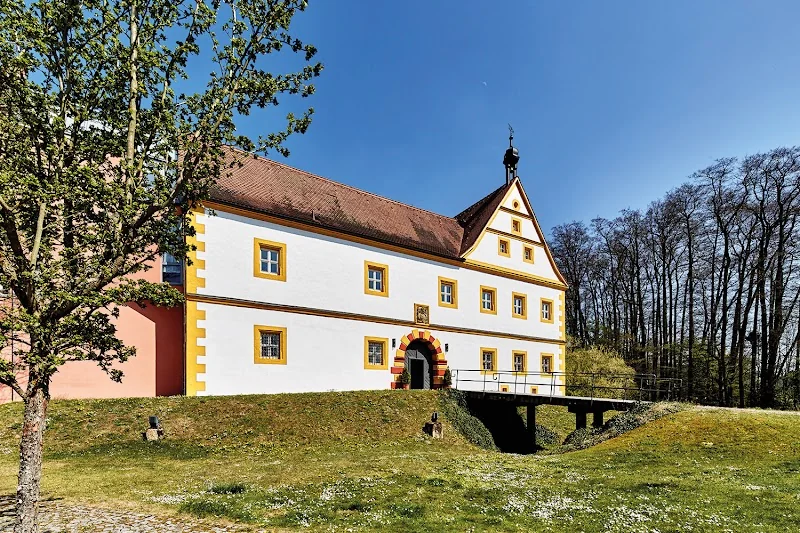
Wernsdorf Castle is a medieval cultural castle in the Strullendorf district of Wernsdorf, just outside the gates of Bamberg. Its oldest components date back to the 12th century, and today it is home to the Capella Antiqua Bambergensis as well as the Private Academy for Early Music, Art, and Cultural History of Europe. The ensemble enlivens the historic concert hall with programs that bring old music to life – from Easter concerts to summer series to Advent and winter programs. In the castle park, there is also the Wernsdorf Castle Manufactory, where the Magic Harp is made – an easy-to-play string instrument that is introduced in courses and workshops. Visitors experience a special connection of history, sound research, and practical music education here. Access for guests usually occurs within the framework of events; the address for arrival is Zur Schleifmühle 4, 96129 Wernsdorf (Strullendorf). Those seeking culture away from large halls will find an intimate venue at Wernsdorf Castle with a palpable closeness to artists, nestled in a small park and surrounded by the Franconian cultural landscape.
Concerts and Program at Wernsdorf Castle
The program at Wernsdorf Castle is curated by the Capella Antiqua Bambergensis and has made the house a special concert venue for early music for many years. The series is thematically diverse and often oriented towards historical events or literary motifs. A recurring season opener is festive Easter concerts that lead into spring with contemplation and baroque splendor. Early summer traditionally belongs to formats like the Mother's Day concert, which focuses on female perspectives with medieval and early modern songs. In August, the series “Summer at Wernsdorf Castle” invites to several Sunday concerts; it focuses on cheerful, southern-inspired music and utilizes the special atmosphere of the hall and park. The year's end is marked by winter and Advent programs, in which music, poetry, and storytelling are woven into a festive collage. For the year 2026, dates such as “Festive Music for Easter” (Sunday, April 5, 2026), “The Young Ladies of Franconia” (Sunday, May 10, 2026), and three Sundays of the series “Summer at Wernsdorf Castle” (August 9, 16, and 23, 2026) are announced. In December, winter concerts follow, often creating a dense atmosphere with speakers, Christmas stories, and historical instruments. The schedule may be adjusted seasonally; for this reason, it is advisable to regularly check the official calendar of the organizers. Tickets can be conveniently ordered online, often with the option to receive personalized tickets by mail. Discounts are generally available for students and will be granted at the box office upon proof. Another characteristic of the program profile is the close collaboration with international guests: In recent years, figures from early music such as Jordi Savall, Arianna Savall, or ensembles from the recorder and percussion scene have performed here. These artists shape the reputation of the house far beyond the region. The audience benefits from the intimate acoustics of the historic hall, where the often quiet, colorful timbres of early music come into their own. For those seeking a concert experience with cultural-historical depth, Wernsdorf Castle offers a concentrated, decelerated alternative to large festival formats.
Magic Harp and Wernsdorf Castle Manufactory
In the park of Wernsdorf Castle stands a workshop building opened in 2015, constructed according to historical models: the Wernsdorf Castle Manufactory. Here, instrument maker Andreas Spindler produces historical musical instruments and the so-called Magic Harp. The workshop combines traditional craftsmanship techniques with modern, sustainable standards – for example, geothermal heating and energy-efficient lighting. The Magic Harp primarily uses local woods and natural surface oils. The concept of the instrument is low-threshold: A sheet of music slid under the strings graphically shows the course of the melody, so the correct note is plucked directly above the respective note marking. This allows both beginners and children, seniors, or people without musical knowledge to make music immediately. The manufactory also offers courses and insights into the creation of these instruments; construction courses for historical musical instruments are also part of the academic offerings at the castle. This educational dimension connects to the orientation of the Private Academy for Early Music, which organizes didactic events, lecture series, and practice-oriented workshops around music, art, and cultural history. In the historic concert hall of the castle, the audience encounters not only performances but also – thanks to the so-called “sounding museum” – a collection of more than 220 playable instruments that highlight the tonal diversity of past centuries. This makes the visit so special: After an introduction, replicas of old sound bodies, such as shawms, bagpipes, dulcians, or harpsichords, literally come to life. The encounter with the Magic Harp is a gateway to active music-making in this context. Even those who have hardly or never played music experience how quickly simple melodies and polyphonic pieces can be grasped. That this happens in the atmosphere of a Franconian cultural castle is no coincidence: The architectural and landscape environment creates the calm and concentration needed for an intense listening experience – both for the audience and in workshop settings that promote the joy of one's own doing. Thus, the manufactory with the Magic Harp forms a central unique selling point of Wernsdorf Castle and explains why the house is perceived far beyond the region in music education, inclusion, and cultural mediation.
Directions and Parking to Wernsdorf Castle
For arrival, it is recommended to use the following address in the navigation system: Zur Schleifmühle 4, 96129 Wernsdorf (Municipality of Strullendorf). The location is only about eight kilometers from the UNESCO World Heritage site of Bamberg and is easily accessible via the state roads of the region. Those arriving by car from Bamberg should plan about 10 to 20 minutes depending on traffic conditions. In Wernsdorf itself, short walking paths lead through the village to the castle. The grounds are private; access is usually granted during event times. For organizational reasons, the entrance gate closes 15 minutes after the concert begins – punctual arrival is therefore important. Parking is available in the village; depending on the event and visitor turnout, parking close by may be limited. Guests should plan a few minutes for the walk and follow the signage and instructions from the staff on site. For groups or visitors with limited mobility, it is advisable to inquire in advance with the castle office whether special instructions or admission regulations apply. Even though the castle is not permanently open to the public, travelers benefit from the good location in the region: Bamberg offers a dense tourist infrastructure with gastronomy and hospitality that can be easily combined with a concert visit. Regardless of the chosen mode of transport, the most important tip for arrival is to check the current status of the event online and to allow enough time buffer. Those who arrive early can – if the park is open for concert guests – absorb the special atmosphere of the area before the music begins in the historic hall. Visitors who are arriving for the first time should note that the castle is sometimes not visible from a great distance and access is clearly regulated. Orientation at the mentioned address and communication with the organization team in advance provide the necessary planning security. For a stress-free departure, it is advisable to pay attention to local instructions after the concert and to clear the parking areas promptly – especially during follow-up events or weather-related restrictions.
Photos and Impressions: Concert Hall, Park, and Instruments
Anyone who wants to get an impression of Wernsdorf Castle in advance can find official photo impressions of the concert hall, the park, and the instrument collection in the online gallery of the Capella Antiqua Bambergensis. The pictures show the hall with its intimate, warm wooden appearance, the rows of chairs, as well as display cases and presentation areas for historical instruments. They also illustrate how the stage is set up for different formats – from pure music programs to scenic readings with speakers. Outdoor shots convey the atmosphere of the castle park; here stands the workshop building of the manufactory, which was opened in 2015. In the photographic perspective, it becomes visible how close the audience sits to the musicians – a decisive advantage for the performance practice of early music, whose fine articulation and timbres would often be lost in large halls. For visitors searching for “Pictures of Wernsdorf Castle” or “Schloß Wernsdorf Photos,” these official impressions are the most reliable source, as they reflect the current state of the house and its furnishings. At the same time, they convey anticipation for the live experience: historical wooden instruments that are visible in the room are brought to sound in the concerts; thus, the interplay of the sounding museum and performance can be immediately understood. Those looking for photographic motifs should note that access to the grounds is regulated and the house rules apply. During events, music is the focus; professional photography is generally restricted, as in many concert halls, to protect the listening experience and the rights of the participants. Official press contacts and image inquiries go through the organizers, who can provide suitable material or grant permissions if needed. For private memory photos before or after the event, please be considerate of other guests, follow the staff's instructions, and do not block escape or work routes. With this responsible handling, the special atmosphere of the house remains preserved – and the pictures tell exactly the story that makes Wernsdorf Castle so unique: the connection of evolved architecture, vibrant music, and human-centered experience.
Accessibility, Seating, and Visitor Information
The house rules of Wernsdorf Castle provide important information for concert visits. Central is the note on the accessibility of the rooms: The courtyard and the sanitary facilities are barrier-free accessible; however, the concert hall is located in the attic and can only be reached via a staircase. There is no elevator. Those who rely on step-free access should therefore contact the castle early to discuss possibilities and alternatives. General hall rules also include the request not to bring food and drinks into the concert hall, as well as restrictions on large bags and backpacks. Animals (dogs) are not permitted on the premises. For safety reasons, the entrance gate remains closed 15 minutes after the start of the event; this serves as a fixed framework for an uninterrupted concert experience. A published, detailed seating plan is not provided; depending on the event, cast, and stage setup, the seating arrangement varies. Therefore, early entry is worthwhile to take a seat in peace. For special requirements – such as proximity to a handrail or the desire to secure sightlines to a specific instrument – a brief note to the hall staff on site is recommended. The combination of historical building substance and safety requirements necessitates that passageways and emergency exits are kept clear at all times; the staff is authorized to give corresponding instructions. Visitors should prepare for a concentrated musical experience in an intimate setting: Mobile devices should be in flight mode, and photo and audio recordings are to be avoided unless expressly permitted. Those arriving with children often find the one-hour summer programs or moderated formats to be a suitable introduction. In general, a little preparation noticeably increases the quality of the stay. This includes checking the current event calendar, ordering tickets in good time, planning the journey, and – depending on the weather – suitable clothing for waiting outside before entry. Those who heed these tips will experience the qualities of the house even more intensely: the fine acoustics, the closeness to the musicians, and the special density that arises in historical rooms when strings, bows, and voices resonate.
Wernsdorf Castle and its History – and the Frequent Confusion with Wernersdorf Castle (Poland)
Wernsdorf Castle has a long and eventful history. It is presumably built on the remains of a fortification established during the Carolingian period to secure a trade route and was first mentioned in documents in the 12th century. Under the Bamberg Prince-Bishop Johann Gottfried I von Aschhausen, the complex received its present form around 1620 and subsequently served, among other things, as a hunting lodge with a hop garden, sheep farming, and a brewery. After the secularization in 1803, the chapel and the fortified enclosure of the courtyard were lost; frequent changes of ownership led to losses in substance before the property was made habitable again at the end of the 19th century by the royal forest master Andreas Eisfelder. After being used as accommodation after 1945, the ensemble later fell into a critical condition again. In the 1990s, the Capella Antiqua Bambergensis took care of the house: In tens of thousands of working hours, the castle and park were restored and made accessible to the public again. Today, the castle houses the Private Academy for Early Music and serves as a performance venue for the Capella and invited ensembles. This special development explains why Wernsdorf is not only a concert hall but also a place of research and mediation. There is often confusion with “Wernersdorf Castle” in Poland. This is a baroque estate (Pałac w Pakoszowie) in the Jizera Valley, which is used as a hotel and cultural venue after an extensive restoration. Both castles are independent monuments with different histories, appearances, and uses. Those searching for “Wernsdorf” should pay attention to the Bavarian location designation Strullendorf-Wernsdorf and the address Zur Schleifmühle 4. For cultural travelers, the region around Bamberg offers diverse additions: The spectrum ranges from large baroque castle complexes to Romanesque churches to modern venues, which can be excellently combined with a concert visit at Wernsdorf Castle. Through this embedding in the Franconian cultural landscape, the location gains additional charm: The proximity to the World Heritage City of Bamberg provides accommodation, gastronomy, and further cultural offerings within immediate reach, without losing the concentration and tranquility of the rural environment.
Sources:
- Capella Antiqua Bambergensis – Concerts at Wernsdorf Castle
- Capella Antiqua Bambergensis – Wernsdorf Castle House Rules
- Capella Antiqua Bambergensis – Gallery Wernsdorf Castle
- Capella Antiqua Bambergensis – Wernsdorf Castle (EN)
- Bamberg Tourism – Wernsdorf Castle (Opening for concerts, Dates 2026)
- Wikipedia – Wernsdorf Castle (History, Use, Location)
- Magic Harp – The Manufactory in the Castle Park (Location, Opening 2015, Sustainability)
- Magic Harp – Information (Manufacture in Wernsdorf Castle Manufactory)
- Municipality of Strullendorf – History of Wernsdorf (Local and Castle Reference)
- Wikipedia – Wernersdorf Castle (Poland) – Distinction
Mehr anzeigenWeniger anzeigen
Wernsdorf Castle | Concerts & Program 2026
Wernsdorf Castle is a medieval cultural castle in the Strullendorf district of Wernsdorf, just outside the gates of Bamberg. Its oldest components date back to the 12th century, and today it is home to the Capella Antiqua Bambergensis as well as the Private Academy for Early Music, Art, and Cultural History of Europe. The ensemble enlivens the historic concert hall with programs that bring old music to life – from Easter concerts to summer series to Advent and winter programs. In the castle park, there is also the Wernsdorf Castle Manufactory, where the Magic Harp is made – an easy-to-play string instrument that is introduced in courses and workshops. Visitors experience a special connection of history, sound research, and practical music education here. Access for guests usually occurs within the framework of events; the address for arrival is Zur Schleifmühle 4, 96129 Wernsdorf (Strullendorf). Those seeking culture away from large halls will find an intimate venue at Wernsdorf Castle with a palpable closeness to artists, nestled in a small park and surrounded by the Franconian cultural landscape.
Concerts and Program at Wernsdorf Castle
The program at Wernsdorf Castle is curated by the Capella Antiqua Bambergensis and has made the house a special concert venue for early music for many years. The series is thematically diverse and often oriented towards historical events or literary motifs. A recurring season opener is festive Easter concerts that lead into spring with contemplation and baroque splendor. Early summer traditionally belongs to formats like the Mother's Day concert, which focuses on female perspectives with medieval and early modern songs. In August, the series “Summer at Wernsdorf Castle” invites to several Sunday concerts; it focuses on cheerful, southern-inspired music and utilizes the special atmosphere of the hall and park. The year's end is marked by winter and Advent programs, in which music, poetry, and storytelling are woven into a festive collage. For the year 2026, dates such as “Festive Music for Easter” (Sunday, April 5, 2026), “The Young Ladies of Franconia” (Sunday, May 10, 2026), and three Sundays of the series “Summer at Wernsdorf Castle” (August 9, 16, and 23, 2026) are announced. In December, winter concerts follow, often creating a dense atmosphere with speakers, Christmas stories, and historical instruments. The schedule may be adjusted seasonally; for this reason, it is advisable to regularly check the official calendar of the organizers. Tickets can be conveniently ordered online, often with the option to receive personalized tickets by mail. Discounts are generally available for students and will be granted at the box office upon proof. Another characteristic of the program profile is the close collaboration with international guests: In recent years, figures from early music such as Jordi Savall, Arianna Savall, or ensembles from the recorder and percussion scene have performed here. These artists shape the reputation of the house far beyond the region. The audience benefits from the intimate acoustics of the historic hall, where the often quiet, colorful timbres of early music come into their own. For those seeking a concert experience with cultural-historical depth, Wernsdorf Castle offers a concentrated, decelerated alternative to large festival formats.
Magic Harp and Wernsdorf Castle Manufactory
In the park of Wernsdorf Castle stands a workshop building opened in 2015, constructed according to historical models: the Wernsdorf Castle Manufactory. Here, instrument maker Andreas Spindler produces historical musical instruments and the so-called Magic Harp. The workshop combines traditional craftsmanship techniques with modern, sustainable standards – for example, geothermal heating and energy-efficient lighting. The Magic Harp primarily uses local woods and natural surface oils. The concept of the instrument is low-threshold: A sheet of music slid under the strings graphically shows the course of the melody, so the correct note is plucked directly above the respective note marking. This allows both beginners and children, seniors, or people without musical knowledge to make music immediately. The manufactory also offers courses and insights into the creation of these instruments; construction courses for historical musical instruments are also part of the academic offerings at the castle. This educational dimension connects to the orientation of the Private Academy for Early Music, which organizes didactic events, lecture series, and practice-oriented workshops around music, art, and cultural history. In the historic concert hall of the castle, the audience encounters not only performances but also – thanks to the so-called “sounding museum” – a collection of more than 220 playable instruments that highlight the tonal diversity of past centuries. This makes the visit so special: After an introduction, replicas of old sound bodies, such as shawms, bagpipes, dulcians, or harpsichords, literally come to life. The encounter with the Magic Harp is a gateway to active music-making in this context. Even those who have hardly or never played music experience how quickly simple melodies and polyphonic pieces can be grasped. That this happens in the atmosphere of a Franconian cultural castle is no coincidence: The architectural and landscape environment creates the calm and concentration needed for an intense listening experience – both for the audience and in workshop settings that promote the joy of one's own doing. Thus, the manufactory with the Magic Harp forms a central unique selling point of Wernsdorf Castle and explains why the house is perceived far beyond the region in music education, inclusion, and cultural mediation.
Directions and Parking to Wernsdorf Castle
For arrival, it is recommended to use the following address in the navigation system: Zur Schleifmühle 4, 96129 Wernsdorf (Municipality of Strullendorf). The location is only about eight kilometers from the UNESCO World Heritage site of Bamberg and is easily accessible via the state roads of the region. Those arriving by car from Bamberg should plan about 10 to 20 minutes depending on traffic conditions. In Wernsdorf itself, short walking paths lead through the village to the castle. The grounds are private; access is usually granted during event times. For organizational reasons, the entrance gate closes 15 minutes after the concert begins – punctual arrival is therefore important. Parking is available in the village; depending on the event and visitor turnout, parking close by may be limited. Guests should plan a few minutes for the walk and follow the signage and instructions from the staff on site. For groups or visitors with limited mobility, it is advisable to inquire in advance with the castle office whether special instructions or admission regulations apply. Even though the castle is not permanently open to the public, travelers benefit from the good location in the region: Bamberg offers a dense tourist infrastructure with gastronomy and hospitality that can be easily combined with a concert visit. Regardless of the chosen mode of transport, the most important tip for arrival is to check the current status of the event online and to allow enough time buffer. Those who arrive early can – if the park is open for concert guests – absorb the special atmosphere of the area before the music begins in the historic hall. Visitors who are arriving for the first time should note that the castle is sometimes not visible from a great distance and access is clearly regulated. Orientation at the mentioned address and communication with the organization team in advance provide the necessary planning security. For a stress-free departure, it is advisable to pay attention to local instructions after the concert and to clear the parking areas promptly – especially during follow-up events or weather-related restrictions.
Photos and Impressions: Concert Hall, Park, and Instruments
Anyone who wants to get an impression of Wernsdorf Castle in advance can find official photo impressions of the concert hall, the park, and the instrument collection in the online gallery of the Capella Antiqua Bambergensis. The pictures show the hall with its intimate, warm wooden appearance, the rows of chairs, as well as display cases and presentation areas for historical instruments. They also illustrate how the stage is set up for different formats – from pure music programs to scenic readings with speakers. Outdoor shots convey the atmosphere of the castle park; here stands the workshop building of the manufactory, which was opened in 2015. In the photographic perspective, it becomes visible how close the audience sits to the musicians – a decisive advantage for the performance practice of early music, whose fine articulation and timbres would often be lost in large halls. For visitors searching for “Pictures of Wernsdorf Castle” or “Schloß Wernsdorf Photos,” these official impressions are the most reliable source, as they reflect the current state of the house and its furnishings. At the same time, they convey anticipation for the live experience: historical wooden instruments that are visible in the room are brought to sound in the concerts; thus, the interplay of the sounding museum and performance can be immediately understood. Those looking for photographic motifs should note that access to the grounds is regulated and the house rules apply. During events, music is the focus; professional photography is generally restricted, as in many concert halls, to protect the listening experience and the rights of the participants. Official press contacts and image inquiries go through the organizers, who can provide suitable material or grant permissions if needed. For private memory photos before or after the event, please be considerate of other guests, follow the staff's instructions, and do not block escape or work routes. With this responsible handling, the special atmosphere of the house remains preserved – and the pictures tell exactly the story that makes Wernsdorf Castle so unique: the connection of evolved architecture, vibrant music, and human-centered experience.
Accessibility, Seating, and Visitor Information
The house rules of Wernsdorf Castle provide important information for concert visits. Central is the note on the accessibility of the rooms: The courtyard and the sanitary facilities are barrier-free accessible; however, the concert hall is located in the attic and can only be reached via a staircase. There is no elevator. Those who rely on step-free access should therefore contact the castle early to discuss possibilities and alternatives. General hall rules also include the request not to bring food and drinks into the concert hall, as well as restrictions on large bags and backpacks. Animals (dogs) are not permitted on the premises. For safety reasons, the entrance gate remains closed 15 minutes after the start of the event; this serves as a fixed framework for an uninterrupted concert experience. A published, detailed seating plan is not provided; depending on the event, cast, and stage setup, the seating arrangement varies. Therefore, early entry is worthwhile to take a seat in peace. For special requirements – such as proximity to a handrail or the desire to secure sightlines to a specific instrument – a brief note to the hall staff on site is recommended. The combination of historical building substance and safety requirements necessitates that passageways and emergency exits are kept clear at all times; the staff is authorized to give corresponding instructions. Visitors should prepare for a concentrated musical experience in an intimate setting: Mobile devices should be in flight mode, and photo and audio recordings are to be avoided unless expressly permitted. Those arriving with children often find the one-hour summer programs or moderated formats to be a suitable introduction. In general, a little preparation noticeably increases the quality of the stay. This includes checking the current event calendar, ordering tickets in good time, planning the journey, and – depending on the weather – suitable clothing for waiting outside before entry. Those who heed these tips will experience the qualities of the house even more intensely: the fine acoustics, the closeness to the musicians, and the special density that arises in historical rooms when strings, bows, and voices resonate.
Wernsdorf Castle and its History – and the Frequent Confusion with Wernersdorf Castle (Poland)
Wernsdorf Castle has a long and eventful history. It is presumably built on the remains of a fortification established during the Carolingian period to secure a trade route and was first mentioned in documents in the 12th century. Under the Bamberg Prince-Bishop Johann Gottfried I von Aschhausen, the complex received its present form around 1620 and subsequently served, among other things, as a hunting lodge with a hop garden, sheep farming, and a brewery. After the secularization in 1803, the chapel and the fortified enclosure of the courtyard were lost; frequent changes of ownership led to losses in substance before the property was made habitable again at the end of the 19th century by the royal forest master Andreas Eisfelder. After being used as accommodation after 1945, the ensemble later fell into a critical condition again. In the 1990s, the Capella Antiqua Bambergensis took care of the house: In tens of thousands of working hours, the castle and park were restored and made accessible to the public again. Today, the castle houses the Private Academy for Early Music and serves as a performance venue for the Capella and invited ensembles. This special development explains why Wernsdorf is not only a concert hall but also a place of research and mediation. There is often confusion with “Wernersdorf Castle” in Poland. This is a baroque estate (Pałac w Pakoszowie) in the Jizera Valley, which is used as a hotel and cultural venue after an extensive restoration. Both castles are independent monuments with different histories, appearances, and uses. Those searching for “Wernsdorf” should pay attention to the Bavarian location designation Strullendorf-Wernsdorf and the address Zur Schleifmühle 4. For cultural travelers, the region around Bamberg offers diverse additions: The spectrum ranges from large baroque castle complexes to Romanesque churches to modern venues, which can be excellently combined with a concert visit at Wernsdorf Castle. Through this embedding in the Franconian cultural landscape, the location gains additional charm: The proximity to the World Heritage City of Bamberg provides accommodation, gastronomy, and further cultural offerings within immediate reach, without losing the concentration and tranquility of the rural environment.
Sources:
- Capella Antiqua Bambergensis – Concerts at Wernsdorf Castle
- Capella Antiqua Bambergensis – Wernsdorf Castle House Rules
- Capella Antiqua Bambergensis – Gallery Wernsdorf Castle
- Capella Antiqua Bambergensis – Wernsdorf Castle (EN)
- Bamberg Tourism – Wernsdorf Castle (Opening for concerts, Dates 2026)
- Wikipedia – Wernsdorf Castle (History, Use, Location)
- Magic Harp – The Manufactory in the Castle Park (Location, Opening 2015, Sustainability)
- Magic Harp – Information (Manufacture in Wernsdorf Castle Manufactory)
- Municipality of Strullendorf – History of Wernsdorf (Local and Castle Reference)
- Wikipedia – Wernersdorf Castle (Poland) – Distinction
Wernsdorf Castle | Concerts & Program 2026
Wernsdorf Castle is a medieval cultural castle in the Strullendorf district of Wernsdorf, just outside the gates of Bamberg. Its oldest components date back to the 12th century, and today it is home to the Capella Antiqua Bambergensis as well as the Private Academy for Early Music, Art, and Cultural History of Europe. The ensemble enlivens the historic concert hall with programs that bring old music to life – from Easter concerts to summer series to Advent and winter programs. In the castle park, there is also the Wernsdorf Castle Manufactory, where the Magic Harp is made – an easy-to-play string instrument that is introduced in courses and workshops. Visitors experience a special connection of history, sound research, and practical music education here. Access for guests usually occurs within the framework of events; the address for arrival is Zur Schleifmühle 4, 96129 Wernsdorf (Strullendorf). Those seeking culture away from large halls will find an intimate venue at Wernsdorf Castle with a palpable closeness to artists, nestled in a small park and surrounded by the Franconian cultural landscape.
Concerts and Program at Wernsdorf Castle
The program at Wernsdorf Castle is curated by the Capella Antiqua Bambergensis and has made the house a special concert venue for early music for many years. The series is thematically diverse and often oriented towards historical events or literary motifs. A recurring season opener is festive Easter concerts that lead into spring with contemplation and baroque splendor. Early summer traditionally belongs to formats like the Mother's Day concert, which focuses on female perspectives with medieval and early modern songs. In August, the series “Summer at Wernsdorf Castle” invites to several Sunday concerts; it focuses on cheerful, southern-inspired music and utilizes the special atmosphere of the hall and park. The year's end is marked by winter and Advent programs, in which music, poetry, and storytelling are woven into a festive collage. For the year 2026, dates such as “Festive Music for Easter” (Sunday, April 5, 2026), “The Young Ladies of Franconia” (Sunday, May 10, 2026), and three Sundays of the series “Summer at Wernsdorf Castle” (August 9, 16, and 23, 2026) are announced. In December, winter concerts follow, often creating a dense atmosphere with speakers, Christmas stories, and historical instruments. The schedule may be adjusted seasonally; for this reason, it is advisable to regularly check the official calendar of the organizers. Tickets can be conveniently ordered online, often with the option to receive personalized tickets by mail. Discounts are generally available for students and will be granted at the box office upon proof. Another characteristic of the program profile is the close collaboration with international guests: In recent years, figures from early music such as Jordi Savall, Arianna Savall, or ensembles from the recorder and percussion scene have performed here. These artists shape the reputation of the house far beyond the region. The audience benefits from the intimate acoustics of the historic hall, where the often quiet, colorful timbres of early music come into their own. For those seeking a concert experience with cultural-historical depth, Wernsdorf Castle offers a concentrated, decelerated alternative to large festival formats.
Magic Harp and Wernsdorf Castle Manufactory
In the park of Wernsdorf Castle stands a workshop building opened in 2015, constructed according to historical models: the Wernsdorf Castle Manufactory. Here, instrument maker Andreas Spindler produces historical musical instruments and the so-called Magic Harp. The workshop combines traditional craftsmanship techniques with modern, sustainable standards – for example, geothermal heating and energy-efficient lighting. The Magic Harp primarily uses local woods and natural surface oils. The concept of the instrument is low-threshold: A sheet of music slid under the strings graphically shows the course of the melody, so the correct note is plucked directly above the respective note marking. This allows both beginners and children, seniors, or people without musical knowledge to make music immediately. The manufactory also offers courses and insights into the creation of these instruments; construction courses for historical musical instruments are also part of the academic offerings at the castle. This educational dimension connects to the orientation of the Private Academy for Early Music, which organizes didactic events, lecture series, and practice-oriented workshops around music, art, and cultural history. In the historic concert hall of the castle, the audience encounters not only performances but also – thanks to the so-called “sounding museum” – a collection of more than 220 playable instruments that highlight the tonal diversity of past centuries. This makes the visit so special: After an introduction, replicas of old sound bodies, such as shawms, bagpipes, dulcians, or harpsichords, literally come to life. The encounter with the Magic Harp is a gateway to active music-making in this context. Even those who have hardly or never played music experience how quickly simple melodies and polyphonic pieces can be grasped. That this happens in the atmosphere of a Franconian cultural castle is no coincidence: The architectural and landscape environment creates the calm and concentration needed for an intense listening experience – both for the audience and in workshop settings that promote the joy of one's own doing. Thus, the manufactory with the Magic Harp forms a central unique selling point of Wernsdorf Castle and explains why the house is perceived far beyond the region in music education, inclusion, and cultural mediation.
Directions and Parking to Wernsdorf Castle
For arrival, it is recommended to use the following address in the navigation system: Zur Schleifmühle 4, 96129 Wernsdorf (Municipality of Strullendorf). The location is only about eight kilometers from the UNESCO World Heritage site of Bamberg and is easily accessible via the state roads of the region. Those arriving by car from Bamberg should plan about 10 to 20 minutes depending on traffic conditions. In Wernsdorf itself, short walking paths lead through the village to the castle. The grounds are private; access is usually granted during event times. For organizational reasons, the entrance gate closes 15 minutes after the concert begins – punctual arrival is therefore important. Parking is available in the village; depending on the event and visitor turnout, parking close by may be limited. Guests should plan a few minutes for the walk and follow the signage and instructions from the staff on site. For groups or visitors with limited mobility, it is advisable to inquire in advance with the castle office whether special instructions or admission regulations apply. Even though the castle is not permanently open to the public, travelers benefit from the good location in the region: Bamberg offers a dense tourist infrastructure with gastronomy and hospitality that can be easily combined with a concert visit. Regardless of the chosen mode of transport, the most important tip for arrival is to check the current status of the event online and to allow enough time buffer. Those who arrive early can – if the park is open for concert guests – absorb the special atmosphere of the area before the music begins in the historic hall. Visitors who are arriving for the first time should note that the castle is sometimes not visible from a great distance and access is clearly regulated. Orientation at the mentioned address and communication with the organization team in advance provide the necessary planning security. For a stress-free departure, it is advisable to pay attention to local instructions after the concert and to clear the parking areas promptly – especially during follow-up events or weather-related restrictions.
Photos and Impressions: Concert Hall, Park, and Instruments
Anyone who wants to get an impression of Wernsdorf Castle in advance can find official photo impressions of the concert hall, the park, and the instrument collection in the online gallery of the Capella Antiqua Bambergensis. The pictures show the hall with its intimate, warm wooden appearance, the rows of chairs, as well as display cases and presentation areas for historical instruments. They also illustrate how the stage is set up for different formats – from pure music programs to scenic readings with speakers. Outdoor shots convey the atmosphere of the castle park; here stands the workshop building of the manufactory, which was opened in 2015. In the photographic perspective, it becomes visible how close the audience sits to the musicians – a decisive advantage for the performance practice of early music, whose fine articulation and timbres would often be lost in large halls. For visitors searching for “Pictures of Wernsdorf Castle” or “Schloß Wernsdorf Photos,” these official impressions are the most reliable source, as they reflect the current state of the house and its furnishings. At the same time, they convey anticipation for the live experience: historical wooden instruments that are visible in the room are brought to sound in the concerts; thus, the interplay of the sounding museum and performance can be immediately understood. Those looking for photographic motifs should note that access to the grounds is regulated and the house rules apply. During events, music is the focus; professional photography is generally restricted, as in many concert halls, to protect the listening experience and the rights of the participants. Official press contacts and image inquiries go through the organizers, who can provide suitable material or grant permissions if needed. For private memory photos before or after the event, please be considerate of other guests, follow the staff's instructions, and do not block escape or work routes. With this responsible handling, the special atmosphere of the house remains preserved – and the pictures tell exactly the story that makes Wernsdorf Castle so unique: the connection of evolved architecture, vibrant music, and human-centered experience.
Accessibility, Seating, and Visitor Information
The house rules of Wernsdorf Castle provide important information for concert visits. Central is the note on the accessibility of the rooms: The courtyard and the sanitary facilities are barrier-free accessible; however, the concert hall is located in the attic and can only be reached via a staircase. There is no elevator. Those who rely on step-free access should therefore contact the castle early to discuss possibilities and alternatives. General hall rules also include the request not to bring food and drinks into the concert hall, as well as restrictions on large bags and backpacks. Animals (dogs) are not permitted on the premises. For safety reasons, the entrance gate remains closed 15 minutes after the start of the event; this serves as a fixed framework for an uninterrupted concert experience. A published, detailed seating plan is not provided; depending on the event, cast, and stage setup, the seating arrangement varies. Therefore, early entry is worthwhile to take a seat in peace. For special requirements – such as proximity to a handrail or the desire to secure sightlines to a specific instrument – a brief note to the hall staff on site is recommended. The combination of historical building substance and safety requirements necessitates that passageways and emergency exits are kept clear at all times; the staff is authorized to give corresponding instructions. Visitors should prepare for a concentrated musical experience in an intimate setting: Mobile devices should be in flight mode, and photo and audio recordings are to be avoided unless expressly permitted. Those arriving with children often find the one-hour summer programs or moderated formats to be a suitable introduction. In general, a little preparation noticeably increases the quality of the stay. This includes checking the current event calendar, ordering tickets in good time, planning the journey, and – depending on the weather – suitable clothing for waiting outside before entry. Those who heed these tips will experience the qualities of the house even more intensely: the fine acoustics, the closeness to the musicians, and the special density that arises in historical rooms when strings, bows, and voices resonate.
Wernsdorf Castle and its History – and the Frequent Confusion with Wernersdorf Castle (Poland)
Wernsdorf Castle has a long and eventful history. It is presumably built on the remains of a fortification established during the Carolingian period to secure a trade route and was first mentioned in documents in the 12th century. Under the Bamberg Prince-Bishop Johann Gottfried I von Aschhausen, the complex received its present form around 1620 and subsequently served, among other things, as a hunting lodge with a hop garden, sheep farming, and a brewery. After the secularization in 1803, the chapel and the fortified enclosure of the courtyard were lost; frequent changes of ownership led to losses in substance before the property was made habitable again at the end of the 19th century by the royal forest master Andreas Eisfelder. After being used as accommodation after 1945, the ensemble later fell into a critical condition again. In the 1990s, the Capella Antiqua Bambergensis took care of the house: In tens of thousands of working hours, the castle and park were restored and made accessible to the public again. Today, the castle houses the Private Academy for Early Music and serves as a performance venue for the Capella and invited ensembles. This special development explains why Wernsdorf is not only a concert hall but also a place of research and mediation. There is often confusion with “Wernersdorf Castle” in Poland. This is a baroque estate (Pałac w Pakoszowie) in the Jizera Valley, which is used as a hotel and cultural venue after an extensive restoration. Both castles are independent monuments with different histories, appearances, and uses. Those searching for “Wernsdorf” should pay attention to the Bavarian location designation Strullendorf-Wernsdorf and the address Zur Schleifmühle 4. For cultural travelers, the region around Bamberg offers diverse additions: The spectrum ranges from large baroque castle complexes to Romanesque churches to modern venues, which can be excellently combined with a concert visit at Wernsdorf Castle. Through this embedding in the Franconian cultural landscape, the location gains additional charm: The proximity to the World Heritage City of Bamberg provides accommodation, gastronomy, and further cultural offerings within immediate reach, without losing the concentration and tranquility of the rural environment.
Sources:
- Capella Antiqua Bambergensis – Concerts at Wernsdorf Castle
- Capella Antiqua Bambergensis – Wernsdorf Castle House Rules
- Capella Antiqua Bambergensis – Gallery Wernsdorf Castle
- Capella Antiqua Bambergensis – Wernsdorf Castle (EN)
- Bamberg Tourism – Wernsdorf Castle (Opening for concerts, Dates 2026)
- Wikipedia – Wernsdorf Castle (History, Use, Location)
- Magic Harp – The Manufactory in the Castle Park (Location, Opening 2015, Sustainability)
- Magic Harp – Information (Manufacture in Wernsdorf Castle Manufactory)
- Municipality of Strullendorf – History of Wernsdorf (Local and Castle Reference)
- Wikipedia – Wernersdorf Castle (Poland) – Distinction
Upcoming Events
No events found
Frequently Asked Questions
Reviews
Elena VG
27. May 2023
Review 05/2023 with pics
Torben
13. September 2025
Unfortunately not visible up close...
Helmut Dörr
29. August 2025
You can only look at it from the outside.
Juergen Brueckner
17. April 2022
A beautiful old well-kept castle
Dietrich Oberg
27. April 2024
I saw this little gem in the neighborhood for the first time from the inside at Easter 2024. The occasion: an Easter performance by the Capella Antiqua. Very refreshing and in a beautiful setting. The Spindler family did an exceptional job.