
Pommersfelden
Schloß 1, 96178 Pommersfelden, Deutschland
Schloss Weissenstein | Tours & Opening Hours
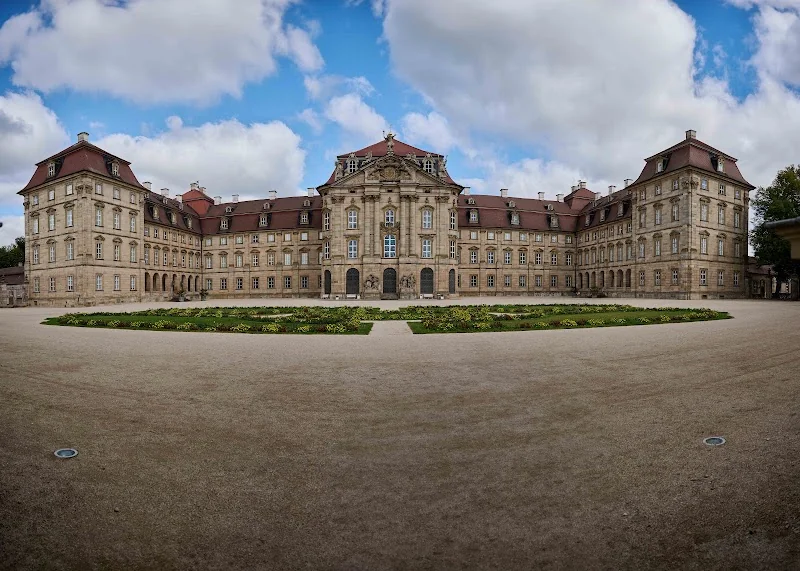
Schloss Weissenstein in Pommersfelden is one of the most distinctive Baroque castles in Franconia and a place where architecture, art, family history, and visitor experience come together in a compact space. The estate is maintained by the non-profit foundation of the Counts of Schönborn, welcoming up to 30,000 guests per year and combining historical rooms with a vibrant cultural program. Those who visit the castle experience not just a monument, but a summer residence with art galleries, completely preserved interior furnishings, an extensive castle park, and a guided tour offering that makes the tour both comprehensible and atmospheric. This is precisely why many visitors seek information about opening hours, tours, parking, weddings, and events: the castle is not a place for a quick glance from the outside, but an address that should be well planned and then gives back a lot. Even the first impression shows the uniqueness of the house: it is located in Pommersfelden, closely connected to the Schönborn family, and still feels like a private, carefully preserved world between representative Baroque, art collection, and garden landscape. ([schoenborn.de](https://www.schoenborn.de/schloss-weissenstein/))
Opening Hours, Tours, and Visit Planning
Anyone wishing to visit Schloss Weissenstein should know the schedule in advance, as the castle is not freely accessible like an ordinary museum. The museum area is currently open from Thursday to Sunday from 11:00 AM to 5:00 PM; Monday, Tuesday, and Wednesday are rest days. The park has its own opening hours: it is closed from Monday to Wednesday, open on Thursdays and Fridays from 8:00 AM to 5:00 PM, and on Saturdays and Sundays from 11:00 AM to 5:00 PM. The last admission is at 4:00 PM, and all gates to the castle grounds close at 5:00 PM. These times make it clear that the visit functions more like a consciously planned outing than a quick stop. This is particularly important for travelers from Bamberg, the A3, or from the region between Steigerwald and Upper Franconia, as it allows for better coordination of the stay with a tour, a walk, and perhaps a coffee afterward. ([schoenborn.de](https://www.schoenborn.de/schloss-weissenstein/))
The tours are a central element of the experience. According to current visitor information, they take place hourly. The regular castle tours are generally in German, but a text in the desired language can be requested at the ticket office. For groups, tours can also be booked outside the listed times; on the official tour page, booking is mentioned from 10 people, and themed tours are offered from 15 people. For planning visitors, this means: Schloss Weissenstein is not a place for spontaneous individual walks through all the interior rooms, but a house whose rooms need to be explained, contextualized, and narratively explored. This is part of the appeal, as the tour connects history, family, art, and architecture into a comprehensible walk. It is also particularly practical to note that Schloss Weissenstein is a summer residence and therefore has no heating options. In the months of April to mid-May and in October, it can be significantly cooler inside the building than outside, so stable and suitable clothing is advisable. The castle administration also points out the limited accessibility in the interior. Therefore, anyone planning a visit should consider not only time but also clothing and physical requirements. ([schoenborn.de](https://www.schoenborn.de/schloss-weissenstein/fuehrungen/?utm_source=openai))
Additionally, it is worth taking a look at the current tour season. For 2026, it begins according to the official site on April 2 and ends on November 1, 2026, which is All Saints' Day. This is particularly interesting for guests who specifically travel in the spring or autumn months. In practice, there may be changes in the tour operation on event days, so especially for longer journeys, a quick check of the visitor information or a call to the castle administration is advisable. Because the estate is regularly used for cultural events, concerts, and private occasions, flexibility is helpful. The best visit is often the one where enough time is planned for the tour, the park, and the view of the ensemble. Those who see the castle only as a photo motif quickly underestimate how much content this house holds. However, those who experience it as a historical residence and cultural site receive a visit that is not only beautiful but also well explained. ([schoenborn.de](https://www.schoenborn.de/schloss-weissenstein/fuehrungen/))
Access, Parking, and Public Transport
The access to Schloss Weissenstein is generally uncomplicated once you know it. The district of Bamberg explicitly designates Schloss Weissenstein in Pommersfelden as a sight and mentions accessibility via the A3, exit Pommersfelden. This is the most important orientation for drivers, as the journey from Nuremberg, Würzburg, or Frankfurt is well integrated into the regional traffic flow. On-site, the castle is not directly at a large parking lot at the entrance but is located slightly elevated, which enhances the character of the estate but also influences the planning of the paths. The official access information makes it clear that the last meters should be covered on foot. This little walk is part of the visit experience and already introduces the special location of the castle. ([bamberg.info](https://www.bamberg.info/poi/schloss_weissenstein_bei_pomme-5129/?utm_source=openai))
The specific parking information is very helpful: parking options can be found in the village at the church Im Städtle or at the playground in Josefstraße. Additionally, the paved castle path can be used, which branches off from the main road opposite the kitchen studio. From all mentioned parking options, it takes about 5 to 10 minutes to walk to the castle. For visitors who are not very mobile, there is a special arrangement by prior agreement: three to four cars can drive closer to the grounds and park in front of one of the garages or in front of the bridge. However, it is important to note the clear announcement from the castle administration that parking is not allowed on the bridge or at the bridge wall. These details are particularly important for groups, wedding parties, and older guests, as they help avoid misunderstandings and unnecessary walks. It is also recommended to wear good and sturdy footwear, which is especially sensible in wet weather or when climbing to the castle. ([schlossweissenstein.de](https://www.schlossweissenstein.de/images/news/2025_Anfahrtsplan_Fuehrungsinfos.pdf))
Public transport is also possible if you plan the visit without a car. According to the tour page, the Steigerwald Express runs on weekends from May 1, and on weekdays, buses of line 978 operate. This is not high-frequency traffic like in a big city, but it is quite practical for carefully planned outings. Those arriving with this information can better time their stay and combine the tour with a leisurely walk in the park. It is also practical that a motorhome parking space is mentioned on the grounds, although it has free parking spaces and no electricity, supply, or disposal. Overall, the access situation shows very well what Schloss Weissenstein is: not an anonymous event hall, but a historical estate that preserves its character even in the path concept. The way to the castle is part of the experience, and that is why the first view of the building after the short ascent often appears so impressive. ([schoenborn.de](https://www.schoenborn.de/schloss-weissenstein/fuehrungen/))
History, Owners, and Baroque Origin
Schloss Weissenstein was built between 1711 and 1718 under Prince-Bishop Lothar Franz von Schönborn and is considered one of the great Baroque estates in Germany according to the district of Bamberg. The German Foundation for Monument Protection describes the castle as an exceptionally well-preserved representative Baroque building that served as a summer residence and was built just a few hours from Bamberg. This proximity to the Bamberg power and cultural area explains why the estate must not be understood as a random country house but as a deliberately staged residence. Lothar Franz von Schönborn created a private summer residence here according to his personal taste and in the style of his time. The castle was therefore from the very beginning not just a place of residence but an expression of rank, education, representation, and passion for collecting. To this day, this origin shapes the character of the house, as the connection between aristocratic architecture and private use is palpable everywhere. ([schoenborn.de](https://www.schoenborn.de/schloss-weissenstein/geschichte/?utm_source=openai))
It is particularly interesting that Schloss Weissenstein has remained in family ownership and is still responsibly managed by the Schönborn family today. The official site explains that the castle was incorporated into a non-profit foundation by Dr. Karl Graf von Schönborn-Wiesentheid in 1996. Since 1998, Paul Graf von Schönborn-Wiesentheid has managed the foundation and uses the castle for public and private events. This continuity is one of the reasons why the building does not feel like an empty museum but like a lively, well-maintained family place with a public mission. For visitors, this means a rare mix: one enters a historical residence that is not museum-frozen but is cared for, used, and simultaneously protected. The history of the house is therefore not only Baroque and prince-bishopric but also modern and foundation-driven. This dual role explains why so many people search for information on topics such as ownership, history, and opening hours. ([schoenborn.de](https://www.schoenborn.de/schloss-weissenstein/))
The castle park is also part of the historical development. According to official visitor information, the initially French-designed garden was later transformed into an English-style layout, and the current park is one of the quiet strengths of the ensemble. The surroundings and community materials also refer to its creation between 1711 and 1718, confirming the Baroque main phase again. For the interpretation of the house, it is important that the castle was conceived not only as a building but as a complete complex: with a representative main building, park, outbuildings, and later expansions. The historical substance that has been lost or altered in many castles is still particularly well experienced here. Those interested in Franconian Baroque therefore not only get beautiful rooms but also a testimony to aristocratic culture that has grown over centuries. This also explains why Schloss Weissenstein can today be referred to as a gem of Franconian Baroque and holds such a firm place in the regional memory. ([landkreis-bamberg.de](https://www.landkreis-bamberg.de/Erleben/Tourismus-und-Freizeit/F%C3%BChrungen-und-Pauschalen/Sehenswertes/Schloss-Weissenstein.php?NavID=2892.360&object=tx%2C2892.1475.1))
Staircase, Art Galleries, and Art Collection
The architecture of Schloss Weissenstein thrives mainly on its impressive interiors. The district of Bamberg highlights the splendidly furnished staircase leading over three floors as a highlight. This staircase conveys the feeling upon entering that one is not only entering a castle but a staged sequence of spaces. The height effect, the spaciousness, and the connection of several levels make the beginning of the tour one of the strongest moments of the visit. In addition, the complete interior furnishings, which are expressly mentioned on the official site, enhance the impression of a preserved aristocratic living and representative space. At Schloss Weissenstein, it is therefore not just about facades but about a spatial overall experience in which architecture, painting, and furnishings interact. Those who see the staircase quickly understand why the estate is among the outstanding Baroque castles in Franconia. ([landkreis-bamberg.de](https://www.landkreis-bamberg.de/Erleben/Tourismus-und-Freizeit/F%C3%BChrungen-und-Pauschalen/Sehenswertes/Schloss-Weissenstein.php?NavID=2892.360&object=tx%2C2892.1475.1))
Particularly noteworthy is the art collection. The district of Bamberg mentions an extensive gallery with art-historically significant works by French, Italian, German, and Dutch painters, including paintings by van Dyck, Titian, Bruegel, and Rubens. The tour page also speaks of over 600 paintings by old masters, which testify to the passion of the builder Lothar Franz von Schönborn. This makes the castle so attractive for art-interested visitors: here one encounters not only individual decorative pieces but a grown collection that culturally enriches the space. For many guests, it is precisely this connection between the castle and the collection that is the reason why the tour is worthwhile. One does not simply see rooms but understands how art ownership, princely representation, and personal collecting passion belong together. In this sense, Schloss Weissenstein is not only a monument of building but also a monument of collecting and preserving. ([landkreis-bamberg.de](https://www.landkreis-bamberg.de/Erleben/Tourismus-und-Freizeit/F%C3%BChrungen-und-Pauschalen/Sehenswertes/Schloss-Weissenstein.php?NavID=2892.360&object=tx%2C2892.1475.1))
In addition to the spatial diversity, there are further areas that round off the visit. The event and visitor page mentions, among others, the Grotto Sala Terrena, the Marble Hall, the castle courtyard, the park, the orangery, the Baroque Hall, and the barn in the stable. These rooms show that the castle cannot be reduced to a single magnificent room. Depending on the occasion, the rooms appear representative, festive, historical, or rather rustic. The castle chapel is also included and is described as the oldest part of the complex. This mixture of sacred, festive, and aristocratic rooms is exciting for visitors because it deepens the understanding of the Baroque overall staging. Those looking for images will find numerous impressions on the official site and in virtual tours, but the actual strength lies in the real spatial feeling: in the interplay of height, light, art, and historical materiality. That is why Schloss Weissenstein is not just a photo object but a place that truly changes the perception of architecture and art. ([schoenborn.de](https://www.schoenborn.de/schloss-weissenstein/individuelle-events/))
Weddings, Celebrations, and Special Events
Schloss Weissenstein is far more than just a museum; it is also a flexible location for special life events. The official event page describes the castle as a venue for indoor and outdoor events, offering authentic Baroque halls, rustic rooms, small courtyards, and an 18-hectare castle park. For events, concerts, lectures, press conferences, receptions, banquets, gala dinners, corporate events, anniversaries, Christmas parties, annual kick-off events, in-house fairs, product presentations, seminars, team events, creative seminars, and workshops are mentioned. This variety shows how broadly the castle is used today. It is not just a pure sightseeing complex but a functioning cultural and event venue with many levels of use. This is precisely why inquiries about events, room sizes, and wedding possibilities are so frequent. ([schoenborn.de](https://www.schoenborn.de/schloss-weissenstein/individuelle-events/))
For weddings, there are several concrete options. Civil ceremonies are possible in the saddle room, which accommodates up to 30 people; the date must be coordinated with the municipality of Pommersfelden, and everything else with the castle administration. The castle chapel can be used for church weddings and has nearly 90 seats. If the celebration is to continue in the castle, there are further options from the elegant Marble Hall to the more rustic barn. The castle chapel is also mentioned on the event page with approximately 80 seats, so for practice, a capacity of around 80 to 90 seats results. This is important for couples who need to plan their guest list. Additionally, the castle administration can organize further arrangements such as a champagne reception or coffee and cake upon request. This combination of historical ambiance, clear capacities, and good planning makes the castle particularly attractive for weddings. ([schoenborn.de](https://www.schoenborn.de/schloss-weissenstein/schloss-weissenstein-heiraten-im-schloss/))
The house is also well equipped for larger celebrations and corporate events. The staircase offers two levels with 240 square meters on the ground floor and 207 square meters on the upper floor; standing receptions or festive meals for up to 130 to 150 people are possible there. The Marble Hall measures 250 square meters, accommodating up to 200 people for festive meals and up to 400 people for concerts or other events. The grotto with the adjacent Marchini rooms is suitable for standing receptions with up to 200 people, and the castle courtyard encompasses 4,300 square meters and is suitable for open-air events such as concerts, readings, or theater performances. This mix of indoor and outdoor spaces makes the venue exceptionally versatile. Additionally, the special atmosphere is described on the official site as familial, individual, and detail-oriented. Therefore, anyone searching for a wedding venue or a representative event space in the Bamberg region will find a house here that convinces both emotionally and organizationally. ([schoenborn.de](https://www.schoenborn.de/schloss-weissenstein/individuelle-events/))
Concerts, Collegium Musicum, and Cultural Highlights
If Schloss Weissenstein is particularly known for something, it is the combination of music, art, and historical backdrop. Since 1958, the Collegium Musicum has annually invited outstanding young musicians from Europe to Pommersfelden. The summer academy is considered one of the most renowned musical summer programs in Europe and is referred to as the third oldest of its kind on the continent. The concerts take place in the magnificent Marble Hall, making the space not only architecturally but also acoustically and atmospherically a main character. For inquiries about concerts, this is particularly important, as it shows: Schloss Weissenstein is not just a place of the past but also an active musical venue. Those looking for a concert in a historical ambiance will find a tradition that has grown over decades here. ([schoenborn.de](https://www.schoenborn.de/geschaeftsbereiche/collegum-musicum/?utm_source=openai))
The cultural side also includes the offerings of tours and special formats. The tour page mentions, among others, Sisi tours, children's tours, painting tours, and chapel tours. The children's tours are aimed at guests between 5 and 12 years old and combine playful elements with the castle visit. The painting tour focuses on the over 600 paintings by old masters, while the chapel tour explains the castle chapel as the oldest part of the complex. These offerings make it clear that the castle not only informs its audience but actively guides them through various interests. Families, art lovers, and those interested in cultural history each receive their own access. This is an important reason why Schloss Weissenstein is searched so often: it appeals not only to tourists but also to people who want to delve deeper into Franconian Baroque, collections, or the stories of use and function of a castle. ([schoenborn.de](https://www.schoenborn.de/schloss-weissenstein/fuehrungen/))
Special events in the outdoor area also contribute to the castle's popularity. The official event page and event announcements feature formats such as open-air events in the castle courtyard, tournament games in the park, winter events in the courtyard, and special exhibitions. At the same time, the castle is described as a film location and is associated with the Film Commission of the Stuttgart region. This shows how versatile the place is used today: as a historical backdrop, as a musical venue, as a wedding location, and as a space for special productions. Those who plan their visit well can easily connect several levels: a tour of the castle, a walk in the park, perhaps a concert or a special event, and in the end, the impression of having experienced a true cultural site. This is precisely the strength of Schloss Weissenstein in Pommersfelden: it connects Baroque, music, art, and the present so seamlessly that a visit quickly becomes a lasting experience. ([schoenborn.de](https://www.schoenborn.de/event/turnierspiele-auf-schloss-weissenstein/?utm_source=openai))
Sources:
Mehr anzeigenWeniger anzeigen
Schloss Weissenstein | Tours & Opening Hours
Schloss Weissenstein in Pommersfelden is one of the most distinctive Baroque castles in Franconia and a place where architecture, art, family history, and visitor experience come together in a compact space. The estate is maintained by the non-profit foundation of the Counts of Schönborn, welcoming up to 30,000 guests per year and combining historical rooms with a vibrant cultural program. Those who visit the castle experience not just a monument, but a summer residence with art galleries, completely preserved interior furnishings, an extensive castle park, and a guided tour offering that makes the tour both comprehensible and atmospheric. This is precisely why many visitors seek information about opening hours, tours, parking, weddings, and events: the castle is not a place for a quick glance from the outside, but an address that should be well planned and then gives back a lot. Even the first impression shows the uniqueness of the house: it is located in Pommersfelden, closely connected to the Schönborn family, and still feels like a private, carefully preserved world between representative Baroque, art collection, and garden landscape. ([schoenborn.de](https://www.schoenborn.de/schloss-weissenstein/))
Opening Hours, Tours, and Visit Planning
Anyone wishing to visit Schloss Weissenstein should know the schedule in advance, as the castle is not freely accessible like an ordinary museum. The museum area is currently open from Thursday to Sunday from 11:00 AM to 5:00 PM; Monday, Tuesday, and Wednesday are rest days. The park has its own opening hours: it is closed from Monday to Wednesday, open on Thursdays and Fridays from 8:00 AM to 5:00 PM, and on Saturdays and Sundays from 11:00 AM to 5:00 PM. The last admission is at 4:00 PM, and all gates to the castle grounds close at 5:00 PM. These times make it clear that the visit functions more like a consciously planned outing than a quick stop. This is particularly important for travelers from Bamberg, the A3, or from the region between Steigerwald and Upper Franconia, as it allows for better coordination of the stay with a tour, a walk, and perhaps a coffee afterward. ([schoenborn.de](https://www.schoenborn.de/schloss-weissenstein/))
The tours are a central element of the experience. According to current visitor information, they take place hourly. The regular castle tours are generally in German, but a text in the desired language can be requested at the ticket office. For groups, tours can also be booked outside the listed times; on the official tour page, booking is mentioned from 10 people, and themed tours are offered from 15 people. For planning visitors, this means: Schloss Weissenstein is not a place for spontaneous individual walks through all the interior rooms, but a house whose rooms need to be explained, contextualized, and narratively explored. This is part of the appeal, as the tour connects history, family, art, and architecture into a comprehensible walk. It is also particularly practical to note that Schloss Weissenstein is a summer residence and therefore has no heating options. In the months of April to mid-May and in October, it can be significantly cooler inside the building than outside, so stable and suitable clothing is advisable. The castle administration also points out the limited accessibility in the interior. Therefore, anyone planning a visit should consider not only time but also clothing and physical requirements. ([schoenborn.de](https://www.schoenborn.de/schloss-weissenstein/fuehrungen/?utm_source=openai))
Additionally, it is worth taking a look at the current tour season. For 2026, it begins according to the official site on April 2 and ends on November 1, 2026, which is All Saints' Day. This is particularly interesting for guests who specifically travel in the spring or autumn months. In practice, there may be changes in the tour operation on event days, so especially for longer journeys, a quick check of the visitor information or a call to the castle administration is advisable. Because the estate is regularly used for cultural events, concerts, and private occasions, flexibility is helpful. The best visit is often the one where enough time is planned for the tour, the park, and the view of the ensemble. Those who see the castle only as a photo motif quickly underestimate how much content this house holds. However, those who experience it as a historical residence and cultural site receive a visit that is not only beautiful but also well explained. ([schoenborn.de](https://www.schoenborn.de/schloss-weissenstein/fuehrungen/))
Access, Parking, and Public Transport
The access to Schloss Weissenstein is generally uncomplicated once you know it. The district of Bamberg explicitly designates Schloss Weissenstein in Pommersfelden as a sight and mentions accessibility via the A3, exit Pommersfelden. This is the most important orientation for drivers, as the journey from Nuremberg, Würzburg, or Frankfurt is well integrated into the regional traffic flow. On-site, the castle is not directly at a large parking lot at the entrance but is located slightly elevated, which enhances the character of the estate but also influences the planning of the paths. The official access information makes it clear that the last meters should be covered on foot. This little walk is part of the visit experience and already introduces the special location of the castle. ([bamberg.info](https://www.bamberg.info/poi/schloss_weissenstein_bei_pomme-5129/?utm_source=openai))
The specific parking information is very helpful: parking options can be found in the village at the church Im Städtle or at the playground in Josefstraße. Additionally, the paved castle path can be used, which branches off from the main road opposite the kitchen studio. From all mentioned parking options, it takes about 5 to 10 minutes to walk to the castle. For visitors who are not very mobile, there is a special arrangement by prior agreement: three to four cars can drive closer to the grounds and park in front of one of the garages or in front of the bridge. However, it is important to note the clear announcement from the castle administration that parking is not allowed on the bridge or at the bridge wall. These details are particularly important for groups, wedding parties, and older guests, as they help avoid misunderstandings and unnecessary walks. It is also recommended to wear good and sturdy footwear, which is especially sensible in wet weather or when climbing to the castle. ([schlossweissenstein.de](https://www.schlossweissenstein.de/images/news/2025_Anfahrtsplan_Fuehrungsinfos.pdf))
Public transport is also possible if you plan the visit without a car. According to the tour page, the Steigerwald Express runs on weekends from May 1, and on weekdays, buses of line 978 operate. This is not high-frequency traffic like in a big city, but it is quite practical for carefully planned outings. Those arriving with this information can better time their stay and combine the tour with a leisurely walk in the park. It is also practical that a motorhome parking space is mentioned on the grounds, although it has free parking spaces and no electricity, supply, or disposal. Overall, the access situation shows very well what Schloss Weissenstein is: not an anonymous event hall, but a historical estate that preserves its character even in the path concept. The way to the castle is part of the experience, and that is why the first view of the building after the short ascent often appears so impressive. ([schoenborn.de](https://www.schoenborn.de/schloss-weissenstein/fuehrungen/))
History, Owners, and Baroque Origin
Schloss Weissenstein was built between 1711 and 1718 under Prince-Bishop Lothar Franz von Schönborn and is considered one of the great Baroque estates in Germany according to the district of Bamberg. The German Foundation for Monument Protection describes the castle as an exceptionally well-preserved representative Baroque building that served as a summer residence and was built just a few hours from Bamberg. This proximity to the Bamberg power and cultural area explains why the estate must not be understood as a random country house but as a deliberately staged residence. Lothar Franz von Schönborn created a private summer residence here according to his personal taste and in the style of his time. The castle was therefore from the very beginning not just a place of residence but an expression of rank, education, representation, and passion for collecting. To this day, this origin shapes the character of the house, as the connection between aristocratic architecture and private use is palpable everywhere. ([schoenborn.de](https://www.schoenborn.de/schloss-weissenstein/geschichte/?utm_source=openai))
It is particularly interesting that Schloss Weissenstein has remained in family ownership and is still responsibly managed by the Schönborn family today. The official site explains that the castle was incorporated into a non-profit foundation by Dr. Karl Graf von Schönborn-Wiesentheid in 1996. Since 1998, Paul Graf von Schönborn-Wiesentheid has managed the foundation and uses the castle for public and private events. This continuity is one of the reasons why the building does not feel like an empty museum but like a lively, well-maintained family place with a public mission. For visitors, this means a rare mix: one enters a historical residence that is not museum-frozen but is cared for, used, and simultaneously protected. The history of the house is therefore not only Baroque and prince-bishopric but also modern and foundation-driven. This dual role explains why so many people search for information on topics such as ownership, history, and opening hours. ([schoenborn.de](https://www.schoenborn.de/schloss-weissenstein/))
The castle park is also part of the historical development. According to official visitor information, the initially French-designed garden was later transformed into an English-style layout, and the current park is one of the quiet strengths of the ensemble. The surroundings and community materials also refer to its creation between 1711 and 1718, confirming the Baroque main phase again. For the interpretation of the house, it is important that the castle was conceived not only as a building but as a complete complex: with a representative main building, park, outbuildings, and later expansions. The historical substance that has been lost or altered in many castles is still particularly well experienced here. Those interested in Franconian Baroque therefore not only get beautiful rooms but also a testimony to aristocratic culture that has grown over centuries. This also explains why Schloss Weissenstein can today be referred to as a gem of Franconian Baroque and holds such a firm place in the regional memory. ([landkreis-bamberg.de](https://www.landkreis-bamberg.de/Erleben/Tourismus-und-Freizeit/F%C3%BChrungen-und-Pauschalen/Sehenswertes/Schloss-Weissenstein.php?NavID=2892.360&object=tx%2C2892.1475.1))
Staircase, Art Galleries, and Art Collection
The architecture of Schloss Weissenstein thrives mainly on its impressive interiors. The district of Bamberg highlights the splendidly furnished staircase leading over three floors as a highlight. This staircase conveys the feeling upon entering that one is not only entering a castle but a staged sequence of spaces. The height effect, the spaciousness, and the connection of several levels make the beginning of the tour one of the strongest moments of the visit. In addition, the complete interior furnishings, which are expressly mentioned on the official site, enhance the impression of a preserved aristocratic living and representative space. At Schloss Weissenstein, it is therefore not just about facades but about a spatial overall experience in which architecture, painting, and furnishings interact. Those who see the staircase quickly understand why the estate is among the outstanding Baroque castles in Franconia. ([landkreis-bamberg.de](https://www.landkreis-bamberg.de/Erleben/Tourismus-und-Freizeit/F%C3%BChrungen-und-Pauschalen/Sehenswertes/Schloss-Weissenstein.php?NavID=2892.360&object=tx%2C2892.1475.1))
Particularly noteworthy is the art collection. The district of Bamberg mentions an extensive gallery with art-historically significant works by French, Italian, German, and Dutch painters, including paintings by van Dyck, Titian, Bruegel, and Rubens. The tour page also speaks of over 600 paintings by old masters, which testify to the passion of the builder Lothar Franz von Schönborn. This makes the castle so attractive for art-interested visitors: here one encounters not only individual decorative pieces but a grown collection that culturally enriches the space. For many guests, it is precisely this connection between the castle and the collection that is the reason why the tour is worthwhile. One does not simply see rooms but understands how art ownership, princely representation, and personal collecting passion belong together. In this sense, Schloss Weissenstein is not only a monument of building but also a monument of collecting and preserving. ([landkreis-bamberg.de](https://www.landkreis-bamberg.de/Erleben/Tourismus-und-Freizeit/F%C3%BChrungen-und-Pauschalen/Sehenswertes/Schloss-Weissenstein.php?NavID=2892.360&object=tx%2C2892.1475.1))
In addition to the spatial diversity, there are further areas that round off the visit. The event and visitor page mentions, among others, the Grotto Sala Terrena, the Marble Hall, the castle courtyard, the park, the orangery, the Baroque Hall, and the barn in the stable. These rooms show that the castle cannot be reduced to a single magnificent room. Depending on the occasion, the rooms appear representative, festive, historical, or rather rustic. The castle chapel is also included and is described as the oldest part of the complex. This mixture of sacred, festive, and aristocratic rooms is exciting for visitors because it deepens the understanding of the Baroque overall staging. Those looking for images will find numerous impressions on the official site and in virtual tours, but the actual strength lies in the real spatial feeling: in the interplay of height, light, art, and historical materiality. That is why Schloss Weissenstein is not just a photo object but a place that truly changes the perception of architecture and art. ([schoenborn.de](https://www.schoenborn.de/schloss-weissenstein/individuelle-events/))
Weddings, Celebrations, and Special Events
Schloss Weissenstein is far more than just a museum; it is also a flexible location for special life events. The official event page describes the castle as a venue for indoor and outdoor events, offering authentic Baroque halls, rustic rooms, small courtyards, and an 18-hectare castle park. For events, concerts, lectures, press conferences, receptions, banquets, gala dinners, corporate events, anniversaries, Christmas parties, annual kick-off events, in-house fairs, product presentations, seminars, team events, creative seminars, and workshops are mentioned. This variety shows how broadly the castle is used today. It is not just a pure sightseeing complex but a functioning cultural and event venue with many levels of use. This is precisely why inquiries about events, room sizes, and wedding possibilities are so frequent. ([schoenborn.de](https://www.schoenborn.de/schloss-weissenstein/individuelle-events/))
For weddings, there are several concrete options. Civil ceremonies are possible in the saddle room, which accommodates up to 30 people; the date must be coordinated with the municipality of Pommersfelden, and everything else with the castle administration. The castle chapel can be used for church weddings and has nearly 90 seats. If the celebration is to continue in the castle, there are further options from the elegant Marble Hall to the more rustic barn. The castle chapel is also mentioned on the event page with approximately 80 seats, so for practice, a capacity of around 80 to 90 seats results. This is important for couples who need to plan their guest list. Additionally, the castle administration can organize further arrangements such as a champagne reception or coffee and cake upon request. This combination of historical ambiance, clear capacities, and good planning makes the castle particularly attractive for weddings. ([schoenborn.de](https://www.schoenborn.de/schloss-weissenstein/schloss-weissenstein-heiraten-im-schloss/))
The house is also well equipped for larger celebrations and corporate events. The staircase offers two levels with 240 square meters on the ground floor and 207 square meters on the upper floor; standing receptions or festive meals for up to 130 to 150 people are possible there. The Marble Hall measures 250 square meters, accommodating up to 200 people for festive meals and up to 400 people for concerts or other events. The grotto with the adjacent Marchini rooms is suitable for standing receptions with up to 200 people, and the castle courtyard encompasses 4,300 square meters and is suitable for open-air events such as concerts, readings, or theater performances. This mix of indoor and outdoor spaces makes the venue exceptionally versatile. Additionally, the special atmosphere is described on the official site as familial, individual, and detail-oriented. Therefore, anyone searching for a wedding venue or a representative event space in the Bamberg region will find a house here that convinces both emotionally and organizationally. ([schoenborn.de](https://www.schoenborn.de/schloss-weissenstein/individuelle-events/))
Concerts, Collegium Musicum, and Cultural Highlights
If Schloss Weissenstein is particularly known for something, it is the combination of music, art, and historical backdrop. Since 1958, the Collegium Musicum has annually invited outstanding young musicians from Europe to Pommersfelden. The summer academy is considered one of the most renowned musical summer programs in Europe and is referred to as the third oldest of its kind on the continent. The concerts take place in the magnificent Marble Hall, making the space not only architecturally but also acoustically and atmospherically a main character. For inquiries about concerts, this is particularly important, as it shows: Schloss Weissenstein is not just a place of the past but also an active musical venue. Those looking for a concert in a historical ambiance will find a tradition that has grown over decades here. ([schoenborn.de](https://www.schoenborn.de/geschaeftsbereiche/collegum-musicum/?utm_source=openai))
The cultural side also includes the offerings of tours and special formats. The tour page mentions, among others, Sisi tours, children's tours, painting tours, and chapel tours. The children's tours are aimed at guests between 5 and 12 years old and combine playful elements with the castle visit. The painting tour focuses on the over 600 paintings by old masters, while the chapel tour explains the castle chapel as the oldest part of the complex. These offerings make it clear that the castle not only informs its audience but actively guides them through various interests. Families, art lovers, and those interested in cultural history each receive their own access. This is an important reason why Schloss Weissenstein is searched so often: it appeals not only to tourists but also to people who want to delve deeper into Franconian Baroque, collections, or the stories of use and function of a castle. ([schoenborn.de](https://www.schoenborn.de/schloss-weissenstein/fuehrungen/))
Special events in the outdoor area also contribute to the castle's popularity. The official event page and event announcements feature formats such as open-air events in the castle courtyard, tournament games in the park, winter events in the courtyard, and special exhibitions. At the same time, the castle is described as a film location and is associated with the Film Commission of the Stuttgart region. This shows how versatile the place is used today: as a historical backdrop, as a musical venue, as a wedding location, and as a space for special productions. Those who plan their visit well can easily connect several levels: a tour of the castle, a walk in the park, perhaps a concert or a special event, and in the end, the impression of having experienced a true cultural site. This is precisely the strength of Schloss Weissenstein in Pommersfelden: it connects Baroque, music, art, and the present so seamlessly that a visit quickly becomes a lasting experience. ([schoenborn.de](https://www.schoenborn.de/event/turnierspiele-auf-schloss-weissenstein/?utm_source=openai))
Sources:
Upcoming Events
find your color in between

Exhibition: choose your color in between
Frequently Asked Questions
Reviews
Betty S
29. May 2026
Stumbled across this really lovely stop. Parked the car and walked into a beautiful courtyard with a wonderful garden and majestic buildings. It was our favorite visit of the day of just wandering the countryside!
Matthew
14. July 2026
This was a very lovely stop and a great palace. Unfortunately, you cannot take pictures inside, but there are very ornate rooms and incredible artwork by old masters. Tours are only in German, but I was fortunate that the tour guide presented in English since it was only two of us at the end of the day. I highly recommend a stop here. Without the English presentation I would have missed a lot of great details which was not on the English tour cards given to non-German speakers. Tours every hour.
Monica Gregg
22. July 2022
Beautiful castle. The architecture is so gorgeous and the information you receive throughout the tour was very interesting. They provide children with a questionnaire and when they answer all the questions, they receive a small prize at the end. What makes me give this a 4 out of 5 is that you can't walk through the rooms alone and can only take a tour so if there is something you want to look at longer you can't because the group moves on. Also absolutely no cameras are allowed inside the castle so that was a bit of a letdown.
Lance Goolsby
7. June 2024
Great tour. Sadly only in German. But for the English speakers there is a flyer which accompanies the tour to read about each room you get to visit making it worth it. Really friendly staff and amazing art and history. Only negative was the amount of time we could stay in each room was almost too short to soak in the amazing art and design in each room.
Tammi L. Coles (tlcoles)
25. May 2026
We (large family group) enjoyed the tour through the gorgeous and distinctive interior. Super informative guide, with a humor- and historical-facts-filled delivery.