
Bamberg
Ob. Sandstraße, 96049 Bamberg, Deutschland
Upper Sand Street | Bamberg & Parking
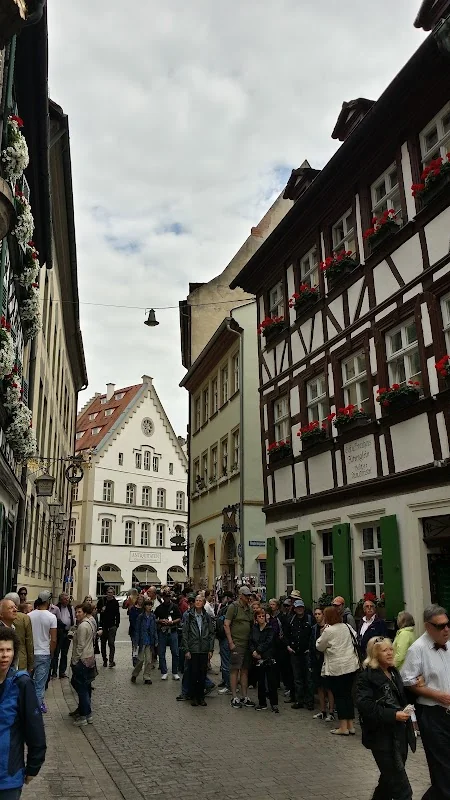
The Upper Sand Street is one of the most distinctive streets in the Bamberg Sand area, connecting history, gastronomy, urban vibrancy, and an exceptionally dense old town image in a compact space. Those who walk here do not traverse an ordinary street, but rather a section of the city described by official urban planning documents as a very old settlement area with high building density, valuable building stock, and a classic mixed function. This very mix shapes the character of Upper Sand Street: during the day, it is a historically significant part of the UNESCO World Heritage site, and in the evening, it becomes a place for encounters, dining, nightlife, and events. The street lies at the foot of the Cathedral Hill and, together with the Elizabeth Church, the Green Dog Fountain, and the adjacent alleys, forms a particularly dense urban area that showcases Bamberg in its compact and multifaceted form. Therefore, those searching for Upper Sand Street often mean not just an address, but a piece of vibrant Bamberg urban culture. ([stadt.bamberg.de](https://www.stadt.bamberg.de/B%C3%BCrgerservice/%C3%84mter/Stadtplanungsamt/Stadtgestaltung/index.php?La=1&NavID=1829.346&object=tx%2C2730.2192.1&utm_source=openai))
History, Location, and Urban Character of Upper Sand Street
The official description of the Sand redevelopment area portrays the surroundings of Upper Sand Street as a historically extraordinarily significant urban area. The Sand area at the foot of the Cathedral Hill is referred to as a very old settlement area characterized by high building density and particularly valuable architectural and art historical heritage. At the same time, it is a classic mixed-use area where living, working, tourism, and evening leisure activities occur simultaneously. This structure makes Upper Sand Street so interesting: it is not simply a thoroughfare but part of a densely woven urban space where historical substance and contemporary use directly intersect. For visitors, this creates an atmosphere where one can not only see the developed history of the neighborhood but also feel it in daily life. Particularly significant is that the city of Bamberg describes the Sand area as a region with high population and employment density, which explains the vibrant yet tightly knit effect of the entire environment. ([stadt.bamberg.de](https://www.stadt.bamberg.de/B%C3%BCrgerservice/%C3%84mter/Stadtplanungsamt/Stadtgestaltung/index.php?La=1&NavID=1829.346&object=tx%2C2730.2192.1&utm_source=openai))
In the detailed urban planning study, Upper Sand Street is described as a street lined with stately, three-story residential buildings on both sides. The buildings appear baroque in their overall appearance and largely uniform in their eaves height, giving the street space a clear and calm edge. At the junction near the Green Dog Fountain, Upper Sand Street makes a 90-degree turn towards the Elizabeth Church and widens out like a square. This spatial movement is an important feature: the street is not just linear but leads visitors to a notable historical junction. On the south and west sides, the square area is framed by two- to three-story, partly very representative residential buildings, while on the east side, the Elizabeth Church with its wall and the Francis Fountain dominate the view. The city documents explicitly describe this part as a special area of the street scene of Upper Sand Street II at the Elizabeth Church. This shows that the street is not only practically significant but also plays a formative role in the historical cityscape. ([planungsamt.bamberg.de](https://www.planungsamt.bamberg.de/dmdocuments/Abschlussbericht_VUSand_web.pdf))
Another important point is its integration into the Bamberg old town structure. Upper Sand Street connects the area at Katzenberg with the surroundings of the Elizabeth Church and subsequently transitions into Lower Sand Street. Thus, it lies at an intersection between the Cathedral Hill, the Sand area, and the city areas that open further towards the Regnitz riverbank. Historically intriguing is that the adjacent house numbers are often documented in official monument records with older cores dating from the 15th to 18th centuries. This makes the street an open history book of the city. Those walking along here move past facades that often show more than just a baroque image but trace back to much older structures. The mix of skewed plots, small parcels, historic residential and guesthouses, as well as representative residential buildings, constitutes the charm of this street space. ([planungsamt.bamberg.de](https://www.planungsamt.bamberg.de/dmdocuments/Abschlussbericht_VUSand_web.pdf))
Gastronomy, Bars, and Cultural Venues on Upper Sand Street
Today, Upper Sand Street is not only a historical street but also a culinary and cultural attraction. Several official Bamberg tourism entries confirm that there is a notable density of gastronomy and nightlife addresses here. These include, among others, Scheiners Tapas Bar at Upper Sand Street 5, the Live Club Bamberg at Upper Sand Street 7, the Old Town Tavern at 9-11, Zuckerstück at number 4, Weinstube Pizzini at number 17, Die Küche at number 27, and Das Backstübla at number 31. This concentration shows: Upper Sand Street is a place where eating, drinking, music, and encounters are closely intertwined. For those searching for Upper Sand Street Bamberg gastronomy or Upper Sand Street Bamberg Live Club, the street itself provides a whole series of relevant meeting points. ([bamberg.info](https://www.bamberg.info/gastronomie/scheiners_bar-4921/?utm_source=openai))
Particularly striking is the variety of offerings. Scheiners Tapas Bar focuses on Franconian tapas and a modern interpretation of regional cuisine; according to the tourism page, there are 20 seats inside and 50 outside, as well as limited wheelchair accessibility. The Ahörnla im Sand at number 22 is described as one of the oldest brewing sites in the city, where its own beer has been brewed again since 2021; the establishment has 95 seats inside and 57 outside and combines brewery, tavern cuisine, and modern menu offerings. The Live Club, on the other hand, represents concert and club culture, and the official event entries show that concerts, parties, and genre-crossing evenings regularly take place there. For Upper Sand Street, this means: the street is not only attractive for dinner but also for people who want to experience Bamberg alive in the evening. The city documents generally state that the Sand area has gained importance as a location for evening leisure activities in recent years. This development is particularly evident on Upper Sand Street. ([bamberg.info](https://www.bamberg.info/gastronomie/scheiners_bar-4921/?utm_source=openai))
Even the smaller addresses contribute to the character. Zuckerstück at number 4, Scheiners at number 5, and several gastronomic establishments along the other house numbers create a dense, walkable offering that is particularly pleasant for visitors. Additionally, many of these places are closely connected to the historical street scene and do not represent isolated solitary buildings but are embedded in the developed ensemble. This creates a typical Bamberg mix of old town flair, regional cuisine, beer culture, and urban nightlife culture. Those visiting Upper Sand Street often seek exactly this interplay: a piece of historical city that simultaneously functions in everyday life. This makes the street a strong target for search queries such as Upper Sand Street Bamberg restaurants, Upper Sand Street Bamberg bars, or Upper Sand Street Bamberg nightlife, without losing its historical identity. ([bamberg.info](https://www.bamberg.info/gastronomie/scheiners_bar-4921/?utm_source=openai))
Sandkirchweih, Advent Market, and Events around the Elizabeth Church
A central reason why Upper Sand Street is regularly searched in connection with events is its direct role in the festival area of the Sandkirchweih. The official Sandkirchweih regulation of the city of Bamberg explicitly names Upper Sand Street as part of the spatial scope. It is clear: the street is not just a backdrop but an integral part of one of Bamberg's most famous city festivals. Special rules apply to the festival area, including an early closing time, a glass and ceramic ban for serving on the street, and restrictions on bringing bicycles during evening and night hours. These regulations show how intensively the street is used during major festivals and how strongly it is then integrated into the social and gastronomic life of the neighborhood. For visitors, this is important because Upper Sand Street takes on a different dynamic during such times than on normal days. ([stadt.bamberg.de](https://www.stadt.bamberg.de/media/custom/1829_1000_1.PDF?1475809208=))
Even outside of the Sandkirchweih, the area around the Elizabeth Church remains a focal point for events. Bamberg Tourism explicitly describes the square around the medieval Elizabeth Church as a historical backdrop for the Advent market in the Sand. According to the tourism page, around 30 exhibitors present their goods there, and entry is free. This type of event fits perfectly with Upper Sand Street: a small, atmospheric market in close proximity to one of the most impressive religious and urban motifs of the neighborhood. Therefore, those searching for Upper Sand Street Bamberg Advent market or Upper Sand Street Bamberg events will find a place where history and seasonal programming connect very naturally. This is a crucial difference from anonymous event spaces, as the program here lives directly from the character of the place. ([bamberg.info](https://www.bamberg.info/veranstaltungen/adventsmarkt_im_sand-624359-12567507/?utm_source=openai))
For its use as an event venue, it is also significant that the city generally describes the Sand area as a place of high tourist importance and simultaneously high usage intensity. The combination of narrow alleys, abundant gastronomy, and historical building stock creates a special atmosphere, but also a high responsibility in organizing festivals. This explains why Upper Sand Street repeatedly comes into focus during major events: it is one of the places where Bamberg shows its mix of World Heritage, neighborhood, culture, and nightlife particularly densely. The Advent market in the Sand and the Sandkirchweih are therefore not just individual events but examples of how the street takes on different roles throughout the year. Sometimes it is a quiet historical address, sometimes a lively festival mile, sometimes a culinary meeting point. This multifacetedness is part of its special charm. ([stadt.bamberg.de](https://www.stadt.bamberg.de/B%C3%BCrgerservice/%C3%84mter/Stadtplanungsamt/Stadtgestaltung/index.php?La=1&NavID=1829.346&object=tx%2C2730.2192.1&utm_source=openai))
Access, Parking, and Orientation in the Bamberg Sand Area
Those wishing to visit Upper Sand Street should be aware of the urban planning situation of the surroundings. The city of Bamberg describes the Sand area as a zone with narrow traffic space and very high traffic volume in relation to the narrow alleys. At the same time, the public parking offer forms the backbone of inner-city traffic. The official parking guidance system page of the city points out that in parking zone I, a large part of the public parking spaces is available as short-term parking in underground garages and parking structures. For visitors to Upper Sand Street, this means in practice: driving is possible, but navigating through central parking garages is more sensible than searching directly in the narrow old town alleys. Especially for short visits, restaurant visits, or evening events, it is advisable to look at the parking guidance system and central underground garages within walking distance. ([stadt.bamberg.de](https://www.stadt.bamberg.de/B%C3%BCrgerservice/%C3%84mter/Stadtplanungsamt/verkehrsplanung/Verkehrsplanung/Parken-in-Bamberg/index.php?La=1&NavID=1829.328&object=tx%2C2730.2328.1&utm_source=openai))
A specific reference point is the underground garage Residenzschloss at Lower Sand Street 32. The Bamberg tourism page lists 125 parking spaces and continuous operation there. This is particularly interesting for Upper Sand Street because it is spatially very close to Lower Sand Street, and many destinations in the section are within walking distance. Also important is the Welcome Hotel Residenzschloss at Lower Sand Street 32: the tourism page describes it as centrally located, directly on the banks of the Regnitz, and just a few minutes' walk from the historic center. The hotel has its own underground garage and is described as having 9 event rooms and a banquet hall for up to 300 people. For visitors to Upper Sand Street, this is a good orientation and comparison point, as it shows how closely gastronomy, accommodation, and parking are interconnected in this urban area. ([bamberg.info](https://www.bamberg.info/poi/tiefgarage_residenzschloss-4974/?utm_source=openai))
For the actual approach, the general logic of the city center is also helpful. The city of Bamberg refers to Park+Ride spaces on the outskirts, from which one can quickly reach the center by bus. This is particularly sensible if one plans to visit Upper Sand Street not just for a short stop but for a longer city stroll, a concert evening, or a visit during a festival. The street structure of the Sand area is narrow, historical, and heavily frequented during peak times. This leads to a practical recommendation that has little surprise potential but works very reliably: those who want to arrive relaxed should choose a central underground garage, a parking structure with good signage, or a Park-and-Ride approach and cover the last meters on foot. For a location like Upper Sand Street, this is usually the most pleasant solution. ([blog.bamberg.info](https://blog.bamberg.info/wp-content/uploads/2021/04/0081-21-TKS_Brosch%C3%BCre_Erlebnisse_in_und_um_Bamberg_web.pdf?utm_source=openai))
Sights, Historical Surroundings, and Visitor Tips
The greatest strength of Upper Sand Street lies in its immediate proximity to some of the most impressive motifs in the Bamberg Sand area. Particularly important is the Elizabeth Church, which shapes the square area at the street curve and gives the entire section its characteristic face. Bamberg Tourism describes the church in connection with the Advent market in the Sand as medieval and as a historical backdrop for the market activities. Additionally, the Green Dog Fountain is noted as a point of orientation in the area of Upper Sand Street. Together with the baroque facade sequence of the residential buildings, a street space is created that is attractive to photographers, strollers, and culture-interested visitors alike. Those seeking a quiet yet meaningful impression of Bamberg will find a place here where ecclesiastical architecture, residential culture, and street life perfectly overlap. ([bamberg.info](https://www.bamberg.info/veranstaltungen/adventsmarkt_im_sand-624359-12567507/?utm_source=openai))
The monument preservation perspective is also noteworthy. Official documents document historical cores from the 15th, 16th, and 17th centuries for several house numbers on Upper Sand Street, some with later facade renovations in the 18th century. Mentioned are, among others, the guesthouse at Upper Sand Street 20 with an older western building part and a younger facade, the residential building at Upper Sand Street 22, the grand bourgeois house at Upper Sand Street 23, the small bourgeois house at Upper Sand Street 24, as well as the distinctive Sandschlösschen at Upper Sand Street 31. Such details make it clear that the street is historically charged not only as a whole but also in its individual addresses. For visitors, this means: even a short walk along the house facades can feel like a small architecture course, as different development phases of the city can be read within just a few dozen meters. ([planungsamt.bamberg.de](https://www.planungsamt.bamberg.de/dmdocuments/Abschlussbericht_VUSand_web.pdf))
As a visitor tip, it can be said: Upper Sand Street is particularly suitable for those who want to experience Bamberg in multiple layers. Those interested in city history should start with a look at the transition from Katzenberg and Dominikanerstraße into Upper Sand Street and then continue to the Elizabeth Church. Those seeking gastronomy will find short distances to bars, restaurants, and pubs. Those wanting to experience events should pay attention to the Sandkirchweih, Advent market, and the program offerings of the local establishments. And those simply wanting to feel the atmosphere of a historical yet vibrant neighborhood are exactly right here. Upper Sand Street is not a place for haste but a place for perception: for facades, for squares, for transitions, and for the typical Bamberg interplay of history and present. This is where its sustainable charm lies. ([stadt.bamberg.de](https://www.stadt.bamberg.de/B%C3%BCrgerservice/%C3%84mter/Stadtplanungsamt/Stadtgestaltung/index.php?La=1&NavID=1829.346&object=tx%2C2730.2192.1&utm_source=openai))
Visitor Profile, Target Groups, and Why Upper Sand Street Works Well in Search Queries
The search queries for Upper Sand Street clearly show what people are looking for in this place: addresses, parking, events, and the specific establishments along the street. This is typical for an address that is simultaneously a residential street, cultural space, gastronomy axis, and festival mile. For SEO, this means that the search intent is not only informative but often very practical. Those entering Upper Sand Street 7 Bamberg usually want to go to the Live Club. Those searching for Upper Sand Street 22 Bamberg find the Ahörnla im Sand. Those looking for Upper Sand Street 9-11 Bamberg end up at the Old Town Tavern. And those entering Upper Sand Street Bamberg parking primarily want a reliable arrival solution. This is precisely why the street is a strong keyword target: it connects a clear place name with a series of clear usage occasions. ([bamberg.info](https://www.bamberg.info/gastronomie/live-club_gmbh_co_kg-4647/?utm_source=openai))
Particularly interesting is that Upper Sand Street appeals to very different target groups. For locals, it is a meeting point, evening route, and part of the familiar cityscape. For day visitors, it is a distinctive old town section with historical houses and good gastronomy. For event attendees, it is a question of access and orientation. For culture-interested visitors, it is an exemplary piece of Bamberg where World Heritage, ecclesiastical architecture, and urban use condense. And for travelers experiencing Bamberg for the first time, it is often one of the streets that quickly conveys the feeling of Bamberg. The mix of historical facades, vibrant gastronomy scene, ecclesiastical center, and immediate proximity to other old town destinations makes this street one of the most efficient places to understand Bamberg in a short time. ([stadt.bamberg.de](https://www.stadt.bamberg.de/B%C3%BCrgerservice/%C3%84mter/Stadtplanungsamt/Stadtgestaltung/index.php?La=1&NavID=1829.346&object=tx%2C2730.2192.1&utm_source=openai))
Furthermore, Upper Sand Street serves as an example of how urban tourism can function in a historical city without losing the identity of the neighborhood. The city emphasizes the value of the building stock and at the same time the usage conflicts arising from high leisure activity and heavy traffic. This makes the street no less attractive but more realistic: it is a lively, utilized urban space and not a museum-like void. Therefore, those visiting Upper Sand Street not only get beautiful facades but also an honest picture of how old town use is organized in Bamberg today. For content related to sights, parking, gastronomy, and historical neighborhoods, Upper Sand Street remains a particularly strong, meaningful, and versatile search topic. ([stadt.bamberg.de](https://www.stadt.bamberg.de/B%C3%BCrgerservice/%C3%84mter/Stadtplanungsamt/Stadtgestaltung/index.php?La=1&NavID=1829.346&object=tx%2C2730.2192.1&utm_source=openai))
Sources:
Mehr anzeigenWeniger anzeigen
Upper Sand Street | Bamberg & Parking
The Upper Sand Street is one of the most distinctive streets in the Bamberg Sand area, connecting history, gastronomy, urban vibrancy, and an exceptionally dense old town image in a compact space. Those who walk here do not traverse an ordinary street, but rather a section of the city described by official urban planning documents as a very old settlement area with high building density, valuable building stock, and a classic mixed function. This very mix shapes the character of Upper Sand Street: during the day, it is a historically significant part of the UNESCO World Heritage site, and in the evening, it becomes a place for encounters, dining, nightlife, and events. The street lies at the foot of the Cathedral Hill and, together with the Elizabeth Church, the Green Dog Fountain, and the adjacent alleys, forms a particularly dense urban area that showcases Bamberg in its compact and multifaceted form. Therefore, those searching for Upper Sand Street often mean not just an address, but a piece of vibrant Bamberg urban culture. ([stadt.bamberg.de](https://www.stadt.bamberg.de/B%C3%BCrgerservice/%C3%84mter/Stadtplanungsamt/Stadtgestaltung/index.php?La=1&NavID=1829.346&object=tx%2C2730.2192.1&utm_source=openai))
History, Location, and Urban Character of Upper Sand Street
The official description of the Sand redevelopment area portrays the surroundings of Upper Sand Street as a historically extraordinarily significant urban area. The Sand area at the foot of the Cathedral Hill is referred to as a very old settlement area characterized by high building density and particularly valuable architectural and art historical heritage. At the same time, it is a classic mixed-use area where living, working, tourism, and evening leisure activities occur simultaneously. This structure makes Upper Sand Street so interesting: it is not simply a thoroughfare but part of a densely woven urban space where historical substance and contemporary use directly intersect. For visitors, this creates an atmosphere where one can not only see the developed history of the neighborhood but also feel it in daily life. Particularly significant is that the city of Bamberg describes the Sand area as a region with high population and employment density, which explains the vibrant yet tightly knit effect of the entire environment. ([stadt.bamberg.de](https://www.stadt.bamberg.de/B%C3%BCrgerservice/%C3%84mter/Stadtplanungsamt/Stadtgestaltung/index.php?La=1&NavID=1829.346&object=tx%2C2730.2192.1&utm_source=openai))
In the detailed urban planning study, Upper Sand Street is described as a street lined with stately, three-story residential buildings on both sides. The buildings appear baroque in their overall appearance and largely uniform in their eaves height, giving the street space a clear and calm edge. At the junction near the Green Dog Fountain, Upper Sand Street makes a 90-degree turn towards the Elizabeth Church and widens out like a square. This spatial movement is an important feature: the street is not just linear but leads visitors to a notable historical junction. On the south and west sides, the square area is framed by two- to three-story, partly very representative residential buildings, while on the east side, the Elizabeth Church with its wall and the Francis Fountain dominate the view. The city documents explicitly describe this part as a special area of the street scene of Upper Sand Street II at the Elizabeth Church. This shows that the street is not only practically significant but also plays a formative role in the historical cityscape. ([planungsamt.bamberg.de](https://www.planungsamt.bamberg.de/dmdocuments/Abschlussbericht_VUSand_web.pdf))
Another important point is its integration into the Bamberg old town structure. Upper Sand Street connects the area at Katzenberg with the surroundings of the Elizabeth Church and subsequently transitions into Lower Sand Street. Thus, it lies at an intersection between the Cathedral Hill, the Sand area, and the city areas that open further towards the Regnitz riverbank. Historically intriguing is that the adjacent house numbers are often documented in official monument records with older cores dating from the 15th to 18th centuries. This makes the street an open history book of the city. Those walking along here move past facades that often show more than just a baroque image but trace back to much older structures. The mix of skewed plots, small parcels, historic residential and guesthouses, as well as representative residential buildings, constitutes the charm of this street space. ([planungsamt.bamberg.de](https://www.planungsamt.bamberg.de/dmdocuments/Abschlussbericht_VUSand_web.pdf))
Gastronomy, Bars, and Cultural Venues on Upper Sand Street
Today, Upper Sand Street is not only a historical street but also a culinary and cultural attraction. Several official Bamberg tourism entries confirm that there is a notable density of gastronomy and nightlife addresses here. These include, among others, Scheiners Tapas Bar at Upper Sand Street 5, the Live Club Bamberg at Upper Sand Street 7, the Old Town Tavern at 9-11, Zuckerstück at number 4, Weinstube Pizzini at number 17, Die Küche at number 27, and Das Backstübla at number 31. This concentration shows: Upper Sand Street is a place where eating, drinking, music, and encounters are closely intertwined. For those searching for Upper Sand Street Bamberg gastronomy or Upper Sand Street Bamberg Live Club, the street itself provides a whole series of relevant meeting points. ([bamberg.info](https://www.bamberg.info/gastronomie/scheiners_bar-4921/?utm_source=openai))
Particularly striking is the variety of offerings. Scheiners Tapas Bar focuses on Franconian tapas and a modern interpretation of regional cuisine; according to the tourism page, there are 20 seats inside and 50 outside, as well as limited wheelchair accessibility. The Ahörnla im Sand at number 22 is described as one of the oldest brewing sites in the city, where its own beer has been brewed again since 2021; the establishment has 95 seats inside and 57 outside and combines brewery, tavern cuisine, and modern menu offerings. The Live Club, on the other hand, represents concert and club culture, and the official event entries show that concerts, parties, and genre-crossing evenings regularly take place there. For Upper Sand Street, this means: the street is not only attractive for dinner but also for people who want to experience Bamberg alive in the evening. The city documents generally state that the Sand area has gained importance as a location for evening leisure activities in recent years. This development is particularly evident on Upper Sand Street. ([bamberg.info](https://www.bamberg.info/gastronomie/scheiners_bar-4921/?utm_source=openai))
Even the smaller addresses contribute to the character. Zuckerstück at number 4, Scheiners at number 5, and several gastronomic establishments along the other house numbers create a dense, walkable offering that is particularly pleasant for visitors. Additionally, many of these places are closely connected to the historical street scene and do not represent isolated solitary buildings but are embedded in the developed ensemble. This creates a typical Bamberg mix of old town flair, regional cuisine, beer culture, and urban nightlife culture. Those visiting Upper Sand Street often seek exactly this interplay: a piece of historical city that simultaneously functions in everyday life. This makes the street a strong target for search queries such as Upper Sand Street Bamberg restaurants, Upper Sand Street Bamberg bars, or Upper Sand Street Bamberg nightlife, without losing its historical identity. ([bamberg.info](https://www.bamberg.info/gastronomie/scheiners_bar-4921/?utm_source=openai))
Sandkirchweih, Advent Market, and Events around the Elizabeth Church
A central reason why Upper Sand Street is regularly searched in connection with events is its direct role in the festival area of the Sandkirchweih. The official Sandkirchweih regulation of the city of Bamberg explicitly names Upper Sand Street as part of the spatial scope. It is clear: the street is not just a backdrop but an integral part of one of Bamberg's most famous city festivals. Special rules apply to the festival area, including an early closing time, a glass and ceramic ban for serving on the street, and restrictions on bringing bicycles during evening and night hours. These regulations show how intensively the street is used during major festivals and how strongly it is then integrated into the social and gastronomic life of the neighborhood. For visitors, this is important because Upper Sand Street takes on a different dynamic during such times than on normal days. ([stadt.bamberg.de](https://www.stadt.bamberg.de/media/custom/1829_1000_1.PDF?1475809208=))
Even outside of the Sandkirchweih, the area around the Elizabeth Church remains a focal point for events. Bamberg Tourism explicitly describes the square around the medieval Elizabeth Church as a historical backdrop for the Advent market in the Sand. According to the tourism page, around 30 exhibitors present their goods there, and entry is free. This type of event fits perfectly with Upper Sand Street: a small, atmospheric market in close proximity to one of the most impressive religious and urban motifs of the neighborhood. Therefore, those searching for Upper Sand Street Bamberg Advent market or Upper Sand Street Bamberg events will find a place where history and seasonal programming connect very naturally. This is a crucial difference from anonymous event spaces, as the program here lives directly from the character of the place. ([bamberg.info](https://www.bamberg.info/veranstaltungen/adventsmarkt_im_sand-624359-12567507/?utm_source=openai))
For its use as an event venue, it is also significant that the city generally describes the Sand area as a place of high tourist importance and simultaneously high usage intensity. The combination of narrow alleys, abundant gastronomy, and historical building stock creates a special atmosphere, but also a high responsibility in organizing festivals. This explains why Upper Sand Street repeatedly comes into focus during major events: it is one of the places where Bamberg shows its mix of World Heritage, neighborhood, culture, and nightlife particularly densely. The Advent market in the Sand and the Sandkirchweih are therefore not just individual events but examples of how the street takes on different roles throughout the year. Sometimes it is a quiet historical address, sometimes a lively festival mile, sometimes a culinary meeting point. This multifacetedness is part of its special charm. ([stadt.bamberg.de](https://www.stadt.bamberg.de/B%C3%BCrgerservice/%C3%84mter/Stadtplanungsamt/Stadtgestaltung/index.php?La=1&NavID=1829.346&object=tx%2C2730.2192.1&utm_source=openai))
Access, Parking, and Orientation in the Bamberg Sand Area
Those wishing to visit Upper Sand Street should be aware of the urban planning situation of the surroundings. The city of Bamberg describes the Sand area as a zone with narrow traffic space and very high traffic volume in relation to the narrow alleys. At the same time, the public parking offer forms the backbone of inner-city traffic. The official parking guidance system page of the city points out that in parking zone I, a large part of the public parking spaces is available as short-term parking in underground garages and parking structures. For visitors to Upper Sand Street, this means in practice: driving is possible, but navigating through central parking garages is more sensible than searching directly in the narrow old town alleys. Especially for short visits, restaurant visits, or evening events, it is advisable to look at the parking guidance system and central underground garages within walking distance. ([stadt.bamberg.de](https://www.stadt.bamberg.de/B%C3%BCrgerservice/%C3%84mter/Stadtplanungsamt/verkehrsplanung/Verkehrsplanung/Parken-in-Bamberg/index.php?La=1&NavID=1829.328&object=tx%2C2730.2328.1&utm_source=openai))
A specific reference point is the underground garage Residenzschloss at Lower Sand Street 32. The Bamberg tourism page lists 125 parking spaces and continuous operation there. This is particularly interesting for Upper Sand Street because it is spatially very close to Lower Sand Street, and many destinations in the section are within walking distance. Also important is the Welcome Hotel Residenzschloss at Lower Sand Street 32: the tourism page describes it as centrally located, directly on the banks of the Regnitz, and just a few minutes' walk from the historic center. The hotel has its own underground garage and is described as having 9 event rooms and a banquet hall for up to 300 people. For visitors to Upper Sand Street, this is a good orientation and comparison point, as it shows how closely gastronomy, accommodation, and parking are interconnected in this urban area. ([bamberg.info](https://www.bamberg.info/poi/tiefgarage_residenzschloss-4974/?utm_source=openai))
For the actual approach, the general logic of the city center is also helpful. The city of Bamberg refers to Park+Ride spaces on the outskirts, from which one can quickly reach the center by bus. This is particularly sensible if one plans to visit Upper Sand Street not just for a short stop but for a longer city stroll, a concert evening, or a visit during a festival. The street structure of the Sand area is narrow, historical, and heavily frequented during peak times. This leads to a practical recommendation that has little surprise potential but works very reliably: those who want to arrive relaxed should choose a central underground garage, a parking structure with good signage, or a Park-and-Ride approach and cover the last meters on foot. For a location like Upper Sand Street, this is usually the most pleasant solution. ([blog.bamberg.info](https://blog.bamberg.info/wp-content/uploads/2021/04/0081-21-TKS_Brosch%C3%BCre_Erlebnisse_in_und_um_Bamberg_web.pdf?utm_source=openai))
Sights, Historical Surroundings, and Visitor Tips
The greatest strength of Upper Sand Street lies in its immediate proximity to some of the most impressive motifs in the Bamberg Sand area. Particularly important is the Elizabeth Church, which shapes the square area at the street curve and gives the entire section its characteristic face. Bamberg Tourism describes the church in connection with the Advent market in the Sand as medieval and as a historical backdrop for the market activities. Additionally, the Green Dog Fountain is noted as a point of orientation in the area of Upper Sand Street. Together with the baroque facade sequence of the residential buildings, a street space is created that is attractive to photographers, strollers, and culture-interested visitors alike. Those seeking a quiet yet meaningful impression of Bamberg will find a place here where ecclesiastical architecture, residential culture, and street life perfectly overlap. ([bamberg.info](https://www.bamberg.info/veranstaltungen/adventsmarkt_im_sand-624359-12567507/?utm_source=openai))
The monument preservation perspective is also noteworthy. Official documents document historical cores from the 15th, 16th, and 17th centuries for several house numbers on Upper Sand Street, some with later facade renovations in the 18th century. Mentioned are, among others, the guesthouse at Upper Sand Street 20 with an older western building part and a younger facade, the residential building at Upper Sand Street 22, the grand bourgeois house at Upper Sand Street 23, the small bourgeois house at Upper Sand Street 24, as well as the distinctive Sandschlösschen at Upper Sand Street 31. Such details make it clear that the street is historically charged not only as a whole but also in its individual addresses. For visitors, this means: even a short walk along the house facades can feel like a small architecture course, as different development phases of the city can be read within just a few dozen meters. ([planungsamt.bamberg.de](https://www.planungsamt.bamberg.de/dmdocuments/Abschlussbericht_VUSand_web.pdf))
As a visitor tip, it can be said: Upper Sand Street is particularly suitable for those who want to experience Bamberg in multiple layers. Those interested in city history should start with a look at the transition from Katzenberg and Dominikanerstraße into Upper Sand Street and then continue to the Elizabeth Church. Those seeking gastronomy will find short distances to bars, restaurants, and pubs. Those wanting to experience events should pay attention to the Sandkirchweih, Advent market, and the program offerings of the local establishments. And those simply wanting to feel the atmosphere of a historical yet vibrant neighborhood are exactly right here. Upper Sand Street is not a place for haste but a place for perception: for facades, for squares, for transitions, and for the typical Bamberg interplay of history and present. This is where its sustainable charm lies. ([stadt.bamberg.de](https://www.stadt.bamberg.de/B%C3%BCrgerservice/%C3%84mter/Stadtplanungsamt/Stadtgestaltung/index.php?La=1&NavID=1829.346&object=tx%2C2730.2192.1&utm_source=openai))
Visitor Profile, Target Groups, and Why Upper Sand Street Works Well in Search Queries
The search queries for Upper Sand Street clearly show what people are looking for in this place: addresses, parking, events, and the specific establishments along the street. This is typical for an address that is simultaneously a residential street, cultural space, gastronomy axis, and festival mile. For SEO, this means that the search intent is not only informative but often very practical. Those entering Upper Sand Street 7 Bamberg usually want to go to the Live Club. Those searching for Upper Sand Street 22 Bamberg find the Ahörnla im Sand. Those looking for Upper Sand Street 9-11 Bamberg end up at the Old Town Tavern. And those entering Upper Sand Street Bamberg parking primarily want a reliable arrival solution. This is precisely why the street is a strong keyword target: it connects a clear place name with a series of clear usage occasions. ([bamberg.info](https://www.bamberg.info/gastronomie/live-club_gmbh_co_kg-4647/?utm_source=openai))
Particularly interesting is that Upper Sand Street appeals to very different target groups. For locals, it is a meeting point, evening route, and part of the familiar cityscape. For day visitors, it is a distinctive old town section with historical houses and good gastronomy. For event attendees, it is a question of access and orientation. For culture-interested visitors, it is an exemplary piece of Bamberg where World Heritage, ecclesiastical architecture, and urban use condense. And for travelers experiencing Bamberg for the first time, it is often one of the streets that quickly conveys the feeling of Bamberg. The mix of historical facades, vibrant gastronomy scene, ecclesiastical center, and immediate proximity to other old town destinations makes this street one of the most efficient places to understand Bamberg in a short time. ([stadt.bamberg.de](https://www.stadt.bamberg.de/B%C3%BCrgerservice/%C3%84mter/Stadtplanungsamt/Stadtgestaltung/index.php?La=1&NavID=1829.346&object=tx%2C2730.2192.1&utm_source=openai))
Furthermore, Upper Sand Street serves as an example of how urban tourism can function in a historical city without losing the identity of the neighborhood. The city emphasizes the value of the building stock and at the same time the usage conflicts arising from high leisure activity and heavy traffic. This makes the street no less attractive but more realistic: it is a lively, utilized urban space and not a museum-like void. Therefore, those visiting Upper Sand Street not only get beautiful facades but also an honest picture of how old town use is organized in Bamberg today. For content related to sights, parking, gastronomy, and historical neighborhoods, Upper Sand Street remains a particularly strong, meaningful, and versatile search topic. ([stadt.bamberg.de](https://www.stadt.bamberg.de/B%C3%BCrgerservice/%C3%84mter/Stadtplanungsamt/Stadtgestaltung/index.php?La=1&NavID=1829.346&object=tx%2C2730.2192.1&utm_source=openai))
Sources:
Upper Sand Street | Bamberg & Parking
The Upper Sand Street is one of the most distinctive streets in the Bamberg Sand area, connecting history, gastronomy, urban vibrancy, and an exceptionally dense old town image in a compact space. Those who walk here do not traverse an ordinary street, but rather a section of the city described by official urban planning documents as a very old settlement area with high building density, valuable building stock, and a classic mixed function. This very mix shapes the character of Upper Sand Street: during the day, it is a historically significant part of the UNESCO World Heritage site, and in the evening, it becomes a place for encounters, dining, nightlife, and events. The street lies at the foot of the Cathedral Hill and, together with the Elizabeth Church, the Green Dog Fountain, and the adjacent alleys, forms a particularly dense urban area that showcases Bamberg in its compact and multifaceted form. Therefore, those searching for Upper Sand Street often mean not just an address, but a piece of vibrant Bamberg urban culture. ([stadt.bamberg.de](https://www.stadt.bamberg.de/B%C3%BCrgerservice/%C3%84mter/Stadtplanungsamt/Stadtgestaltung/index.php?La=1&NavID=1829.346&object=tx%2C2730.2192.1&utm_source=openai))
History, Location, and Urban Character of Upper Sand Street
The official description of the Sand redevelopment area portrays the surroundings of Upper Sand Street as a historically extraordinarily significant urban area. The Sand area at the foot of the Cathedral Hill is referred to as a very old settlement area characterized by high building density and particularly valuable architectural and art historical heritage. At the same time, it is a classic mixed-use area where living, working, tourism, and evening leisure activities occur simultaneously. This structure makes Upper Sand Street so interesting: it is not simply a thoroughfare but part of a densely woven urban space where historical substance and contemporary use directly intersect. For visitors, this creates an atmosphere where one can not only see the developed history of the neighborhood but also feel it in daily life. Particularly significant is that the city of Bamberg describes the Sand area as a region with high population and employment density, which explains the vibrant yet tightly knit effect of the entire environment. ([stadt.bamberg.de](https://www.stadt.bamberg.de/B%C3%BCrgerservice/%C3%84mter/Stadtplanungsamt/Stadtgestaltung/index.php?La=1&NavID=1829.346&object=tx%2C2730.2192.1&utm_source=openai))
In the detailed urban planning study, Upper Sand Street is described as a street lined with stately, three-story residential buildings on both sides. The buildings appear baroque in their overall appearance and largely uniform in their eaves height, giving the street space a clear and calm edge. At the junction near the Green Dog Fountain, Upper Sand Street makes a 90-degree turn towards the Elizabeth Church and widens out like a square. This spatial movement is an important feature: the street is not just linear but leads visitors to a notable historical junction. On the south and west sides, the square area is framed by two- to three-story, partly very representative residential buildings, while on the east side, the Elizabeth Church with its wall and the Francis Fountain dominate the view. The city documents explicitly describe this part as a special area of the street scene of Upper Sand Street II at the Elizabeth Church. This shows that the street is not only practically significant but also plays a formative role in the historical cityscape. ([planungsamt.bamberg.de](https://www.planungsamt.bamberg.de/dmdocuments/Abschlussbericht_VUSand_web.pdf))
Another important point is its integration into the Bamberg old town structure. Upper Sand Street connects the area at Katzenberg with the surroundings of the Elizabeth Church and subsequently transitions into Lower Sand Street. Thus, it lies at an intersection between the Cathedral Hill, the Sand area, and the city areas that open further towards the Regnitz riverbank. Historically intriguing is that the adjacent house numbers are often documented in official monument records with older cores dating from the 15th to 18th centuries. This makes the street an open history book of the city. Those walking along here move past facades that often show more than just a baroque image but trace back to much older structures. The mix of skewed plots, small parcels, historic residential and guesthouses, as well as representative residential buildings, constitutes the charm of this street space. ([planungsamt.bamberg.de](https://www.planungsamt.bamberg.de/dmdocuments/Abschlussbericht_VUSand_web.pdf))
Gastronomy, Bars, and Cultural Venues on Upper Sand Street
Today, Upper Sand Street is not only a historical street but also a culinary and cultural attraction. Several official Bamberg tourism entries confirm that there is a notable density of gastronomy and nightlife addresses here. These include, among others, Scheiners Tapas Bar at Upper Sand Street 5, the Live Club Bamberg at Upper Sand Street 7, the Old Town Tavern at 9-11, Zuckerstück at number 4, Weinstube Pizzini at number 17, Die Küche at number 27, and Das Backstübla at number 31. This concentration shows: Upper Sand Street is a place where eating, drinking, music, and encounters are closely intertwined. For those searching for Upper Sand Street Bamberg gastronomy or Upper Sand Street Bamberg Live Club, the street itself provides a whole series of relevant meeting points. ([bamberg.info](https://www.bamberg.info/gastronomie/scheiners_bar-4921/?utm_source=openai))
Particularly striking is the variety of offerings. Scheiners Tapas Bar focuses on Franconian tapas and a modern interpretation of regional cuisine; according to the tourism page, there are 20 seats inside and 50 outside, as well as limited wheelchair accessibility. The Ahörnla im Sand at number 22 is described as one of the oldest brewing sites in the city, where its own beer has been brewed again since 2021; the establishment has 95 seats inside and 57 outside and combines brewery, tavern cuisine, and modern menu offerings. The Live Club, on the other hand, represents concert and club culture, and the official event entries show that concerts, parties, and genre-crossing evenings regularly take place there. For Upper Sand Street, this means: the street is not only attractive for dinner but also for people who want to experience Bamberg alive in the evening. The city documents generally state that the Sand area has gained importance as a location for evening leisure activities in recent years. This development is particularly evident on Upper Sand Street. ([bamberg.info](https://www.bamberg.info/gastronomie/scheiners_bar-4921/?utm_source=openai))
Even the smaller addresses contribute to the character. Zuckerstück at number 4, Scheiners at number 5, and several gastronomic establishments along the other house numbers create a dense, walkable offering that is particularly pleasant for visitors. Additionally, many of these places are closely connected to the historical street scene and do not represent isolated solitary buildings but are embedded in the developed ensemble. This creates a typical Bamberg mix of old town flair, regional cuisine, beer culture, and urban nightlife culture. Those visiting Upper Sand Street often seek exactly this interplay: a piece of historical city that simultaneously functions in everyday life. This makes the street a strong target for search queries such as Upper Sand Street Bamberg restaurants, Upper Sand Street Bamberg bars, or Upper Sand Street Bamberg nightlife, without losing its historical identity. ([bamberg.info](https://www.bamberg.info/gastronomie/scheiners_bar-4921/?utm_source=openai))
Sandkirchweih, Advent Market, and Events around the Elizabeth Church
A central reason why Upper Sand Street is regularly searched in connection with events is its direct role in the festival area of the Sandkirchweih. The official Sandkirchweih regulation of the city of Bamberg explicitly names Upper Sand Street as part of the spatial scope. It is clear: the street is not just a backdrop but an integral part of one of Bamberg's most famous city festivals. Special rules apply to the festival area, including an early closing time, a glass and ceramic ban for serving on the street, and restrictions on bringing bicycles during evening and night hours. These regulations show how intensively the street is used during major festivals and how strongly it is then integrated into the social and gastronomic life of the neighborhood. For visitors, this is important because Upper Sand Street takes on a different dynamic during such times than on normal days. ([stadt.bamberg.de](https://www.stadt.bamberg.de/media/custom/1829_1000_1.PDF?1475809208=))
Even outside of the Sandkirchweih, the area around the Elizabeth Church remains a focal point for events. Bamberg Tourism explicitly describes the square around the medieval Elizabeth Church as a historical backdrop for the Advent market in the Sand. According to the tourism page, around 30 exhibitors present their goods there, and entry is free. This type of event fits perfectly with Upper Sand Street: a small, atmospheric market in close proximity to one of the most impressive religious and urban motifs of the neighborhood. Therefore, those searching for Upper Sand Street Bamberg Advent market or Upper Sand Street Bamberg events will find a place where history and seasonal programming connect very naturally. This is a crucial difference from anonymous event spaces, as the program here lives directly from the character of the place. ([bamberg.info](https://www.bamberg.info/veranstaltungen/adventsmarkt_im_sand-624359-12567507/?utm_source=openai))
For its use as an event venue, it is also significant that the city generally describes the Sand area as a place of high tourist importance and simultaneously high usage intensity. The combination of narrow alleys, abundant gastronomy, and historical building stock creates a special atmosphere, but also a high responsibility in organizing festivals. This explains why Upper Sand Street repeatedly comes into focus during major events: it is one of the places where Bamberg shows its mix of World Heritage, neighborhood, culture, and nightlife particularly densely. The Advent market in the Sand and the Sandkirchweih are therefore not just individual events but examples of how the street takes on different roles throughout the year. Sometimes it is a quiet historical address, sometimes a lively festival mile, sometimes a culinary meeting point. This multifacetedness is part of its special charm. ([stadt.bamberg.de](https://www.stadt.bamberg.de/B%C3%BCrgerservice/%C3%84mter/Stadtplanungsamt/Stadtgestaltung/index.php?La=1&NavID=1829.346&object=tx%2C2730.2192.1&utm_source=openai))
Access, Parking, and Orientation in the Bamberg Sand Area
Those wishing to visit Upper Sand Street should be aware of the urban planning situation of the surroundings. The city of Bamberg describes the Sand area as a zone with narrow traffic space and very high traffic volume in relation to the narrow alleys. At the same time, the public parking offer forms the backbone of inner-city traffic. The official parking guidance system page of the city points out that in parking zone I, a large part of the public parking spaces is available as short-term parking in underground garages and parking structures. For visitors to Upper Sand Street, this means in practice: driving is possible, but navigating through central parking garages is more sensible than searching directly in the narrow old town alleys. Especially for short visits, restaurant visits, or evening events, it is advisable to look at the parking guidance system and central underground garages within walking distance. ([stadt.bamberg.de](https://www.stadt.bamberg.de/B%C3%BCrgerservice/%C3%84mter/Stadtplanungsamt/verkehrsplanung/Verkehrsplanung/Parken-in-Bamberg/index.php?La=1&NavID=1829.328&object=tx%2C2730.2328.1&utm_source=openai))
A specific reference point is the underground garage Residenzschloss at Lower Sand Street 32. The Bamberg tourism page lists 125 parking spaces and continuous operation there. This is particularly interesting for Upper Sand Street because it is spatially very close to Lower Sand Street, and many destinations in the section are within walking distance. Also important is the Welcome Hotel Residenzschloss at Lower Sand Street 32: the tourism page describes it as centrally located, directly on the banks of the Regnitz, and just a few minutes' walk from the historic center. The hotel has its own underground garage and is described as having 9 event rooms and a banquet hall for up to 300 people. For visitors to Upper Sand Street, this is a good orientation and comparison point, as it shows how closely gastronomy, accommodation, and parking are interconnected in this urban area. ([bamberg.info](https://www.bamberg.info/poi/tiefgarage_residenzschloss-4974/?utm_source=openai))
For the actual approach, the general logic of the city center is also helpful. The city of Bamberg refers to Park+Ride spaces on the outskirts, from which one can quickly reach the center by bus. This is particularly sensible if one plans to visit Upper Sand Street not just for a short stop but for a longer city stroll, a concert evening, or a visit during a festival. The street structure of the Sand area is narrow, historical, and heavily frequented during peak times. This leads to a practical recommendation that has little surprise potential but works very reliably: those who want to arrive relaxed should choose a central underground garage, a parking structure with good signage, or a Park-and-Ride approach and cover the last meters on foot. For a location like Upper Sand Street, this is usually the most pleasant solution. ([blog.bamberg.info](https://blog.bamberg.info/wp-content/uploads/2021/04/0081-21-TKS_Brosch%C3%BCre_Erlebnisse_in_und_um_Bamberg_web.pdf?utm_source=openai))
Sights, Historical Surroundings, and Visitor Tips
The greatest strength of Upper Sand Street lies in its immediate proximity to some of the most impressive motifs in the Bamberg Sand area. Particularly important is the Elizabeth Church, which shapes the square area at the street curve and gives the entire section its characteristic face. Bamberg Tourism describes the church in connection with the Advent market in the Sand as medieval and as a historical backdrop for the market activities. Additionally, the Green Dog Fountain is noted as a point of orientation in the area of Upper Sand Street. Together with the baroque facade sequence of the residential buildings, a street space is created that is attractive to photographers, strollers, and culture-interested visitors alike. Those seeking a quiet yet meaningful impression of Bamberg will find a place here where ecclesiastical architecture, residential culture, and street life perfectly overlap. ([bamberg.info](https://www.bamberg.info/veranstaltungen/adventsmarkt_im_sand-624359-12567507/?utm_source=openai))
The monument preservation perspective is also noteworthy. Official documents document historical cores from the 15th, 16th, and 17th centuries for several house numbers on Upper Sand Street, some with later facade renovations in the 18th century. Mentioned are, among others, the guesthouse at Upper Sand Street 20 with an older western building part and a younger facade, the residential building at Upper Sand Street 22, the grand bourgeois house at Upper Sand Street 23, the small bourgeois house at Upper Sand Street 24, as well as the distinctive Sandschlösschen at Upper Sand Street 31. Such details make it clear that the street is historically charged not only as a whole but also in its individual addresses. For visitors, this means: even a short walk along the house facades can feel like a small architecture course, as different development phases of the city can be read within just a few dozen meters. ([planungsamt.bamberg.de](https://www.planungsamt.bamberg.de/dmdocuments/Abschlussbericht_VUSand_web.pdf))
As a visitor tip, it can be said: Upper Sand Street is particularly suitable for those who want to experience Bamberg in multiple layers. Those interested in city history should start with a look at the transition from Katzenberg and Dominikanerstraße into Upper Sand Street and then continue to the Elizabeth Church. Those seeking gastronomy will find short distances to bars, restaurants, and pubs. Those wanting to experience events should pay attention to the Sandkirchweih, Advent market, and the program offerings of the local establishments. And those simply wanting to feel the atmosphere of a historical yet vibrant neighborhood are exactly right here. Upper Sand Street is not a place for haste but a place for perception: for facades, for squares, for transitions, and for the typical Bamberg interplay of history and present. This is where its sustainable charm lies. ([stadt.bamberg.de](https://www.stadt.bamberg.de/B%C3%BCrgerservice/%C3%84mter/Stadtplanungsamt/Stadtgestaltung/index.php?La=1&NavID=1829.346&object=tx%2C2730.2192.1&utm_source=openai))
Visitor Profile, Target Groups, and Why Upper Sand Street Works Well in Search Queries
The search queries for Upper Sand Street clearly show what people are looking for in this place: addresses, parking, events, and the specific establishments along the street. This is typical for an address that is simultaneously a residential street, cultural space, gastronomy axis, and festival mile. For SEO, this means that the search intent is not only informative but often very practical. Those entering Upper Sand Street 7 Bamberg usually want to go to the Live Club. Those searching for Upper Sand Street 22 Bamberg find the Ahörnla im Sand. Those looking for Upper Sand Street 9-11 Bamberg end up at the Old Town Tavern. And those entering Upper Sand Street Bamberg parking primarily want a reliable arrival solution. This is precisely why the street is a strong keyword target: it connects a clear place name with a series of clear usage occasions. ([bamberg.info](https://www.bamberg.info/gastronomie/live-club_gmbh_co_kg-4647/?utm_source=openai))
Particularly interesting is that Upper Sand Street appeals to very different target groups. For locals, it is a meeting point, evening route, and part of the familiar cityscape. For day visitors, it is a distinctive old town section with historical houses and good gastronomy. For event attendees, it is a question of access and orientation. For culture-interested visitors, it is an exemplary piece of Bamberg where World Heritage, ecclesiastical architecture, and urban use condense. And for travelers experiencing Bamberg for the first time, it is often one of the streets that quickly conveys the feeling of Bamberg. The mix of historical facades, vibrant gastronomy scene, ecclesiastical center, and immediate proximity to other old town destinations makes this street one of the most efficient places to understand Bamberg in a short time. ([stadt.bamberg.de](https://www.stadt.bamberg.de/B%C3%BCrgerservice/%C3%84mter/Stadtplanungsamt/Stadtgestaltung/index.php?La=1&NavID=1829.346&object=tx%2C2730.2192.1&utm_source=openai))
Furthermore, Upper Sand Street serves as an example of how urban tourism can function in a historical city without losing the identity of the neighborhood. The city emphasizes the value of the building stock and at the same time the usage conflicts arising from high leisure activity and heavy traffic. This makes the street no less attractive but more realistic: it is a lively, utilized urban space and not a museum-like void. Therefore, those visiting Upper Sand Street not only get beautiful facades but also an honest picture of how old town use is organized in Bamberg today. For content related to sights, parking, gastronomy, and historical neighborhoods, Upper Sand Street remains a particularly strong, meaningful, and versatile search topic. ([stadt.bamberg.de](https://www.stadt.bamberg.de/B%C3%BCrgerservice/%C3%84mter/Stadtplanungsamt/Stadtgestaltung/index.php?La=1&NavID=1829.346&object=tx%2C2730.2192.1&utm_source=openai))
Sources:
Upcoming Events

Schwof with half drink prices - DJ Fonser
Monday turns into night: At the Schwof in the Live Club Bamberg, DJ Fonser meets half drink prices and full dance floor energy. #BambergParty

Art with Words
Bamberg's word stage calls: Poetry Slam, performance, and applause at STIL.Bruch. On 04.08.2026 from 8 PM, free admission. Experience literature live. #PoetrySlam
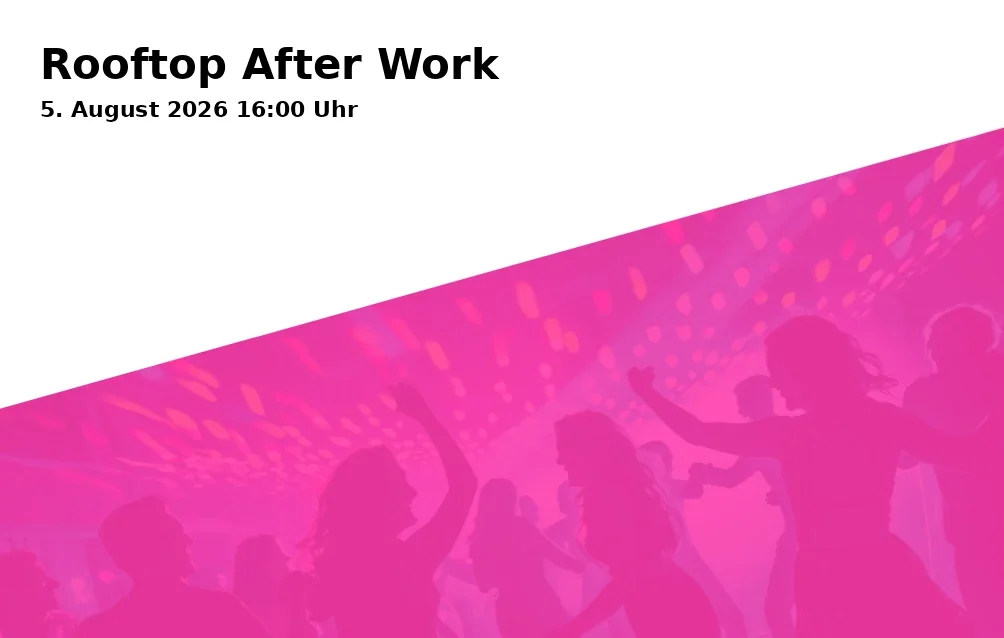
Rooftop After Work
End of the workday with a view: Rooftop After Work in Haas Säle Bamberg brings drinks, games, and summer feeling to the terrace. Free entry! #Bamberg #Afterwork
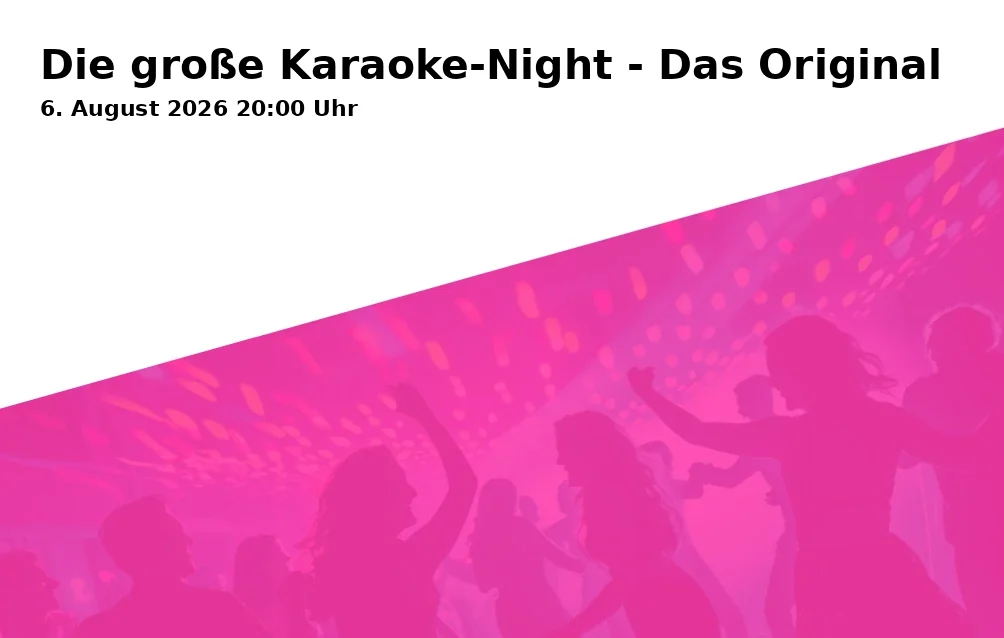
The Big Karaoke Night - The Original
Bamberg sings through summer: The big Karaoke Night at STIL.Bruch brings stage, applause, and joy of free admission together. 06.08.2026 from 8 p.m. #Bamberg

African Night 2026
Experience a night full of African music at the African Night 2026 in Bamberg on August 15, 2026.
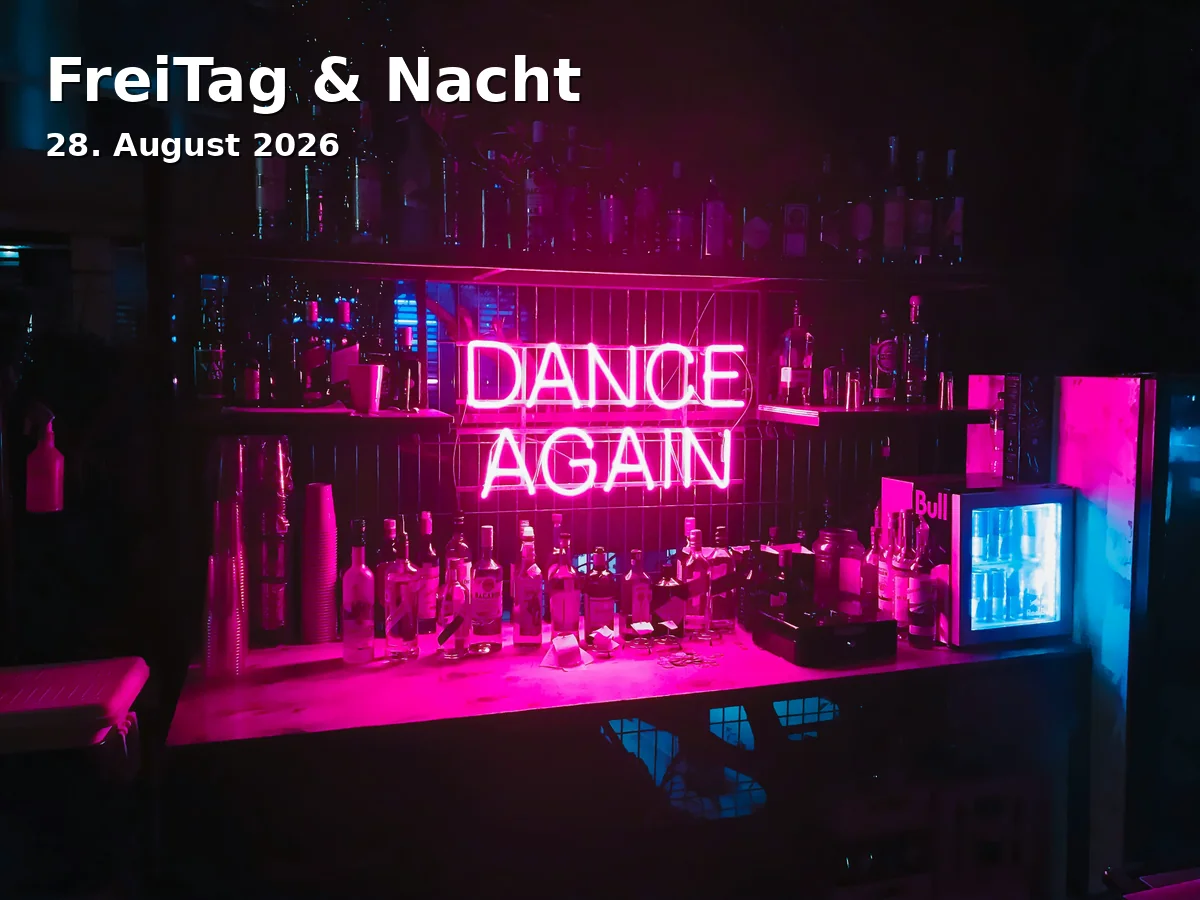
FreiTag & Nacht
Relax with summer drinks and party in Bamberg's nightlife at FreiTag & Nacht on the Haas Säle Terrace!
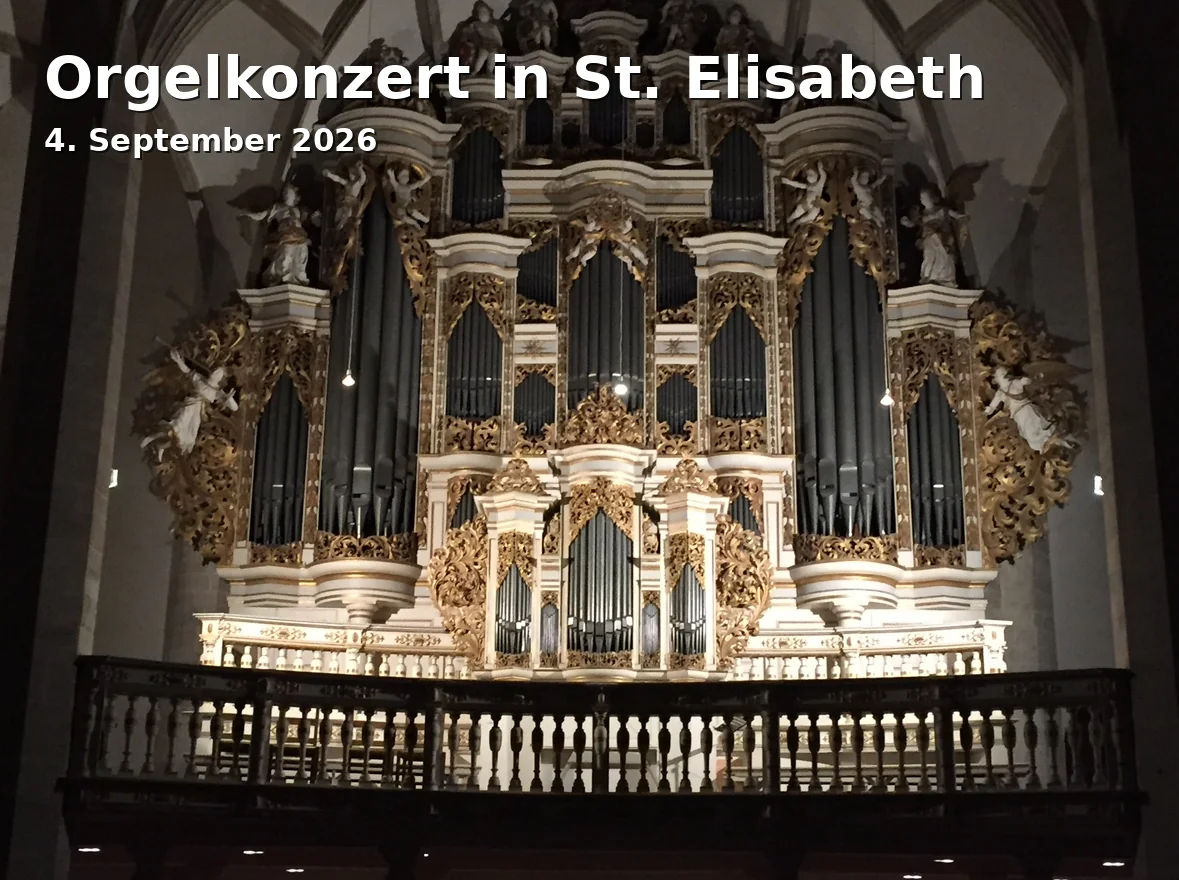
Organ Concert at St. Elisabeth
Join the organ concert on September 4, 2026, at St. Elisabeth in Bamberg. Enjoy the music of Katharina Ackva. Admission is free.
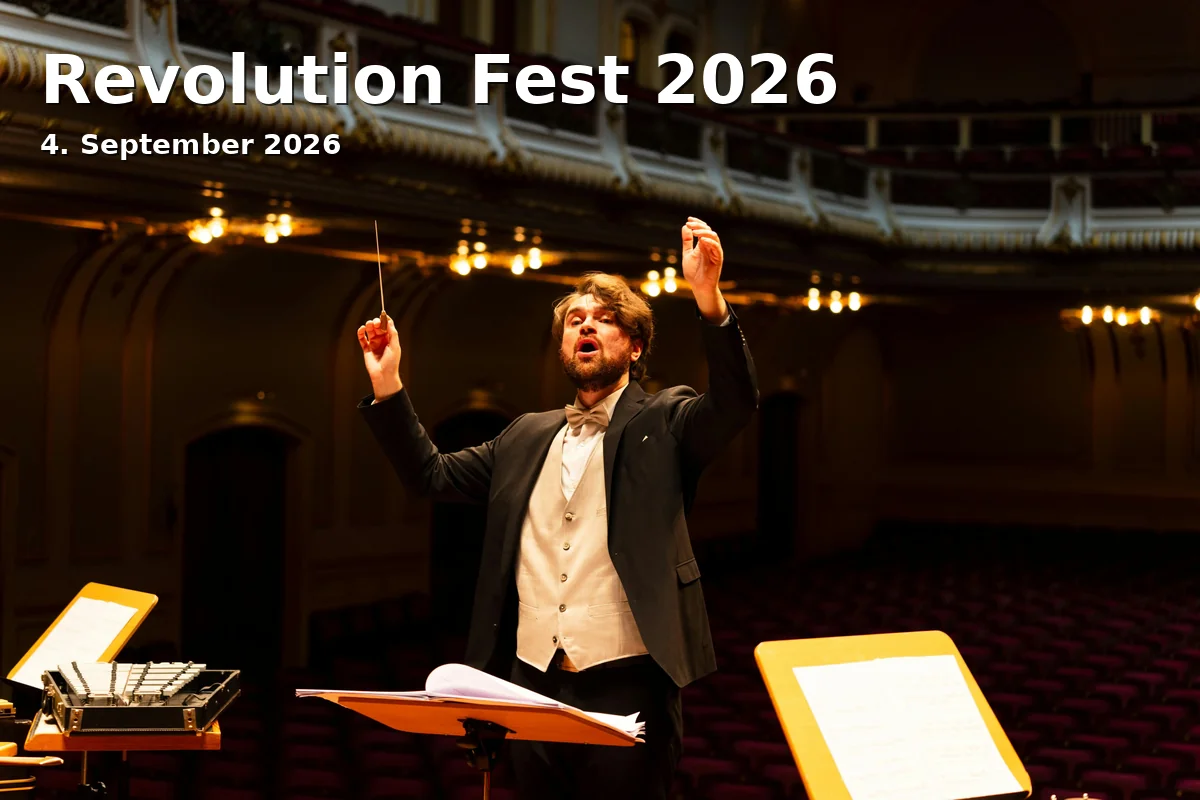
Revolution Fest 2026
The Revolution Fest 2026 brings punk and live music to Bamberg. Be there at the Live Club!
Frequently Asked Questions
Reviews
No reviews found