
Buttenheim
Marktstraße 31-33, 96155 Buttenheim, Deutschland
Levi Strauss Museum | Opening Hours & Admission Prices
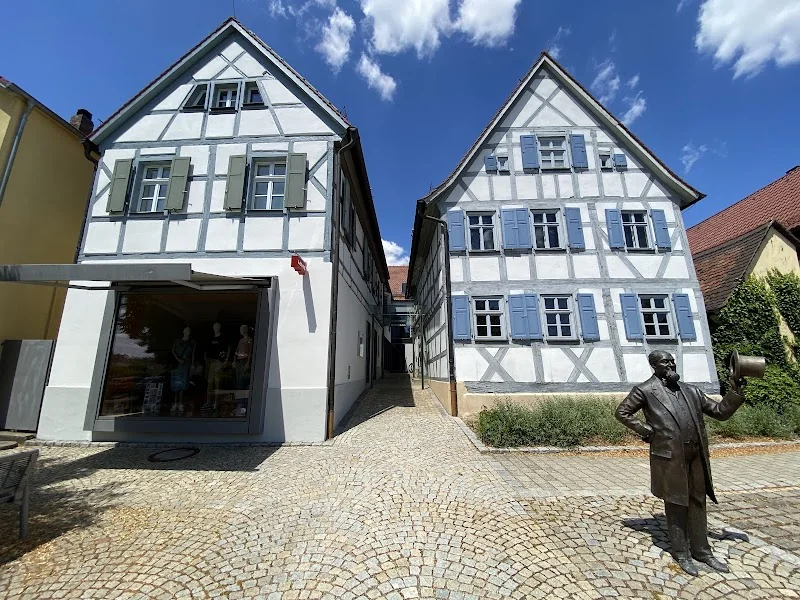
The Levi Strauss Museum in Buttenheim is not just any local museum, but the original site of one of the most famous fashion stories in the world. In this house in Upper Franconia, Buttenheim, Levi Strauss was born, who is considered the father of blue jeans and embodies the American dream with his life story. The official presentation of the museum emphasizes this dual fascination: on one hand, the birthplace of a historical figure, and on the other hand, the international success story of jeans as a garment, cult object, and symbol of youth, freedom, and individuality. The exhibition rooms connect biography, local history, and textile culture in a way that a short visit quickly becomes a content-rich tour. The building itself is a central part of this narrative: it is an old half-timbered house that dates back to the 17th century and has been remodeled several times. After intensive research, triggered by a letter from America in 1983, the history of the building was reworked; since September 2000, the Levi Strauss Museum has been housed there, and in 2011, additional spaces for special exhibitions, events, a cafeteria, and a museum shop were added in the adjacent building. The internationally awarded presentation makes the house one of the most distinctive museum locations in the region. ([levi-strauss-museum.de](https://levi-strauss-museum.de/museum/geschichte/?utm_source=openai))
Opening Hours and Admission Prices at the Levi Strauss Museum
Those planning a visit will find very clear and up-to-date visitor information on the official website. The museum is regularly open on Tuesdays and Thursdays from 2 PM to 6 PM; from November to February, the hours are shortened to 2 PM to 5 PM on these days. On Saturdays, Sundays, and public holidays, it is open from 11 AM to 5 PM. For groups, visits outside normal opening hours are also possible by arrangement, making the museum particularly flexible for travel groups, school classes, and clubs. Additionally, the website lists specific holiday regulations for the summer season of 2026: it will be closed on Good Friday, and open from 11 AM to 5 PM on Easter Saturday, Easter Sunday, Easter Monday, May 1st, Ascension Day, Pentecost Saturday, Pentecost Sunday, Pentecost Monday, and Corpus Christi. This information is not only helpful for travel planning but also shows that the museum is well-prepared for seasonal visitor flows. The admission prices are structured clearly and family-friendly: adults pay 5 euros, students, pupils, and people with disabilities pay 2.50 euros. Groups of 20 or more pay 4 euros per person, and the family ticket for two adults and two children aged 6 and over costs 10 euros. Groups are asked to register in advance. This makes the house suitable for both spontaneous individual visits and planned outings with multiple people. ([levi-strauss-museum.de](https://levi-strauss-museum.de/en/visitor-info/))
Access, Location, and Accessibility in Buttenheim
The Levi Strauss Museum is centrally located in Buttenheim at Marktstraße 31 to 33, making it easy to integrate into a local tour. The official directions are specific and practical: by car, one drives from Bamberg or Nuremberg via the A73 exit Buttenheim, continues straight on the state road, and turns left at the second junction towards Buttenheim-Mitte, along Kellerstraße, until reaching the museum signage. Those preferring to come by train can get off at Buttenheim station and walk about 20 minutes from there. Additionally, the Regnitz Cycle Path is mentioned as a possible route, making the museum attractive for cyclists. Convenient for planning are also the contact details of the house: the museum's and administration's phone numbers, as well as the separate number for the museum shop, are officially provided. Important for many guests is the building's situation: the house is officially reported to be not barrier-free. This information should be kept in mind, especially for wheelchair users, strollers, or those with limited mobility. This is why the clear communication on the website is helpful, as it avoids misunderstandings on site. Although the site does not specify its own parking spaces in detail, the directions by car are simply described, and the location in Buttenheim makes the visit easily combinable with the town center and other stops in the region. This creates the impression of a compact, historically shaped address that consciously integrates into the village and its history. ([levi-strauss-museum.de](https://levi-strauss-museum.de/))
History of the Birthplace and Levi Strauss
The biographical basis of the museum is exceptionally well documented. Levi Strauss was born on February 26, 1829, in Buttenheim as Löb Strauss, the youngest son of the Jewish peddler Hirsch Strauss and his wife Rebecca. When the father died in 1846, the family fell into economic difficulties, prompting Rebecca to emigrate to America with the three youngest children in 1848. Levi was thus early on part of a migration story that later became the core of the museum. After a stay in New York, he was sent to San Francisco in 1853 during the Gold Rush to open a branch of the family business. During this phase, he traded in fabrics and notions, supplying gold miners, laborers, and pioneers with everything they needed for everyday life in the West. The actual breakthrough came through collaboration with tailor Jacob Davis from Reno: on May 20, 1873, both jointly applied for a patent for riveted work pants. This step resulted in the jeans as they are understood worldwide today. Levi Strauss died in 1902 as a wealthy businessman, but his product remained on a successful course and evolved from a robust work garment into a global fashion icon. The fact that a museum dedicated to this story exists in Buttenheim is the result of coincidence, research, and regional commitment. It was only a letter from America in 1983 that prompted the then-mayor to investigate Levi Strauss's birthplace more closely. An entry in the birth register of the Jewish community and an emigration certificate from the Bamberg state archive ultimately confirmed the origin. The birthplace was acquired by the community in 1987, extensively renovated in 1992, and opened as a museum in September 2000. ([levi-strauss-museum.de](https://levi-strauss-museum.de/levi-und-die-jeans/))
Permanent Exhibition, Audio Tour, and Special Exhibitions
The permanent exhibition is designed to not only inform visitors but also to engage them in a narrative movement. According to the museum description, an audio tour with a narrator and Levi Strauss himself guides visitors through the house, linking personal life stages with the history of jeans. On the ground floor, which was the former living area of the Strauss family, the focus is on the childhood and youth of the later inventor of jeans, his emigration, and the living conditions of Franconian rural Jews in the 19th century. This level is important because it shows that the museum not only tells fashion history but also local and social history. On the first floor, everything revolves around jeans themselves: the fabric, the blue color, the beginnings of industrial production, and the global triumph of the pants. A collection of rare pieces made from blue cotton fabric illustrates how versatile and durable this garment has become. In the attic, the history of the blue pants in Germany, their socio-cultural significance, and their recent trends are addressed. Directly under the museum's roof, there is also a small cinema dedicated to the cult of jeans, which answers the question of why jeans continue to embody youth, freedom, and identity through video clips. Additionally, the museum offers digital formats: since 2020, there have been live-stream tours via Zoom in cooperation with AGIL/Bamberg, which are particularly suitable for school classes and groups. There is also the children's program Interwoven for eight to thirteen-year-olds, which addresses everyday history, Jewish, and textile themes in an age-appropriate manner. The special exhibitions further enhance this vibrant character. For 2025, among other things, 'Jeans and their wearers – traces of life on denim' will be shown, and in 2023, the 'Denim Legends' by British artist Ian Berry complemented the exhibition 'The Greatest Story Ever Worn – 150 Years Jeans.' The anniversary year 2025 also brought actions for the 25th anniversary of the museum, including a large anniversary show and a casting for Buttenheim's Next Jeans Models. ([levi-strauss-museum.de](https://levi-strauss-museum.de/en/museum-2/tour-permanent-exhibition/?utm_source=openai))
Museum Shop, Photos, and Special Experiences On-Site
An essential part of the visitor experience is the museum shop, which is explicitly described on the website as an attraction in its own right. There, visitors can find not only souvenirs, books, and smaller Levi's items but also current Levi's collections, classic jeans, and especially the iconic Levi's 501 in various styles. The offering is complemented by fashionable tops and matching jackets, making the shop far more than a typical museum assortment. This is interesting for many visitors because shopping here is not just an addition but a substantive extension of the museum visit: one takes home not only a memory but something directly connected to the history of denim and Levi Strauss. The website itself also works with images, gallery elements, and short films, which visually charge the topic strongly. Those looking for photos will find not only individual views of the house but also a carefully staged combination of historical building, exhibition objects, and modern presentation technology. That the museum is perceived as a special address in the region is also shown by references to international awards for its multimedia presentation technology. This combination of historical site and modern communication is what makes it appealing: the house feels authentic but not outdated; locally rooted but globally relevant. Those who want to see jeans not just as a garment but as a cultural symbol will find a clear narrative with original reference here. At the same time, the house invites visitors to discover something new on a second or third visit with changing special exhibitions and events. This is important because a museum that continuously evolves remains relevant for those seeking photos, reviews, exhibitions, and anniversaries in the long term. ([levi-strauss-museum.de](https://levi-strauss-museum.de/en/museum-shop/))
Groups, School Programs, and Digital Tours
The Levi Strauss Museum is not only a place for individual visitors but also a didactically structured house. The website explicitly describes virtual museum tours via Zoom, which have been offered since 2020 in cooperation with AGIL/Bamberg. For school classes and groups, these live tours are particularly interesting because they are not pre-produced but take place in real-time, can be tailored to the respective group, and allow for questions. This format is suitable for both teaching and the preparation and follow-up of excursions. Additionally, there are accompanying materials for schools as well as the children's program Interwoven, aimed at third to sixth graders, which conveys the life world of Jewish rural communities, the biography of Levi Strauss, and the history of jeans in an age-appropriate manner. Other cooperative educational projects also address the topic of rural life in the 19th century and connect the Levi Strauss Museum with other museums in the region. A particular strength of the house lies in this: it is not only a place of exhibition but also an extracurricular learning location where social history, migration, craftsmanship, and fashion are interconnected. It is also practical for groups that visits outside regular opening hours are possible by arrangement. So, if someone is planning a class trip, a club outing, or a thematic group journey, they have a flexible and clearly structured address here. In summary, the image of a museum emerges that convinces with little size but much narrative power: an authentic place that brings together the history of Levi Strauss, the development of jeans, and the memory of Buttenheim in a compact, well-curated framework. ([levi-strauss-museum.de](https://levi-strauss-museum.de/en/museum-2/museum_education/))
The official museum website, the historical detail page, the visitor information, and the Bavarian museum database together form the basis for this overview. They show a house that tells history not abstractly but at the original site, and which is also very practically organized with a shop, special exhibitions, educational offerings, and seasonal opening hours. Those who want to understand blue jeans will find in Buttenheim not only a birthplace but a well-developed learning and experience location with strong regional roots and international impact. ([levi-strauss-museum.de](https://levi-strauss-museum.de/))
Sources:
- Levi Strauss Museum - Official Homepage
- Levi Strauss Museum - Visitor Info
- Levi Strauss Museum - History of the House
- Levi Strauss Museum - Tour of the Permanent Exhibition
- Levi Strauss Museum - Museum Shop
- Levi Strauss Museum - Museum Education
- Levi Strauss Museum - Special Exhibition 2025
- Levi Strauss Museum - Anniversary Show 2025
- Market Buttenheim - Levi Strauss Museum
- Museums in Bavaria - Birthplace Levi Strauss Museum
Mehr anzeigenWeniger anzeigen
Levi Strauss Museum | Opening Hours & Admission Prices
The Levi Strauss Museum in Buttenheim is not just any local museum, but the original site of one of the most famous fashion stories in the world. In this house in Upper Franconia, Buttenheim, Levi Strauss was born, who is considered the father of blue jeans and embodies the American dream with his life story. The official presentation of the museum emphasizes this dual fascination: on one hand, the birthplace of a historical figure, and on the other hand, the international success story of jeans as a garment, cult object, and symbol of youth, freedom, and individuality. The exhibition rooms connect biography, local history, and textile culture in a way that a short visit quickly becomes a content-rich tour. The building itself is a central part of this narrative: it is an old half-timbered house that dates back to the 17th century and has been remodeled several times. After intensive research, triggered by a letter from America in 1983, the history of the building was reworked; since September 2000, the Levi Strauss Museum has been housed there, and in 2011, additional spaces for special exhibitions, events, a cafeteria, and a museum shop were added in the adjacent building. The internationally awarded presentation makes the house one of the most distinctive museum locations in the region. ([levi-strauss-museum.de](https://levi-strauss-museum.de/museum/geschichte/?utm_source=openai))
Opening Hours and Admission Prices at the Levi Strauss Museum
Those planning a visit will find very clear and up-to-date visitor information on the official website. The museum is regularly open on Tuesdays and Thursdays from 2 PM to 6 PM; from November to February, the hours are shortened to 2 PM to 5 PM on these days. On Saturdays, Sundays, and public holidays, it is open from 11 AM to 5 PM. For groups, visits outside normal opening hours are also possible by arrangement, making the museum particularly flexible for travel groups, school classes, and clubs. Additionally, the website lists specific holiday regulations for the summer season of 2026: it will be closed on Good Friday, and open from 11 AM to 5 PM on Easter Saturday, Easter Sunday, Easter Monday, May 1st, Ascension Day, Pentecost Saturday, Pentecost Sunday, Pentecost Monday, and Corpus Christi. This information is not only helpful for travel planning but also shows that the museum is well-prepared for seasonal visitor flows. The admission prices are structured clearly and family-friendly: adults pay 5 euros, students, pupils, and people with disabilities pay 2.50 euros. Groups of 20 or more pay 4 euros per person, and the family ticket for two adults and two children aged 6 and over costs 10 euros. Groups are asked to register in advance. This makes the house suitable for both spontaneous individual visits and planned outings with multiple people. ([levi-strauss-museum.de](https://levi-strauss-museum.de/en/visitor-info/))
Access, Location, and Accessibility in Buttenheim
The Levi Strauss Museum is centrally located in Buttenheim at Marktstraße 31 to 33, making it easy to integrate into a local tour. The official directions are specific and practical: by car, one drives from Bamberg or Nuremberg via the A73 exit Buttenheim, continues straight on the state road, and turns left at the second junction towards Buttenheim-Mitte, along Kellerstraße, until reaching the museum signage. Those preferring to come by train can get off at Buttenheim station and walk about 20 minutes from there. Additionally, the Regnitz Cycle Path is mentioned as a possible route, making the museum attractive for cyclists. Convenient for planning are also the contact details of the house: the museum's and administration's phone numbers, as well as the separate number for the museum shop, are officially provided. Important for many guests is the building's situation: the house is officially reported to be not barrier-free. This information should be kept in mind, especially for wheelchair users, strollers, or those with limited mobility. This is why the clear communication on the website is helpful, as it avoids misunderstandings on site. Although the site does not specify its own parking spaces in detail, the directions by car are simply described, and the location in Buttenheim makes the visit easily combinable with the town center and other stops in the region. This creates the impression of a compact, historically shaped address that consciously integrates into the village and its history. ([levi-strauss-museum.de](https://levi-strauss-museum.de/))
History of the Birthplace and Levi Strauss
The biographical basis of the museum is exceptionally well documented. Levi Strauss was born on February 26, 1829, in Buttenheim as Löb Strauss, the youngest son of the Jewish peddler Hirsch Strauss and his wife Rebecca. When the father died in 1846, the family fell into economic difficulties, prompting Rebecca to emigrate to America with the three youngest children in 1848. Levi was thus early on part of a migration story that later became the core of the museum. After a stay in New York, he was sent to San Francisco in 1853 during the Gold Rush to open a branch of the family business. During this phase, he traded in fabrics and notions, supplying gold miners, laborers, and pioneers with everything they needed for everyday life in the West. The actual breakthrough came through collaboration with tailor Jacob Davis from Reno: on May 20, 1873, both jointly applied for a patent for riveted work pants. This step resulted in the jeans as they are understood worldwide today. Levi Strauss died in 1902 as a wealthy businessman, but his product remained on a successful course and evolved from a robust work garment into a global fashion icon. The fact that a museum dedicated to this story exists in Buttenheim is the result of coincidence, research, and regional commitment. It was only a letter from America in 1983 that prompted the then-mayor to investigate Levi Strauss's birthplace more closely. An entry in the birth register of the Jewish community and an emigration certificate from the Bamberg state archive ultimately confirmed the origin. The birthplace was acquired by the community in 1987, extensively renovated in 1992, and opened as a museum in September 2000. ([levi-strauss-museum.de](https://levi-strauss-museum.de/levi-und-die-jeans/))
Permanent Exhibition, Audio Tour, and Special Exhibitions
The permanent exhibition is designed to not only inform visitors but also to engage them in a narrative movement. According to the museum description, an audio tour with a narrator and Levi Strauss himself guides visitors through the house, linking personal life stages with the history of jeans. On the ground floor, which was the former living area of the Strauss family, the focus is on the childhood and youth of the later inventor of jeans, his emigration, and the living conditions of Franconian rural Jews in the 19th century. This level is important because it shows that the museum not only tells fashion history but also local and social history. On the first floor, everything revolves around jeans themselves: the fabric, the blue color, the beginnings of industrial production, and the global triumph of the pants. A collection of rare pieces made from blue cotton fabric illustrates how versatile and durable this garment has become. In the attic, the history of the blue pants in Germany, their socio-cultural significance, and their recent trends are addressed. Directly under the museum's roof, there is also a small cinema dedicated to the cult of jeans, which answers the question of why jeans continue to embody youth, freedom, and identity through video clips. Additionally, the museum offers digital formats: since 2020, there have been live-stream tours via Zoom in cooperation with AGIL/Bamberg, which are particularly suitable for school classes and groups. There is also the children's program Interwoven for eight to thirteen-year-olds, which addresses everyday history, Jewish, and textile themes in an age-appropriate manner. The special exhibitions further enhance this vibrant character. For 2025, among other things, 'Jeans and their wearers – traces of life on denim' will be shown, and in 2023, the 'Denim Legends' by British artist Ian Berry complemented the exhibition 'The Greatest Story Ever Worn – 150 Years Jeans.' The anniversary year 2025 also brought actions for the 25th anniversary of the museum, including a large anniversary show and a casting for Buttenheim's Next Jeans Models. ([levi-strauss-museum.de](https://levi-strauss-museum.de/en/museum-2/tour-permanent-exhibition/?utm_source=openai))
Museum Shop, Photos, and Special Experiences On-Site
An essential part of the visitor experience is the museum shop, which is explicitly described on the website as an attraction in its own right. There, visitors can find not only souvenirs, books, and smaller Levi's items but also current Levi's collections, classic jeans, and especially the iconic Levi's 501 in various styles. The offering is complemented by fashionable tops and matching jackets, making the shop far more than a typical museum assortment. This is interesting for many visitors because shopping here is not just an addition but a substantive extension of the museum visit: one takes home not only a memory but something directly connected to the history of denim and Levi Strauss. The website itself also works with images, gallery elements, and short films, which visually charge the topic strongly. Those looking for photos will find not only individual views of the house but also a carefully staged combination of historical building, exhibition objects, and modern presentation technology. That the museum is perceived as a special address in the region is also shown by references to international awards for its multimedia presentation technology. This combination of historical site and modern communication is what makes it appealing: the house feels authentic but not outdated; locally rooted but globally relevant. Those who want to see jeans not just as a garment but as a cultural symbol will find a clear narrative with original reference here. At the same time, the house invites visitors to discover something new on a second or third visit with changing special exhibitions and events. This is important because a museum that continuously evolves remains relevant for those seeking photos, reviews, exhibitions, and anniversaries in the long term. ([levi-strauss-museum.de](https://levi-strauss-museum.de/en/museum-shop/))
Groups, School Programs, and Digital Tours
The Levi Strauss Museum is not only a place for individual visitors but also a didactically structured house. The website explicitly describes virtual museum tours via Zoom, which have been offered since 2020 in cooperation with AGIL/Bamberg. For school classes and groups, these live tours are particularly interesting because they are not pre-produced but take place in real-time, can be tailored to the respective group, and allow for questions. This format is suitable for both teaching and the preparation and follow-up of excursions. Additionally, there are accompanying materials for schools as well as the children's program Interwoven, aimed at third to sixth graders, which conveys the life world of Jewish rural communities, the biography of Levi Strauss, and the history of jeans in an age-appropriate manner. Other cooperative educational projects also address the topic of rural life in the 19th century and connect the Levi Strauss Museum with other museums in the region. A particular strength of the house lies in this: it is not only a place of exhibition but also an extracurricular learning location where social history, migration, craftsmanship, and fashion are interconnected. It is also practical for groups that visits outside regular opening hours are possible by arrangement. So, if someone is planning a class trip, a club outing, or a thematic group journey, they have a flexible and clearly structured address here. In summary, the image of a museum emerges that convinces with little size but much narrative power: an authentic place that brings together the history of Levi Strauss, the development of jeans, and the memory of Buttenheim in a compact, well-curated framework. ([levi-strauss-museum.de](https://levi-strauss-museum.de/en/museum-2/museum_education/))
The official museum website, the historical detail page, the visitor information, and the Bavarian museum database together form the basis for this overview. They show a house that tells history not abstractly but at the original site, and which is also very practically organized with a shop, special exhibitions, educational offerings, and seasonal opening hours. Those who want to understand blue jeans will find in Buttenheim not only a birthplace but a well-developed learning and experience location with strong regional roots and international impact. ([levi-strauss-museum.de](https://levi-strauss-museum.de/))
Sources:
- Levi Strauss Museum - Official Homepage
- Levi Strauss Museum - Visitor Info
- Levi Strauss Museum - History of the House
- Levi Strauss Museum - Tour of the Permanent Exhibition
- Levi Strauss Museum - Museum Shop
- Levi Strauss Museum - Museum Education
- Levi Strauss Museum - Special Exhibition 2025
- Levi Strauss Museum - Anniversary Show 2025
- Market Buttenheim - Levi Strauss Museum
- Museums in Bavaria - Birthplace Levi Strauss Museum
Levi Strauss Museum | Opening Hours & Admission Prices
The Levi Strauss Museum in Buttenheim is not just any local museum, but the original site of one of the most famous fashion stories in the world. In this house in Upper Franconia, Buttenheim, Levi Strauss was born, who is considered the father of blue jeans and embodies the American dream with his life story. The official presentation of the museum emphasizes this dual fascination: on one hand, the birthplace of a historical figure, and on the other hand, the international success story of jeans as a garment, cult object, and symbol of youth, freedom, and individuality. The exhibition rooms connect biography, local history, and textile culture in a way that a short visit quickly becomes a content-rich tour. The building itself is a central part of this narrative: it is an old half-timbered house that dates back to the 17th century and has been remodeled several times. After intensive research, triggered by a letter from America in 1983, the history of the building was reworked; since September 2000, the Levi Strauss Museum has been housed there, and in 2011, additional spaces for special exhibitions, events, a cafeteria, and a museum shop were added in the adjacent building. The internationally awarded presentation makes the house one of the most distinctive museum locations in the region. ([levi-strauss-museum.de](https://levi-strauss-museum.de/museum/geschichte/?utm_source=openai))
Opening Hours and Admission Prices at the Levi Strauss Museum
Those planning a visit will find very clear and up-to-date visitor information on the official website. The museum is regularly open on Tuesdays and Thursdays from 2 PM to 6 PM; from November to February, the hours are shortened to 2 PM to 5 PM on these days. On Saturdays, Sundays, and public holidays, it is open from 11 AM to 5 PM. For groups, visits outside normal opening hours are also possible by arrangement, making the museum particularly flexible for travel groups, school classes, and clubs. Additionally, the website lists specific holiday regulations for the summer season of 2026: it will be closed on Good Friday, and open from 11 AM to 5 PM on Easter Saturday, Easter Sunday, Easter Monday, May 1st, Ascension Day, Pentecost Saturday, Pentecost Sunday, Pentecost Monday, and Corpus Christi. This information is not only helpful for travel planning but also shows that the museum is well-prepared for seasonal visitor flows. The admission prices are structured clearly and family-friendly: adults pay 5 euros, students, pupils, and people with disabilities pay 2.50 euros. Groups of 20 or more pay 4 euros per person, and the family ticket for two adults and two children aged 6 and over costs 10 euros. Groups are asked to register in advance. This makes the house suitable for both spontaneous individual visits and planned outings with multiple people. ([levi-strauss-museum.de](https://levi-strauss-museum.de/en/visitor-info/))
Access, Location, and Accessibility in Buttenheim
The Levi Strauss Museum is centrally located in Buttenheim at Marktstraße 31 to 33, making it easy to integrate into a local tour. The official directions are specific and practical: by car, one drives from Bamberg or Nuremberg via the A73 exit Buttenheim, continues straight on the state road, and turns left at the second junction towards Buttenheim-Mitte, along Kellerstraße, until reaching the museum signage. Those preferring to come by train can get off at Buttenheim station and walk about 20 minutes from there. Additionally, the Regnitz Cycle Path is mentioned as a possible route, making the museum attractive for cyclists. Convenient for planning are also the contact details of the house: the museum's and administration's phone numbers, as well as the separate number for the museum shop, are officially provided. Important for many guests is the building's situation: the house is officially reported to be not barrier-free. This information should be kept in mind, especially for wheelchair users, strollers, or those with limited mobility. This is why the clear communication on the website is helpful, as it avoids misunderstandings on site. Although the site does not specify its own parking spaces in detail, the directions by car are simply described, and the location in Buttenheim makes the visit easily combinable with the town center and other stops in the region. This creates the impression of a compact, historically shaped address that consciously integrates into the village and its history. ([levi-strauss-museum.de](https://levi-strauss-museum.de/))
History of the Birthplace and Levi Strauss
The biographical basis of the museum is exceptionally well documented. Levi Strauss was born on February 26, 1829, in Buttenheim as Löb Strauss, the youngest son of the Jewish peddler Hirsch Strauss and his wife Rebecca. When the father died in 1846, the family fell into economic difficulties, prompting Rebecca to emigrate to America with the three youngest children in 1848. Levi was thus early on part of a migration story that later became the core of the museum. After a stay in New York, he was sent to San Francisco in 1853 during the Gold Rush to open a branch of the family business. During this phase, he traded in fabrics and notions, supplying gold miners, laborers, and pioneers with everything they needed for everyday life in the West. The actual breakthrough came through collaboration with tailor Jacob Davis from Reno: on May 20, 1873, both jointly applied for a patent for riveted work pants. This step resulted in the jeans as they are understood worldwide today. Levi Strauss died in 1902 as a wealthy businessman, but his product remained on a successful course and evolved from a robust work garment into a global fashion icon. The fact that a museum dedicated to this story exists in Buttenheim is the result of coincidence, research, and regional commitment. It was only a letter from America in 1983 that prompted the then-mayor to investigate Levi Strauss's birthplace more closely. An entry in the birth register of the Jewish community and an emigration certificate from the Bamberg state archive ultimately confirmed the origin. The birthplace was acquired by the community in 1987, extensively renovated in 1992, and opened as a museum in September 2000. ([levi-strauss-museum.de](https://levi-strauss-museum.de/levi-und-die-jeans/))
Permanent Exhibition, Audio Tour, and Special Exhibitions
The permanent exhibition is designed to not only inform visitors but also to engage them in a narrative movement. According to the museum description, an audio tour with a narrator and Levi Strauss himself guides visitors through the house, linking personal life stages with the history of jeans. On the ground floor, which was the former living area of the Strauss family, the focus is on the childhood and youth of the later inventor of jeans, his emigration, and the living conditions of Franconian rural Jews in the 19th century. This level is important because it shows that the museum not only tells fashion history but also local and social history. On the first floor, everything revolves around jeans themselves: the fabric, the blue color, the beginnings of industrial production, and the global triumph of the pants. A collection of rare pieces made from blue cotton fabric illustrates how versatile and durable this garment has become. In the attic, the history of the blue pants in Germany, their socio-cultural significance, and their recent trends are addressed. Directly under the museum's roof, there is also a small cinema dedicated to the cult of jeans, which answers the question of why jeans continue to embody youth, freedom, and identity through video clips. Additionally, the museum offers digital formats: since 2020, there have been live-stream tours via Zoom in cooperation with AGIL/Bamberg, which are particularly suitable for school classes and groups. There is also the children's program Interwoven for eight to thirteen-year-olds, which addresses everyday history, Jewish, and textile themes in an age-appropriate manner. The special exhibitions further enhance this vibrant character. For 2025, among other things, 'Jeans and their wearers – traces of life on denim' will be shown, and in 2023, the 'Denim Legends' by British artist Ian Berry complemented the exhibition 'The Greatest Story Ever Worn – 150 Years Jeans.' The anniversary year 2025 also brought actions for the 25th anniversary of the museum, including a large anniversary show and a casting for Buttenheim's Next Jeans Models. ([levi-strauss-museum.de](https://levi-strauss-museum.de/en/museum-2/tour-permanent-exhibition/?utm_source=openai))
Museum Shop, Photos, and Special Experiences On-Site
An essential part of the visitor experience is the museum shop, which is explicitly described on the website as an attraction in its own right. There, visitors can find not only souvenirs, books, and smaller Levi's items but also current Levi's collections, classic jeans, and especially the iconic Levi's 501 in various styles. The offering is complemented by fashionable tops and matching jackets, making the shop far more than a typical museum assortment. This is interesting for many visitors because shopping here is not just an addition but a substantive extension of the museum visit: one takes home not only a memory but something directly connected to the history of denim and Levi Strauss. The website itself also works with images, gallery elements, and short films, which visually charge the topic strongly. Those looking for photos will find not only individual views of the house but also a carefully staged combination of historical building, exhibition objects, and modern presentation technology. That the museum is perceived as a special address in the region is also shown by references to international awards for its multimedia presentation technology. This combination of historical site and modern communication is what makes it appealing: the house feels authentic but not outdated; locally rooted but globally relevant. Those who want to see jeans not just as a garment but as a cultural symbol will find a clear narrative with original reference here. At the same time, the house invites visitors to discover something new on a second or third visit with changing special exhibitions and events. This is important because a museum that continuously evolves remains relevant for those seeking photos, reviews, exhibitions, and anniversaries in the long term. ([levi-strauss-museum.de](https://levi-strauss-museum.de/en/museum-shop/))
Groups, School Programs, and Digital Tours
The Levi Strauss Museum is not only a place for individual visitors but also a didactically structured house. The website explicitly describes virtual museum tours via Zoom, which have been offered since 2020 in cooperation with AGIL/Bamberg. For school classes and groups, these live tours are particularly interesting because they are not pre-produced but take place in real-time, can be tailored to the respective group, and allow for questions. This format is suitable for both teaching and the preparation and follow-up of excursions. Additionally, there are accompanying materials for schools as well as the children's program Interwoven, aimed at third to sixth graders, which conveys the life world of Jewish rural communities, the biography of Levi Strauss, and the history of jeans in an age-appropriate manner. Other cooperative educational projects also address the topic of rural life in the 19th century and connect the Levi Strauss Museum with other museums in the region. A particular strength of the house lies in this: it is not only a place of exhibition but also an extracurricular learning location where social history, migration, craftsmanship, and fashion are interconnected. It is also practical for groups that visits outside regular opening hours are possible by arrangement. So, if someone is planning a class trip, a club outing, or a thematic group journey, they have a flexible and clearly structured address here. In summary, the image of a museum emerges that convinces with little size but much narrative power: an authentic place that brings together the history of Levi Strauss, the development of jeans, and the memory of Buttenheim in a compact, well-curated framework. ([levi-strauss-museum.de](https://levi-strauss-museum.de/en/museum-2/museum_education/))
The official museum website, the historical detail page, the visitor information, and the Bavarian museum database together form the basis for this overview. They show a house that tells history not abstractly but at the original site, and which is also very practically organized with a shop, special exhibitions, educational offerings, and seasonal opening hours. Those who want to understand blue jeans will find in Buttenheim not only a birthplace but a well-developed learning and experience location with strong regional roots and international impact. ([levi-strauss-museum.de](https://levi-strauss-museum.de/))
Sources:
- Levi Strauss Museum - Official Homepage
- Levi Strauss Museum - Visitor Info
- Levi Strauss Museum - History of the House
- Levi Strauss Museum - Tour of the Permanent Exhibition
- Levi Strauss Museum - Museum Shop
- Levi Strauss Museum - Museum Education
- Levi Strauss Museum - Special Exhibition 2025
- Levi Strauss Museum - Anniversary Show 2025
- Market Buttenheim - Levi Strauss Museum
- Museums in Bavaria - Birthplace Levi Strauss Museum
Frequently Asked Questions
Reviews
Sophie Pownall
13. January 2024
It was very interesting to learn about the man who founded Levis. In the first part of the museum, it was guided by an audio tour which I would imagine is available in several languages. It was a little bit too much audio for me. I would have preferred more visual elements. For the later part, there was a cool cinema where you could watch old Levi adverts. That was my favorite part. The newer part of the museum was also pretty cool with lots of info on modern culture and even the women’s movement but only in German.
Christa Ken
24. March 2024
Levi’s original birth house is renovated into a kind of storyline with audio guide. In my opinion, rich of information. The rooms are small as it originally was, so it can be a bit narrow if a lot of people are visiting. A store by the end, sadly no good offers..that’s why not 5 star..Tickets: 5€/person
Nikhil Kevin Jones
26. September 2023
Nice history of one of the greatest jeans and jackets manufacturers. Good audio guide of the story of Levi Strauss from Bavaria to San Francisco. Worth it.
Cielo del Cielo
2. October 2019
An old house of Löb Strauß known as Levi's Strauss and currently a museum. Audio guide is available in English and in Deutsch. Inside tells the story of how he started the business and his journey to the U.S.. Beside the museum is a Levi's shop and a small coffee shop on the corner.
Rickert van der vlies
28. July 2025
Cute little museum about the history of Levi Strauss. One thing I missed in the shop were special editions / retro models with heavy fabric.