
Litzendorf
Schimmelsgraben 4, 96123 Litzendorf, Deutschland
Catholic Church St. Wenceslaus | Opening Hours & Directions
The Catholic Church St. Wenceslaus in Litzendorf is much more than a quiet place for short visits. It is the spiritual center of a developed village history, a prominent building from the Baroque period, and a destination for all who seek culture, architecture, and quiet moments in the Franconian Tuscany. The church, together with the town hall, the rectory, and the historic churchyard, shapes the townscape on the northeastern edge of Litzendorf, where the church can be seen from afar as part of an impressive ensemble. Visitors will find not only a traditional sacred space here but also a place with open accessibility, good orientation, and a surprisingly vibrant role in the cultural life of the town. The church is open daily, guided tours are available upon request, and especially in autumn, it becomes a very special experience with its candlelight concerts. Those searching for St. Wenceslaus Litzendorf often seek history, photos, directions, and practical visitor information at the same time. This mixture makes the church particularly interesting for guests, locals, and pilgrims. ([fsvf.de](https://www.fsvf.de/detail/id%3D5f57733b5f7f9b38066ef0b9?utm_source=openai))
History of the Parish Church St. Wenceslaus
The history of the parish church dates back significantly further than the current Baroque building. Sources mention a chapel in Litzendorf for the first time in 1402; the founding document of the parish from 1406 confirms that this chapel was dedicated to Saint Wenceslaus. This shows that the church patron was already closely connected to the history of the place very early on. The current church stands on the same site as its predecessor buildings, and during heating work in 1972, foundations were uncovered that extended to the area of the fourth pew of the current house of worship. Information from church accounts also suggests that the older church already had two entrances and a gallery. A possible relic from this early time is the relief of Saint Wenceslaus, which can now be seen at the town hall. The history of the place can thus be read not only in archives but also in the space itself. Additionally, the historic churchyard with its ossuary and cemetery wall enhances the impression of a church space that has developed over centuries. Therefore, when visiting the church, one does not simply enter a single building but a preserved ensemble of faith history, village development, and regional memory culture. ([pfarrei-litzendorf.de](https://pfarrei-litzendorf.de/pfarreien-kirchen/pfarrei-litzendorf/litzendorf?utm_source=openai))
Particularly exciting is the role of the church patron St. Wenceslaus, also known as Wenzel or Vaclav in the German-speaking world. He is considered the national saint of the Bohemians and is rather rarely venerated in the Bamberg area, which gives the patronage in Litzendorf an additional historical depth. The choice of the patron is associated with the Bohemian ruler tradition and with political and ecclesiastical references of the late Middle Ages. Thus, Wenceslaus symbolically represents the close bond between spiritual life, regional power, and local identity. The current church visibly illustrates this connection: The patron stands as a figure above the main entrance, the images on the high altar depict scenes from his life, and even at the town hall, one encounters him in the form of a late Gothic relief. The historic ossuary at the southeastern corner of the church square also contributes to the special atmosphere. It is currently used as a war memorial, thus reminding us of the connection between religious memory and secular history. Together with the park-like cemetery, a quiet yet very expressive place is created, where Litzendorf's past can be read in several layers. ([fsvf.de](https://www.fsvf.de/detail/id%3D5f57733b5f7f9b38066ef0b9?utm_source=openai))
Baroque Building by Johann Dientzenhofer and Its Furnishings
The Baroque new building that visitors see today was constructed between 1715 and 1718 according to a plan by Johann Dientzenhofer. As early as 1713, he inspected the old house of worship together with the pastor and local officials; the result was clear: a restoration was no longer worthwhile. In the summer of 1715, the foundation stone was laid, and already in the same year, the roof construction began. The construction work was a community effort of the village. Sandstone blocks were quarried in the quarries at Stammberg and transported to the village by the farmers, and the construction wood came from the Hauptsmoorwald and Stammberg. This craftsmanship and organizational collaboration explains why the church is still perceived today as a particularly authentic village and Baroque monument. Sources also emphasize that the parish church of Litzendorf is the only church that Dientzenhofer designed as a simple parish church. This gives the building a special rank within his overall work. In addition to the architecture, the furnishings also play a significant role: The high altar and side altars were added in the early 1720s, and the southern reliefs were added in 1723 and 1734. Thus, the construction phase was not abruptly completed but was finished in several steps. This slow growth of the furnishings explains why the interior appears so cohesive yet tells many individual stories. ([pfarrei-litzendorf.de](https://pfarrei-litzendorf.de/pfarreien-kirchen/pfarrei-litzendorf/litzendorf?utm_source=openai))
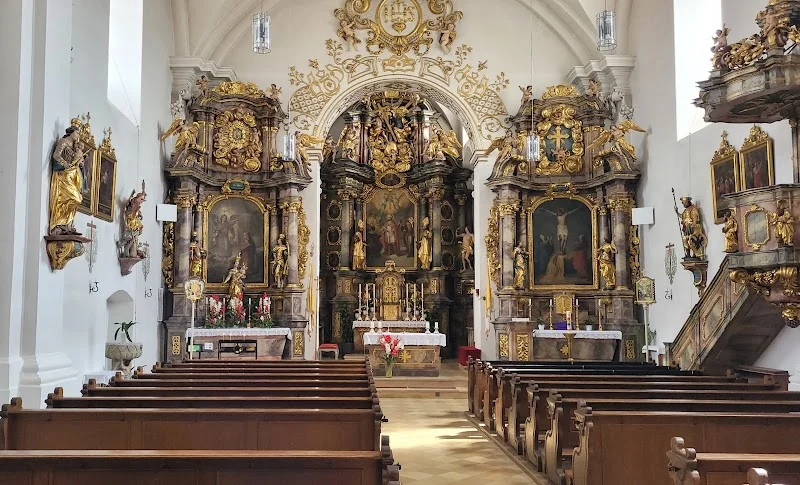
The interior of the church bears the signature of several artists. According to nature park information, the sculptor Gollwitzer and the carpenter Franz Jörg created altars, saint figures, and the pulpit, while the Bamberg painter Müller took care of the painting and gilding. The baptismal font, which stands in front of the left side altar, also comes from Gollwitzer and was created in 1734. On the south side of the church, that is, towards the village, there are reliefs depicting the Mount of Olives scene and the resurrection of Christ. They are among the most prominent artworks of the building because they carry the Baroque imagery directly outward. The historic ossuary at the southeastern corner of the church square was built by a master builder Weber from Staffelstein and is now the war memorial of the parish. Between 1972 and 1976, the church was renovated inside and out, as was the roof of the ossuary. Thus, the parish church St. Wenceslaus connects medieval roots, Baroque design joy, and careful monument preservation. Therefore, those searching for photos of St. Wenceslaus Litzendorf will discover not only a pretty facade but also a multi-layered building with a clear history, rich furnishings, and a usage that is still maintained today. ([fsvf.de](https://www.fsvf.de/detail/id%3D5f57733b5f7f9b38066ef0b9?utm_source=openai))
Opening Hours, Tours, and Parish Office
For visitors, practical information is particularly important, and here St. Wenceslaus offers clear orientation. The church is open daily from 8:00 AM to 5:00 PM. This is very pleasant for a village church visit, as the visit can be easily combined with a walk through Litzendorf or an excursion into the Franconian Tuscany. Those who want to learn more about the interior can request a guided tour. The nature park website mentions the tourist info Franconian Tuscany at 09505 8064106 for this purpose. Additionally, the parish refers to a church guide available in the church and asks for contact through the parish office for a church tour. This combination of freely accessible church and optional professional guidance makes the place particularly attractive for groups, culture enthusiasts, and anyone who wants to not only see but also understand the details of Baroque architecture. In this context, the cultural-historical added value is also important: the church is not a museum-like closed space but a lively place of worship where religious and cultural use are closely interconnected. Especially in a church with such a long history, this openness creates a good access for visitors who decide spontaneously for a short stop or want to plan their stay purposefully. ([fsvf.de](https://www.fsvf.de/detail/id%3D5f57733b5f7f9b38066ef0b9?utm_source=openai))
The parish office also includes reliable contact information that is helpful for inquiries. The official page lists the Catholic parish office Litzendorf at Schimmelsgraben 2, 96123 Litzendorf, with the phone number 09505 375 and the email address of the pastoral area. The nature park page adds the opening hours of the parish office: Tuesday and Thursday from 9:00 AM to 12:00 PM and Wednesday from 4:00 PM to 6:00 PM. For guests who want to prepare their visit more precisely, this is particularly practical, as guided tours, group inquiries, or organizational questions can be clarified directly. Those who wish to participate in church events will also find the right contact person here. This is relevant because St. Wenceslaus is used not only for Sunday services but also for special liturgical and cultural dates. Therefore, visitors should ideally check before a longer journey whether they want to experience a visit, a tour, or a service. Especially for church photography, group visits, or thematic tours, a brief contact in advance is worthwhile, as this allows the open times to be optimally combined with personal planning. ([pfarrei-litzendorf.de](https://pfarrei-litzendorf.de/pfarreien-kirchen/pfarrei-litzendorf/litzendorf?utm_source=openai))
Directions, Parking, and Accessibility
The route to the Parish Church St. Wenceslaus is easy to follow thanks to its location in Litzendorf. Bamberg Tourism describes the location with Schimmelsgraben in 96123 Litzendorf and additionally mentions the location via the A73 motorway, exit Bamberg East, about eight kilometers east of Bamberg. For guests from the region, this is a clear advantage, as the visit to the church can be planned without complicated local knowledge. The house of worship is located on the northeastern edge of the village in an ensemble with the town hall and rectory, making it visually easy to find. Those arriving by car will find a dedicated area for parking on visitor portals, but no detailed parking space description directly at the church. For this reason, it is advisable to pay attention to the current parking situation on-site and, if necessary, to ask the tourist info. This honest assessment is important because one should not automatically expect a large parking lot like at an event hall for a village church visit. The charm of the place lies precisely in the fact that the church, cemetery, and village center are closely intertwined. Visitors can usually comfortably walk the short distance from the village area to the church, making their stay very relaxed. ([bamberg.info](https://www.bamberg.info/poi/st_wenzeslaus_in_litzendorf-8396/))
Especially positive is the barrier-free access. Bamberg Tourism explicitly describes the church as wheelchair accessible and mentions an entrance without a step. This makes St. Wenceslaus well accessible for people with limited mobility. Additionally, the nature park page shows that guided tours are available upon request and that the church is open daily, which further simplifies planning. For practical visits, the surrounding facilities are also useful: In the nearby town hall, there are public restrooms during regular opening hours, and the village center of Litzendorf offers additional infrastructure for a longer stay. This makes the church not only a destination for a quick photo stop but also a place where one can consciously linger. Those searching for barrier-free access, directions, parking, or church Litzendorf will thus receive a fairly clear answer: The access is good, the location is central and clear, and the most important visitor information can be organized without much effort. This is a real plus for groups or older visitors, as the church remains not only beautiful but also practically accessible. ([bamberg.info](https://www.bamberg.info/poi/st_wenzeslaus_in_litzendorf-8396/))
Candlelight Concerts, Acoustics, and Photo Motifs
One of the greatest features of St. Wenceslaus is the acoustics. The nature park information describes it as exceptionally good and emphasizes that even the finest nuances of classical music are perceivable. For this reason, candlelight concerts have been held in autumn since 1975, combining the Baroque atmosphere with musical quality. According to the sources, musicians from the Bamberg Symphony, renowned instrumentalists, and choirs regularly participate. This makes the church a place where sacred architecture and music interact directly. Additionally, Bamberg Tourism points out that candlelight concerts take place in October, highlighting the seasonal character of these events. For visitors, this means: If you want to experience the church not only architecturally but also acoustically, you should particularly keep an eye on autumn. The cultural reputation of the church thus goes far beyond the status of a village sacred site. It is simultaneously a concert venue, a space of remembrance, and a piece of living regional cultural landscape. Especially when searching for events, programs, or special experiences in Litzendorf, St. Wenceslaus is therefore a strong hit. The combination of a quiet environment, high-quality music, and atmospheric lighting is rare and makes the visit impressively memorable. ([fsvf.de](https://www.fsvf.de/detail/id%3D5f57733b5f7f9b38066ef0b9?utm_source=openai))
The church also offers many good motifs for photography. From the west, according to the parish, two facades and the choir tower in the east are clearly visible, allowing for different perspectives. The ensemble of the town hall, rectory, churchyard wall, and ossuary creates a harmonious frame that is particularly attractive for exterior shots. Those searching for St. Wenceslaus Litzendorf photos will therefore find not only the classic frontal view but also many smaller motifs: the Baroque entrance with the figure of the patron, the south side with the reliefs, the historic ossuary, and the park-like cemetery surroundings. The relief of Saint Wenceslaus at the town hall can also be included as a complementary image motif in a village tour. The church visibly stands out from the village due to the slightly rising and historically significant terrain, making it particularly interesting for panoramic shots. Especially in the morning or evening hours, the combination of sandstone, green spaces, and Baroque architecture appears very calm and expressive. Those planning a visit should therefore take some time to not only absorb the interior but also the entire surroundings. This creates a complete impression of a church that remarkably connects history, music, village life, and photogenicity. ([pfarrei-litzendorf.de](https://pfarrei-litzendorf.de/pfarreien-kirchen/pfarrei-litzendorf/litzendorf?utm_source=openai))
Photo Motifs, Surroundings, and the Best Impressions On-Site
The immediate surroundings of the church are almost as important for the overall impression as the building itself. On the northeastern edge of Litzendorf, according to the parish, a widely visible ensemble of the town hall, parish church, and rectory rises. This tripartite structure creates a very clear townscape that is suitable for both walks and photos. The former cemetery is now surrounded by a park-like green area, and the slightly rising location enhances the presence of the church in the village. The historic ossuary with its curved slate roof and its use as a war memorial adds a quiet, contemplative layer. Especially for those interested in historical church spaces, this combination of architecture, memory culture, and landscape embedding often appears particularly intense in smaller places. St. Wenceslaus is thus not only a destination for believers or art lovers but also for anyone interested in local history and regional building culture. The church is easily accessible during the day, clearly readable in its design, and so openly embedded in its surroundings that one can easily combine the visit with a village tour. This is a key reason why the place has a firm place in tourist perception. ([pfarrei-litzendorf.de](https://pfarrei-litzendorf.de/pfarreien-kirchen/pfarrei-litzendorf/litzendorf?utm_source=openai))
In summary, it becomes clear: The Catholic Church St. Wenceslaus in Litzendorf is a place with strong historical depth, clear Baroque character, and a surprisingly vibrant present. The combination of medieval prehistory, Dientzenhofer building, well-maintained church space, good accessibility, and cultural events makes it a versatile destination. Those searching for opening hours, directions, parking, or photos will find here a church that is not only beautiful to look at but can also be reliably visited. For more information, it is best to use the tourist info Franconian Tuscany or the parish office, as practical information is gathered there. For a short visit, often just a glance at the facade and the surroundings is enough, while for a longer stay, an interior visit is worthwhile, and for music lovers, a candlelight concert in autumn is a particularly impressive option. Thus, St. Wenceslaus remains not just a name in search results but a real place with atmosphere, history, and recognizability. ([fsvf.de](https://www.fsvf.de/detail/id%3D5f57733b5f7f9b38066ef0b9?utm_source=openai))
Sources:
Mehr anzeigenWeniger anzeigen
Catholic Church St. Wenceslaus | Opening Hours & Directions
The Catholic Church St. Wenceslaus in Litzendorf is much more than a quiet place for short visits. It is the spiritual center of a developed village history, a prominent building from the Baroque period, and a destination for all who seek culture, architecture, and quiet moments in the Franconian Tuscany. The church, together with the town hall, the rectory, and the historic churchyard, shapes the townscape on the northeastern edge of Litzendorf, where the church can be seen from afar as part of an impressive ensemble. Visitors will find not only a traditional sacred space here but also a place with open accessibility, good orientation, and a surprisingly vibrant role in the cultural life of the town. The church is open daily, guided tours are available upon request, and especially in autumn, it becomes a very special experience with its candlelight concerts. Those searching for St. Wenceslaus Litzendorf often seek history, photos, directions, and practical visitor information at the same time. This mixture makes the church particularly interesting for guests, locals, and pilgrims. ([fsvf.de](https://www.fsvf.de/detail/id%3D5f57733b5f7f9b38066ef0b9?utm_source=openai))
History of the Parish Church St. Wenceslaus
The history of the parish church dates back significantly further than the current Baroque building. Sources mention a chapel in Litzendorf for the first time in 1402; the founding document of the parish from 1406 confirms that this chapel was dedicated to Saint Wenceslaus. This shows that the church patron was already closely connected to the history of the place very early on. The current church stands on the same site as its predecessor buildings, and during heating work in 1972, foundations were uncovered that extended to the area of the fourth pew of the current house of worship. Information from church accounts also suggests that the older church already had two entrances and a gallery. A possible relic from this early time is the relief of Saint Wenceslaus, which can now be seen at the town hall. The history of the place can thus be read not only in archives but also in the space itself. Additionally, the historic churchyard with its ossuary and cemetery wall enhances the impression of a church space that has developed over centuries. Therefore, when visiting the church, one does not simply enter a single building but a preserved ensemble of faith history, village development, and regional memory culture. ([pfarrei-litzendorf.de](https://pfarrei-litzendorf.de/pfarreien-kirchen/pfarrei-litzendorf/litzendorf?utm_source=openai))
Particularly exciting is the role of the church patron St. Wenceslaus, also known as Wenzel or Vaclav in the German-speaking world. He is considered the national saint of the Bohemians and is rather rarely venerated in the Bamberg area, which gives the patronage in Litzendorf an additional historical depth. The choice of the patron is associated with the Bohemian ruler tradition and with political and ecclesiastical references of the late Middle Ages. Thus, Wenceslaus symbolically represents the close bond between spiritual life, regional power, and local identity. The current church visibly illustrates this connection: The patron stands as a figure above the main entrance, the images on the high altar depict scenes from his life, and even at the town hall, one encounters him in the form of a late Gothic relief. The historic ossuary at the southeastern corner of the church square also contributes to the special atmosphere. It is currently used as a war memorial, thus reminding us of the connection between religious memory and secular history. Together with the park-like cemetery, a quiet yet very expressive place is created, where Litzendorf's past can be read in several layers. ([fsvf.de](https://www.fsvf.de/detail/id%3D5f57733b5f7f9b38066ef0b9?utm_source=openai))
Baroque Building by Johann Dientzenhofer and Its Furnishings
The Baroque new building that visitors see today was constructed between 1715 and 1718 according to a plan by Johann Dientzenhofer. As early as 1713, he inspected the old house of worship together with the pastor and local officials; the result was clear: a restoration was no longer worthwhile. In the summer of 1715, the foundation stone was laid, and already in the same year, the roof construction began. The construction work was a community effort of the village. Sandstone blocks were quarried in the quarries at Stammberg and transported to the village by the farmers, and the construction wood came from the Hauptsmoorwald and Stammberg. This craftsmanship and organizational collaboration explains why the church is still perceived today as a particularly authentic village and Baroque monument. Sources also emphasize that the parish church of Litzendorf is the only church that Dientzenhofer designed as a simple parish church. This gives the building a special rank within his overall work. In addition to the architecture, the furnishings also play a significant role: The high altar and side altars were added in the early 1720s, and the southern reliefs were added in 1723 and 1734. Thus, the construction phase was not abruptly completed but was finished in several steps. This slow growth of the furnishings explains why the interior appears so cohesive yet tells many individual stories. ([pfarrei-litzendorf.de](https://pfarrei-litzendorf.de/pfarreien-kirchen/pfarrei-litzendorf/litzendorf?utm_source=openai))
The interior of the church bears the signature of several artists. According to nature park information, the sculptor Gollwitzer and the carpenter Franz Jörg created altars, saint figures, and the pulpit, while the Bamberg painter Müller took care of the painting and gilding. The baptismal font, which stands in front of the left side altar, also comes from Gollwitzer and was created in 1734. On the south side of the church, that is, towards the village, there are reliefs depicting the Mount of Olives scene and the resurrection of Christ. They are among the most prominent artworks of the building because they carry the Baroque imagery directly outward. The historic ossuary at the southeastern corner of the church square was built by a master builder Weber from Staffelstein and is now the war memorial of the parish. Between 1972 and 1976, the church was renovated inside and out, as was the roof of the ossuary. Thus, the parish church St. Wenceslaus connects medieval roots, Baroque design joy, and careful monument preservation. Therefore, those searching for photos of St. Wenceslaus Litzendorf will discover not only a pretty facade but also a multi-layered building with a clear history, rich furnishings, and a usage that is still maintained today. ([fsvf.de](https://www.fsvf.de/detail/id%3D5f57733b5f7f9b38066ef0b9?utm_source=openai))
Opening Hours, Tours, and Parish Office
For visitors, practical information is particularly important, and here St. Wenceslaus offers clear orientation. The church is open daily from 8:00 AM to 5:00 PM. This is very pleasant for a village church visit, as the visit can be easily combined with a walk through Litzendorf or an excursion into the Franconian Tuscany. Those who want to learn more about the interior can request a guided tour. The nature park website mentions the tourist info Franconian Tuscany at 09505 8064106 for this purpose. Additionally, the parish refers to a church guide available in the church and asks for contact through the parish office for a church tour. This combination of freely accessible church and optional professional guidance makes the place particularly attractive for groups, culture enthusiasts, and anyone who wants to not only see but also understand the details of Baroque architecture. In this context, the cultural-historical added value is also important: the church is not a museum-like closed space but a lively place of worship where religious and cultural use are closely interconnected. Especially in a church with such a long history, this openness creates a good access for visitors who decide spontaneously for a short stop or want to plan their stay purposefully. ([fsvf.de](https://www.fsvf.de/detail/id%3D5f57733b5f7f9b38066ef0b9?utm_source=openai))
The parish office also includes reliable contact information that is helpful for inquiries. The official page lists the Catholic parish office Litzendorf at Schimmelsgraben 2, 96123 Litzendorf, with the phone number 09505 375 and the email address of the pastoral area. The nature park page adds the opening hours of the parish office: Tuesday and Thursday from 9:00 AM to 12:00 PM and Wednesday from 4:00 PM to 6:00 PM. For guests who want to prepare their visit more precisely, this is particularly practical, as guided tours, group inquiries, or organizational questions can be clarified directly. Those who wish to participate in church events will also find the right contact person here. This is relevant because St. Wenceslaus is used not only for Sunday services but also for special liturgical and cultural dates. Therefore, visitors should ideally check before a longer journey whether they want to experience a visit, a tour, or a service. Especially for church photography, group visits, or thematic tours, a brief contact in advance is worthwhile, as this allows the open times to be optimally combined with personal planning. ([pfarrei-litzendorf.de](https://pfarrei-litzendorf.de/pfarreien-kirchen/pfarrei-litzendorf/litzendorf?utm_source=openai))
Directions, Parking, and Accessibility
The route to the Parish Church St. Wenceslaus is easy to follow thanks to its location in Litzendorf. Bamberg Tourism describes the location with Schimmelsgraben in 96123 Litzendorf and additionally mentions the location via the A73 motorway, exit Bamberg East, about eight kilometers east of Bamberg. For guests from the region, this is a clear advantage, as the visit to the church can be planned without complicated local knowledge. The house of worship is located on the northeastern edge of the village in an ensemble with the town hall and rectory, making it visually easy to find. Those arriving by car will find a dedicated area for parking on visitor portals, but no detailed parking space description directly at the church. For this reason, it is advisable to pay attention to the current parking situation on-site and, if necessary, to ask the tourist info. This honest assessment is important because one should not automatically expect a large parking lot like at an event hall for a village church visit. The charm of the place lies precisely in the fact that the church, cemetery, and village center are closely intertwined. Visitors can usually comfortably walk the short distance from the village area to the church, making their stay very relaxed. ([bamberg.info](https://www.bamberg.info/poi/st_wenzeslaus_in_litzendorf-8396/))
Especially positive is the barrier-free access. Bamberg Tourism explicitly describes the church as wheelchair accessible and mentions an entrance without a step. This makes St. Wenceslaus well accessible for people with limited mobility. Additionally, the nature park page shows that guided tours are available upon request and that the church is open daily, which further simplifies planning. For practical visits, the surrounding facilities are also useful: In the nearby town hall, there are public restrooms during regular opening hours, and the village center of Litzendorf offers additional infrastructure for a longer stay. This makes the church not only a destination for a quick photo stop but also a place where one can consciously linger. Those searching for barrier-free access, directions, parking, or church Litzendorf will thus receive a fairly clear answer: The access is good, the location is central and clear, and the most important visitor information can be organized without much effort. This is a real plus for groups or older visitors, as the church remains not only beautiful but also practically accessible. ([bamberg.info](https://www.bamberg.info/poi/st_wenzeslaus_in_litzendorf-8396/))
Candlelight Concerts, Acoustics, and Photo Motifs
One of the greatest features of St. Wenceslaus is the acoustics. The nature park information describes it as exceptionally good and emphasizes that even the finest nuances of classical music are perceivable. For this reason, candlelight concerts have been held in autumn since 1975, combining the Baroque atmosphere with musical quality. According to the sources, musicians from the Bamberg Symphony, renowned instrumentalists, and choirs regularly participate. This makes the church a place where sacred architecture and music interact directly. Additionally, Bamberg Tourism points out that candlelight concerts take place in October, highlighting the seasonal character of these events. For visitors, this means: If you want to experience the church not only architecturally but also acoustically, you should particularly keep an eye on autumn. The cultural reputation of the church thus goes far beyond the status of a village sacred site. It is simultaneously a concert venue, a space of remembrance, and a piece of living regional cultural landscape. Especially when searching for events, programs, or special experiences in Litzendorf, St. Wenceslaus is therefore a strong hit. The combination of a quiet environment, high-quality music, and atmospheric lighting is rare and makes the visit impressively memorable. ([fsvf.de](https://www.fsvf.de/detail/id%3D5f57733b5f7f9b38066ef0b9?utm_source=openai))
The church also offers many good motifs for photography. From the west, according to the parish, two facades and the choir tower in the east are clearly visible, allowing for different perspectives. The ensemble of the town hall, rectory, churchyard wall, and ossuary creates a harmonious frame that is particularly attractive for exterior shots. Those searching for St. Wenceslaus Litzendorf photos will therefore find not only the classic frontal view but also many smaller motifs: the Baroque entrance with the figure of the patron, the south side with the reliefs, the historic ossuary, and the park-like cemetery surroundings. The relief of Saint Wenceslaus at the town hall can also be included as a complementary image motif in a village tour. The church visibly stands out from the village due to the slightly rising and historically significant terrain, making it particularly interesting for panoramic shots. Especially in the morning or evening hours, the combination of sandstone, green spaces, and Baroque architecture appears very calm and expressive. Those planning a visit should therefore take some time to not only absorb the interior but also the entire surroundings. This creates a complete impression of a church that remarkably connects history, music, village life, and photogenicity. ([pfarrei-litzendorf.de](https://pfarrei-litzendorf.de/pfarreien-kirchen/pfarrei-litzendorf/litzendorf?utm_source=openai))
Photo Motifs, Surroundings, and the Best Impressions On-Site
The immediate surroundings of the church are almost as important for the overall impression as the building itself. On the northeastern edge of Litzendorf, according to the parish, a widely visible ensemble of the town hall, parish church, and rectory rises. This tripartite structure creates a very clear townscape that is suitable for both walks and photos. The former cemetery is now surrounded by a park-like green area, and the slightly rising location enhances the presence of the church in the village. The historic ossuary with its curved slate roof and its use as a war memorial adds a quiet, contemplative layer. Especially for those interested in historical church spaces, this combination of architecture, memory culture, and landscape embedding often appears particularly intense in smaller places. St. Wenceslaus is thus not only a destination for believers or art lovers but also for anyone interested in local history and regional building culture. The church is easily accessible during the day, clearly readable in its design, and so openly embedded in its surroundings that one can easily combine the visit with a village tour. This is a key reason why the place has a firm place in tourist perception. ([pfarrei-litzendorf.de](https://pfarrei-litzendorf.de/pfarreien-kirchen/pfarrei-litzendorf/litzendorf?utm_source=openai))
In summary, it becomes clear: The Catholic Church St. Wenceslaus in Litzendorf is a place with strong historical depth, clear Baroque character, and a surprisingly vibrant present. The combination of medieval prehistory, Dientzenhofer building, well-maintained church space, good accessibility, and cultural events makes it a versatile destination. Those searching for opening hours, directions, parking, or photos will find here a church that is not only beautiful to look at but can also be reliably visited. For more information, it is best to use the tourist info Franconian Tuscany or the parish office, as practical information is gathered there. For a short visit, often just a glance at the facade and the surroundings is enough, while for a longer stay, an interior visit is worthwhile, and for music lovers, a candlelight concert in autumn is a particularly impressive option. Thus, St. Wenceslaus remains not just a name in search results but a real place with atmosphere, history, and recognizability. ([fsvf.de](https://www.fsvf.de/detail/id%3D5f57733b5f7f9b38066ef0b9?utm_source=openai))
Sources:
Catholic Church St. Wenceslaus | Opening Hours & Directions
The Catholic Church St. Wenceslaus in Litzendorf is much more than a quiet place for short visits. It is the spiritual center of a developed village history, a prominent building from the Baroque period, and a destination for all who seek culture, architecture, and quiet moments in the Franconian Tuscany. The church, together with the town hall, the rectory, and the historic churchyard, shapes the townscape on the northeastern edge of Litzendorf, where the church can be seen from afar as part of an impressive ensemble. Visitors will find not only a traditional sacred space here but also a place with open accessibility, good orientation, and a surprisingly vibrant role in the cultural life of the town. The church is open daily, guided tours are available upon request, and especially in autumn, it becomes a very special experience with its candlelight concerts. Those searching for St. Wenceslaus Litzendorf often seek history, photos, directions, and practical visitor information at the same time. This mixture makes the church particularly interesting for guests, locals, and pilgrims. ([fsvf.de](https://www.fsvf.de/detail/id%3D5f57733b5f7f9b38066ef0b9?utm_source=openai))
History of the Parish Church St. Wenceslaus
The history of the parish church dates back significantly further than the current Baroque building. Sources mention a chapel in Litzendorf for the first time in 1402; the founding document of the parish from 1406 confirms that this chapel was dedicated to Saint Wenceslaus. This shows that the church patron was already closely connected to the history of the place very early on. The current church stands on the same site as its predecessor buildings, and during heating work in 1972, foundations were uncovered that extended to the area of the fourth pew of the current house of worship. Information from church accounts also suggests that the older church already had two entrances and a gallery. A possible relic from this early time is the relief of Saint Wenceslaus, which can now be seen at the town hall. The history of the place can thus be read not only in archives but also in the space itself. Additionally, the historic churchyard with its ossuary and cemetery wall enhances the impression of a church space that has developed over centuries. Therefore, when visiting the church, one does not simply enter a single building but a preserved ensemble of faith history, village development, and regional memory culture. ([pfarrei-litzendorf.de](https://pfarrei-litzendorf.de/pfarreien-kirchen/pfarrei-litzendorf/litzendorf?utm_source=openai))
Particularly exciting is the role of the church patron St. Wenceslaus, also known as Wenzel or Vaclav in the German-speaking world. He is considered the national saint of the Bohemians and is rather rarely venerated in the Bamberg area, which gives the patronage in Litzendorf an additional historical depth. The choice of the patron is associated with the Bohemian ruler tradition and with political and ecclesiastical references of the late Middle Ages. Thus, Wenceslaus symbolically represents the close bond between spiritual life, regional power, and local identity. The current church visibly illustrates this connection: The patron stands as a figure above the main entrance, the images on the high altar depict scenes from his life, and even at the town hall, one encounters him in the form of a late Gothic relief. The historic ossuary at the southeastern corner of the church square also contributes to the special atmosphere. It is currently used as a war memorial, thus reminding us of the connection between religious memory and secular history. Together with the park-like cemetery, a quiet yet very expressive place is created, where Litzendorf's past can be read in several layers. ([fsvf.de](https://www.fsvf.de/detail/id%3D5f57733b5f7f9b38066ef0b9?utm_source=openai))
Baroque Building by Johann Dientzenhofer and Its Furnishings
The Baroque new building that visitors see today was constructed between 1715 and 1718 according to a plan by Johann Dientzenhofer. As early as 1713, he inspected the old house of worship together with the pastor and local officials; the result was clear: a restoration was no longer worthwhile. In the summer of 1715, the foundation stone was laid, and already in the same year, the roof construction began. The construction work was a community effort of the village. Sandstone blocks were quarried in the quarries at Stammberg and transported to the village by the farmers, and the construction wood came from the Hauptsmoorwald and Stammberg. This craftsmanship and organizational collaboration explains why the church is still perceived today as a particularly authentic village and Baroque monument. Sources also emphasize that the parish church of Litzendorf is the only church that Dientzenhofer designed as a simple parish church. This gives the building a special rank within his overall work. In addition to the architecture, the furnishings also play a significant role: The high altar and side altars were added in the early 1720s, and the southern reliefs were added in 1723 and 1734. Thus, the construction phase was not abruptly completed but was finished in several steps. This slow growth of the furnishings explains why the interior appears so cohesive yet tells many individual stories. ([pfarrei-litzendorf.de](https://pfarrei-litzendorf.de/pfarreien-kirchen/pfarrei-litzendorf/litzendorf?utm_source=openai))
The interior of the church bears the signature of several artists. According to nature park information, the sculptor Gollwitzer and the carpenter Franz Jörg created altars, saint figures, and the pulpit, while the Bamberg painter Müller took care of the painting and gilding. The baptismal font, which stands in front of the left side altar, also comes from Gollwitzer and was created in 1734. On the south side of the church, that is, towards the village, there are reliefs depicting the Mount of Olives scene and the resurrection of Christ. They are among the most prominent artworks of the building because they carry the Baroque imagery directly outward. The historic ossuary at the southeastern corner of the church square was built by a master builder Weber from Staffelstein and is now the war memorial of the parish. Between 1972 and 1976, the church was renovated inside and out, as was the roof of the ossuary. Thus, the parish church St. Wenceslaus connects medieval roots, Baroque design joy, and careful monument preservation. Therefore, those searching for photos of St. Wenceslaus Litzendorf will discover not only a pretty facade but also a multi-layered building with a clear history, rich furnishings, and a usage that is still maintained today. ([fsvf.de](https://www.fsvf.de/detail/id%3D5f57733b5f7f9b38066ef0b9?utm_source=openai))
Opening Hours, Tours, and Parish Office
For visitors, practical information is particularly important, and here St. Wenceslaus offers clear orientation. The church is open daily from 8:00 AM to 5:00 PM. This is very pleasant for a village church visit, as the visit can be easily combined with a walk through Litzendorf or an excursion into the Franconian Tuscany. Those who want to learn more about the interior can request a guided tour. The nature park website mentions the tourist info Franconian Tuscany at 09505 8064106 for this purpose. Additionally, the parish refers to a church guide available in the church and asks for contact through the parish office for a church tour. This combination of freely accessible church and optional professional guidance makes the place particularly attractive for groups, culture enthusiasts, and anyone who wants to not only see but also understand the details of Baroque architecture. In this context, the cultural-historical added value is also important: the church is not a museum-like closed space but a lively place of worship where religious and cultural use are closely interconnected. Especially in a church with such a long history, this openness creates a good access for visitors who decide spontaneously for a short stop or want to plan their stay purposefully. ([fsvf.de](https://www.fsvf.de/detail/id%3D5f57733b5f7f9b38066ef0b9?utm_source=openai))
The parish office also includes reliable contact information that is helpful for inquiries. The official page lists the Catholic parish office Litzendorf at Schimmelsgraben 2, 96123 Litzendorf, with the phone number 09505 375 and the email address of the pastoral area. The nature park page adds the opening hours of the parish office: Tuesday and Thursday from 9:00 AM to 12:00 PM and Wednesday from 4:00 PM to 6:00 PM. For guests who want to prepare their visit more precisely, this is particularly practical, as guided tours, group inquiries, or organizational questions can be clarified directly. Those who wish to participate in church events will also find the right contact person here. This is relevant because St. Wenceslaus is used not only for Sunday services but also for special liturgical and cultural dates. Therefore, visitors should ideally check before a longer journey whether they want to experience a visit, a tour, or a service. Especially for church photography, group visits, or thematic tours, a brief contact in advance is worthwhile, as this allows the open times to be optimally combined with personal planning. ([pfarrei-litzendorf.de](https://pfarrei-litzendorf.de/pfarreien-kirchen/pfarrei-litzendorf/litzendorf?utm_source=openai))
Directions, Parking, and Accessibility
The route to the Parish Church St. Wenceslaus is easy to follow thanks to its location in Litzendorf. Bamberg Tourism describes the location with Schimmelsgraben in 96123 Litzendorf and additionally mentions the location via the A73 motorway, exit Bamberg East, about eight kilometers east of Bamberg. For guests from the region, this is a clear advantage, as the visit to the church can be planned without complicated local knowledge. The house of worship is located on the northeastern edge of the village in an ensemble with the town hall and rectory, making it visually easy to find. Those arriving by car will find a dedicated area for parking on visitor portals, but no detailed parking space description directly at the church. For this reason, it is advisable to pay attention to the current parking situation on-site and, if necessary, to ask the tourist info. This honest assessment is important because one should not automatically expect a large parking lot like at an event hall for a village church visit. The charm of the place lies precisely in the fact that the church, cemetery, and village center are closely intertwined. Visitors can usually comfortably walk the short distance from the village area to the church, making their stay very relaxed. ([bamberg.info](https://www.bamberg.info/poi/st_wenzeslaus_in_litzendorf-8396/))
Especially positive is the barrier-free access. Bamberg Tourism explicitly describes the church as wheelchair accessible and mentions an entrance without a step. This makes St. Wenceslaus well accessible for people with limited mobility. Additionally, the nature park page shows that guided tours are available upon request and that the church is open daily, which further simplifies planning. For practical visits, the surrounding facilities are also useful: In the nearby town hall, there are public restrooms during regular opening hours, and the village center of Litzendorf offers additional infrastructure for a longer stay. This makes the church not only a destination for a quick photo stop but also a place where one can consciously linger. Those searching for barrier-free access, directions, parking, or church Litzendorf will thus receive a fairly clear answer: The access is good, the location is central and clear, and the most important visitor information can be organized without much effort. This is a real plus for groups or older visitors, as the church remains not only beautiful but also practically accessible. ([bamberg.info](https://www.bamberg.info/poi/st_wenzeslaus_in_litzendorf-8396/))
Candlelight Concerts, Acoustics, and Photo Motifs
One of the greatest features of St. Wenceslaus is the acoustics. The nature park information describes it as exceptionally good and emphasizes that even the finest nuances of classical music are perceivable. For this reason, candlelight concerts have been held in autumn since 1975, combining the Baroque atmosphere with musical quality. According to the sources, musicians from the Bamberg Symphony, renowned instrumentalists, and choirs regularly participate. This makes the church a place where sacred architecture and music interact directly. Additionally, Bamberg Tourism points out that candlelight concerts take place in October, highlighting the seasonal character of these events. For visitors, this means: If you want to experience the church not only architecturally but also acoustically, you should particularly keep an eye on autumn. The cultural reputation of the church thus goes far beyond the status of a village sacred site. It is simultaneously a concert venue, a space of remembrance, and a piece of living regional cultural landscape. Especially when searching for events, programs, or special experiences in Litzendorf, St. Wenceslaus is therefore a strong hit. The combination of a quiet environment, high-quality music, and atmospheric lighting is rare and makes the visit impressively memorable. ([fsvf.de](https://www.fsvf.de/detail/id%3D5f57733b5f7f9b38066ef0b9?utm_source=openai))
The church also offers many good motifs for photography. From the west, according to the parish, two facades and the choir tower in the east are clearly visible, allowing for different perspectives. The ensemble of the town hall, rectory, churchyard wall, and ossuary creates a harmonious frame that is particularly attractive for exterior shots. Those searching for St. Wenceslaus Litzendorf photos will therefore find not only the classic frontal view but also many smaller motifs: the Baroque entrance with the figure of the patron, the south side with the reliefs, the historic ossuary, and the park-like cemetery surroundings. The relief of Saint Wenceslaus at the town hall can also be included as a complementary image motif in a village tour. The church visibly stands out from the village due to the slightly rising and historically significant terrain, making it particularly interesting for panoramic shots. Especially in the morning or evening hours, the combination of sandstone, green spaces, and Baroque architecture appears very calm and expressive. Those planning a visit should therefore take some time to not only absorb the interior but also the entire surroundings. This creates a complete impression of a church that remarkably connects history, music, village life, and photogenicity. ([pfarrei-litzendorf.de](https://pfarrei-litzendorf.de/pfarreien-kirchen/pfarrei-litzendorf/litzendorf?utm_source=openai))
Photo Motifs, Surroundings, and the Best Impressions On-Site
The immediate surroundings of the church are almost as important for the overall impression as the building itself. On the northeastern edge of Litzendorf, according to the parish, a widely visible ensemble of the town hall, parish church, and rectory rises. This tripartite structure creates a very clear townscape that is suitable for both walks and photos. The former cemetery is now surrounded by a park-like green area, and the slightly rising location enhances the presence of the church in the village. The historic ossuary with its curved slate roof and its use as a war memorial adds a quiet, contemplative layer. Especially for those interested in historical church spaces, this combination of architecture, memory culture, and landscape embedding often appears particularly intense in smaller places. St. Wenceslaus is thus not only a destination for believers or art lovers but also for anyone interested in local history and regional building culture. The church is easily accessible during the day, clearly readable in its design, and so openly embedded in its surroundings that one can easily combine the visit with a village tour. This is a key reason why the place has a firm place in tourist perception. ([pfarrei-litzendorf.de](https://pfarrei-litzendorf.de/pfarreien-kirchen/pfarrei-litzendorf/litzendorf?utm_source=openai))
In summary, it becomes clear: The Catholic Church St. Wenceslaus in Litzendorf is a place with strong historical depth, clear Baroque character, and a surprisingly vibrant present. The combination of medieval prehistory, Dientzenhofer building, well-maintained church space, good accessibility, and cultural events makes it a versatile destination. Those searching for opening hours, directions, parking, or photos will find here a church that is not only beautiful to look at but can also be reliably visited. For more information, it is best to use the tourist info Franconian Tuscany or the parish office, as practical information is gathered there. For a short visit, often just a glance at the facade and the surroundings is enough, while for a longer stay, an interior visit is worthwhile, and for music lovers, a candlelight concert in autumn is a particularly impressive option. Thus, St. Wenceslaus remains not just a name in search results but a real place with atmosphere, history, and recognizability. ([fsvf.de](https://www.fsvf.de/detail/id%3D5f57733b5f7f9b38066ef0b9?utm_source=openai))
Sources:
Upcoming Events
No events found
Frequently Asked Questions
Reviews
Puri Juri
16. December 2018
it's a church
Amadeus Klein
2. December 2025
Schöne Kirche, gemütlicher, klein aber feiner Weihnachtsmarkt
Brigitte Festge-Leißle
4. April 2023
Eine wunderschöne Kirche mit vielen Schätzen. Ein Ort der Ruhe und Einkehr.
S. W.
28. April 2019
Eine wunderschöne Kirche. Muss man von innen unbedingt anschauen. Jedoch ist der Beton Brunnen vor der Kirche das schlimmste was ich seit langem gesehen habe. Wie konnte dieses genehmigt werden...furchtbar
Joachim Kemter
14. April 2019
Eine hübsche kleine Kirche direkt neben dem Rathaus. Auch der daneben liegende Friedhof ist sehr schön gestaltet.