
Bamberg
Oberer Stephansberg 7, 96049 Bamberg, Deutschland
Johanniskapelle Bamberg | Events & History
The Johanniskapelle in Bamberg is one of those places that seem calm at first glance, but tell an astonishing amount upon closer inspection. Located directly at Oberen Stephansberg 7, it combines medieval building substance with a modern use as a cultural space, event venue, and meeting place. Those searching for Johanniskapelle Bamberg, Johanneskapelle Bamberg, Johanniskapelle photos, or Johanniskapelle events will not end up at just any chapel, but at a building with a long history, prominent location, and a clear profile for small, atmospheric formats. The official website describes the chapel as a special place for culture and encounters, which has been accessible to the public since 2014 and is now used for music, art, readings, lectures, and private occasions. At the same time, municipal documents document the long, not always easy development of the building and its surroundings at Stephansberg. It is precisely this mix of historical depth and vibrant present that makes the Johanniskapelle so exciting for visitors, organizers, and culture enthusiasts. Those wanting to inform themselves before a visit about access, parking, capacity, seating, or photos will find surprisingly good resources for planning in the official sources. ([johanniskapelle-bamberg.de](https://johanniskapelle-bamberg.de/))
Events, Concerts, and Cultural Program in the Johanniskapelle
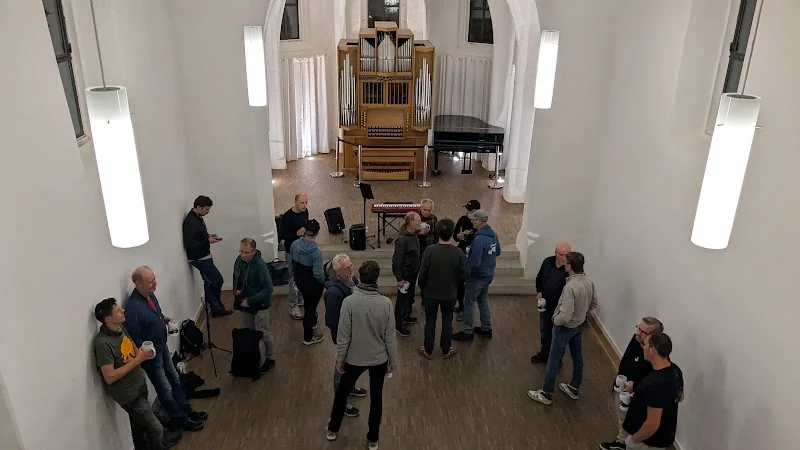
The current identity of the Johanniskapelle Bamberg is closely linked to its cultural program. On the official website, it is described not as a classic large event hall, but as a space for culture, private celebrations, and business occasions. This is precisely its charm: The chapel is small enough for concentrated, personal formats and yet characterful enough to allow music, language, and images to resonate particularly intensely. There, concerts with small ensembles, theatrical performances, exhibitions, lectures, readings, and workshops take place. The text on the website explicitly highlights the good supporting acoustics and the beautiful lighting conditions, which are particularly suitable for musical performances, visual art, and quiet conversational formats. So, those searching for Johanniskapelle events, Johanniskapelle concerts, or cultural space St. Johannis Bamberg are actually looking for a place that focuses on atmosphere rather than mass. The official description also mentions a variable seating capacity of 80 to 100 seats, further emphasizing the character of the building as an intimate cultural venue. ([johanniskapelle-bamberg.de](https://johanniskapelle-bamberg.de/?utm_source=openai))
The actual usage shows that the Johanniskapelle has long been a fixed component of the Bamberg cultural scene. In the official event notices and calendars, matinees, musical programs, literary events, and concert formats appear. One example is a matinee in the Johanniskapelle, which was announced in the Kultur.Bamberg calendar with free admission. Concert and cultural formats such as Bohai Klezmer, reading evenings, or events as part of larger cultural series are also documented. The Intercultural Artisan Advent Market also uses the Johanniskapelle together with the romantic outdoor area and the adjacent buildings of Stephansberg as a historical backdrop. This mix of music, word, and creative craftsmanship illustrates very well what the chapel stands for today: It is not a rigid museum space, but an open cultural venue with flexible dramaturgy. Therefore, those searching for Johanniskapelle Bamberg photos will not only see a beautiful building but will likely also get impressions of audience situations, small stage setups, and the special lighting atmosphere of this place. For practical planning, it is important: The focus is on smaller, curated formats, not on anonymous mass audiences. This is precisely what makes the venue so suitable for demanding cultural projects. ([kultur.bamberg.de](https://www.kultur.bamberg.de/_plaza/kuba.cfm?veranstaltungid=410501&utm_source=openai))
As a search topic, the Johanniskapelle also fits into the clusters around program, culture, and usage. Many people do not immediately enter the official name but combine it with questions like seating plan, tickets, photos, rentals, or program. These search intentions reflect the actual character of the building: There is no anonymous standard use, but a place with a clear curatorial signature. This is precisely why official communication is so important. The website not only provides information about events but also a direct contact option for booking inquiries. This makes it clear that the chapel does not merely exist as a sight but as an active space for events that can be utilized by artists, initiatives, and private organizers alike. For visitors, this means: If you are looking for a cultural event in Bamberg with a historical backdrop, quiet atmosphere, and manageable size, you will find a very suitable address here. For organizers, the place is interesting because the chapel, due to its dimensions, creates closeness rather than distance, making it particularly effective for readings, chamber music, lectures, small concerts, and festive formats. ([johanniskapelle-bamberg.de](https://johanniskapelle-bamberg.de/?utm_source=openai))
History of the Johanniskapelle at Oberen Stephansberg
The history of the Johanniskapelle dates back deep into the Middle Ages. According to the information on the official website, the current building structure was created around 1330 based on dendrochronological findings, and the chapel is first mentioned in documents in 1343. The choir dates from around 1420. Thus, the building is among the older ecclesiastical structures in Bamberg, even though its current use is quite different from the original. This medieval origin is not only interesting for historians but also for visitors who experience the place today as a cultural space: One stands here in a structure whose substance spans a very long time and whose history is much older than the modern event use. It is precisely in conjunction with the Oberen Stephansberg, the historical topography, and the neighboring Stephanskirche environment that it becomes clear why the chapel is still perceived as a special place in Bamberg today. Its effect does not arise from size but from layering: medieval origin, later repurposing, long phase of decay, and finally the careful return to the public as a cultural space. ([johanniskapelle-bamberg.de](https://johanniskapelle-bamberg.de/))
However, after the secularization in 1803, a long phase of repurposing began. The official website describes that the chapel was used for almost 200 years as a beer and hop warehouse, as a stable, and later as a storage facility for an electrical dealer. Municipal documents provide a very concrete picture of this: The decline of the building substance began after the sale to private ownership, the chapel served as a private chapel until 1827, was then repurposed as a barrel storage, and during World War II, further structural interventions occurred. The building was altered with intermediate ceilings, installations, and air raid protection measures; window and door openings were retrofitted, and the building substance suffered from insufficient maintenance. This information makes it understandable why the current preservation of the building is by no means a given. The Johanniskapelle is a good example of how historical buildings can lose their original use over decades and still survive as urban heritage. That it is now visible and publicly experienceable again is due to several phases of securing, renovating, and repositioning. ([johanniskapelle-bamberg.de](https://johanniskapelle-bamberg.de/))
A turning point came with the engagement of citizens and culture enthusiasts. In 1992, the Friends of St. Johannis Association was founded, which aimed to preserve and restore the chapel. In 2014, the building was finally made accessible to the public as a cultural venue, and in 2017, the teaching organ of the former cathedral organist Wolfgang Wünsch was moved to the chapel. In 2023, the Friends Association dissolved because its statutory purpose had been fulfilled; at the same time, responsibility for cultural use was handed over to Jochen Neurath. This sequence shows how a threatened historical building could become a functioning cultural space. The municipal renovation perspective also plays a role in this: In the official documents regarding the renovation area Stephansberg, there is explicit mention of a comprehensive renovation of the former chapel St. Johannis, the reorganization of the forecourt, and the restoration of historical structures. Thus, the Johanniskapelle is not only a restored building but also an example of sustainable urban cultural and heritage work. So, those searching for Johanniskapelle history or Johanniskapelle Bamberg history are looking for more than architecture: They are searching for a narrative of loss, rescue, and new cultural significance. ([johanniskapelle-bamberg.de](https://johanniskapelle-bamberg.de/))
Particularly important is the context of the Oberen Stephansberg. The city of Bamberg already described the building Oberer Stephansberg 7 in a renovation presentation as part of a problematically developed environment that should be urbanistically upgraded. Mentioned are the semi-public forecourt, the use by a kindergarten, the access situation, and the changed square situation between Stephanskirche and the former Johanniskapelle. These indications show that the Johanniskapelle cannot be viewed in isolation. It belongs to a spatial ensemble in which church, forecourt, former ancillary uses, and public space intertwine. For visitors, this is an advantage today: The way to the chapel is part of the experience because the history of the place continues in the street space. For heritage preservation, it has been and continues to be a task to make the historical form of the environment more visible again. Those interested in Johanniskapelle Bamberg photos will therefore quickly recognize that not only the building itself but also the square situation, the open spaces, and the neighborhood to Stephansberg shape the effect of the place. ([stadt.bamberg.de](https://www.stadt.bamberg.de/buergerinformationssystem/vo020?TOLFDNR=1361&VOLFDNR=584&refresh=false))
Capacity, Seating Plan, and Equipment of the Johanniskapelle
For anyone wanting to assess the Johanniskapelle as an event venue, capacity and equipment are central factors. The municipal event documents state that the Johanniskapelle has an area of 75 square meters for the nave and about 45 square meters for the choir. Additionally, different seating and usage scenarios are listed there. Depending on the configuration, figures such as 130 and 100 seats, 80 and 50 seats, or 90 and 40 seats appear. The official website summarizes the character of the space a bit more generally and speaks of a variable seating capacity of 80 to 100 seats. From this information, it can be safely inferred that the chapel is not intended for large hall formats but for manageable, flexible, and rather intimate events. This makes it interesting for chamber music, readings, lectures, or small festive occasions. Those searching for Johanniskapelle capacity, Johanniskapelle seating, or Johanniskapelle seating plan should therefore not look for a rigid standard plan but for a space with variable usage options. The combination of limited size and historical atmosphere is not a disadvantage here but part of the concept. ([stadt.bamberg.de](https://www.stadt.bamberg.de/buergerinformationssystem/wicket/resource/org.apache.wicket.Application/doc1121646.pdf?utm_source=openai))
The equipment is also remarkably versatile for a historical cultural space. The municipal information mentions that projections onto a white wall are possible and that white walls are generally suitable for projection. Additionally, an organ is available. The kitchen can be used as a cloakroom; furthermore, a refrigerator, stove, and dishwasher are available. Such details are important because they show that the Johanniskapelle is not only a beautiful space but also a functionally usable event venue. Especially for readings, small concerts, discussions, or private celebrations, practical infrastructure plays a significant role. The ability to combine the space with projection, furniture, and organ significantly expands the range of applications. In conjunction with the historical building structure, this creates a place that connects old substance with contemporary use. For organizers, this is attractive because they are not just booking a space but a specific atmosphere. For visitors, it is exciting because each event makes the character of the building visible in different ways. This is precisely why the Johanniskapelle does not feel like an interchangeable event space but like a place with recognition value. ([stadt.bamberg.de](https://www.stadt.bamberg.de/buergerinformationssystem/wicket/resource/org.apache.wicket.Application/doc1121646.pdf?utm_source=openai))
The capacity figures deserve a small contextualization. That different sources mention different numbers is not unusual for historical spaces with variable equipment, as distinctions are made between standing places, row seating, concert setups, and special solutions. In practice, this means: The actual space requirement depends on the format. A pure concert evening with narrow seating may look different than a lecture with tables, a reading with small technology, or a reception with an open room structure. So, those entering Johanniskapelle seating plan or Johanniskapelle rental should always understand capacity in relation to the planned purpose of use. Here, official communication is useful because individual inquiries via contact form or email can clarify the appropriate setup. The chapel is thus not a place for standardized mass logistics but for tailored formats. This is a plus in the tourist and cultural context because visitors often specifically seek such special, smaller places. The Johanniskapelle convincingly fulfills this need: historically rich, flexible, well-equipped, and atmospherically dense. ([johanniskapelle-bamberg.de](https://johanniskapelle-bamberg.de/?utm_source=openai))
Additionally, the official website, with its imagery and wording, presents the spaces not as mere shells but as shapeable cultural venues. The gallery on the website suggests that the space is suitable for different settings, from simple performances to more festive occasions. For those wanting to view photos in advance, this is helpful because it allows them to assess the character of the interior, the lighting mood, and the proportions. Especially for a historical chapel, this visual impression is often crucial for booking. While a modern hall is primarily sold based on technical values, the Johanniskapelle thrives on both: reliable usage data and a strong spatial feeling. Therefore, it is worth reading the information on capacity and equipment not in isolation but as part of the overall impression. Those planning a small, upscale, or culturally shaped event will find here a space that offers visibly more personality than a neutral standard venue. ([johanniskapelle-bamberg.de](https://johanniskapelle-bamberg.de/))
Access, Location, and Parking at Oberen Stephansberg
The Johanniskapelle is located at Oberen Stephansberg 7 in 96049 Bamberg, thus in a historically shaped part of the city, whose surroundings have been described as needing renovation early on. The municipal documents locate the forecourt between Stephanskirche and the former Johanniskapelle and emphasize the semi-public character of the area. For visitors, this means primarily: The chapel is not in an anonymous outskirt but in a developed inner-city environment with historical topography. This is pleasant for the stay but requires a somewhat more conscious travel plan than a new building on the outskirts. Those searching for Johanniskapelle access or Johanniskapelle Bamberg parking should therefore not only know the address but also consider the parking options in the Bamberg old town. The location at Stephansberg is part of the charm, but precisely for this reason, the journey with a bit more planning is often more relaxed. ([stadt.bamberg.de](https://www.stadt.bamberg.de/buergerinformationssystem/vo020?TOLFDNR=1361&VOLFDNR=584&refresh=false))
For access by car, the official Bamberg tourism service refers to a number of public parking garages and underground garages in the city center. Mentioned are, among others, the underground garage City-Altstadt, the parking garage Zentrum Süd, the parking garage Atrium, as well as other parking options and park-and-ride offers. The city center side of Bamberg tourism explicitly states that visitors can easily reach the city center on foot or by bus from these parking garages and underground garages. This is relevant for the Johanniskapelle because it is part of the old town fabric and is therefore typically accessed via public city center parking spaces, not via a large private parking lot. So, those coming by car should best drive into the city center, park in one of the public facilities, and walk the rest of the way. Especially for events in the evening hours, this is a pragmatic solution because it relieves the tight historical environment and at the same time perceives the way through the old town as part of the visit experience. ([bamberg.info](https://www.bamberg.info/parkplaetze/?utm_source=openai))
Also for visitors seeking information about Johanniskapelle parking or Johanniskapelle parking, the public infrastructure of the city is the most reliable reference point. A dedicated, prominently designated event parking lot for the chapel is not highlighted in the official sources; instead, the central parking garages and underground garages of the city center are in the foreground. Particularly useful is the park-and-ride system, which aims to facilitate access to the old town. From a tourist perspective, this is a reasonable solution because the Bamberg old town, as a historical ensemble, is protected and sensitive in its traffic situation. The Johanniskapelle indirectly benefits from a quiet environment that does not rely on extensive parking facilities. Those who plan in advance will find a good compromise between proximity, comfort, and historical atmosphere. The combination of old town parking garage, short walking distance, and small-scale cultural venue fits very well with the character of the chapel as a more personal event location. ([bamberg.info](https://www.bamberg.info/parkplaetze/?utm_source=openai))
For the search intentions around access and location, it is also important that the Johanniskapelle does not stand in isolation but is embedded in an ensemble of Stephansberg, Stephanskirche, and adjacent buildings. This makes it appealing for visitors: You do not just come to an address but to a small historical urban space. When the official event calendar of the city of Bamberg lists an event at the Johanniskapelle, orientation is easy thanks to the clear address. In everyday life, this means that visitors should already think in advance about parking, walking distance, and time buffer, especially for evening events or highly attended dates such as Advent markets, matinees, or concerts. Those who bring this planning usually experience the arrival at the Johanniskapelle as pleasantly calm and harmonious. Especially for a house with so much history, it is a plus if the journey does not feel hectic but organically fits into the experience. ([bamberg.info](https://www.bamberg.info/veranstaltungen/interkultureller_kunsthandwerk-624367/))
Photos, Booking, and Use as a Cultural Space
Many visitors initially search for Johanniskapelle photos before deciding on a visit or booking inquiry. The official website is well suited for this because it offers a gallery with several images that make the interior and atmosphere of the chapel visible. The selection of images emphasizes the impression of a simple yet very characterful space that works not through overload but through calm and proportion. For a historical chapel, this is particularly important because photos often form the decisive bridge between curiosity and real imagination. Those who view the Johanniskapelle in advance quickly recognize that it is more suitable for harmonious, concentrated formats than for large show effects. This is precisely why the images work so well as a search and selection aid: They show not only architecture but also usability. ([johanniskapelle-bamberg.de](https://johanniskapelle-bamberg.de/))
The booking is also clearly oriented towards the cultural venue. The official website describes the chapel as a space for culture, private celebrations, and business occasions and explicitly encourages interested parties to inquire via email or contact form. Jochen Neurath is named as the responsible contact person in the imprint and contact details. This is important for organizers and guests because the place thus has a concrete and direct structure instead of being anonymous through a large ticket system. For inquiries regarding Johanniskapelle rental, Johanniskapelle seating plan, or Johanniskapelle events, this is very practical: One can individually coordinate the required format, seating, and occasion. Especially with historical spaces, this personal coordination is often the decisive factor because technical and spatial details cannot be treated generically. The combination of historical ambiance and direct support makes the Johanniskapelle equally interesting for small cultural events, family celebrations, or representative occasions. ([johanniskapelle-bamberg.de](https://johanniskapelle-bamberg.de/?utm_source=openai))
The use as a cultural space is not just a marketing term. The official site emphasizes the good acoustics, beautiful lighting conditions, and suitability for musical performances, theater, performances, exhibitions, lectures, readings, and workshops. This diversity explains why the chapel is present in the Bamberg cultural scene and why it keeps appearing in the official calendars. The historical environment is also consciously considered, for example, in the Advent market, which connects the Johanniskapelle with the romantic outdoor area, the neighboring kindergarten, and the Stephanshof. The chapel is thus not simply a closed interior space but part of a walkable cultural space. For visitors, this means: One experiences not only an event but also a place with atmospheric and spatial depth. For organizers, it means that they choose a space that aesthetically supports the contents of the event rather than neutralizing them. This quality makes the Johanniskapelle particularly valuable in Bamberg for small, demanding formats. ([johanniskapelle-bamberg.de](https://johanniskapelle-bamberg.de/?utm_source=openai))
Those who remember the Johanniskapelle as a place for photos, bookings, or events should fundamentally understand it as a threefold added value: historical substance, flexible use, and strong atmosphere. This combination is rare. Many places are either beautiful and impractical or functional and interchangeable. The Johanniskapelle manages the balancing act between both. Its history gives it depth, its current use makes it lively, and its equipment allows for surprisingly versatile applications. Therefore, it is not only interesting for tourists but also for cultural creators looking for a characterful space. Those searching for Johanniskapelle Bamberg photos, Johanniskapelle capacity, or Johanniskapelle parking ultimately receive answers to the same fundamental question: Is this place suitable for my occasion? The official website and the municipal or tourist information provide a clear answer: Yes, if you are looking for a small, special, and historically charged space in Bamberg. ([johanniskapelle-bamberg.de](https://johanniskapelle-bamberg.de/))
Sources:
Mehr anzeigenWeniger anzeigen
Johanniskapelle Bamberg | Events & History
The Johanniskapelle in Bamberg is one of those places that seem calm at first glance, but tell an astonishing amount upon closer inspection. Located directly at Oberen Stephansberg 7, it combines medieval building substance with a modern use as a cultural space, event venue, and meeting place. Those searching for Johanniskapelle Bamberg, Johanneskapelle Bamberg, Johanniskapelle photos, or Johanniskapelle events will not end up at just any chapel, but at a building with a long history, prominent location, and a clear profile for small, atmospheric formats. The official website describes the chapel as a special place for culture and encounters, which has been accessible to the public since 2014 and is now used for music, art, readings, lectures, and private occasions. At the same time, municipal documents document the long, not always easy development of the building and its surroundings at Stephansberg. It is precisely this mix of historical depth and vibrant present that makes the Johanniskapelle so exciting for visitors, organizers, and culture enthusiasts. Those wanting to inform themselves before a visit about access, parking, capacity, seating, or photos will find surprisingly good resources for planning in the official sources. ([johanniskapelle-bamberg.de](https://johanniskapelle-bamberg.de/))
Events, Concerts, and Cultural Program in the Johanniskapelle
The current identity of the Johanniskapelle Bamberg is closely linked to its cultural program. On the official website, it is described not as a classic large event hall, but as a space for culture, private celebrations, and business occasions. This is precisely its charm: The chapel is small enough for concentrated, personal formats and yet characterful enough to allow music, language, and images to resonate particularly intensely. There, concerts with small ensembles, theatrical performances, exhibitions, lectures, readings, and workshops take place. The text on the website explicitly highlights the good supporting acoustics and the beautiful lighting conditions, which are particularly suitable for musical performances, visual art, and quiet conversational formats. So, those searching for Johanniskapelle events, Johanniskapelle concerts, or cultural space St. Johannis Bamberg are actually looking for a place that focuses on atmosphere rather than mass. The official description also mentions a variable seating capacity of 80 to 100 seats, further emphasizing the character of the building as an intimate cultural venue. ([johanniskapelle-bamberg.de](https://johanniskapelle-bamberg.de/?utm_source=openai))
The actual usage shows that the Johanniskapelle has long been a fixed component of the Bamberg cultural scene. In the official event notices and calendars, matinees, musical programs, literary events, and concert formats appear. One example is a matinee in the Johanniskapelle, which was announced in the Kultur.Bamberg calendar with free admission. Concert and cultural formats such as Bohai Klezmer, reading evenings, or events as part of larger cultural series are also documented. The Intercultural Artisan Advent Market also uses the Johanniskapelle together with the romantic outdoor area and the adjacent buildings of Stephansberg as a historical backdrop. This mix of music, word, and creative craftsmanship illustrates very well what the chapel stands for today: It is not a rigid museum space, but an open cultural venue with flexible dramaturgy. Therefore, those searching for Johanniskapelle Bamberg photos will not only see a beautiful building but will likely also get impressions of audience situations, small stage setups, and the special lighting atmosphere of this place. For practical planning, it is important: The focus is on smaller, curated formats, not on anonymous mass audiences. This is precisely what makes the venue so suitable for demanding cultural projects. ([kultur.bamberg.de](https://www.kultur.bamberg.de/_plaza/kuba.cfm?veranstaltungid=410501&utm_source=openai))
As a search topic, the Johanniskapelle also fits into the clusters around program, culture, and usage. Many people do not immediately enter the official name but combine it with questions like seating plan, tickets, photos, rentals, or program. These search intentions reflect the actual character of the building: There is no anonymous standard use, but a place with a clear curatorial signature. This is precisely why official communication is so important. The website not only provides information about events but also a direct contact option for booking inquiries. This makes it clear that the chapel does not merely exist as a sight but as an active space for events that can be utilized by artists, initiatives, and private organizers alike. For visitors, this means: If you are looking for a cultural event in Bamberg with a historical backdrop, quiet atmosphere, and manageable size, you will find a very suitable address here. For organizers, the place is interesting because the chapel, due to its dimensions, creates closeness rather than distance, making it particularly effective for readings, chamber music, lectures, small concerts, and festive formats. ([johanniskapelle-bamberg.de](https://johanniskapelle-bamberg.de/?utm_source=openai))
History of the Johanniskapelle at Oberen Stephansberg
The history of the Johanniskapelle dates back deep into the Middle Ages. According to the information on the official website, the current building structure was created around 1330 based on dendrochronological findings, and the chapel is first mentioned in documents in 1343. The choir dates from around 1420. Thus, the building is among the older ecclesiastical structures in Bamberg, even though its current use is quite different from the original. This medieval origin is not only interesting for historians but also for visitors who experience the place today as a cultural space: One stands here in a structure whose substance spans a very long time and whose history is much older than the modern event use. It is precisely in conjunction with the Oberen Stephansberg, the historical topography, and the neighboring Stephanskirche environment that it becomes clear why the chapel is still perceived as a special place in Bamberg today. Its effect does not arise from size but from layering: medieval origin, later repurposing, long phase of decay, and finally the careful return to the public as a cultural space. ([johanniskapelle-bamberg.de](https://johanniskapelle-bamberg.de/))
However, after the secularization in 1803, a long phase of repurposing began. The official website describes that the chapel was used for almost 200 years as a beer and hop warehouse, as a stable, and later as a storage facility for an electrical dealer. Municipal documents provide a very concrete picture of this: The decline of the building substance began after the sale to private ownership, the chapel served as a private chapel until 1827, was then repurposed as a barrel storage, and during World War II, further structural interventions occurred. The building was altered with intermediate ceilings, installations, and air raid protection measures; window and door openings were retrofitted, and the building substance suffered from insufficient maintenance. This information makes it understandable why the current preservation of the building is by no means a given. The Johanniskapelle is a good example of how historical buildings can lose their original use over decades and still survive as urban heritage. That it is now visible and publicly experienceable again is due to several phases of securing, renovating, and repositioning. ([johanniskapelle-bamberg.de](https://johanniskapelle-bamberg.de/))
A turning point came with the engagement of citizens and culture enthusiasts. In 1992, the Friends of St. Johannis Association was founded, which aimed to preserve and restore the chapel. In 2014, the building was finally made accessible to the public as a cultural venue, and in 2017, the teaching organ of the former cathedral organist Wolfgang Wünsch was moved to the chapel. In 2023, the Friends Association dissolved because its statutory purpose had been fulfilled; at the same time, responsibility for cultural use was handed over to Jochen Neurath. This sequence shows how a threatened historical building could become a functioning cultural space. The municipal renovation perspective also plays a role in this: In the official documents regarding the renovation area Stephansberg, there is explicit mention of a comprehensive renovation of the former chapel St. Johannis, the reorganization of the forecourt, and the restoration of historical structures. Thus, the Johanniskapelle is not only a restored building but also an example of sustainable urban cultural and heritage work. So, those searching for Johanniskapelle history or Johanniskapelle Bamberg history are looking for more than architecture: They are searching for a narrative of loss, rescue, and new cultural significance. ([johanniskapelle-bamberg.de](https://johanniskapelle-bamberg.de/))
Particularly important is the context of the Oberen Stephansberg. The city of Bamberg already described the building Oberer Stephansberg 7 in a renovation presentation as part of a problematically developed environment that should be urbanistically upgraded. Mentioned are the semi-public forecourt, the use by a kindergarten, the access situation, and the changed square situation between Stephanskirche and the former Johanniskapelle. These indications show that the Johanniskapelle cannot be viewed in isolation. It belongs to a spatial ensemble in which church, forecourt, former ancillary uses, and public space intertwine. For visitors, this is an advantage today: The way to the chapel is part of the experience because the history of the place continues in the street space. For heritage preservation, it has been and continues to be a task to make the historical form of the environment more visible again. Those interested in Johanniskapelle Bamberg photos will therefore quickly recognize that not only the building itself but also the square situation, the open spaces, and the neighborhood to Stephansberg shape the effect of the place. ([stadt.bamberg.de](https://www.stadt.bamberg.de/buergerinformationssystem/vo020?TOLFDNR=1361&VOLFDNR=584&refresh=false))
Capacity, Seating Plan, and Equipment of the Johanniskapelle
For anyone wanting to assess the Johanniskapelle as an event venue, capacity and equipment are central factors. The municipal event documents state that the Johanniskapelle has an area of 75 square meters for the nave and about 45 square meters for the choir. Additionally, different seating and usage scenarios are listed there. Depending on the configuration, figures such as 130 and 100 seats, 80 and 50 seats, or 90 and 40 seats appear. The official website summarizes the character of the space a bit more generally and speaks of a variable seating capacity of 80 to 100 seats. From this information, it can be safely inferred that the chapel is not intended for large hall formats but for manageable, flexible, and rather intimate events. This makes it interesting for chamber music, readings, lectures, or small festive occasions. Those searching for Johanniskapelle capacity, Johanniskapelle seating, or Johanniskapelle seating plan should therefore not look for a rigid standard plan but for a space with variable usage options. The combination of limited size and historical atmosphere is not a disadvantage here but part of the concept. ([stadt.bamberg.de](https://www.stadt.bamberg.de/buergerinformationssystem/wicket/resource/org.apache.wicket.Application/doc1121646.pdf?utm_source=openai))
The equipment is also remarkably versatile for a historical cultural space. The municipal information mentions that projections onto a white wall are possible and that white walls are generally suitable for projection. Additionally, an organ is available. The kitchen can be used as a cloakroom; furthermore, a refrigerator, stove, and dishwasher are available. Such details are important because they show that the Johanniskapelle is not only a beautiful space but also a functionally usable event venue. Especially for readings, small concerts, discussions, or private celebrations, practical infrastructure plays a significant role. The ability to combine the space with projection, furniture, and organ significantly expands the range of applications. In conjunction with the historical building structure, this creates a place that connects old substance with contemporary use. For organizers, this is attractive because they are not just booking a space but a specific atmosphere. For visitors, it is exciting because each event makes the character of the building visible in different ways. This is precisely why the Johanniskapelle does not feel like an interchangeable event space but like a place with recognition value. ([stadt.bamberg.de](https://www.stadt.bamberg.de/buergerinformationssystem/wicket/resource/org.apache.wicket.Application/doc1121646.pdf?utm_source=openai))
The capacity figures deserve a small contextualization. That different sources mention different numbers is not unusual for historical spaces with variable equipment, as distinctions are made between standing places, row seating, concert setups, and special solutions. In practice, this means: The actual space requirement depends on the format. A pure concert evening with narrow seating may look different than a lecture with tables, a reading with small technology, or a reception with an open room structure. So, those entering Johanniskapelle seating plan or Johanniskapelle rental should always understand capacity in relation to the planned purpose of use. Here, official communication is useful because individual inquiries via contact form or email can clarify the appropriate setup. The chapel is thus not a place for standardized mass logistics but for tailored formats. This is a plus in the tourist and cultural context because visitors often specifically seek such special, smaller places. The Johanniskapelle convincingly fulfills this need: historically rich, flexible, well-equipped, and atmospherically dense. ([johanniskapelle-bamberg.de](https://johanniskapelle-bamberg.de/?utm_source=openai))
Additionally, the official website, with its imagery and wording, presents the spaces not as mere shells but as shapeable cultural venues. The gallery on the website suggests that the space is suitable for different settings, from simple performances to more festive occasions. For those wanting to view photos in advance, this is helpful because it allows them to assess the character of the interior, the lighting mood, and the proportions. Especially for a historical chapel, this visual impression is often crucial for booking. While a modern hall is primarily sold based on technical values, the Johanniskapelle thrives on both: reliable usage data and a strong spatial feeling. Therefore, it is worth reading the information on capacity and equipment not in isolation but as part of the overall impression. Those planning a small, upscale, or culturally shaped event will find here a space that offers visibly more personality than a neutral standard venue. ([johanniskapelle-bamberg.de](https://johanniskapelle-bamberg.de/))
Access, Location, and Parking at Oberen Stephansberg
The Johanniskapelle is located at Oberen Stephansberg 7 in 96049 Bamberg, thus in a historically shaped part of the city, whose surroundings have been described as needing renovation early on. The municipal documents locate the forecourt between Stephanskirche and the former Johanniskapelle and emphasize the semi-public character of the area. For visitors, this means primarily: The chapel is not in an anonymous outskirt but in a developed inner-city environment with historical topography. This is pleasant for the stay but requires a somewhat more conscious travel plan than a new building on the outskirts. Those searching for Johanniskapelle access or Johanniskapelle Bamberg parking should therefore not only know the address but also consider the parking options in the Bamberg old town. The location at Stephansberg is part of the charm, but precisely for this reason, the journey with a bit more planning is often more relaxed. ([stadt.bamberg.de](https://www.stadt.bamberg.de/buergerinformationssystem/vo020?TOLFDNR=1361&VOLFDNR=584&refresh=false))
For access by car, the official Bamberg tourism service refers to a number of public parking garages and underground garages in the city center. Mentioned are, among others, the underground garage City-Altstadt, the parking garage Zentrum Süd, the parking garage Atrium, as well as other parking options and park-and-ride offers. The city center side of Bamberg tourism explicitly states that visitors can easily reach the city center on foot or by bus from these parking garages and underground garages. This is relevant for the Johanniskapelle because it is part of the old town fabric and is therefore typically accessed via public city center parking spaces, not via a large private parking lot. So, those coming by car should best drive into the city center, park in one of the public facilities, and walk the rest of the way. Especially for events in the evening hours, this is a pragmatic solution because it relieves the tight historical environment and at the same time perceives the way through the old town as part of the visit experience. ([bamberg.info](https://www.bamberg.info/parkplaetze/?utm_source=openai))
Also for visitors seeking information about Johanniskapelle parking or Johanniskapelle parking, the public infrastructure of the city is the most reliable reference point. A dedicated, prominently designated event parking lot for the chapel is not highlighted in the official sources; instead, the central parking garages and underground garages of the city center are in the foreground. Particularly useful is the park-and-ride system, which aims to facilitate access to the old town. From a tourist perspective, this is a reasonable solution because the Bamberg old town, as a historical ensemble, is protected and sensitive in its traffic situation. The Johanniskapelle indirectly benefits from a quiet environment that does not rely on extensive parking facilities. Those who plan in advance will find a good compromise between proximity, comfort, and historical atmosphere. The combination of old town parking garage, short walking distance, and small-scale cultural venue fits very well with the character of the chapel as a more personal event location. ([bamberg.info](https://www.bamberg.info/parkplaetze/?utm_source=openai))
For the search intentions around access and location, it is also important that the Johanniskapelle does not stand in isolation but is embedded in an ensemble of Stephansberg, Stephanskirche, and adjacent buildings. This makes it appealing for visitors: You do not just come to an address but to a small historical urban space. When the official event calendar of the city of Bamberg lists an event at the Johanniskapelle, orientation is easy thanks to the clear address. In everyday life, this means that visitors should already think in advance about parking, walking distance, and time buffer, especially for evening events or highly attended dates such as Advent markets, matinees, or concerts. Those who bring this planning usually experience the arrival at the Johanniskapelle as pleasantly calm and harmonious. Especially for a house with so much history, it is a plus if the journey does not feel hectic but organically fits into the experience. ([bamberg.info](https://www.bamberg.info/veranstaltungen/interkultureller_kunsthandwerk-624367/))
Photos, Booking, and Use as a Cultural Space
Many visitors initially search for Johanniskapelle photos before deciding on a visit or booking inquiry. The official website is well suited for this because it offers a gallery with several images that make the interior and atmosphere of the chapel visible. The selection of images emphasizes the impression of a simple yet very characterful space that works not through overload but through calm and proportion. For a historical chapel, this is particularly important because photos often form the decisive bridge between curiosity and real imagination. Those who view the Johanniskapelle in advance quickly recognize that it is more suitable for harmonious, concentrated formats than for large show effects. This is precisely why the images work so well as a search and selection aid: They show not only architecture but also usability. ([johanniskapelle-bamberg.de](https://johanniskapelle-bamberg.de/))
The booking is also clearly oriented towards the cultural venue. The official website describes the chapel as a space for culture, private celebrations, and business occasions and explicitly encourages interested parties to inquire via email or contact form. Jochen Neurath is named as the responsible contact person in the imprint and contact details. This is important for organizers and guests because the place thus has a concrete and direct structure instead of being anonymous through a large ticket system. For inquiries regarding Johanniskapelle rental, Johanniskapelle seating plan, or Johanniskapelle events, this is very practical: One can individually coordinate the required format, seating, and occasion. Especially with historical spaces, this personal coordination is often the decisive factor because technical and spatial details cannot be treated generically. The combination of historical ambiance and direct support makes the Johanniskapelle equally interesting for small cultural events, family celebrations, or representative occasions. ([johanniskapelle-bamberg.de](https://johanniskapelle-bamberg.de/?utm_source=openai))
The use as a cultural space is not just a marketing term. The official site emphasizes the good acoustics, beautiful lighting conditions, and suitability for musical performances, theater, performances, exhibitions, lectures, readings, and workshops. This diversity explains why the chapel is present in the Bamberg cultural scene and why it keeps appearing in the official calendars. The historical environment is also consciously considered, for example, in the Advent market, which connects the Johanniskapelle with the romantic outdoor area, the neighboring kindergarten, and the Stephanshof. The chapel is thus not simply a closed interior space but part of a walkable cultural space. For visitors, this means: One experiences not only an event but also a place with atmospheric and spatial depth. For organizers, it means that they choose a space that aesthetically supports the contents of the event rather than neutralizing them. This quality makes the Johanniskapelle particularly valuable in Bamberg for small, demanding formats. ([johanniskapelle-bamberg.de](https://johanniskapelle-bamberg.de/?utm_source=openai))
Those who remember the Johanniskapelle as a place for photos, bookings, or events should fundamentally understand it as a threefold added value: historical substance, flexible use, and strong atmosphere. This combination is rare. Many places are either beautiful and impractical or functional and interchangeable. The Johanniskapelle manages the balancing act between both. Its history gives it depth, its current use makes it lively, and its equipment allows for surprisingly versatile applications. Therefore, it is not only interesting for tourists but also for cultural creators looking for a characterful space. Those searching for Johanniskapelle Bamberg photos, Johanniskapelle capacity, or Johanniskapelle parking ultimately receive answers to the same fundamental question: Is this place suitable for my occasion? The official website and the municipal or tourist information provide a clear answer: Yes, if you are looking for a small, special, and historically charged space in Bamberg. ([johanniskapelle-bamberg.de](https://johanniskapelle-bamberg.de/))
Sources:
Johanniskapelle Bamberg | Events & History
The Johanniskapelle in Bamberg is one of those places that seem calm at first glance, but tell an astonishing amount upon closer inspection. Located directly at Oberen Stephansberg 7, it combines medieval building substance with a modern use as a cultural space, event venue, and meeting place. Those searching for Johanniskapelle Bamberg, Johanneskapelle Bamberg, Johanniskapelle photos, or Johanniskapelle events will not end up at just any chapel, but at a building with a long history, prominent location, and a clear profile for small, atmospheric formats. The official website describes the chapel as a special place for culture and encounters, which has been accessible to the public since 2014 and is now used for music, art, readings, lectures, and private occasions. At the same time, municipal documents document the long, not always easy development of the building and its surroundings at Stephansberg. It is precisely this mix of historical depth and vibrant present that makes the Johanniskapelle so exciting for visitors, organizers, and culture enthusiasts. Those wanting to inform themselves before a visit about access, parking, capacity, seating, or photos will find surprisingly good resources for planning in the official sources. ([johanniskapelle-bamberg.de](https://johanniskapelle-bamberg.de/))
Events, Concerts, and Cultural Program in the Johanniskapelle
The current identity of the Johanniskapelle Bamberg is closely linked to its cultural program. On the official website, it is described not as a classic large event hall, but as a space for culture, private celebrations, and business occasions. This is precisely its charm: The chapel is small enough for concentrated, personal formats and yet characterful enough to allow music, language, and images to resonate particularly intensely. There, concerts with small ensembles, theatrical performances, exhibitions, lectures, readings, and workshops take place. The text on the website explicitly highlights the good supporting acoustics and the beautiful lighting conditions, which are particularly suitable for musical performances, visual art, and quiet conversational formats. So, those searching for Johanniskapelle events, Johanniskapelle concerts, or cultural space St. Johannis Bamberg are actually looking for a place that focuses on atmosphere rather than mass. The official description also mentions a variable seating capacity of 80 to 100 seats, further emphasizing the character of the building as an intimate cultural venue. ([johanniskapelle-bamberg.de](https://johanniskapelle-bamberg.de/?utm_source=openai))
The actual usage shows that the Johanniskapelle has long been a fixed component of the Bamberg cultural scene. In the official event notices and calendars, matinees, musical programs, literary events, and concert formats appear. One example is a matinee in the Johanniskapelle, which was announced in the Kultur.Bamberg calendar with free admission. Concert and cultural formats such as Bohai Klezmer, reading evenings, or events as part of larger cultural series are also documented. The Intercultural Artisan Advent Market also uses the Johanniskapelle together with the romantic outdoor area and the adjacent buildings of Stephansberg as a historical backdrop. This mix of music, word, and creative craftsmanship illustrates very well what the chapel stands for today: It is not a rigid museum space, but an open cultural venue with flexible dramaturgy. Therefore, those searching for Johanniskapelle Bamberg photos will not only see a beautiful building but will likely also get impressions of audience situations, small stage setups, and the special lighting atmosphere of this place. For practical planning, it is important: The focus is on smaller, curated formats, not on anonymous mass audiences. This is precisely what makes the venue so suitable for demanding cultural projects. ([kultur.bamberg.de](https://www.kultur.bamberg.de/_plaza/kuba.cfm?veranstaltungid=410501&utm_source=openai))
As a search topic, the Johanniskapelle also fits into the clusters around program, culture, and usage. Many people do not immediately enter the official name but combine it with questions like seating plan, tickets, photos, rentals, or program. These search intentions reflect the actual character of the building: There is no anonymous standard use, but a place with a clear curatorial signature. This is precisely why official communication is so important. The website not only provides information about events but also a direct contact option for booking inquiries. This makes it clear that the chapel does not merely exist as a sight but as an active space for events that can be utilized by artists, initiatives, and private organizers alike. For visitors, this means: If you are looking for a cultural event in Bamberg with a historical backdrop, quiet atmosphere, and manageable size, you will find a very suitable address here. For organizers, the place is interesting because the chapel, due to its dimensions, creates closeness rather than distance, making it particularly effective for readings, chamber music, lectures, small concerts, and festive formats. ([johanniskapelle-bamberg.de](https://johanniskapelle-bamberg.de/?utm_source=openai))
History of the Johanniskapelle at Oberen Stephansberg
The history of the Johanniskapelle dates back deep into the Middle Ages. According to the information on the official website, the current building structure was created around 1330 based on dendrochronological findings, and the chapel is first mentioned in documents in 1343. The choir dates from around 1420. Thus, the building is among the older ecclesiastical structures in Bamberg, even though its current use is quite different from the original. This medieval origin is not only interesting for historians but also for visitors who experience the place today as a cultural space: One stands here in a structure whose substance spans a very long time and whose history is much older than the modern event use. It is precisely in conjunction with the Oberen Stephansberg, the historical topography, and the neighboring Stephanskirche environment that it becomes clear why the chapel is still perceived as a special place in Bamberg today. Its effect does not arise from size but from layering: medieval origin, later repurposing, long phase of decay, and finally the careful return to the public as a cultural space. ([johanniskapelle-bamberg.de](https://johanniskapelle-bamberg.de/))
However, after the secularization in 1803, a long phase of repurposing began. The official website describes that the chapel was used for almost 200 years as a beer and hop warehouse, as a stable, and later as a storage facility for an electrical dealer. Municipal documents provide a very concrete picture of this: The decline of the building substance began after the sale to private ownership, the chapel served as a private chapel until 1827, was then repurposed as a barrel storage, and during World War II, further structural interventions occurred. The building was altered with intermediate ceilings, installations, and air raid protection measures; window and door openings were retrofitted, and the building substance suffered from insufficient maintenance. This information makes it understandable why the current preservation of the building is by no means a given. The Johanniskapelle is a good example of how historical buildings can lose their original use over decades and still survive as urban heritage. That it is now visible and publicly experienceable again is due to several phases of securing, renovating, and repositioning. ([johanniskapelle-bamberg.de](https://johanniskapelle-bamberg.de/))
A turning point came with the engagement of citizens and culture enthusiasts. In 1992, the Friends of St. Johannis Association was founded, which aimed to preserve and restore the chapel. In 2014, the building was finally made accessible to the public as a cultural venue, and in 2017, the teaching organ of the former cathedral organist Wolfgang Wünsch was moved to the chapel. In 2023, the Friends Association dissolved because its statutory purpose had been fulfilled; at the same time, responsibility for cultural use was handed over to Jochen Neurath. This sequence shows how a threatened historical building could become a functioning cultural space. The municipal renovation perspective also plays a role in this: In the official documents regarding the renovation area Stephansberg, there is explicit mention of a comprehensive renovation of the former chapel St. Johannis, the reorganization of the forecourt, and the restoration of historical structures. Thus, the Johanniskapelle is not only a restored building but also an example of sustainable urban cultural and heritage work. So, those searching for Johanniskapelle history or Johanniskapelle Bamberg history are looking for more than architecture: They are searching for a narrative of loss, rescue, and new cultural significance. ([johanniskapelle-bamberg.de](https://johanniskapelle-bamberg.de/))
Particularly important is the context of the Oberen Stephansberg. The city of Bamberg already described the building Oberer Stephansberg 7 in a renovation presentation as part of a problematically developed environment that should be urbanistically upgraded. Mentioned are the semi-public forecourt, the use by a kindergarten, the access situation, and the changed square situation between Stephanskirche and the former Johanniskapelle. These indications show that the Johanniskapelle cannot be viewed in isolation. It belongs to a spatial ensemble in which church, forecourt, former ancillary uses, and public space intertwine. For visitors, this is an advantage today: The way to the chapel is part of the experience because the history of the place continues in the street space. For heritage preservation, it has been and continues to be a task to make the historical form of the environment more visible again. Those interested in Johanniskapelle Bamberg photos will therefore quickly recognize that not only the building itself but also the square situation, the open spaces, and the neighborhood to Stephansberg shape the effect of the place. ([stadt.bamberg.de](https://www.stadt.bamberg.de/buergerinformationssystem/vo020?TOLFDNR=1361&VOLFDNR=584&refresh=false))
Capacity, Seating Plan, and Equipment of the Johanniskapelle
For anyone wanting to assess the Johanniskapelle as an event venue, capacity and equipment are central factors. The municipal event documents state that the Johanniskapelle has an area of 75 square meters for the nave and about 45 square meters for the choir. Additionally, different seating and usage scenarios are listed there. Depending on the configuration, figures such as 130 and 100 seats, 80 and 50 seats, or 90 and 40 seats appear. The official website summarizes the character of the space a bit more generally and speaks of a variable seating capacity of 80 to 100 seats. From this information, it can be safely inferred that the chapel is not intended for large hall formats but for manageable, flexible, and rather intimate events. This makes it interesting for chamber music, readings, lectures, or small festive occasions. Those searching for Johanniskapelle capacity, Johanniskapelle seating, or Johanniskapelle seating plan should therefore not look for a rigid standard plan but for a space with variable usage options. The combination of limited size and historical atmosphere is not a disadvantage here but part of the concept. ([stadt.bamberg.de](https://www.stadt.bamberg.de/buergerinformationssystem/wicket/resource/org.apache.wicket.Application/doc1121646.pdf?utm_source=openai))
The equipment is also remarkably versatile for a historical cultural space. The municipal information mentions that projections onto a white wall are possible and that white walls are generally suitable for projection. Additionally, an organ is available. The kitchen can be used as a cloakroom; furthermore, a refrigerator, stove, and dishwasher are available. Such details are important because they show that the Johanniskapelle is not only a beautiful space but also a functionally usable event venue. Especially for readings, small concerts, discussions, or private celebrations, practical infrastructure plays a significant role. The ability to combine the space with projection, furniture, and organ significantly expands the range of applications. In conjunction with the historical building structure, this creates a place that connects old substance with contemporary use. For organizers, this is attractive because they are not just booking a space but a specific atmosphere. For visitors, it is exciting because each event makes the character of the building visible in different ways. This is precisely why the Johanniskapelle does not feel like an interchangeable event space but like a place with recognition value. ([stadt.bamberg.de](https://www.stadt.bamberg.de/buergerinformationssystem/wicket/resource/org.apache.wicket.Application/doc1121646.pdf?utm_source=openai))
The capacity figures deserve a small contextualization. That different sources mention different numbers is not unusual for historical spaces with variable equipment, as distinctions are made between standing places, row seating, concert setups, and special solutions. In practice, this means: The actual space requirement depends on the format. A pure concert evening with narrow seating may look different than a lecture with tables, a reading with small technology, or a reception with an open room structure. So, those entering Johanniskapelle seating plan or Johanniskapelle rental should always understand capacity in relation to the planned purpose of use. Here, official communication is useful because individual inquiries via contact form or email can clarify the appropriate setup. The chapel is thus not a place for standardized mass logistics but for tailored formats. This is a plus in the tourist and cultural context because visitors often specifically seek such special, smaller places. The Johanniskapelle convincingly fulfills this need: historically rich, flexible, well-equipped, and atmospherically dense. ([johanniskapelle-bamberg.de](https://johanniskapelle-bamberg.de/?utm_source=openai))
Additionally, the official website, with its imagery and wording, presents the spaces not as mere shells but as shapeable cultural venues. The gallery on the website suggests that the space is suitable for different settings, from simple performances to more festive occasions. For those wanting to view photos in advance, this is helpful because it allows them to assess the character of the interior, the lighting mood, and the proportions. Especially for a historical chapel, this visual impression is often crucial for booking. While a modern hall is primarily sold based on technical values, the Johanniskapelle thrives on both: reliable usage data and a strong spatial feeling. Therefore, it is worth reading the information on capacity and equipment not in isolation but as part of the overall impression. Those planning a small, upscale, or culturally shaped event will find here a space that offers visibly more personality than a neutral standard venue. ([johanniskapelle-bamberg.de](https://johanniskapelle-bamberg.de/))
Access, Location, and Parking at Oberen Stephansberg
The Johanniskapelle is located at Oberen Stephansberg 7 in 96049 Bamberg, thus in a historically shaped part of the city, whose surroundings have been described as needing renovation early on. The municipal documents locate the forecourt between Stephanskirche and the former Johanniskapelle and emphasize the semi-public character of the area. For visitors, this means primarily: The chapel is not in an anonymous outskirt but in a developed inner-city environment with historical topography. This is pleasant for the stay but requires a somewhat more conscious travel plan than a new building on the outskirts. Those searching for Johanniskapelle access or Johanniskapelle Bamberg parking should therefore not only know the address but also consider the parking options in the Bamberg old town. The location at Stephansberg is part of the charm, but precisely for this reason, the journey with a bit more planning is often more relaxed. ([stadt.bamberg.de](https://www.stadt.bamberg.de/buergerinformationssystem/vo020?TOLFDNR=1361&VOLFDNR=584&refresh=false))
For access by car, the official Bamberg tourism service refers to a number of public parking garages and underground garages in the city center. Mentioned are, among others, the underground garage City-Altstadt, the parking garage Zentrum Süd, the parking garage Atrium, as well as other parking options and park-and-ride offers. The city center side of Bamberg tourism explicitly states that visitors can easily reach the city center on foot or by bus from these parking garages and underground garages. This is relevant for the Johanniskapelle because it is part of the old town fabric and is therefore typically accessed via public city center parking spaces, not via a large private parking lot. So, those coming by car should best drive into the city center, park in one of the public facilities, and walk the rest of the way. Especially for events in the evening hours, this is a pragmatic solution because it relieves the tight historical environment and at the same time perceives the way through the old town as part of the visit experience. ([bamberg.info](https://www.bamberg.info/parkplaetze/?utm_source=openai))
Also for visitors seeking information about Johanniskapelle parking or Johanniskapelle parking, the public infrastructure of the city is the most reliable reference point. A dedicated, prominently designated event parking lot for the chapel is not highlighted in the official sources; instead, the central parking garages and underground garages of the city center are in the foreground. Particularly useful is the park-and-ride system, which aims to facilitate access to the old town. From a tourist perspective, this is a reasonable solution because the Bamberg old town, as a historical ensemble, is protected and sensitive in its traffic situation. The Johanniskapelle indirectly benefits from a quiet environment that does not rely on extensive parking facilities. Those who plan in advance will find a good compromise between proximity, comfort, and historical atmosphere. The combination of old town parking garage, short walking distance, and small-scale cultural venue fits very well with the character of the chapel as a more personal event location. ([bamberg.info](https://www.bamberg.info/parkplaetze/?utm_source=openai))
For the search intentions around access and location, it is also important that the Johanniskapelle does not stand in isolation but is embedded in an ensemble of Stephansberg, Stephanskirche, and adjacent buildings. This makes it appealing for visitors: You do not just come to an address but to a small historical urban space. When the official event calendar of the city of Bamberg lists an event at the Johanniskapelle, orientation is easy thanks to the clear address. In everyday life, this means that visitors should already think in advance about parking, walking distance, and time buffer, especially for evening events or highly attended dates such as Advent markets, matinees, or concerts. Those who bring this planning usually experience the arrival at the Johanniskapelle as pleasantly calm and harmonious. Especially for a house with so much history, it is a plus if the journey does not feel hectic but organically fits into the experience. ([bamberg.info](https://www.bamberg.info/veranstaltungen/interkultureller_kunsthandwerk-624367/))
Photos, Booking, and Use as a Cultural Space
Many visitors initially search for Johanniskapelle photos before deciding on a visit or booking inquiry. The official website is well suited for this because it offers a gallery with several images that make the interior and atmosphere of the chapel visible. The selection of images emphasizes the impression of a simple yet very characterful space that works not through overload but through calm and proportion. For a historical chapel, this is particularly important because photos often form the decisive bridge between curiosity and real imagination. Those who view the Johanniskapelle in advance quickly recognize that it is more suitable for harmonious, concentrated formats than for large show effects. This is precisely why the images work so well as a search and selection aid: They show not only architecture but also usability. ([johanniskapelle-bamberg.de](https://johanniskapelle-bamberg.de/))
The booking is also clearly oriented towards the cultural venue. The official website describes the chapel as a space for culture, private celebrations, and business occasions and explicitly encourages interested parties to inquire via email or contact form. Jochen Neurath is named as the responsible contact person in the imprint and contact details. This is important for organizers and guests because the place thus has a concrete and direct structure instead of being anonymous through a large ticket system. For inquiries regarding Johanniskapelle rental, Johanniskapelle seating plan, or Johanniskapelle events, this is very practical: One can individually coordinate the required format, seating, and occasion. Especially with historical spaces, this personal coordination is often the decisive factor because technical and spatial details cannot be treated generically. The combination of historical ambiance and direct support makes the Johanniskapelle equally interesting for small cultural events, family celebrations, or representative occasions. ([johanniskapelle-bamberg.de](https://johanniskapelle-bamberg.de/?utm_source=openai))
The use as a cultural space is not just a marketing term. The official site emphasizes the good acoustics, beautiful lighting conditions, and suitability for musical performances, theater, performances, exhibitions, lectures, readings, and workshops. This diversity explains why the chapel is present in the Bamberg cultural scene and why it keeps appearing in the official calendars. The historical environment is also consciously considered, for example, in the Advent market, which connects the Johanniskapelle with the romantic outdoor area, the neighboring kindergarten, and the Stephanshof. The chapel is thus not simply a closed interior space but part of a walkable cultural space. For visitors, this means: One experiences not only an event but also a place with atmospheric and spatial depth. For organizers, it means that they choose a space that aesthetically supports the contents of the event rather than neutralizing them. This quality makes the Johanniskapelle particularly valuable in Bamberg for small, demanding formats. ([johanniskapelle-bamberg.de](https://johanniskapelle-bamberg.de/?utm_source=openai))
Those who remember the Johanniskapelle as a place for photos, bookings, or events should fundamentally understand it as a threefold added value: historical substance, flexible use, and strong atmosphere. This combination is rare. Many places are either beautiful and impractical or functional and interchangeable. The Johanniskapelle manages the balancing act between both. Its history gives it depth, its current use makes it lively, and its equipment allows for surprisingly versatile applications. Therefore, it is not only interesting for tourists but also for cultural creators looking for a characterful space. Those searching for Johanniskapelle Bamberg photos, Johanniskapelle capacity, or Johanniskapelle parking ultimately receive answers to the same fundamental question: Is this place suitable for my occasion? The official website and the municipal or tourist information provide a clear answer: Yes, if you are looking for a small, special, and historically charged space in Bamberg. ([johanniskapelle-bamberg.de](https://johanniskapelle-bamberg.de/))
Sources:
Upcoming Events
No events found
Frequently Asked Questions
Reviews
No reviews found