
Ebrach
Marktpl. 1, 96157 Ebrach, Deutschland
Former Cistercian Abbey Ebrach | Tours & Tickets
The former Cistercian Abbey Ebrach is not just any excursion destination, but one of the defining Cistercian monuments in Germany. The monastery was founded in 1127 in the Middle Ebrach Valley, as the first Cistercian monastery on the right bank of the Rhine and probably the third Cistercian monastery in Germany, and has been closely connected with Morimond, the French mother abbey, from the very beginning. From its founding in the forest-surrounded valley, a monastery with enormous economic, spiritual, and landscape-shaping significance developed over centuries. Today, visitors experience Ebrach as a historical monastery landscape with the monastery church, imperial hall, staircase, gardens, museum, and cultural events. Important for planning a visit are the official opening hours from April to October as well as the clearly described tour offerings from the community. ([denkmalschutz.de](https://www.denkmalschutz.de/denkmal/kloster-ebrach.html))
Tours, Tickets, and Opening Hours in the Monastery Complex
Those looking for tickets for the former Cistercian Abbey Ebrach should first distinguish between sightseeing, guided tours, and event attendance. The community of Ebrach quotes a price of €6.00 per person for the complete package including the monastery church, imperial hall, and staircase. Pure church tours are offered by the Catholic parish and cost €3.00 per person. Additionally, there is the option to book an organ concert as a guided experience. Particularly attractive for day visitors is also the public Cisterscapes tour through the former monastery complex, which takes place from May to October on Sundays from 3:00 PM to 4:30 PM. This creates a visit offer that relies not only on open sightlines and beautiful rooms but also on genuine historical context. ([ebrach.de](https://www.ebrach.de/freizeit-naherholung/geniessen-und-entdecken/fuehrungen))
The time slots are clearly structured. The official opening hours of the monastery are from April to October, Tuesday to Sunday, from 10:00 AM to 12:00 PM and from 2:00 PM to 6:00 PM. According to the community, the Museum of the History of Ebrach is open from the end of March to the end of October and welcomes visitors Tuesday to Sunday from 2:00 PM to 4:00 PM. The church is closed on Mondays, which makes planning the week easier. Therefore, those who want to experience the complex in peace should integrate not only the start of the tour but also the museum section and church opening into their route. This very structuring makes Ebrach interesting for cultural-historical short trips, as one can connect multiple levels of the monastery world in half a day or a full day. ([ebrach.de](https://www.ebrach.de/freizeit-und-naherholung/geniessen-und-entdecken/kloster-ebrach))
For the first visual impression, the community offers a virtual tour of the staircase and the imperial hall, complemented by a bird's-eye view of the monastery complex. This is helpful for anyone who wants to assess photos, spatial effects, and pathways in advance. At the same time, the official information structure shows that Ebrach is no longer just a museum backdrop, but a vibrant cultural place with historical depth. Group tours can be tailored to the respective target group, and even for smaller groups, individual packages are provided. So, those looking for tickets are often actually seeking a package of history, orientation, and atmosphere in Ebrach. This makes the place equally interesting for families, cultural travelers, and architecture enthusiasts. ([ebrach.de](https://www.ebrach.de/freizeit-und-naherholung/geniessen-und-entdecken/kloster-ebrach))
Access, Parking, and Practical Visitor Information
The access to the former Cistercian Abbey Ebrach is well organized from the community's perspective. In the town center, there are time-limited parking spaces along the federal highway 22 and at the marketplace. Those who want to stay longer to connect the monastery, museum, information center, and possibly a walk through the town will find ample parking opportunities on Lagerhausstraße; from there, it is just a few minutes' walk to the town center. This makes orientation simple: those heading to the monastery should best orient themselves towards the marketplace and town center and avoid unnecessary search traffic in the sensitive areas of the historical complex. For visitors arriving by electric car, charging points are also designated at several locations. ([ebrach.de](https://www.ebrach.de/service-fuer-gaeste/parken))
Especially practical is that the community not only mentions classic parking spaces but also supplementary infrastructure. There is a charging station in close proximity to the marketplace, another at the fire station on Lagerhausstraße, as well as additional charging options at the parking lot of the treetop path Steigerwald. This is relevant for day visitors who want to combine their visit with another excursion destination. For travelers with motorhomes, there is also a nearby parking space opposite the swimming pool, which can be accessed around the clock. This allows a monastery visit to be combined with a longer stay or even an overnight stay in the region. The practical information shows that Ebrach focuses not only on culture but also on good accessibility. ([ebrach.de](https://www.ebrach.de/service-fuer-gaeste/parken))
The location is also attractive from a landscape perspective. Bamberg Tourism describes Ebrach as a baroque gem in the heart of the Steigerwald, about 30 kilometers west of Bamberg. The town center still impresses today with its monastery landscape, baroque buildings, gardens, and historical outbuildings. Therefore, those arriving do not come to an isolated monument but to a place whose structure has been shaped by the monastery over centuries. For planning, this means: allow enough time for walks, understand the marketplace not just as a parking lot but also as a starting point, and, if possible, combine the visit with the museum or a guided tour. This way, the journey becomes a substantive introduction to the history of the place. ([tourmedia-service.de](https://tourmedia-service.de/kloster-in-bayern/kloster-ebrach-franken?utm_source=openai))
History of the Cistercian Abbey Ebrach
The history of the Cistercian Abbey Ebrach begins in 1127 in the Middle Ebrach Valley. The German Foundation for Monument Protection describes the monastery as the first Cistercian monastery on the right bank of the Rhine and probably the third Cistercian monastery in Germany. The founding convent consisted of twelve monks sent from the French mother abbey Morimond. This origin is important because it connects Ebrach from the very beginning to a European network of orders. Thus, from a founding in a forested valley, a marginal outpost did not develop, but a center of spiritual, economic, and cultural power. Early on, the monks shaped the region far beyond the monastery walls. ([denkmalschutz.de](https://www.denkmalschutz.de/denkmal/kloster-ebrach.html))
The community describes that Ebrach developed significantly under Abbot Adam, already having seven granges by 1136 and initiating six daughter foundations by 1158. In the 13th to 15th centuries, there was a comprehensive expansion of property ownership, making Ebrach one of the wealthiest monasteries in Franconia. The agricultural and landscape activities of the monks were equally formative: recurring Cistercian characteristics can still be seen in Ebrach today in water management, viticulture, sheep farming, and forest use. The beech-oak mixed forest surrounding the complex is not only a natural backdrop but part of this historical cultural landscape. Here lies a core of Ebrach's history: the monastery world was not only religious but also a system of work, planning, and landscape design. ([ebrach.de](https://www.ebrach.de/freizeit-und-naherholung/geniessen-und-entdecken/kloster-ebrach))
With the secularization, the fate of the monastery changed fundamentally. In 1803, the abbey was dissolved; the former monastery church has since served as a Catholic parish church. The convent buildings were remodeled and repurposed in the 18th and 19th centuries, resulting in various layers of time overlapping in today's ensemble. According to the community, the complex today also houses a juvenile detention center. This multiple use makes Ebrach particularly exciting: the place is not only a monument but also a vibrant administrative, church, and cultural space. This mixture explains why Ebrach has remained so present in the collective memory of the region to this day. ([denkmalschutz.de](https://www.denkmalschutz.de/denkmal/kloster-ebrach.html))
Abbey Church, Imperial Hall, and Staircase as Architectural Highlights
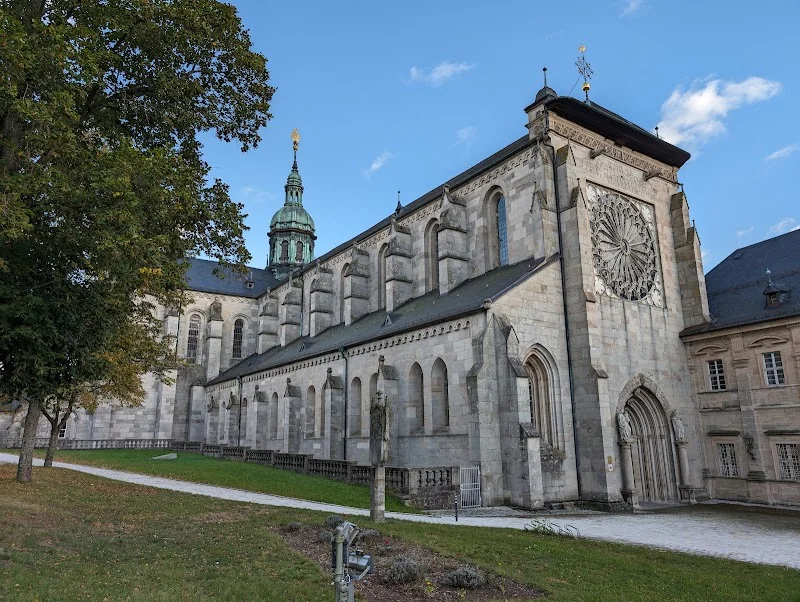
Architecturally, Ebrach is one of the most significant Gothic Cistercian buildings in Germany. The German Foundation for Monument Protection emphasizes that despite later interior renovations, the structures and architectural forms are still clearly discernible. Particularly noteworthy is the early Gothic basic layout, which continues to shape the sacred character of the church today. Throughout the 18th century, the interior received rich furnishings and paintings; the Würzburg stucco artist Materno Bossi worked together with Peter Wagner on the new design. The high altar dates from 1778 to 1780. Thus, the abbey church combines Gothic substance with baroque and early classicist furnishings into an unusually multifaceted space. ([denkmalschutz.de](https://www.denkmalschutz.de/denkmal/kloster-ebrach.html))
The monastery buildings themselves are also part of this architectural narrative. The Bamberg district describes that the complex underwent fundamental redesigns into a castle-like baroque complex in the 18th century by Leonhard Dientzenhofer, while the Gothic church with its rose window was preserved. The community also highlights the splendid baroque staircase and the imperial hall as special points of interest. These rooms form the heart of many tours and are also digitally accessible. The virtual tour through the staircase and imperial hall shows how strongly Ebrach relies on spatial effects, perspective, and representation. Those who enter here do not simply experience a hall but a staging of monastic power and baroque spatial culture. ([landkreis-bamberg.de](https://www.landkreis-bamberg.de/Erleben/Tourismus-und-Freizeit/Sehenswertes-/Kirchen-und-Kl%C3%B6ster/Ehemaliges-Zisterzienserkloster-in-Ebrach.php?FID=2892.1479.1&ModID=7&NavID=2892.350&object=tx%2C2892.5&utm_source=openai))
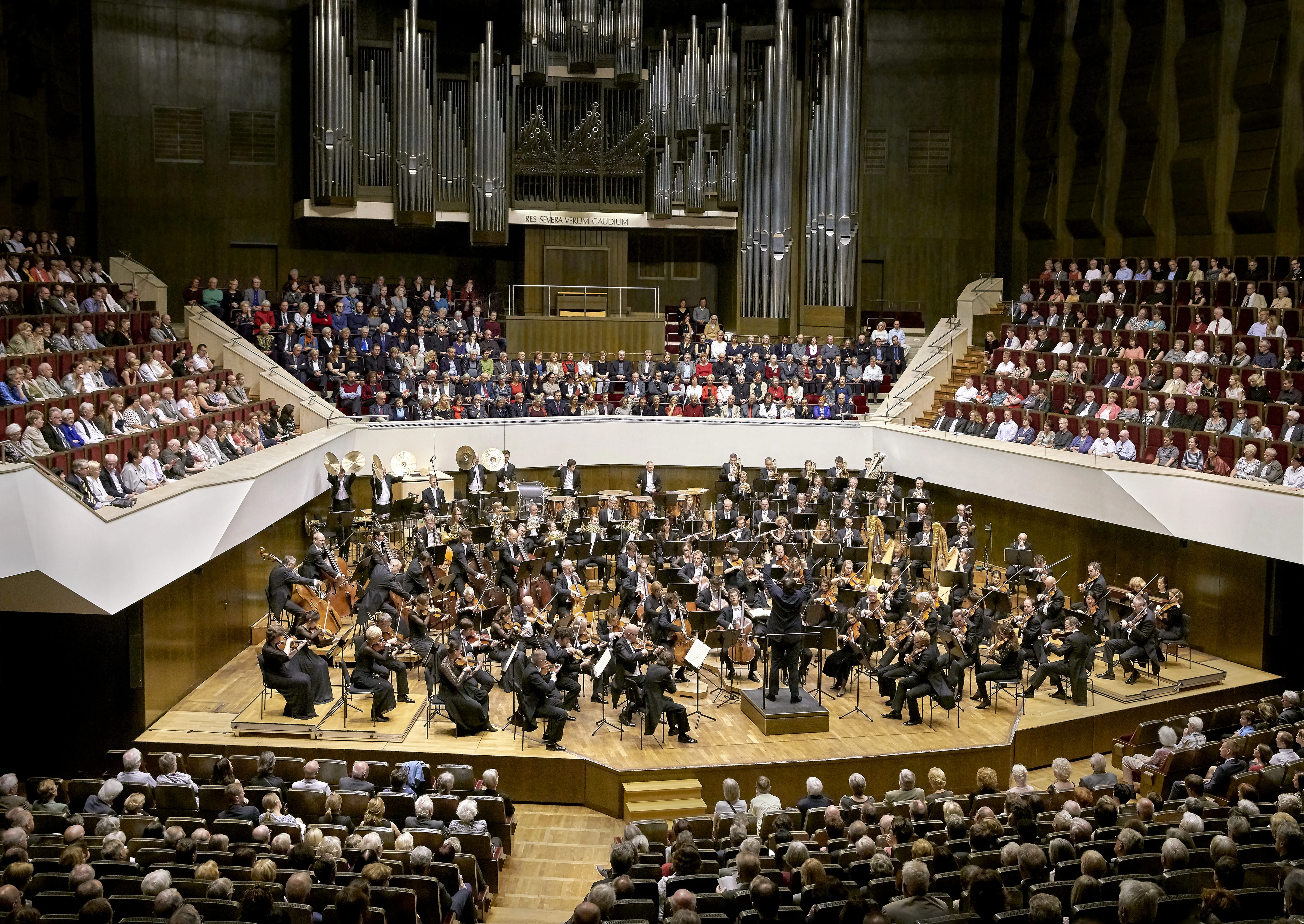
Another architectural allure lies in its current use. The former abbey church is not only a monument but also a place of music. The German Foundation for Monument Protection names it a venue for the Ebrach Music Summer, and the community points to renowned orchestras that perform there in the concert program. Thus, the historical architecture is not museum-like silent but is continually filled with sound. This is precisely what makes Ebrach so attractive for visitors: one does not only see history, one hears and feels it. Between the church space, imperial hall, and digital preview, a very modern access to a very old place is created. ([denkmalschutz.de](https://www.denkmalschutz.de/denkmal/kloster-ebrach.html))
Museum, Cisterscapes, and Cultural Highlights in Ebrach
Since 2004, a museum has been housed in the former Cistercian monastery, the Museum of the History of Ebrach. The community states that the opening hours are from the end of March to the end of October, Tuesday to Sunday from 2:00 PM to 4:00 PM. Here, the development of the town and the monastery landscape can be traced in a condensed form. The offer is supplemented by the exhibition Wild Beech Forests, which is also open from April. This is important for visitors because Ebrach does not just showcase a single monument but places its history in a broader natural and cultural context. Therefore, the museum visit is particularly suitable as an introduction before a guided tour or as a quiet conclusion after a walk through the monastery church and garden areas. ([ebrach.de](https://www.ebrach.de/freizeit-naherholung/geniessen-und-entdecken/fuehrungen))
A second focus is Cisterscapes. The community points out that an information center has been established in the former orangery in the upper abbey garden, which is part of the Cisterscapes project. There, visitors receive background knowledge about the role of the Cistercians as a European network and the peculiarities of the Ebrach monastery landscape. The opening hours of the information center are from April to October, Thursdays and Fridays from 10:00 AM to 2:00 PM, as well as Saturdays, Sundays, and holidays from 12:00 PM to 4:00 PM; admission is free. At the same time, the community honors the monastery landscape with the European Heritage Label. This means that Ebrach is not only locally but explicitly placed in a European context. ([ebrach.de](https://www.ebrach.de/freizeit-und-naherholung/geniessen-und-entdecken/kloster-ebrach?utm_source=openai))
For a comprehensive visitor experience, it is also worth looking at the landscape paths. The Ebrach Monastery Landscape Path and other thematic offers make visible how water engineering, forestry, and the ideal of seclusion have shaped the work of the monks. Those who understand the site not just as a monument but as a developed cultural landscape immediately recognize the special charm of this place. For photos, first impressions, and route planning, the digital models, bird's-eye view, and virtually prepared abbey spaces are helpful. The search interest in photos and reviews is therefore understandable; the provided location data indicates 4.6 out of 5 stars based on 250 reviews. However, Ebrach impresses not only through numbers but through the rare combination of architecture, landscape, sound, and European history. ([landkreis-bamberg.de](https://www.landkreis-bamberg.de/Erleben/Tourismus-und-Freizeit/Aktiv-sein/Wandern/Themenwanderwege/Klosterlandschaftsweg-Ebrach.php?FID=2976.2420.1&La=1&ModID=7&NavID=2892.330&object=tx%2C2892.5&utm_source=openai))
Sources:
Show moreShow less
Former Cistercian Abbey Ebrach | Tours & Tickets
The former Cistercian Abbey Ebrach is not just any excursion destination, but one of the defining Cistercian monuments in Germany. The monastery was founded in 1127 in the Middle Ebrach Valley, as the first Cistercian monastery on the right bank of the Rhine and probably the third Cistercian monastery in Germany, and has been closely connected with Morimond, the French mother abbey, from the very beginning. From its founding in the forest-surrounded valley, a monastery with enormous economic, spiritual, and landscape-shaping significance developed over centuries. Today, visitors experience Ebrach as a historical monastery landscape with the monastery church, imperial hall, staircase, gardens, museum, and cultural events. Important for planning a visit are the official opening hours from April to October as well as the clearly described tour offerings from the community. ([denkmalschutz.de](https://www.denkmalschutz.de/denkmal/kloster-ebrach.html))
Tours, Tickets, and Opening Hours in the Monastery Complex
Those looking for tickets for the former Cistercian Abbey Ebrach should first distinguish between sightseeing, guided tours, and event attendance. The community of Ebrach quotes a price of €6.00 per person for the complete package including the monastery church, imperial hall, and staircase. Pure church tours are offered by the Catholic parish and cost €3.00 per person. Additionally, there is the option to book an organ concert as a guided experience. Particularly attractive for day visitors is also the public Cisterscapes tour through the former monastery complex, which takes place from May to October on Sundays from 3:00 PM to 4:30 PM. This creates a visit offer that relies not only on open sightlines and beautiful rooms but also on genuine historical context. ([ebrach.de](https://www.ebrach.de/freizeit-naherholung/geniessen-und-entdecken/fuehrungen))
The time slots are clearly structured. The official opening hours of the monastery are from April to October, Tuesday to Sunday, from 10:00 AM to 12:00 PM and from 2:00 PM to 6:00 PM. According to the community, the Museum of the History of Ebrach is open from the end of March to the end of October and welcomes visitors Tuesday to Sunday from 2:00 PM to 4:00 PM. The church is closed on Mondays, which makes planning the week easier. Therefore, those who want to experience the complex in peace should integrate not only the start of the tour but also the museum section and church opening into their route. This very structuring makes Ebrach interesting for cultural-historical short trips, as one can connect multiple levels of the monastery world in half a day or a full day. ([ebrach.de](https://www.ebrach.de/freizeit-und-naherholung/geniessen-und-entdecken/kloster-ebrach))
For the first visual impression, the community offers a virtual tour of the staircase and the imperial hall, complemented by a bird's-eye view of the monastery complex. This is helpful for anyone who wants to assess photos, spatial effects, and pathways in advance. At the same time, the official information structure shows that Ebrach is no longer just a museum backdrop, but a vibrant cultural place with historical depth. Group tours can be tailored to the respective target group, and even for smaller groups, individual packages are provided. So, those looking for tickets are often actually seeking a package of history, orientation, and atmosphere in Ebrach. This makes the place equally interesting for families, cultural travelers, and architecture enthusiasts. ([ebrach.de](https://www.ebrach.de/freizeit-und-naherholung/geniessen-und-entdecken/kloster-ebrach))
Access, Parking, and Practical Visitor Information
The access to the former Cistercian Abbey Ebrach is well organized from the community's perspective. In the town center, there are time-limited parking spaces along the federal highway 22 and at the marketplace. Those who want to stay longer to connect the monastery, museum, information center, and possibly a walk through the town will find ample parking opportunities on Lagerhausstraße; from there, it is just a few minutes' walk to the town center. This makes orientation simple: those heading to the monastery should best orient themselves towards the marketplace and town center and avoid unnecessary search traffic in the sensitive areas of the historical complex. For visitors arriving by electric car, charging points are also designated at several locations. ([ebrach.de](https://www.ebrach.de/service-fuer-gaeste/parken))
Especially practical is that the community not only mentions classic parking spaces but also supplementary infrastructure. There is a charging station in close proximity to the marketplace, another at the fire station on Lagerhausstraße, as well as additional charging options at the parking lot of the treetop path Steigerwald. This is relevant for day visitors who want to combine their visit with another excursion destination. For travelers with motorhomes, there is also a nearby parking space opposite the swimming pool, which can be accessed around the clock. This allows a monastery visit to be combined with a longer stay or even an overnight stay in the region. The practical information shows that Ebrach focuses not only on culture but also on good accessibility. ([ebrach.de](https://www.ebrach.de/service-fuer-gaeste/parken))
The location is also attractive from a landscape perspective. Bamberg Tourism describes Ebrach as a baroque gem in the heart of the Steigerwald, about 30 kilometers west of Bamberg. The town center still impresses today with its monastery landscape, baroque buildings, gardens, and historical outbuildings. Therefore, those arriving do not come to an isolated monument but to a place whose structure has been shaped by the monastery over centuries. For planning, this means: allow enough time for walks, understand the marketplace not just as a parking lot but also as a starting point, and, if possible, combine the visit with the museum or a guided tour. This way, the journey becomes a substantive introduction to the history of the place. ([tourmedia-service.de](https://tourmedia-service.de/kloster-in-bayern/kloster-ebrach-franken?utm_source=openai))
History of the Cistercian Abbey Ebrach
The history of the Cistercian Abbey Ebrach begins in 1127 in the Middle Ebrach Valley. The German Foundation for Monument Protection describes the monastery as the first Cistercian monastery on the right bank of the Rhine and probably the third Cistercian monastery in Germany. The founding convent consisted of twelve monks sent from the French mother abbey Morimond. This origin is important because it connects Ebrach from the very beginning to a European network of orders. Thus, from a founding in a forested valley, a marginal outpost did not develop, but a center of spiritual, economic, and cultural power. Early on, the monks shaped the region far beyond the monastery walls. ([denkmalschutz.de](https://www.denkmalschutz.de/denkmal/kloster-ebrach.html))
The community describes that Ebrach developed significantly under Abbot Adam, already having seven granges by 1136 and initiating six daughter foundations by 1158. In the 13th to 15th centuries, there was a comprehensive expansion of property ownership, making Ebrach one of the wealthiest monasteries in Franconia. The agricultural and landscape activities of the monks were equally formative: recurring Cistercian characteristics can still be seen in Ebrach today in water management, viticulture, sheep farming, and forest use. The beech-oak mixed forest surrounding the complex is not only a natural backdrop but part of this historical cultural landscape. Here lies a core of Ebrach's history: the monastery world was not only religious but also a system of work, planning, and landscape design. ([ebrach.de](https://www.ebrach.de/freizeit-und-naherholung/geniessen-und-entdecken/kloster-ebrach))
With the secularization, the fate of the monastery changed fundamentally. In 1803, the abbey was dissolved; the former monastery church has since served as a Catholic parish church. The convent buildings were remodeled and repurposed in the 18th and 19th centuries, resulting in various layers of time overlapping in today's ensemble. According to the community, the complex today also houses a juvenile detention center. This multiple use makes Ebrach particularly exciting: the place is not only a monument but also a vibrant administrative, church, and cultural space. This mixture explains why Ebrach has remained so present in the collective memory of the region to this day. ([denkmalschutz.de](https://www.denkmalschutz.de/denkmal/kloster-ebrach.html))
Abbey Church, Imperial Hall, and Staircase as Architectural Highlights
Architecturally, Ebrach is one of the most significant Gothic Cistercian buildings in Germany. The German Foundation for Monument Protection emphasizes that despite later interior renovations, the structures and architectural forms are still clearly discernible. Particularly noteworthy is the early Gothic basic layout, which continues to shape the sacred character of the church today. Throughout the 18th century, the interior received rich furnishings and paintings; the Würzburg stucco artist Materno Bossi worked together with Peter Wagner on the new design. The high altar dates from 1778 to 1780. Thus, the abbey church combines Gothic substance with baroque and early classicist furnishings into an unusually multifaceted space. ([denkmalschutz.de](https://www.denkmalschutz.de/denkmal/kloster-ebrach.html))
The monastery buildings themselves are also part of this architectural narrative. The Bamberg district describes that the complex underwent fundamental redesigns into a castle-like baroque complex in the 18th century by Leonhard Dientzenhofer, while the Gothic church with its rose window was preserved. The community also highlights the splendid baroque staircase and the imperial hall as special points of interest. These rooms form the heart of many tours and are also digitally accessible. The virtual tour through the staircase and imperial hall shows how strongly Ebrach relies on spatial effects, perspective, and representation. Those who enter here do not simply experience a hall but a staging of monastic power and baroque spatial culture. ([landkreis-bamberg.de](https://www.landkreis-bamberg.de/Erleben/Tourismus-und-Freizeit/Sehenswertes-/Kirchen-und-Kl%C3%B6ster/Ehemaliges-Zisterzienserkloster-in-Ebrach.php?FID=2892.1479.1&ModID=7&NavID=2892.350&object=tx%2C2892.5&utm_source=openai))
Another architectural allure lies in its current use. The former abbey church is not only a monument but also a place of music. The German Foundation for Monument Protection names it a venue for the Ebrach Music Summer, and the community points to renowned orchestras that perform there in the concert program. Thus, the historical architecture is not museum-like silent but is continually filled with sound. This is precisely what makes Ebrach so attractive for visitors: one does not only see history, one hears and feels it. Between the church space, imperial hall, and digital preview, a very modern access to a very old place is created. ([denkmalschutz.de](https://www.denkmalschutz.de/denkmal/kloster-ebrach.html))
Museum, Cisterscapes, and Cultural Highlights in Ebrach
Since 2004, a museum has been housed in the former Cistercian monastery, the Museum of the History of Ebrach. The community states that the opening hours are from the end of March to the end of October, Tuesday to Sunday from 2:00 PM to 4:00 PM. Here, the development of the town and the monastery landscape can be traced in a condensed form. The offer is supplemented by the exhibition Wild Beech Forests, which is also open from April. This is important for visitors because Ebrach does not just showcase a single monument but places its history in a broader natural and cultural context. Therefore, the museum visit is particularly suitable as an introduction before a guided tour or as a quiet conclusion after a walk through the monastery church and garden areas. ([ebrach.de](https://www.ebrach.de/freizeit-naherholung/geniessen-und-entdecken/fuehrungen))
A second focus is Cisterscapes. The community points out that an information center has been established in the former orangery in the upper abbey garden, which is part of the Cisterscapes project. There, visitors receive background knowledge about the role of the Cistercians as a European network and the peculiarities of the Ebrach monastery landscape. The opening hours of the information center are from April to October, Thursdays and Fridays from 10:00 AM to 2:00 PM, as well as Saturdays, Sundays, and holidays from 12:00 PM to 4:00 PM; admission is free. At the same time, the community honors the monastery landscape with the European Heritage Label. This means that Ebrach is not only locally but explicitly placed in a European context. ([ebrach.de](https://www.ebrach.de/freizeit-und-naherholung/geniessen-und-entdecken/kloster-ebrach?utm_source=openai))
For a comprehensive visitor experience, it is also worth looking at the landscape paths. The Ebrach Monastery Landscape Path and other thematic offers make visible how water engineering, forestry, and the ideal of seclusion have shaped the work of the monks. Those who understand the site not just as a monument but as a developed cultural landscape immediately recognize the special charm of this place. For photos, first impressions, and route planning, the digital models, bird's-eye view, and virtually prepared abbey spaces are helpful. The search interest in photos and reviews is therefore understandable; the provided location data indicates 4.6 out of 5 stars based on 250 reviews. However, Ebrach impresses not only through numbers but through the rare combination of architecture, landscape, sound, and European history. ([landkreis-bamberg.de](https://www.landkreis-bamberg.de/Erleben/Tourismus-und-Freizeit/Aktiv-sein/Wandern/Themenwanderwege/Klosterlandschaftsweg-Ebrach.php?FID=2976.2420.1&La=1&ModID=7&NavID=2892.330&object=tx%2C2892.5&utm_source=openai))
Sources:
Former Cistercian Abbey Ebrach | Tours & Tickets
The former Cistercian Abbey Ebrach is not just any excursion destination, but one of the defining Cistercian monuments in Germany. The monastery was founded in 1127 in the Middle Ebrach Valley, as the first Cistercian monastery on the right bank of the Rhine and probably the third Cistercian monastery in Germany, and has been closely connected with Morimond, the French mother abbey, from the very beginning. From its founding in the forest-surrounded valley, a monastery with enormous economic, spiritual, and landscape-shaping significance developed over centuries. Today, visitors experience Ebrach as a historical monastery landscape with the monastery church, imperial hall, staircase, gardens, museum, and cultural events. Important for planning a visit are the official opening hours from April to October as well as the clearly described tour offerings from the community. ([denkmalschutz.de](https://www.denkmalschutz.de/denkmal/kloster-ebrach.html))
Tours, Tickets, and Opening Hours in the Monastery Complex
Those looking for tickets for the former Cistercian Abbey Ebrach should first distinguish between sightseeing, guided tours, and event attendance. The community of Ebrach quotes a price of €6.00 per person for the complete package including the monastery church, imperial hall, and staircase. Pure church tours are offered by the Catholic parish and cost €3.00 per person. Additionally, there is the option to book an organ concert as a guided experience. Particularly attractive for day visitors is also the public Cisterscapes tour through the former monastery complex, which takes place from May to October on Sundays from 3:00 PM to 4:30 PM. This creates a visit offer that relies not only on open sightlines and beautiful rooms but also on genuine historical context. ([ebrach.de](https://www.ebrach.de/freizeit-naherholung/geniessen-und-entdecken/fuehrungen))
The time slots are clearly structured. The official opening hours of the monastery are from April to October, Tuesday to Sunday, from 10:00 AM to 12:00 PM and from 2:00 PM to 6:00 PM. According to the community, the Museum of the History of Ebrach is open from the end of March to the end of October and welcomes visitors Tuesday to Sunday from 2:00 PM to 4:00 PM. The church is closed on Mondays, which makes planning the week easier. Therefore, those who want to experience the complex in peace should integrate not only the start of the tour but also the museum section and church opening into their route. This very structuring makes Ebrach interesting for cultural-historical short trips, as one can connect multiple levels of the monastery world in half a day or a full day. ([ebrach.de](https://www.ebrach.de/freizeit-und-naherholung/geniessen-und-entdecken/kloster-ebrach))
For the first visual impression, the community offers a virtual tour of the staircase and the imperial hall, complemented by a bird's-eye view of the monastery complex. This is helpful for anyone who wants to assess photos, spatial effects, and pathways in advance. At the same time, the official information structure shows that Ebrach is no longer just a museum backdrop, but a vibrant cultural place with historical depth. Group tours can be tailored to the respective target group, and even for smaller groups, individual packages are provided. So, those looking for tickets are often actually seeking a package of history, orientation, and atmosphere in Ebrach. This makes the place equally interesting for families, cultural travelers, and architecture enthusiasts. ([ebrach.de](https://www.ebrach.de/freizeit-und-naherholung/geniessen-und-entdecken/kloster-ebrach))
Access, Parking, and Practical Visitor Information
The access to the former Cistercian Abbey Ebrach is well organized from the community's perspective. In the town center, there are time-limited parking spaces along the federal highway 22 and at the marketplace. Those who want to stay longer to connect the monastery, museum, information center, and possibly a walk through the town will find ample parking opportunities on Lagerhausstraße; from there, it is just a few minutes' walk to the town center. This makes orientation simple: those heading to the monastery should best orient themselves towards the marketplace and town center and avoid unnecessary search traffic in the sensitive areas of the historical complex. For visitors arriving by electric car, charging points are also designated at several locations. ([ebrach.de](https://www.ebrach.de/service-fuer-gaeste/parken))
Especially practical is that the community not only mentions classic parking spaces but also supplementary infrastructure. There is a charging station in close proximity to the marketplace, another at the fire station on Lagerhausstraße, as well as additional charging options at the parking lot of the treetop path Steigerwald. This is relevant for day visitors who want to combine their visit with another excursion destination. For travelers with motorhomes, there is also a nearby parking space opposite the swimming pool, which can be accessed around the clock. This allows a monastery visit to be combined with a longer stay or even an overnight stay in the region. The practical information shows that Ebrach focuses not only on culture but also on good accessibility. ([ebrach.de](https://www.ebrach.de/service-fuer-gaeste/parken))
The location is also attractive from a landscape perspective. Bamberg Tourism describes Ebrach as a baroque gem in the heart of the Steigerwald, about 30 kilometers west of Bamberg. The town center still impresses today with its monastery landscape, baroque buildings, gardens, and historical outbuildings. Therefore, those arriving do not come to an isolated monument but to a place whose structure has been shaped by the monastery over centuries. For planning, this means: allow enough time for walks, understand the marketplace not just as a parking lot but also as a starting point, and, if possible, combine the visit with the museum or a guided tour. This way, the journey becomes a substantive introduction to the history of the place. ([tourmedia-service.de](https://tourmedia-service.de/kloster-in-bayern/kloster-ebrach-franken?utm_source=openai))
History of the Cistercian Abbey Ebrach
The history of the Cistercian Abbey Ebrach begins in 1127 in the Middle Ebrach Valley. The German Foundation for Monument Protection describes the monastery as the first Cistercian monastery on the right bank of the Rhine and probably the third Cistercian monastery in Germany. The founding convent consisted of twelve monks sent from the French mother abbey Morimond. This origin is important because it connects Ebrach from the very beginning to a European network of orders. Thus, from a founding in a forested valley, a marginal outpost did not develop, but a center of spiritual, economic, and cultural power. Early on, the monks shaped the region far beyond the monastery walls. ([denkmalschutz.de](https://www.denkmalschutz.de/denkmal/kloster-ebrach.html))
The community describes that Ebrach developed significantly under Abbot Adam, already having seven granges by 1136 and initiating six daughter foundations by 1158. In the 13th to 15th centuries, there was a comprehensive expansion of property ownership, making Ebrach one of the wealthiest monasteries in Franconia. The agricultural and landscape activities of the monks were equally formative: recurring Cistercian characteristics can still be seen in Ebrach today in water management, viticulture, sheep farming, and forest use. The beech-oak mixed forest surrounding the complex is not only a natural backdrop but part of this historical cultural landscape. Here lies a core of Ebrach's history: the monastery world was not only religious but also a system of work, planning, and landscape design. ([ebrach.de](https://www.ebrach.de/freizeit-und-naherholung/geniessen-und-entdecken/kloster-ebrach))
With the secularization, the fate of the monastery changed fundamentally. In 1803, the abbey was dissolved; the former monastery church has since served as a Catholic parish church. The convent buildings were remodeled and repurposed in the 18th and 19th centuries, resulting in various layers of time overlapping in today's ensemble. According to the community, the complex today also houses a juvenile detention center. This multiple use makes Ebrach particularly exciting: the place is not only a monument but also a vibrant administrative, church, and cultural space. This mixture explains why Ebrach has remained so present in the collective memory of the region to this day. ([denkmalschutz.de](https://www.denkmalschutz.de/denkmal/kloster-ebrach.html))
Abbey Church, Imperial Hall, and Staircase as Architectural Highlights
Architecturally, Ebrach is one of the most significant Gothic Cistercian buildings in Germany. The German Foundation for Monument Protection emphasizes that despite later interior renovations, the structures and architectural forms are still clearly discernible. Particularly noteworthy is the early Gothic basic layout, which continues to shape the sacred character of the church today. Throughout the 18th century, the interior received rich furnishings and paintings; the Würzburg stucco artist Materno Bossi worked together with Peter Wagner on the new design. The high altar dates from 1778 to 1780. Thus, the abbey church combines Gothic substance with baroque and early classicist furnishings into an unusually multifaceted space. ([denkmalschutz.de](https://www.denkmalschutz.de/denkmal/kloster-ebrach.html))
The monastery buildings themselves are also part of this architectural narrative. The Bamberg district describes that the complex underwent fundamental redesigns into a castle-like baroque complex in the 18th century by Leonhard Dientzenhofer, while the Gothic church with its rose window was preserved. The community also highlights the splendid baroque staircase and the imperial hall as special points of interest. These rooms form the heart of many tours and are also digitally accessible. The virtual tour through the staircase and imperial hall shows how strongly Ebrach relies on spatial effects, perspective, and representation. Those who enter here do not simply experience a hall but a staging of monastic power and baroque spatial culture. ([landkreis-bamberg.de](https://www.landkreis-bamberg.de/Erleben/Tourismus-und-Freizeit/Sehenswertes-/Kirchen-und-Kl%C3%B6ster/Ehemaliges-Zisterzienserkloster-in-Ebrach.php?FID=2892.1479.1&ModID=7&NavID=2892.350&object=tx%2C2892.5&utm_source=openai))
Another architectural allure lies in its current use. The former abbey church is not only a monument but also a place of music. The German Foundation for Monument Protection names it a venue for the Ebrach Music Summer, and the community points to renowned orchestras that perform there in the concert program. Thus, the historical architecture is not museum-like silent but is continually filled with sound. This is precisely what makes Ebrach so attractive for visitors: one does not only see history, one hears and feels it. Between the church space, imperial hall, and digital preview, a very modern access to a very old place is created. ([denkmalschutz.de](https://www.denkmalschutz.de/denkmal/kloster-ebrach.html))
Museum, Cisterscapes, and Cultural Highlights in Ebrach
Since 2004, a museum has been housed in the former Cistercian monastery, the Museum of the History of Ebrach. The community states that the opening hours are from the end of March to the end of October, Tuesday to Sunday from 2:00 PM to 4:00 PM. Here, the development of the town and the monastery landscape can be traced in a condensed form. The offer is supplemented by the exhibition Wild Beech Forests, which is also open from April. This is important for visitors because Ebrach does not just showcase a single monument but places its history in a broader natural and cultural context. Therefore, the museum visit is particularly suitable as an introduction before a guided tour or as a quiet conclusion after a walk through the monastery church and garden areas. ([ebrach.de](https://www.ebrach.de/freizeit-naherholung/geniessen-und-entdecken/fuehrungen))
A second focus is Cisterscapes. The community points out that an information center has been established in the former orangery in the upper abbey garden, which is part of the Cisterscapes project. There, visitors receive background knowledge about the role of the Cistercians as a European network and the peculiarities of the Ebrach monastery landscape. The opening hours of the information center are from April to October, Thursdays and Fridays from 10:00 AM to 2:00 PM, as well as Saturdays, Sundays, and holidays from 12:00 PM to 4:00 PM; admission is free. At the same time, the community honors the monastery landscape with the European Heritage Label. This means that Ebrach is not only locally but explicitly placed in a European context. ([ebrach.de](https://www.ebrach.de/freizeit-und-naherholung/geniessen-und-entdecken/kloster-ebrach?utm_source=openai))
For a comprehensive visitor experience, it is also worth looking at the landscape paths. The Ebrach Monastery Landscape Path and other thematic offers make visible how water engineering, forestry, and the ideal of seclusion have shaped the work of the monks. Those who understand the site not just as a monument but as a developed cultural landscape immediately recognize the special charm of this place. For photos, first impressions, and route planning, the digital models, bird's-eye view, and virtually prepared abbey spaces are helpful. The search interest in photos and reviews is therefore understandable; the provided location data indicates 4.6 out of 5 stars based on 250 reviews. However, Ebrach impresses not only through numbers but through the rare combination of architecture, landscape, sound, and European history. ([landkreis-bamberg.de](https://www.landkreis-bamberg.de/Erleben/Tourismus-und-Freizeit/Aktiv-sein/Wandern/Themenwanderwege/Klosterlandschaftsweg-Ebrach.php?FID=2976.2420.1&La=1&ModID=7&NavID=2892.330&object=tx%2C2892.5&utm_source=openai))
Sources:
Frequently Asked Questions
Reviews
No reviews found