
Bamberg
Dompl. 5, 96049 Bamberg, Deutschland
Diocesan Museum Bamberg | Opening Hours & Admission
The Diocesan Museum Bamberg is one of the places in Franconia where art history, religious history, and city history come together very directly. Located directly at Domplatz 5, to the left of Bamberg Cathedral, the museum presents a collection that is known far beyond Bamberg and is particularly characterized by its textile treasures, the cathedral treasure, and its close ties to Ottonian history. Those who come here visit not only a museum but a place where an entire chapter of European culture is told through precious objects. The official website provides information about opening hours, admission prices, directions, guided tours, and current offers; at the same time, it shows that the house has been reimagined after renovation with a museum shop and café as a place to stay. Thus, the Diocesan Museum Bamberg combines concentrated collection experience with practical visitor friendliness. Especially for people looking for opening hours, admission, photos, shop, café, or exhibitions, the institution is therefore much more than a classic sight: it is a vibrant museum location with a clear structure and an exceptionally strong profile. ([dioezesanmuseum-bamberg.de](https://dioezesanmuseum-bamberg.de/?utm_source=openai))
Opening Hours, Admission, and Tickets for the Museum Visit
Anyone planning a visit should start with the current opening hours. According to the official site, the Diocesan Museum Bamberg is open on Mondays and Tuesdays from 10:00 AM to 5:00 PM, closed on Wednesdays, and open from Thursday to Saturday from 10:00 AM to 5:00 PM, and on Sundays from 1:00 PM to 5:00 PM. The museum also points out on the homepage that there may occasionally be different opening hours, such as on special holidays or during specific museum events. This is important for planning because it allows the visit to be well integrated into a cathedral or old town tour without encountering surprises. The website keeps the visitor information visible and up to date, so one can quickly check in advance if there are any restrictions or special regulations. This makes the house particularly calculable for travelers who tightly schedule their day in Bamberg. ([dioezesanmuseum-bamberg.de](https://dioezesanmuseum-bamberg.de/?utm_source=openai))
Regarding admission, the museum relies on clear and fair conditions. The regular admission fee is 7 euros, the Domberg ticket for the Diocesan Museum, Historical Museum, and New Residence costs 12 euros, and the annual pass costs 30 euros. Discounts are available for groups of ten or more, people with disabilities, unemployed individuals, and students, each with proof; children and teenagers up to the age of 18 have free admission, as do certain specialized students and various entitled individuals. For visitors who want to experience the Domberg as a cultural ensemble, the Domberg ticket is particularly interesting because it brings together several significant places in a common tour. Thus, a single museum visit quickly becomes a larger cultural-historical arc that is well suited for half or a whole day in Bamberg. Even those who just want to stop by briefly can expect substantial content for a manageable ticket price. ([dioezesanmuseum-bamberg.de](https://dioezesanmuseum-bamberg.de/besuch/eintrittspreise/index.html?utm_source=openai))
Directions, Parking, and Accessibility at the Diocesan Museum
Getting to the Diocesan Museum Bamberg is generally easy due to its location at Domplatz, but as is usual in the Bamberg old town, it is not associated with a large parking area right at the door. Therefore, the official directions page clearly states: There are no parking spaces at the Diocesan Museum itself; nearby parking garages should be used. Those arriving by public transport can take the city bus line 910 to the Domplatz stop. This is particularly convenient for guests who want to connect the Domplatz, the Old Court, or other destinations in the historic center. The museum also points out that the Domplatz is closed for travel buses, so groups should plan their route in advance. This information is important, especially for visits as part of a city trip or an organized excursion, as it avoids unnecessary detours and time losses. Overall, it shows that the museum is centrally located, but in a historic urban space where mobility works a bit differently than at a location with its own parking. ([dioezesanmuseum-bamberg.de](https://dioezesanmuseum-bamberg.de/besuch/anreise/index.html?utm_source=openai))
Additionally, the current situation regarding accessibility is openly communicated by the museum. The homepage and the directions page describe that it is currently again possible to enter the Bamberg Cathedral and the Diocesan Museum at ground level, but the access route does not yet meet all accessibility requirements. The path leads through the Mesnerhof via Domstraße; at the same time, the museum announces that the area may be temporarily closed again to finalize the portal and surface to be fully accessible. There is also information about an accessible parking area at Domplatz 1–2 opposite the main entrance. For guests with mobility restrictions, this transparency is very valuable because it does not obscure the real conditions but explains them understandably. Those preparing for the visit can arrive with appropriate expectations and plan on-site much more relaxed. This balancing act between accessibility and historical building substance is particularly relevant for a house in a monument-rich cathedral environment. ([dioezesanmuseum-bamberg.de](https://dioezesanmuseum-bamberg.de/besuch/anreise/index.html?utm_source=openai))
Cathedral Treasure, Imperial Robes, and the Most Famous Exhibits
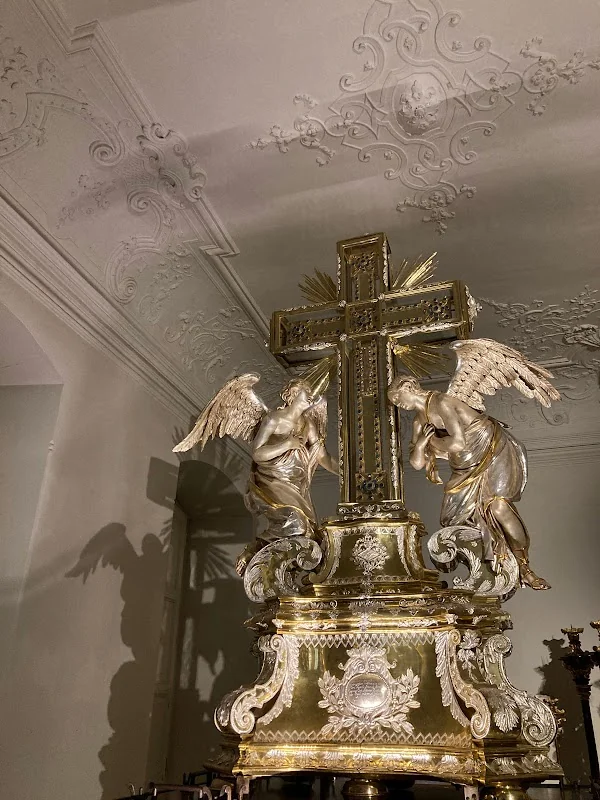
The thematic heart of the Diocesan Museum Bamberg is the cathedral treasure. According to official representation, it was established by Heinrich II and Kunigunde with numerous endowments and has been supplemented, changed, and partially recorded over centuries. This allows not only the history of individual objects to be traced but also the development of ecclesiastical representation and liturgical culture in Bamberg. Highlighted pieces include liturgical utensils, reliquaries, altar crosses, and other valuable objects that make visible both religious use and craftsmanship excellence. Particularly striking is the so-called Cathedral Cross, a monumental gem cross and cross reliquary that is still carried through the city during the Corpus Christi procession. Thus, the museum sees itself not only as an exhibition space but as a preservation site of a living tradition that impressively shows the connection between sacred use and museum presentation. Therefore, those who visit the cathedral treasure do not stand before isolated individual objects but before testimonies of a long culture history closely linked to Bamberg. ([dioezesanmuseum-bamberg.de](https://dioezesanmuseum-bamberg.de/ausstellungen/Dauerausstellung/vasa-sacra/index.html?utm_source=openai))
Particularly famous are the imperial robes and textiles highlighted as unique exhibits in the museum. These include the six ceremonial garments associated with Emperor Heinrich II and his wife Kunigunde: Star Cloak, Blue Kunigunde Cloak, White Kunigunde Cloak, Rider's Cloak, Tunic, and Rationale. These garments date from the first quarter of the 11th century and, together with the vestment of Pope Clemens II from the only preserved papal tomb north of the Alps and the Gunthertuch, form the basis of a textile collection of world significance. These pieces make the museum particularly attractive for visitors interested in medieval art, ecclesiastical representation, and material history. The objects are not only beautiful but also historically dense: they tell of power, liturgy, memorial culture, and artistic technique. In Bamberg, this textile history is therefore more than a specialized topic; it is a key to understanding the entire museum. Thus, those searching for "imperial robes" will indeed find one of the most well-known and significant collection areas of the city here. ([dioezesanmuseum-bamberg.de](https://dioezesanmuseum-bamberg.de/ausstellungen/Dauerausstellung/kaisergewaender_und_textilien/index.html?utm_source=openai))
Beyond the textile treasures, the museum offers a wide view of artworks and sculptures connected to Bamberg Cathedral and its surroundings. The museum's descriptions mention, among others, the Bamberg Rider, original figures of the cathedral, works by Veit Stoß, Matthäus Merian the Younger, and Joachim Sandrart. The Gothic cloister also plays an important role as it marks not only the spatial but also the atmospheric transition from the cathedral to the museum. Those participating in a guided tour or exploring the collection themselves experience an unusually close intertwining of architecture, visual art, and liturgical function. Therefore, the Diocesan Museum is particularly appealing for guests who not only want to see a single object but wish to understand the history of an entire ensemble. It does not focus on a loud staging but on the quiet authority of extraordinary originals. This combination of scientific precision and poetic aura makes the visit sustainable and explains why the collection enjoys such a high reputation far beyond Bamberg. ([dioezesanmuseum-bamberg.de](https://dioezesanmuseum-bamberg.de/vermittlung/gruppenfuehrungen/DomSchatzKreuzgang/index.html?utm_source=openai))
Museum Shop, Museum Café, and Space for a Real Break
After an intensive round through the cathedral treasure and permanent exhibition, the new museum shop and café are a very pleasant part of the visit. The official site describes the offer as the result of a comprehensive renovation and emphasizes that the house has thus created new places for discovery, deepening, and enjoyment. In the shop, visitors can find exhibition catalogs, specialist books, postcards, and small souvenirs, exactly those things that extend a museum visit in the best sense. The café offers sustainable Italian coffee, tea, soft drinks, cakes, and snacks. Thus, it not only fulfills the classic function of a break but creates a place where impressions can be sorted, conversations held, and content reviewed. This combination of culture and enjoyment is particularly fitting for a museum in the cathedral environment because it does not abruptly end the visit but transitions it into a quieter second phase. This is equally pleasant for families, groups, and individual guests, as the stay becomes more flexible and less hectic. ([dioezesanmuseum-bamberg.de](https://dioezesanmuseum-bamberg.de/museumsshop/Museumsshop/index.html?utm_source=openai))
It is also interesting that the shop and café are not merely side issues in the museum's concept but are explicitly integrated into the overall picture. The website states that the Diocesan Museum Bamberg connects culture, knowledge, and enjoyment in new ways and also envisions the space as a reading lounge and event venue. A flexible event room for up to 60 people is even mentioned, where seminars, workshops, lectures, and creative formats for various target groups can take place. For inquiries such as "shop," "café," or "opening hours," this is relevant because visitors can see in advance that the museum offers not only exhibitions but also a quality stay. In a city like Bamberg, where many guests combine several stops in one day, this is a real advantage: one can combine the museum visit with a break, a conversation, or a little research in the shop. Especially after the return of the main entrance and the redesign, the house appears significantly more open and inviting than a purely preserved exhibition space. ([dioezesanmuseum-bamberg.de](https://dioezesanmuseum-bamberg.de/museumsshop/Museumsshop/index.html?utm_source=openai))
Guided Tours, Exhibitions, and Digital Discoveries
The Diocesan Museum Bamberg thrives not only on its exhibits but also on the way it is conveyed. The website makes public tours, group tours, and special formats visible. The tour "Dom.Schatz.Kreuzgang" is particularly well-known, connecting the cathedral, Diocesan Museum, and medieval cloister in a 90-minute tour. Additional tour formats focus on art, history, or spiritual connections, depending on the theme. It is important that the mediation does not remain static: the museum regularly offers events, current dates, and thematic approaches that continually open up new perspectives on the collection. For guests who want not only to look at something but to understand something, this is a significant added value. Those interested in program points, special topics, or tour offers will find continuously updated information on the website. Thus, the visit becomes not a one-time passage but a repeatable experience with changing focuses. ([dioezesanmuseum-bamberg.de](https://dioezesanmuseum-bamberg.de/vermittlung/oeffentliche-fuehrungen/index.html?utm_source=openai))
Digital and family-friendly formats also play a visible role. The website refers to puzzle rallies for families available at the ticket office, as well as Actionbounds that can be downloaded via QR code, guiding both youth and adults interactively through the collection. There are also virtual exhibitions, such as on the imperial robes, and digital treasure hunts that playfully explore individual themes like the rider's cloak or special objects. This is particularly interesting for visitors who visit the museum with children, school classes, or mixed groups and seek a low-threshold but not superficial mediation. Through these formats, the Diocesan Museum shows that sacred art does not have to be silent and distant. It can also be dialogical, interactive, and surprising. In combination with the classic tours, a very broad spectrum emerges that appeals to both specialists and the curious. Thus, those searching for "exhibition" will find not only a permanent exhibition but a continuously developed program. ([dioezesanmuseum-bamberg.de](https://dioezesanmuseum-bamberg.de/?utm_source=openai))
Photos, Reviews, Management, Job Offers, and Practical Tips
For many seekers, not only the collection and opening hours are important but also very practical questions such as photos, reviews, and contact persons. The museum allows photography throughout the house without flash and tripod for private use; only special rules apply for professional photography. This is pleasant for travelers and culture enthusiasts because one can capture impressions in an appropriate context without having to forgo every shot. The provided location data also describes the museum with 4.5 stars from 108 reviews, indicating a very good first impression among visitors. Such signals fit a house that connects its collection with clear visitor guidance and current services. Those looking for experiences from others before their visit should use the reviews as a supplement to the official information, while the most important hard facts can be found on the museum's website. This creates a realistic picture between subjective impression and reliable information. ([dioezesanmuseum-bamberg.de](https://dioezesanmuseum-bamberg.de/besuch/eintrittspreise/index.html?utm_source=openai))
The management and team structure are also transparently presented. On the team page, Carola Marie Schmidt is named as the museum director, complemented by curator Dr. Ludmila Kvapilová-Klüsener, the referent for spiritual art education Anne-Kathrin Eisenbarth-Goletz, and other contact persons from the ticket office, administration, museum shop, and technology. Additionally, the contact page refers to a section for job offers and internships, showing that the museum is also visible as a workplace and training location. Those searching for "management" or "job offers" will find no vague hints but a clear point of contact. For visitors, this means: Behind the house stands a professional, multi-member team that covers various tasks from mediation to administration to service. Especially for a museum that is so closely intertwined with the cathedral, diocese, and city history, this structure creates trust. It makes the house tangible not only as an exhibition location but also as a reliable institution. Therefore, for practical planning: Check opening hours before the visit, plan tickets, consider directions via Domplatz, and for specific questions, directly seek the appropriate information through the contact page or the team. ([dioezesanmuseum-bamberg.de](https://dioezesanmuseum-bamberg.de/kontakt/team/index.html?utm_source=openai))
Sources:
Mehr anzeigenWeniger anzeigen
Diocesan Museum Bamberg | Opening Hours & Admission
The Diocesan Museum Bamberg is one of the places in Franconia where art history, religious history, and city history come together very directly. Located directly at Domplatz 5, to the left of Bamberg Cathedral, the museum presents a collection that is known far beyond Bamberg and is particularly characterized by its textile treasures, the cathedral treasure, and its close ties to Ottonian history. Those who come here visit not only a museum but a place where an entire chapter of European culture is told through precious objects. The official website provides information about opening hours, admission prices, directions, guided tours, and current offers; at the same time, it shows that the house has been reimagined after renovation with a museum shop and café as a place to stay. Thus, the Diocesan Museum Bamberg combines concentrated collection experience with practical visitor friendliness. Especially for people looking for opening hours, admission, photos, shop, café, or exhibitions, the institution is therefore much more than a classic sight: it is a vibrant museum location with a clear structure and an exceptionally strong profile. ([dioezesanmuseum-bamberg.de](https://dioezesanmuseum-bamberg.de/?utm_source=openai))
Opening Hours, Admission, and Tickets for the Museum Visit
Anyone planning a visit should start with the current opening hours. According to the official site, the Diocesan Museum Bamberg is open on Mondays and Tuesdays from 10:00 AM to 5:00 PM, closed on Wednesdays, and open from Thursday to Saturday from 10:00 AM to 5:00 PM, and on Sundays from 1:00 PM to 5:00 PM. The museum also points out on the homepage that there may occasionally be different opening hours, such as on special holidays or during specific museum events. This is important for planning because it allows the visit to be well integrated into a cathedral or old town tour without encountering surprises. The website keeps the visitor information visible and up to date, so one can quickly check in advance if there are any restrictions or special regulations. This makes the house particularly calculable for travelers who tightly schedule their day in Bamberg. ([dioezesanmuseum-bamberg.de](https://dioezesanmuseum-bamberg.de/?utm_source=openai))
Regarding admission, the museum relies on clear and fair conditions. The regular admission fee is 7 euros, the Domberg ticket for the Diocesan Museum, Historical Museum, and New Residence costs 12 euros, and the annual pass costs 30 euros. Discounts are available for groups of ten or more, people with disabilities, unemployed individuals, and students, each with proof; children and teenagers up to the age of 18 have free admission, as do certain specialized students and various entitled individuals. For visitors who want to experience the Domberg as a cultural ensemble, the Domberg ticket is particularly interesting because it brings together several significant places in a common tour. Thus, a single museum visit quickly becomes a larger cultural-historical arc that is well suited for half or a whole day in Bamberg. Even those who just want to stop by briefly can expect substantial content for a manageable ticket price. ([dioezesanmuseum-bamberg.de](https://dioezesanmuseum-bamberg.de/besuch/eintrittspreise/index.html?utm_source=openai))
Directions, Parking, and Accessibility at the Diocesan Museum
Getting to the Diocesan Museum Bamberg is generally easy due to its location at Domplatz, but as is usual in the Bamberg old town, it is not associated with a large parking area right at the door. Therefore, the official directions page clearly states: There are no parking spaces at the Diocesan Museum itself; nearby parking garages should be used. Those arriving by public transport can take the city bus line 910 to the Domplatz stop. This is particularly convenient for guests who want to connect the Domplatz, the Old Court, or other destinations in the historic center. The museum also points out that the Domplatz is closed for travel buses, so groups should plan their route in advance. This information is important, especially for visits as part of a city trip or an organized excursion, as it avoids unnecessary detours and time losses. Overall, it shows that the museum is centrally located, but in a historic urban space where mobility works a bit differently than at a location with its own parking. ([dioezesanmuseum-bamberg.de](https://dioezesanmuseum-bamberg.de/besuch/anreise/index.html?utm_source=openai))
Additionally, the current situation regarding accessibility is openly communicated by the museum. The homepage and the directions page describe that it is currently again possible to enter the Bamberg Cathedral and the Diocesan Museum at ground level, but the access route does not yet meet all accessibility requirements. The path leads through the Mesnerhof via Domstraße; at the same time, the museum announces that the area may be temporarily closed again to finalize the portal and surface to be fully accessible. There is also information about an accessible parking area at Domplatz 1–2 opposite the main entrance. For guests with mobility restrictions, this transparency is very valuable because it does not obscure the real conditions but explains them understandably. Those preparing for the visit can arrive with appropriate expectations and plan on-site much more relaxed. This balancing act between accessibility and historical building substance is particularly relevant for a house in a monument-rich cathedral environment. ([dioezesanmuseum-bamberg.de](https://dioezesanmuseum-bamberg.de/besuch/anreise/index.html?utm_source=openai))
Cathedral Treasure, Imperial Robes, and the Most Famous Exhibits
The thematic heart of the Diocesan Museum Bamberg is the cathedral treasure. According to official representation, it was established by Heinrich II and Kunigunde with numerous endowments and has been supplemented, changed, and partially recorded over centuries. This allows not only the history of individual objects to be traced but also the development of ecclesiastical representation and liturgical culture in Bamberg. Highlighted pieces include liturgical utensils, reliquaries, altar crosses, and other valuable objects that make visible both religious use and craftsmanship excellence. Particularly striking is the so-called Cathedral Cross, a monumental gem cross and cross reliquary that is still carried through the city during the Corpus Christi procession. Thus, the museum sees itself not only as an exhibition space but as a preservation site of a living tradition that impressively shows the connection between sacred use and museum presentation. Therefore, those who visit the cathedral treasure do not stand before isolated individual objects but before testimonies of a long culture history closely linked to Bamberg. ([dioezesanmuseum-bamberg.de](https://dioezesanmuseum-bamberg.de/ausstellungen/Dauerausstellung/vasa-sacra/index.html?utm_source=openai))
Particularly famous are the imperial robes and textiles highlighted as unique exhibits in the museum. These include the six ceremonial garments associated with Emperor Heinrich II and his wife Kunigunde: Star Cloak, Blue Kunigunde Cloak, White Kunigunde Cloak, Rider's Cloak, Tunic, and Rationale. These garments date from the first quarter of the 11th century and, together with the vestment of Pope Clemens II from the only preserved papal tomb north of the Alps and the Gunthertuch, form the basis of a textile collection of world significance. These pieces make the museum particularly attractive for visitors interested in medieval art, ecclesiastical representation, and material history. The objects are not only beautiful but also historically dense: they tell of power, liturgy, memorial culture, and artistic technique. In Bamberg, this textile history is therefore more than a specialized topic; it is a key to understanding the entire museum. Thus, those searching for "imperial robes" will indeed find one of the most well-known and significant collection areas of the city here. ([dioezesanmuseum-bamberg.de](https://dioezesanmuseum-bamberg.de/ausstellungen/Dauerausstellung/kaisergewaender_und_textilien/index.html?utm_source=openai))
Beyond the textile treasures, the museum offers a wide view of artworks and sculptures connected to Bamberg Cathedral and its surroundings. The museum's descriptions mention, among others, the Bamberg Rider, original figures of the cathedral, works by Veit Stoß, Matthäus Merian the Younger, and Joachim Sandrart. The Gothic cloister also plays an important role as it marks not only the spatial but also the atmospheric transition from the cathedral to the museum. Those participating in a guided tour or exploring the collection themselves experience an unusually close intertwining of architecture, visual art, and liturgical function. Therefore, the Diocesan Museum is particularly appealing for guests who not only want to see a single object but wish to understand the history of an entire ensemble. It does not focus on a loud staging but on the quiet authority of extraordinary originals. This combination of scientific precision and poetic aura makes the visit sustainable and explains why the collection enjoys such a high reputation far beyond Bamberg. ([dioezesanmuseum-bamberg.de](https://dioezesanmuseum-bamberg.de/vermittlung/gruppenfuehrungen/DomSchatzKreuzgang/index.html?utm_source=openai))
Museum Shop, Museum Café, and Space for a Real Break
After an intensive round through the cathedral treasure and permanent exhibition, the new museum shop and café are a very pleasant part of the visit. The official site describes the offer as the result of a comprehensive renovation and emphasizes that the house has thus created new places for discovery, deepening, and enjoyment. In the shop, visitors can find exhibition catalogs, specialist books, postcards, and small souvenirs, exactly those things that extend a museum visit in the best sense. The café offers sustainable Italian coffee, tea, soft drinks, cakes, and snacks. Thus, it not only fulfills the classic function of a break but creates a place where impressions can be sorted, conversations held, and content reviewed. This combination of culture and enjoyment is particularly fitting for a museum in the cathedral environment because it does not abruptly end the visit but transitions it into a quieter second phase. This is equally pleasant for families, groups, and individual guests, as the stay becomes more flexible and less hectic. ([dioezesanmuseum-bamberg.de](https://dioezesanmuseum-bamberg.de/museumsshop/Museumsshop/index.html?utm_source=openai))
It is also interesting that the shop and café are not merely side issues in the museum's concept but are explicitly integrated into the overall picture. The website states that the Diocesan Museum Bamberg connects culture, knowledge, and enjoyment in new ways and also envisions the space as a reading lounge and event venue. A flexible event room for up to 60 people is even mentioned, where seminars, workshops, lectures, and creative formats for various target groups can take place. For inquiries such as "shop," "café," or "opening hours," this is relevant because visitors can see in advance that the museum offers not only exhibitions but also a quality stay. In a city like Bamberg, where many guests combine several stops in one day, this is a real advantage: one can combine the museum visit with a break, a conversation, or a little research in the shop. Especially after the return of the main entrance and the redesign, the house appears significantly more open and inviting than a purely preserved exhibition space. ([dioezesanmuseum-bamberg.de](https://dioezesanmuseum-bamberg.de/museumsshop/Museumsshop/index.html?utm_source=openai))
Guided Tours, Exhibitions, and Digital Discoveries
The Diocesan Museum Bamberg thrives not only on its exhibits but also on the way it is conveyed. The website makes public tours, group tours, and special formats visible. The tour "Dom.Schatz.Kreuzgang" is particularly well-known, connecting the cathedral, Diocesan Museum, and medieval cloister in a 90-minute tour. Additional tour formats focus on art, history, or spiritual connections, depending on the theme. It is important that the mediation does not remain static: the museum regularly offers events, current dates, and thematic approaches that continually open up new perspectives on the collection. For guests who want not only to look at something but to understand something, this is a significant added value. Those interested in program points, special topics, or tour offers will find continuously updated information on the website. Thus, the visit becomes not a one-time passage but a repeatable experience with changing focuses. ([dioezesanmuseum-bamberg.de](https://dioezesanmuseum-bamberg.de/vermittlung/oeffentliche-fuehrungen/index.html?utm_source=openai))
Digital and family-friendly formats also play a visible role. The website refers to puzzle rallies for families available at the ticket office, as well as Actionbounds that can be downloaded via QR code, guiding both youth and adults interactively through the collection. There are also virtual exhibitions, such as on the imperial robes, and digital treasure hunts that playfully explore individual themes like the rider's cloak or special objects. This is particularly interesting for visitors who visit the museum with children, school classes, or mixed groups and seek a low-threshold but not superficial mediation. Through these formats, the Diocesan Museum shows that sacred art does not have to be silent and distant. It can also be dialogical, interactive, and surprising. In combination with the classic tours, a very broad spectrum emerges that appeals to both specialists and the curious. Thus, those searching for "exhibition" will find not only a permanent exhibition but a continuously developed program. ([dioezesanmuseum-bamberg.de](https://dioezesanmuseum-bamberg.de/?utm_source=openai))
Photos, Reviews, Management, Job Offers, and Practical Tips
For many seekers, not only the collection and opening hours are important but also very practical questions such as photos, reviews, and contact persons. The museum allows photography throughout the house without flash and tripod for private use; only special rules apply for professional photography. This is pleasant for travelers and culture enthusiasts because one can capture impressions in an appropriate context without having to forgo every shot. The provided location data also describes the museum with 4.5 stars from 108 reviews, indicating a very good first impression among visitors. Such signals fit a house that connects its collection with clear visitor guidance and current services. Those looking for experiences from others before their visit should use the reviews as a supplement to the official information, while the most important hard facts can be found on the museum's website. This creates a realistic picture between subjective impression and reliable information. ([dioezesanmuseum-bamberg.de](https://dioezesanmuseum-bamberg.de/besuch/eintrittspreise/index.html?utm_source=openai))
The management and team structure are also transparently presented. On the team page, Carola Marie Schmidt is named as the museum director, complemented by curator Dr. Ludmila Kvapilová-Klüsener, the referent for spiritual art education Anne-Kathrin Eisenbarth-Goletz, and other contact persons from the ticket office, administration, museum shop, and technology. Additionally, the contact page refers to a section for job offers and internships, showing that the museum is also visible as a workplace and training location. Those searching for "management" or "job offers" will find no vague hints but a clear point of contact. For visitors, this means: Behind the house stands a professional, multi-member team that covers various tasks from mediation to administration to service. Especially for a museum that is so closely intertwined with the cathedral, diocese, and city history, this structure creates trust. It makes the house tangible not only as an exhibition location but also as a reliable institution. Therefore, for practical planning: Check opening hours before the visit, plan tickets, consider directions via Domplatz, and for specific questions, directly seek the appropriate information through the contact page or the team. ([dioezesanmuseum-bamberg.de](https://dioezesanmuseum-bamberg.de/kontakt/team/index.html?utm_source=openai))
Sources:
Diocesan Museum Bamberg | Opening Hours & Admission
The Diocesan Museum Bamberg is one of the places in Franconia where art history, religious history, and city history come together very directly. Located directly at Domplatz 5, to the left of Bamberg Cathedral, the museum presents a collection that is known far beyond Bamberg and is particularly characterized by its textile treasures, the cathedral treasure, and its close ties to Ottonian history. Those who come here visit not only a museum but a place where an entire chapter of European culture is told through precious objects. The official website provides information about opening hours, admission prices, directions, guided tours, and current offers; at the same time, it shows that the house has been reimagined after renovation with a museum shop and café as a place to stay. Thus, the Diocesan Museum Bamberg combines concentrated collection experience with practical visitor friendliness. Especially for people looking for opening hours, admission, photos, shop, café, or exhibitions, the institution is therefore much more than a classic sight: it is a vibrant museum location with a clear structure and an exceptionally strong profile. ([dioezesanmuseum-bamberg.de](https://dioezesanmuseum-bamberg.de/?utm_source=openai))
Opening Hours, Admission, and Tickets for the Museum Visit
Anyone planning a visit should start with the current opening hours. According to the official site, the Diocesan Museum Bamberg is open on Mondays and Tuesdays from 10:00 AM to 5:00 PM, closed on Wednesdays, and open from Thursday to Saturday from 10:00 AM to 5:00 PM, and on Sundays from 1:00 PM to 5:00 PM. The museum also points out on the homepage that there may occasionally be different opening hours, such as on special holidays or during specific museum events. This is important for planning because it allows the visit to be well integrated into a cathedral or old town tour without encountering surprises. The website keeps the visitor information visible and up to date, so one can quickly check in advance if there are any restrictions or special regulations. This makes the house particularly calculable for travelers who tightly schedule their day in Bamberg. ([dioezesanmuseum-bamberg.de](https://dioezesanmuseum-bamberg.de/?utm_source=openai))
Regarding admission, the museum relies on clear and fair conditions. The regular admission fee is 7 euros, the Domberg ticket for the Diocesan Museum, Historical Museum, and New Residence costs 12 euros, and the annual pass costs 30 euros. Discounts are available for groups of ten or more, people with disabilities, unemployed individuals, and students, each with proof; children and teenagers up to the age of 18 have free admission, as do certain specialized students and various entitled individuals. For visitors who want to experience the Domberg as a cultural ensemble, the Domberg ticket is particularly interesting because it brings together several significant places in a common tour. Thus, a single museum visit quickly becomes a larger cultural-historical arc that is well suited for half or a whole day in Bamberg. Even those who just want to stop by briefly can expect substantial content for a manageable ticket price. ([dioezesanmuseum-bamberg.de](https://dioezesanmuseum-bamberg.de/besuch/eintrittspreise/index.html?utm_source=openai))
Directions, Parking, and Accessibility at the Diocesan Museum
Getting to the Diocesan Museum Bamberg is generally easy due to its location at Domplatz, but as is usual in the Bamberg old town, it is not associated with a large parking area right at the door. Therefore, the official directions page clearly states: There are no parking spaces at the Diocesan Museum itself; nearby parking garages should be used. Those arriving by public transport can take the city bus line 910 to the Domplatz stop. This is particularly convenient for guests who want to connect the Domplatz, the Old Court, or other destinations in the historic center. The museum also points out that the Domplatz is closed for travel buses, so groups should plan their route in advance. This information is important, especially for visits as part of a city trip or an organized excursion, as it avoids unnecessary detours and time losses. Overall, it shows that the museum is centrally located, but in a historic urban space where mobility works a bit differently than at a location with its own parking. ([dioezesanmuseum-bamberg.de](https://dioezesanmuseum-bamberg.de/besuch/anreise/index.html?utm_source=openai))
Additionally, the current situation regarding accessibility is openly communicated by the museum. The homepage and the directions page describe that it is currently again possible to enter the Bamberg Cathedral and the Diocesan Museum at ground level, but the access route does not yet meet all accessibility requirements. The path leads through the Mesnerhof via Domstraße; at the same time, the museum announces that the area may be temporarily closed again to finalize the portal and surface to be fully accessible. There is also information about an accessible parking area at Domplatz 1–2 opposite the main entrance. For guests with mobility restrictions, this transparency is very valuable because it does not obscure the real conditions but explains them understandably. Those preparing for the visit can arrive with appropriate expectations and plan on-site much more relaxed. This balancing act between accessibility and historical building substance is particularly relevant for a house in a monument-rich cathedral environment. ([dioezesanmuseum-bamberg.de](https://dioezesanmuseum-bamberg.de/besuch/anreise/index.html?utm_source=openai))
Cathedral Treasure, Imperial Robes, and the Most Famous Exhibits
The thematic heart of the Diocesan Museum Bamberg is the cathedral treasure. According to official representation, it was established by Heinrich II and Kunigunde with numerous endowments and has been supplemented, changed, and partially recorded over centuries. This allows not only the history of individual objects to be traced but also the development of ecclesiastical representation and liturgical culture in Bamberg. Highlighted pieces include liturgical utensils, reliquaries, altar crosses, and other valuable objects that make visible both religious use and craftsmanship excellence. Particularly striking is the so-called Cathedral Cross, a monumental gem cross and cross reliquary that is still carried through the city during the Corpus Christi procession. Thus, the museum sees itself not only as an exhibition space but as a preservation site of a living tradition that impressively shows the connection between sacred use and museum presentation. Therefore, those who visit the cathedral treasure do not stand before isolated individual objects but before testimonies of a long culture history closely linked to Bamberg. ([dioezesanmuseum-bamberg.de](https://dioezesanmuseum-bamberg.de/ausstellungen/Dauerausstellung/vasa-sacra/index.html?utm_source=openai))
Particularly famous are the imperial robes and textiles highlighted as unique exhibits in the museum. These include the six ceremonial garments associated with Emperor Heinrich II and his wife Kunigunde: Star Cloak, Blue Kunigunde Cloak, White Kunigunde Cloak, Rider's Cloak, Tunic, and Rationale. These garments date from the first quarter of the 11th century and, together with the vestment of Pope Clemens II from the only preserved papal tomb north of the Alps and the Gunthertuch, form the basis of a textile collection of world significance. These pieces make the museum particularly attractive for visitors interested in medieval art, ecclesiastical representation, and material history. The objects are not only beautiful but also historically dense: they tell of power, liturgy, memorial culture, and artistic technique. In Bamberg, this textile history is therefore more than a specialized topic; it is a key to understanding the entire museum. Thus, those searching for "imperial robes" will indeed find one of the most well-known and significant collection areas of the city here. ([dioezesanmuseum-bamberg.de](https://dioezesanmuseum-bamberg.de/ausstellungen/Dauerausstellung/kaisergewaender_und_textilien/index.html?utm_source=openai))
Beyond the textile treasures, the museum offers a wide view of artworks and sculptures connected to Bamberg Cathedral and its surroundings. The museum's descriptions mention, among others, the Bamberg Rider, original figures of the cathedral, works by Veit Stoß, Matthäus Merian the Younger, and Joachim Sandrart. The Gothic cloister also plays an important role as it marks not only the spatial but also the atmospheric transition from the cathedral to the museum. Those participating in a guided tour or exploring the collection themselves experience an unusually close intertwining of architecture, visual art, and liturgical function. Therefore, the Diocesan Museum is particularly appealing for guests who not only want to see a single object but wish to understand the history of an entire ensemble. It does not focus on a loud staging but on the quiet authority of extraordinary originals. This combination of scientific precision and poetic aura makes the visit sustainable and explains why the collection enjoys such a high reputation far beyond Bamberg. ([dioezesanmuseum-bamberg.de](https://dioezesanmuseum-bamberg.de/vermittlung/gruppenfuehrungen/DomSchatzKreuzgang/index.html?utm_source=openai))
Museum Shop, Museum Café, and Space for a Real Break
After an intensive round through the cathedral treasure and permanent exhibition, the new museum shop and café are a very pleasant part of the visit. The official site describes the offer as the result of a comprehensive renovation and emphasizes that the house has thus created new places for discovery, deepening, and enjoyment. In the shop, visitors can find exhibition catalogs, specialist books, postcards, and small souvenirs, exactly those things that extend a museum visit in the best sense. The café offers sustainable Italian coffee, tea, soft drinks, cakes, and snacks. Thus, it not only fulfills the classic function of a break but creates a place where impressions can be sorted, conversations held, and content reviewed. This combination of culture and enjoyment is particularly fitting for a museum in the cathedral environment because it does not abruptly end the visit but transitions it into a quieter second phase. This is equally pleasant for families, groups, and individual guests, as the stay becomes more flexible and less hectic. ([dioezesanmuseum-bamberg.de](https://dioezesanmuseum-bamberg.de/museumsshop/Museumsshop/index.html?utm_source=openai))
It is also interesting that the shop and café are not merely side issues in the museum's concept but are explicitly integrated into the overall picture. The website states that the Diocesan Museum Bamberg connects culture, knowledge, and enjoyment in new ways and also envisions the space as a reading lounge and event venue. A flexible event room for up to 60 people is even mentioned, where seminars, workshops, lectures, and creative formats for various target groups can take place. For inquiries such as "shop," "café," or "opening hours," this is relevant because visitors can see in advance that the museum offers not only exhibitions but also a quality stay. In a city like Bamberg, where many guests combine several stops in one day, this is a real advantage: one can combine the museum visit with a break, a conversation, or a little research in the shop. Especially after the return of the main entrance and the redesign, the house appears significantly more open and inviting than a purely preserved exhibition space. ([dioezesanmuseum-bamberg.de](https://dioezesanmuseum-bamberg.de/museumsshop/Museumsshop/index.html?utm_source=openai))
Guided Tours, Exhibitions, and Digital Discoveries
The Diocesan Museum Bamberg thrives not only on its exhibits but also on the way it is conveyed. The website makes public tours, group tours, and special formats visible. The tour "Dom.Schatz.Kreuzgang" is particularly well-known, connecting the cathedral, Diocesan Museum, and medieval cloister in a 90-minute tour. Additional tour formats focus on art, history, or spiritual connections, depending on the theme. It is important that the mediation does not remain static: the museum regularly offers events, current dates, and thematic approaches that continually open up new perspectives on the collection. For guests who want not only to look at something but to understand something, this is a significant added value. Those interested in program points, special topics, or tour offers will find continuously updated information on the website. Thus, the visit becomes not a one-time passage but a repeatable experience with changing focuses. ([dioezesanmuseum-bamberg.de](https://dioezesanmuseum-bamberg.de/vermittlung/oeffentliche-fuehrungen/index.html?utm_source=openai))
Digital and family-friendly formats also play a visible role. The website refers to puzzle rallies for families available at the ticket office, as well as Actionbounds that can be downloaded via QR code, guiding both youth and adults interactively through the collection. There are also virtual exhibitions, such as on the imperial robes, and digital treasure hunts that playfully explore individual themes like the rider's cloak or special objects. This is particularly interesting for visitors who visit the museum with children, school classes, or mixed groups and seek a low-threshold but not superficial mediation. Through these formats, the Diocesan Museum shows that sacred art does not have to be silent and distant. It can also be dialogical, interactive, and surprising. In combination with the classic tours, a very broad spectrum emerges that appeals to both specialists and the curious. Thus, those searching for "exhibition" will find not only a permanent exhibition but a continuously developed program. ([dioezesanmuseum-bamberg.de](https://dioezesanmuseum-bamberg.de/?utm_source=openai))
Photos, Reviews, Management, Job Offers, and Practical Tips
For many seekers, not only the collection and opening hours are important but also very practical questions such as photos, reviews, and contact persons. The museum allows photography throughout the house without flash and tripod for private use; only special rules apply for professional photography. This is pleasant for travelers and culture enthusiasts because one can capture impressions in an appropriate context without having to forgo every shot. The provided location data also describes the museum with 4.5 stars from 108 reviews, indicating a very good first impression among visitors. Such signals fit a house that connects its collection with clear visitor guidance and current services. Those looking for experiences from others before their visit should use the reviews as a supplement to the official information, while the most important hard facts can be found on the museum's website. This creates a realistic picture between subjective impression and reliable information. ([dioezesanmuseum-bamberg.de](https://dioezesanmuseum-bamberg.de/besuch/eintrittspreise/index.html?utm_source=openai))
The management and team structure are also transparently presented. On the team page, Carola Marie Schmidt is named as the museum director, complemented by curator Dr. Ludmila Kvapilová-Klüsener, the referent for spiritual art education Anne-Kathrin Eisenbarth-Goletz, and other contact persons from the ticket office, administration, museum shop, and technology. Additionally, the contact page refers to a section for job offers and internships, showing that the museum is also visible as a workplace and training location. Those searching for "management" or "job offers" will find no vague hints but a clear point of contact. For visitors, this means: Behind the house stands a professional, multi-member team that covers various tasks from mediation to administration to service. Especially for a museum that is so closely intertwined with the cathedral, diocese, and city history, this structure creates trust. It makes the house tangible not only as an exhibition location but also as a reliable institution. Therefore, for practical planning: Check opening hours before the visit, plan tickets, consider directions via Domplatz, and for specific questions, directly seek the appropriate information through the contact page or the team. ([dioezesanmuseum-bamberg.de](https://dioezesanmuseum-bamberg.de/kontakt/team/index.html?utm_source=openai))
Sources:
Upcoming Events
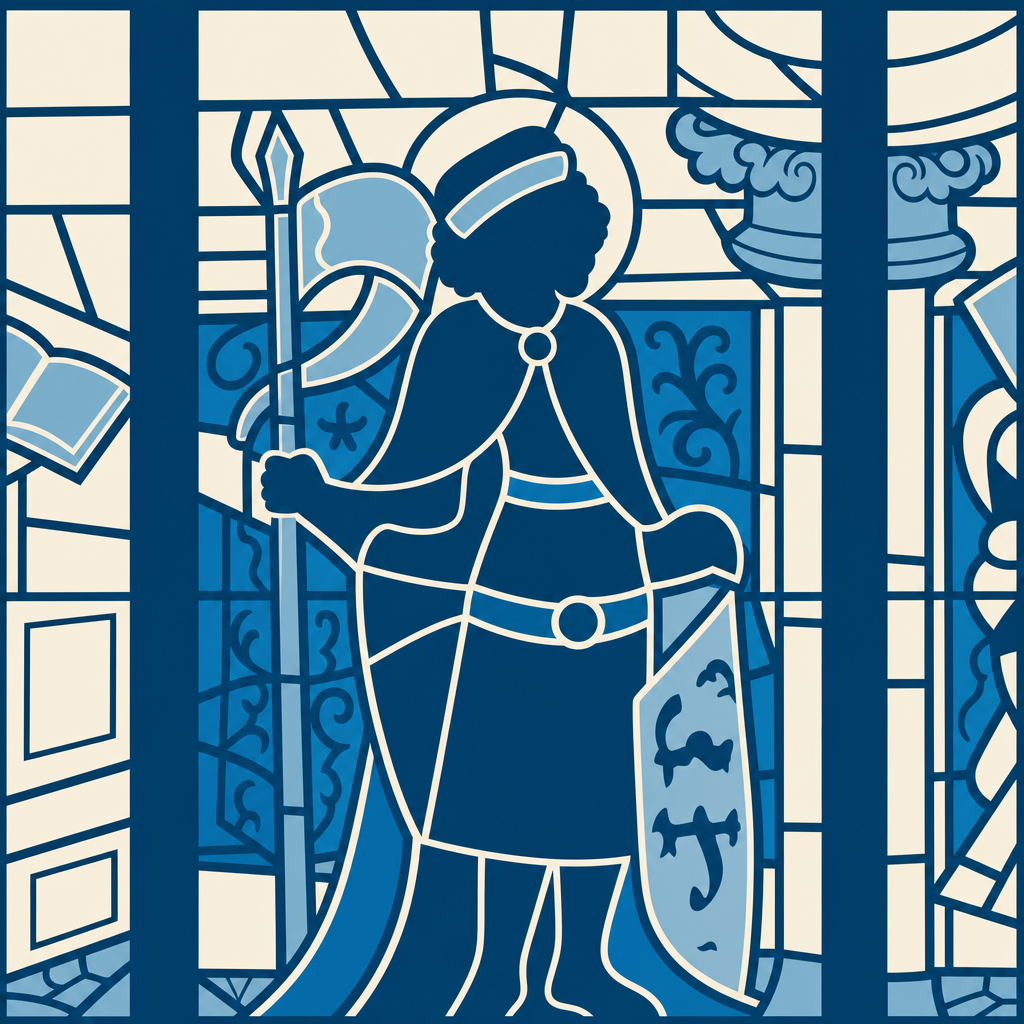
Fragile Heritage – Lasting Light: Andreas Window in Dialogue
An extraordinary view of stained glass, light, and restoration awaits you at the Diocesan Museum Bamberg. The Andreas Window meets contemporary art. #Art #Bamberg
Exhibition Fragile Heritage – Lasting Light
The Middle Ages meet the present: In Bamberg, the Andreas window from 1414 shines in dialogue with modern art. A strong #artexperience at the Diocese Museum.
Exhibition 'Fragile Heritage - Lasting Light'
Glass, color, and light in their most beautiful form: In Bamberg, the Andreas Window from 1414 meets contemporary art. A quiet, powerful #art experience.
Frequently Asked Questions
Reviews
Alessandro Chan
24. December 2023
Before you go inside, you have to put big bags or backpacks in the lockers. Toilets are free for ticket buyers but €0.5 for outsiders. The museum is worth going if you are interested in religious relics. They have combo tickets for 2 museums and it is €12 if I don't remember wrong.
Jonathan Chua
15. October 2025
The museum was smaller than expected but worth the visit.
alex chan
23. December 2023
very nice museum with lockers and toliet.
Beyond Be
28. February 2018
There are so many antique art pieces. You can see catholic treasures.
Kevin Maps
4. October 2022
Interesting collection of treasures and unique garments.