
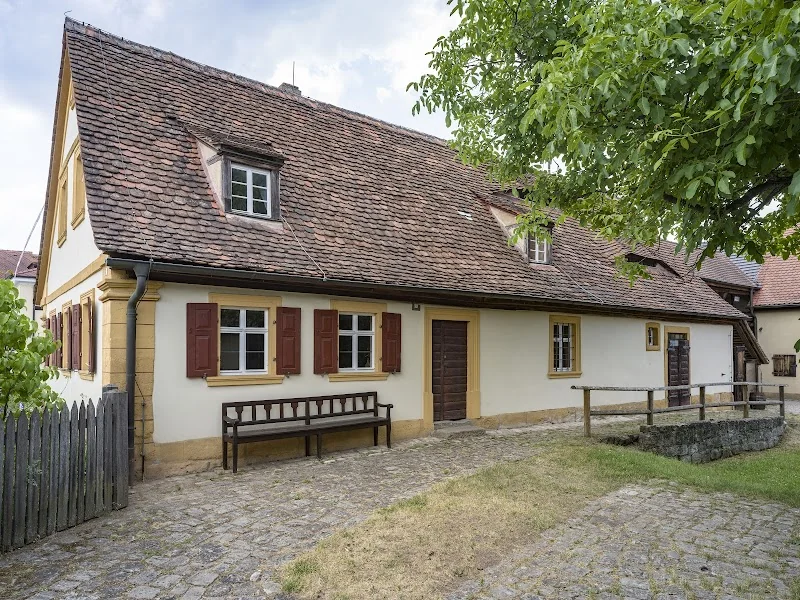
Hauptstraße 5, Frensdorf
Hauptstraße 5, 96158 Frensdorf, Germany
Farm Museum Bamberger Land | Tickets & Martinimarkt
The Farm Museum Bamberger Land is one of those locations that seem calm and down-to-earth at first glance, but upon closer inspection, offers an astonishing amount of material for a whole day's excursion. Those looking for a place where rural history is not only displayed but can also be experienced spatially will find an authentic ensemble of farm, garden, exhibitions, and event spaces in Frensdorf. The museum is located in the southern district of Bamberg and is supported by the district itself. The centerpiece is the historic Fischerhof with a central courtyard, residential barn, barn, delivery house, and traditional oven. This architectural structure not only conveys atmosphere but also tells very concretely how living, working, and farming functioned on a Franconian farm over generations. ([bauernmuseum-frensdorf.de](https://www.bauernmuseum-frensdorf.de/))
For those searching for photos, impressions, or a good excursion idea in Frensdorf, the museum is therefore more than just a classic exhibition house. The farm is clearly structured in its design, the garden has been developed independently, and there are also changing special exhibitions, guided tours, courses, and seasonal events. Particularly exciting is the mix of historical substance and lively programming: on one hand, it is about the early 20th century, rural living culture, and the preserved building fabric of the Fischerhof; on the other hand, it is about modern mediation, education, family offerings, and a well-visible event calendar. This very connection makes the Farm Museum Bamberger Land an attractive location for both culture-interested individuals and groups, families, and event visitors. ([bauernmuseum-frensdorf.de](https://bauernmuseum-frensdorf.de/de/besuch/fuehrung))
Tickets, Opening Hours, and Admission Prices
For those who want to plan their visit sensibly, it is best to start with the practical information. The Farm Museum Bamberger Land opens in the season from April to October, Tuesday to Friday from 2:00 PM to 5:00 PM, and on Sundays and public holidays from 1:00 PM to 5:00 PM. The administration can be reached Monday to Friday from 9:00 AM to 12:00 PM, which is especially helpful for inquiries, bookings, or group requests. The regular admission prices are clear and manageable: adults pay 3.50 euros, children and teenagers aged 6 to 17 pay 1.50 euros, and children up to 5 years are free. Additionally, there is a family ticket for a maximum of two adults including children for 7.00 euros, as well as a reduced price for students and people with disabilities. ([bauernmuseum-frensdorf.de](https://bauernmuseum-frensdorf.de/de/besuch/allgemeines))
The museum is also well-prepared for larger groups. From 20 people, there are special group rates, and guided tours are offered for a flat fee plus admission. This is particularly interesting for clubs, school classes, family celebrations, or travel groups that want to plan the visit not just as a tour but as a guided cultural experience. The website also links to a ticket shop, allowing events and visits to be prepared in a structured manner. This content aligns with a museum that does not see itself as a quiet storage place but as a place of mediation and encounter. Those wishing to discover rural everyday history, historical crafts and living forms, or seasonal programs will find a compact, well-calculable visit with transparent prices and clear time slots. Especially for guests searching for tickets, admission, and opening hours, this reliable structure is a real advantage. ([bauernmuseum-frensdorf.de](https://bauernmuseum-frensdorf.de/de/besuch/allgemeines))
Martinimarkt, Events, and Seasonal Highlights
One of the most well-known search terms related to the Farm Museum Bamberger Land is the Martinimarkt, and for good reason. The market transforms the museum grounds into a festively decorated meeting point for connoisseurs, families, and friends of regional crafts. In 2025, it was held for the fifth time in collaboration with the Soroptimists of the Bamberg Kunigunde Club. The program combined regional food, gift ideas, crafts, and an atmospheric autumn backdrop. Mentioned were mulled wine, cakes, wild sausages, tarte flambée, chutneys, fruit spreads, and handcrafted products from ceramics to felt work. Thus, the Martinimarkt is not just an additional date but a format that makes the character of the location very visible: rural, regional, socially engaged, and at the same time close to the public. ([bauernmuseum-frensdorf.de](https://www.bauernmuseum-frensdorf.de/de/veranstaltungen/martinimarkt))
What is particularly nice is the double benefit for guests and the region. On one hand, a lively market with stories, music, culinary offerings, and family moments is created. On the other hand, the proceeds from the soroptimistic offerings flow back into charitable projects. The museum itself uses the seminar room as a retreat for coffee, cake, wine, and specialties, allowing visits and breaks to be pleasantly combined. From an SEO perspective, the Martinimarkt is therefore a strong keyword because it serves several search intentions: people search for events, a specific date, regional Advent or autumn market flair, and a location that offers more than just a pure exhibition. The Farm Museum Bamberger Land meets these expectations and combines a historic ambiance with a surprisingly versatile event profile. Those searching for Martinimarkt, events, or Frensdorf will find a location here that certainly stands out in the calendar. ([bauernmuseum-frensdorf.de](https://www.bauernmuseum-frensdorf.de/de/veranstaltungen/martinimarkt))
Access, Entrance, and Parking at the Museum Area
The access to the Farm Museum Bamberger Land is pleasantly straightforward. By car, the official website lists three clear routes: via B 22 with exit Waizendorf, via B 505 with exit Frensdorf, or via A 73 with exit Hirschaid. This is particularly helpful for visitors from the greater Bamberg area, but also for guests traveling from further away for an excursion to Frensdorf. Additionally, there are notes on public transport: lines 978, 983, and 991 are explicitly mentioned. So, for those wanting to come without a car, there is also a practical orientation. For SEO and user experience, this mix is valuable because search queries about access, parking, or public transport are almost always closely related in practice. ([bauernmuseum-frensdorf.de](https://bauernmuseum-frensdorf.de/de/besuch/allgemeines))
When it comes to parking, it also shows how flexibly the grounds are used. Several course and event pages refer to the museum parking lot or the garden entrance at the back of the parking lot. This makes it clear that access does not only occur via a single, rigid path, but that the museum can also be accessed via the garden or the back entrance depending on the event. For visitors, this is a real advantage as it allows different program points to be reached without detours. Especially for workshops, courses, or events in the seminar room, this orientation is important. So, those searching for parking, entrance, or access will find a practical and everyday solution at the Farm Museum Bamberger Land instead of complicated navigation. Together with the location in Frensdorf and the good connection via federal and highway roads, this creates a coherent picture of a location that remains easily accessible in rural areas. ([bauernmuseum-frensdorf.de](https://bauernmuseum-frensdorf.de/de/kurs-herbstkranz-binden?utm_source=openai))
Special Exhibitions and Museum Garden as the Core of the Visitor Experience
An important part of the attractiveness of the Farm Museum Bamberger Land lies in its changing special exhibitions. According to the museum association, they have been shown annually in the expanded museum since 2003; thus, the house is not only a historical farm but also a place where cultural-historical themes are continually redefined. The current and recent themes show the range particularly well. In 2025, for example, hygiene in rural areas and the world of mushrooms were the focus. The exhibition on hygiene highlighted tools and devices for cleanliness of people, animals, and things, the path through rural pharmacies and midwives, as well as an originally furnished hair salon from the 1950s. Such content connects everyday history with tangible objects and strong images, significantly enhancing the quality of stay for visitors. ([bauernmuseum-frensdorf.de](https://bauernmuseum-frensdorf.de/de/museum/foerderverein))
The museum garden perfectly complements this concept and is much more than just a pretty area next to the farm. It was created in 1984 on the occasion of the museum's opening, expanded in 2003, and provided with a new concept. Today, it invites visitors with a sensory field, herb mosaic, and fragrant plants, showcasing especially historical salad and vegetable varieties as well as traditional perennials and flowers. This combination makes the place special: the museum not only tells of peasant living worlds but also makes the plant culture of earlier times visible. For guests searching for photos or particularly beautiful viewpoints, the garden, together with the historic courtyard, provides strong motifs without appearing artificial. At the same time, the offerings are didactically clear: cultural plants, kitchen garden, scent, structure, and seasonal development can be experienced directly here. Those who visit the museum attentively quickly understand that the garden and exhibitions are not separate program points but combine to form a coherent overall picture of rural culture. ([bauernmuseum-frensdorf.de](https://bauernmuseum-frensdorf.de/de/museum/garten))
Fischerhof, History, and Rural Living Culture
The history of the Farm Museum Bamberger Land begins with a very concrete goal: in 1984, the association Bauernmuseum Landkreis Bamberg e. V. founded the museum to preserve a typical farm of the region and document peasant work and life in the past. The Fischerhof in Frensdorf was particularly suitable for this purpose because its buildings and authentic furnishings have largely remained unchanged and exemplarily show the rural working world around 1920. In 1992, the district took over the museum and invested in renovation and expansion. Since 2003, annual special exhibitions have shaped the expanded museum concept. These developmental dates are crucial for classification because they show that the house has not remained static but has evolved from a conserving idea into a lively cultural place. ([bauernmuseum-frensdorf.de](https://bauernmuseum-frensdorf.de/de/museum/foerderverein))
The architectural depth of the facility is also remarkable. The museum's homepage describes that several historical buildings are grouped around a central courtyard, including the residential barn from the early 19th century, which is based on the remains of a predecessor building from 1676. A barn, a delivery house, and a traditional oven complete the ensemble. This not only creates an authentic image of peasant architecture but also a spatial dramaturgy that visitors intuitively understand: living, working, storing, baking, and preserving are closely intertwined here. Those searching for history, Franconian building culture, or the term Fischerhof will find more than just a museum backdrop. The museum shows how everyday culture is reflected in buildings, furnishing details, and uses. That is why the place feels so tangible and credible to many guests. ([bauernmuseum-frensdorf.de](https://www.bauernmuseum-frensdorf.de/))
Guided Tours, Rooms, and Educational Offers
The Farm Museum Bamberger Land is not only there to be looked at but is also designed for active use. Guided tours can be booked for groups and school classes of up to about 25 people by prior arrangement and are also possible outside regular opening hours. Particularly exciting is the thematic focus of the tours: the Fischerhof as a monument of peasant past is at the center, and the mediation specifically asks how one lived and worked on a farm around 1925, how a household consisting of family, servants, and animals functioned, and what perspectives children had back then. This makes abstract terms like rural living culture or early 20th century into vivid, visitable topics. For groups, this is an important SEO and practical factor because it transforms a simple museum address into a pedagogically usable place. ([bauernmuseum-frensdorf.de](https://bauernmuseum-frensdorf.de/de/besuch/fuehrung))
The room offerings also make the location versatile. The hall can be rented for cultural or educational events as well as for clubs, and the parlor in the farmhouse is available for weddings during the museum season. Additionally, there is a seminar room with an attached tea kitchen that is used for courses and seminars. This aligns with the educational profile of the museum, which focuses on offerings for children and adults, courses, and seasonal actions, clearly oriented towards education and participation. The period from March to October is mentioned for educational actions, underscoring the character of the house as an active learning place. So, those searching for family offerings, courses, workshops, or a special location for celebrations and events will discover at the Farm Museum Bamberger Land a place that combines historical authenticity and functional usability. This mix is rare and explains why the museum remains interesting beyond the classic museum visit. ([bauernmuseum-frensdorf.de](https://bauernmuseum-frensdorf.de/de/museum/raeume-und-vermietung))
Sources:
Mehr anzeigenWeniger anzeigen
Farm Museum Bamberger Land | Tickets & Martinimarkt
The Farm Museum Bamberger Land is one of those locations that seem calm and down-to-earth at first glance, but upon closer inspection, offers an astonishing amount of material for a whole day's excursion. Those looking for a place where rural history is not only displayed but can also be experienced spatially will find an authentic ensemble of farm, garden, exhibitions, and event spaces in Frensdorf. The museum is located in the southern district of Bamberg and is supported by the district itself. The centerpiece is the historic Fischerhof with a central courtyard, residential barn, barn, delivery house, and traditional oven. This architectural structure not only conveys atmosphere but also tells very concretely how living, working, and farming functioned on a Franconian farm over generations. ([bauernmuseum-frensdorf.de](https://www.bauernmuseum-frensdorf.de/))
For those searching for photos, impressions, or a good excursion idea in Frensdorf, the museum is therefore more than just a classic exhibition house. The farm is clearly structured in its design, the garden has been developed independently, and there are also changing special exhibitions, guided tours, courses, and seasonal events. Particularly exciting is the mix of historical substance and lively programming: on one hand, it is about the early 20th century, rural living culture, and the preserved building fabric of the Fischerhof; on the other hand, it is about modern mediation, education, family offerings, and a well-visible event calendar. This very connection makes the Farm Museum Bamberger Land an attractive location for both culture-interested individuals and groups, families, and event visitors. ([bauernmuseum-frensdorf.de](https://bauernmuseum-frensdorf.de/de/besuch/fuehrung))
Tickets, Opening Hours, and Admission Prices
For those who want to plan their visit sensibly, it is best to start with the practical information. The Farm Museum Bamberger Land opens in the season from April to October, Tuesday to Friday from 2:00 PM to 5:00 PM, and on Sundays and public holidays from 1:00 PM to 5:00 PM. The administration can be reached Monday to Friday from 9:00 AM to 12:00 PM, which is especially helpful for inquiries, bookings, or group requests. The regular admission prices are clear and manageable: adults pay 3.50 euros, children and teenagers aged 6 to 17 pay 1.50 euros, and children up to 5 years are free. Additionally, there is a family ticket for a maximum of two adults including children for 7.00 euros, as well as a reduced price for students and people with disabilities. ([bauernmuseum-frensdorf.de](https://bauernmuseum-frensdorf.de/de/besuch/allgemeines))
The museum is also well-prepared for larger groups. From 20 people, there are special group rates, and guided tours are offered for a flat fee plus admission. This is particularly interesting for clubs, school classes, family celebrations, or travel groups that want to plan the visit not just as a tour but as a guided cultural experience. The website also links to a ticket shop, allowing events and visits to be prepared in a structured manner. This content aligns with a museum that does not see itself as a quiet storage place but as a place of mediation and encounter. Those wishing to discover rural everyday history, historical crafts and living forms, or seasonal programs will find a compact, well-calculable visit with transparent prices and clear time slots. Especially for guests searching for tickets, admission, and opening hours, this reliable structure is a real advantage. ([bauernmuseum-frensdorf.de](https://bauernmuseum-frensdorf.de/de/besuch/allgemeines))
Martinimarkt, Events, and Seasonal Highlights
One of the most well-known search terms related to the Farm Museum Bamberger Land is the Martinimarkt, and for good reason. The market transforms the museum grounds into a festively decorated meeting point for connoisseurs, families, and friends of regional crafts. In 2025, it was held for the fifth time in collaboration with the Soroptimists of the Bamberg Kunigunde Club. The program combined regional food, gift ideas, crafts, and an atmospheric autumn backdrop. Mentioned were mulled wine, cakes, wild sausages, tarte flambée, chutneys, fruit spreads, and handcrafted products from ceramics to felt work. Thus, the Martinimarkt is not just an additional date but a format that makes the character of the location very visible: rural, regional, socially engaged, and at the same time close to the public. ([bauernmuseum-frensdorf.de](https://www.bauernmuseum-frensdorf.de/de/veranstaltungen/martinimarkt))
What is particularly nice is the double benefit for guests and the region. On one hand, a lively market with stories, music, culinary offerings, and family moments is created. On the other hand, the proceeds from the soroptimistic offerings flow back into charitable projects. The museum itself uses the seminar room as a retreat for coffee, cake, wine, and specialties, allowing visits and breaks to be pleasantly combined. From an SEO perspective, the Martinimarkt is therefore a strong keyword because it serves several search intentions: people search for events, a specific date, regional Advent or autumn market flair, and a location that offers more than just a pure exhibition. The Farm Museum Bamberger Land meets these expectations and combines a historic ambiance with a surprisingly versatile event profile. Those searching for Martinimarkt, events, or Frensdorf will find a location here that certainly stands out in the calendar. ([bauernmuseum-frensdorf.de](https://www.bauernmuseum-frensdorf.de/de/veranstaltungen/martinimarkt))
Access, Entrance, and Parking at the Museum Area
The access to the Farm Museum Bamberger Land is pleasantly straightforward. By car, the official website lists three clear routes: via B 22 with exit Waizendorf, via B 505 with exit Frensdorf, or via A 73 with exit Hirschaid. This is particularly helpful for visitors from the greater Bamberg area, but also for guests traveling from further away for an excursion to Frensdorf. Additionally, there are notes on public transport: lines 978, 983, and 991 are explicitly mentioned. So, for those wanting to come without a car, there is also a practical orientation. For SEO and user experience, this mix is valuable because search queries about access, parking, or public transport are almost always closely related in practice. ([bauernmuseum-frensdorf.de](https://bauernmuseum-frensdorf.de/de/besuch/allgemeines))
When it comes to parking, it also shows how flexibly the grounds are used. Several course and event pages refer to the museum parking lot or the garden entrance at the back of the parking lot. This makes it clear that access does not only occur via a single, rigid path, but that the museum can also be accessed via the garden or the back entrance depending on the event. For visitors, this is a real advantage as it allows different program points to be reached without detours. Especially for workshops, courses, or events in the seminar room, this orientation is important. So, those searching for parking, entrance, or access will find a practical and everyday solution at the Farm Museum Bamberger Land instead of complicated navigation. Together with the location in Frensdorf and the good connection via federal and highway roads, this creates a coherent picture of a location that remains easily accessible in rural areas. ([bauernmuseum-frensdorf.de](https://bauernmuseum-frensdorf.de/de/kurs-herbstkranz-binden?utm_source=openai))
Special Exhibitions and Museum Garden as the Core of the Visitor Experience
An important part of the attractiveness of the Farm Museum Bamberger Land lies in its changing special exhibitions. According to the museum association, they have been shown annually in the expanded museum since 2003; thus, the house is not only a historical farm but also a place where cultural-historical themes are continually redefined. The current and recent themes show the range particularly well. In 2025, for example, hygiene in rural areas and the world of mushrooms were the focus. The exhibition on hygiene highlighted tools and devices for cleanliness of people, animals, and things, the path through rural pharmacies and midwives, as well as an originally furnished hair salon from the 1950s. Such content connects everyday history with tangible objects and strong images, significantly enhancing the quality of stay for visitors. ([bauernmuseum-frensdorf.de](https://bauernmuseum-frensdorf.de/de/museum/foerderverein))
The museum garden perfectly complements this concept and is much more than just a pretty area next to the farm. It was created in 1984 on the occasion of the museum's opening, expanded in 2003, and provided with a new concept. Today, it invites visitors with a sensory field, herb mosaic, and fragrant plants, showcasing especially historical salad and vegetable varieties as well as traditional perennials and flowers. This combination makes the place special: the museum not only tells of peasant living worlds but also makes the plant culture of earlier times visible. For guests searching for photos or particularly beautiful viewpoints, the garden, together with the historic courtyard, provides strong motifs without appearing artificial. At the same time, the offerings are didactically clear: cultural plants, kitchen garden, scent, structure, and seasonal development can be experienced directly here. Those who visit the museum attentively quickly understand that the garden and exhibitions are not separate program points but combine to form a coherent overall picture of rural culture. ([bauernmuseum-frensdorf.de](https://bauernmuseum-frensdorf.de/de/museum/garten))
Fischerhof, History, and Rural Living Culture
The history of the Farm Museum Bamberger Land begins with a very concrete goal: in 1984, the association Bauernmuseum Landkreis Bamberg e. V. founded the museum to preserve a typical farm of the region and document peasant work and life in the past. The Fischerhof in Frensdorf was particularly suitable for this purpose because its buildings and authentic furnishings have largely remained unchanged and exemplarily show the rural working world around 1920. In 1992, the district took over the museum and invested in renovation and expansion. Since 2003, annual special exhibitions have shaped the expanded museum concept. These developmental dates are crucial for classification because they show that the house has not remained static but has evolved from a conserving idea into a lively cultural place. ([bauernmuseum-frensdorf.de](https://bauernmuseum-frensdorf.de/de/museum/foerderverein))
The architectural depth of the facility is also remarkable. The museum's homepage describes that several historical buildings are grouped around a central courtyard, including the residential barn from the early 19th century, which is based on the remains of a predecessor building from 1676. A barn, a delivery house, and a traditional oven complete the ensemble. This not only creates an authentic image of peasant architecture but also a spatial dramaturgy that visitors intuitively understand: living, working, storing, baking, and preserving are closely intertwined here. Those searching for history, Franconian building culture, or the term Fischerhof will find more than just a museum backdrop. The museum shows how everyday culture is reflected in buildings, furnishing details, and uses. That is why the place feels so tangible and credible to many guests. ([bauernmuseum-frensdorf.de](https://www.bauernmuseum-frensdorf.de/))
Guided Tours, Rooms, and Educational Offers
The Farm Museum Bamberger Land is not only there to be looked at but is also designed for active use. Guided tours can be booked for groups and school classes of up to about 25 people by prior arrangement and are also possible outside regular opening hours. Particularly exciting is the thematic focus of the tours: the Fischerhof as a monument of peasant past is at the center, and the mediation specifically asks how one lived and worked on a farm around 1925, how a household consisting of family, servants, and animals functioned, and what perspectives children had back then. This makes abstract terms like rural living culture or early 20th century into vivid, visitable topics. For groups, this is an important SEO and practical factor because it transforms a simple museum address into a pedagogically usable place. ([bauernmuseum-frensdorf.de](https://bauernmuseum-frensdorf.de/de/besuch/fuehrung))
The room offerings also make the location versatile. The hall can be rented for cultural or educational events as well as for clubs, and the parlor in the farmhouse is available for weddings during the museum season. Additionally, there is a seminar room with an attached tea kitchen that is used for courses and seminars. This aligns with the educational profile of the museum, which focuses on offerings for children and adults, courses, and seasonal actions, clearly oriented towards education and participation. The period from March to October is mentioned for educational actions, underscoring the character of the house as an active learning place. So, those searching for family offerings, courses, workshops, or a special location for celebrations and events will discover at the Farm Museum Bamberger Land a place that combines historical authenticity and functional usability. This mix is rare and explains why the museum remains interesting beyond the classic museum visit. ([bauernmuseum-frensdorf.de](https://bauernmuseum-frensdorf.de/de/museum/raeume-und-vermietung))
Sources:
Farm Museum Bamberger Land | Tickets & Martinimarkt
The Farm Museum Bamberger Land is one of those locations that seem calm and down-to-earth at first glance, but upon closer inspection, offers an astonishing amount of material for a whole day's excursion. Those looking for a place where rural history is not only displayed but can also be experienced spatially will find an authentic ensemble of farm, garden, exhibitions, and event spaces in Frensdorf. The museum is located in the southern district of Bamberg and is supported by the district itself. The centerpiece is the historic Fischerhof with a central courtyard, residential barn, barn, delivery house, and traditional oven. This architectural structure not only conveys atmosphere but also tells very concretely how living, working, and farming functioned on a Franconian farm over generations. ([bauernmuseum-frensdorf.de](https://www.bauernmuseum-frensdorf.de/))
For those searching for photos, impressions, or a good excursion idea in Frensdorf, the museum is therefore more than just a classic exhibition house. The farm is clearly structured in its design, the garden has been developed independently, and there are also changing special exhibitions, guided tours, courses, and seasonal events. Particularly exciting is the mix of historical substance and lively programming: on one hand, it is about the early 20th century, rural living culture, and the preserved building fabric of the Fischerhof; on the other hand, it is about modern mediation, education, family offerings, and a well-visible event calendar. This very connection makes the Farm Museum Bamberger Land an attractive location for both culture-interested individuals and groups, families, and event visitors. ([bauernmuseum-frensdorf.de](https://bauernmuseum-frensdorf.de/de/besuch/fuehrung))
Tickets, Opening Hours, and Admission Prices
For those who want to plan their visit sensibly, it is best to start with the practical information. The Farm Museum Bamberger Land opens in the season from April to October, Tuesday to Friday from 2:00 PM to 5:00 PM, and on Sundays and public holidays from 1:00 PM to 5:00 PM. The administration can be reached Monday to Friday from 9:00 AM to 12:00 PM, which is especially helpful for inquiries, bookings, or group requests. The regular admission prices are clear and manageable: adults pay 3.50 euros, children and teenagers aged 6 to 17 pay 1.50 euros, and children up to 5 years are free. Additionally, there is a family ticket for a maximum of two adults including children for 7.00 euros, as well as a reduced price for students and people with disabilities. ([bauernmuseum-frensdorf.de](https://bauernmuseum-frensdorf.de/de/besuch/allgemeines))
The museum is also well-prepared for larger groups. From 20 people, there are special group rates, and guided tours are offered for a flat fee plus admission. This is particularly interesting for clubs, school classes, family celebrations, or travel groups that want to plan the visit not just as a tour but as a guided cultural experience. The website also links to a ticket shop, allowing events and visits to be prepared in a structured manner. This content aligns with a museum that does not see itself as a quiet storage place but as a place of mediation and encounter. Those wishing to discover rural everyday history, historical crafts and living forms, or seasonal programs will find a compact, well-calculable visit with transparent prices and clear time slots. Especially for guests searching for tickets, admission, and opening hours, this reliable structure is a real advantage. ([bauernmuseum-frensdorf.de](https://bauernmuseum-frensdorf.de/de/besuch/allgemeines))
Martinimarkt, Events, and Seasonal Highlights
One of the most well-known search terms related to the Farm Museum Bamberger Land is the Martinimarkt, and for good reason. The market transforms the museum grounds into a festively decorated meeting point for connoisseurs, families, and friends of regional crafts. In 2025, it was held for the fifth time in collaboration with the Soroptimists of the Bamberg Kunigunde Club. The program combined regional food, gift ideas, crafts, and an atmospheric autumn backdrop. Mentioned were mulled wine, cakes, wild sausages, tarte flambée, chutneys, fruit spreads, and handcrafted products from ceramics to felt work. Thus, the Martinimarkt is not just an additional date but a format that makes the character of the location very visible: rural, regional, socially engaged, and at the same time close to the public. ([bauernmuseum-frensdorf.de](https://www.bauernmuseum-frensdorf.de/de/veranstaltungen/martinimarkt))
What is particularly nice is the double benefit for guests and the region. On one hand, a lively market with stories, music, culinary offerings, and family moments is created. On the other hand, the proceeds from the soroptimistic offerings flow back into charitable projects. The museum itself uses the seminar room as a retreat for coffee, cake, wine, and specialties, allowing visits and breaks to be pleasantly combined. From an SEO perspective, the Martinimarkt is therefore a strong keyword because it serves several search intentions: people search for events, a specific date, regional Advent or autumn market flair, and a location that offers more than just a pure exhibition. The Farm Museum Bamberger Land meets these expectations and combines a historic ambiance with a surprisingly versatile event profile. Those searching for Martinimarkt, events, or Frensdorf will find a location here that certainly stands out in the calendar. ([bauernmuseum-frensdorf.de](https://www.bauernmuseum-frensdorf.de/de/veranstaltungen/martinimarkt))
Access, Entrance, and Parking at the Museum Area
The access to the Farm Museum Bamberger Land is pleasantly straightforward. By car, the official website lists three clear routes: via B 22 with exit Waizendorf, via B 505 with exit Frensdorf, or via A 73 with exit Hirschaid. This is particularly helpful for visitors from the greater Bamberg area, but also for guests traveling from further away for an excursion to Frensdorf. Additionally, there are notes on public transport: lines 978, 983, and 991 are explicitly mentioned. So, for those wanting to come without a car, there is also a practical orientation. For SEO and user experience, this mix is valuable because search queries about access, parking, or public transport are almost always closely related in practice. ([bauernmuseum-frensdorf.de](https://bauernmuseum-frensdorf.de/de/besuch/allgemeines))
When it comes to parking, it also shows how flexibly the grounds are used. Several course and event pages refer to the museum parking lot or the garden entrance at the back of the parking lot. This makes it clear that access does not only occur via a single, rigid path, but that the museum can also be accessed via the garden or the back entrance depending on the event. For visitors, this is a real advantage as it allows different program points to be reached without detours. Especially for workshops, courses, or events in the seminar room, this orientation is important. So, those searching for parking, entrance, or access will find a practical and everyday solution at the Farm Museum Bamberger Land instead of complicated navigation. Together with the location in Frensdorf and the good connection via federal and highway roads, this creates a coherent picture of a location that remains easily accessible in rural areas. ([bauernmuseum-frensdorf.de](https://bauernmuseum-frensdorf.de/de/kurs-herbstkranz-binden?utm_source=openai))
Special Exhibitions and Museum Garden as the Core of the Visitor Experience
An important part of the attractiveness of the Farm Museum Bamberger Land lies in its changing special exhibitions. According to the museum association, they have been shown annually in the expanded museum since 2003; thus, the house is not only a historical farm but also a place where cultural-historical themes are continually redefined. The current and recent themes show the range particularly well. In 2025, for example, hygiene in rural areas and the world of mushrooms were the focus. The exhibition on hygiene highlighted tools and devices for cleanliness of people, animals, and things, the path through rural pharmacies and midwives, as well as an originally furnished hair salon from the 1950s. Such content connects everyday history with tangible objects and strong images, significantly enhancing the quality of stay for visitors. ([bauernmuseum-frensdorf.de](https://bauernmuseum-frensdorf.de/de/museum/foerderverein))
The museum garden perfectly complements this concept and is much more than just a pretty area next to the farm. It was created in 1984 on the occasion of the museum's opening, expanded in 2003, and provided with a new concept. Today, it invites visitors with a sensory field, herb mosaic, and fragrant plants, showcasing especially historical salad and vegetable varieties as well as traditional perennials and flowers. This combination makes the place special: the museum not only tells of peasant living worlds but also makes the plant culture of earlier times visible. For guests searching for photos or particularly beautiful viewpoints, the garden, together with the historic courtyard, provides strong motifs without appearing artificial. At the same time, the offerings are didactically clear: cultural plants, kitchen garden, scent, structure, and seasonal development can be experienced directly here. Those who visit the museum attentively quickly understand that the garden and exhibitions are not separate program points but combine to form a coherent overall picture of rural culture. ([bauernmuseum-frensdorf.de](https://bauernmuseum-frensdorf.de/de/museum/garten))
Fischerhof, History, and Rural Living Culture
The history of the Farm Museum Bamberger Land begins with a very concrete goal: in 1984, the association Bauernmuseum Landkreis Bamberg e. V. founded the museum to preserve a typical farm of the region and document peasant work and life in the past. The Fischerhof in Frensdorf was particularly suitable for this purpose because its buildings and authentic furnishings have largely remained unchanged and exemplarily show the rural working world around 1920. In 1992, the district took over the museum and invested in renovation and expansion. Since 2003, annual special exhibitions have shaped the expanded museum concept. These developmental dates are crucial for classification because they show that the house has not remained static but has evolved from a conserving idea into a lively cultural place. ([bauernmuseum-frensdorf.de](https://bauernmuseum-frensdorf.de/de/museum/foerderverein))
The architectural depth of the facility is also remarkable. The museum's homepage describes that several historical buildings are grouped around a central courtyard, including the residential barn from the early 19th century, which is based on the remains of a predecessor building from 1676. A barn, a delivery house, and a traditional oven complete the ensemble. This not only creates an authentic image of peasant architecture but also a spatial dramaturgy that visitors intuitively understand: living, working, storing, baking, and preserving are closely intertwined here. Those searching for history, Franconian building culture, or the term Fischerhof will find more than just a museum backdrop. The museum shows how everyday culture is reflected in buildings, furnishing details, and uses. That is why the place feels so tangible and credible to many guests. ([bauernmuseum-frensdorf.de](https://www.bauernmuseum-frensdorf.de/))
Guided Tours, Rooms, and Educational Offers
The Farm Museum Bamberger Land is not only there to be looked at but is also designed for active use. Guided tours can be booked for groups and school classes of up to about 25 people by prior arrangement and are also possible outside regular opening hours. Particularly exciting is the thematic focus of the tours: the Fischerhof as a monument of peasant past is at the center, and the mediation specifically asks how one lived and worked on a farm around 1925, how a household consisting of family, servants, and animals functioned, and what perspectives children had back then. This makes abstract terms like rural living culture or early 20th century into vivid, visitable topics. For groups, this is an important SEO and practical factor because it transforms a simple museum address into a pedagogically usable place. ([bauernmuseum-frensdorf.de](https://bauernmuseum-frensdorf.de/de/besuch/fuehrung))
The room offerings also make the location versatile. The hall can be rented for cultural or educational events as well as for clubs, and the parlor in the farmhouse is available for weddings during the museum season. Additionally, there is a seminar room with an attached tea kitchen that is used for courses and seminars. This aligns with the educational profile of the museum, which focuses on offerings for children and adults, courses, and seasonal actions, clearly oriented towards education and participation. The period from March to October is mentioned for educational actions, underscoring the character of the house as an active learning place. So, those searching for family offerings, courses, workshops, or a special location for celebrations and events will discover at the Farm Museum Bamberger Land a place that combines historical authenticity and functional usability. This mix is rare and explains why the museum remains interesting beyond the classic museum visit. ([bauernmuseum-frensdorf.de](https://bauernmuseum-frensdorf.de/de/museum/raeume-und-vermietung))
Sources:
Upcoming Events
No events found
Frequently Asked Questions
Reviews
Peter Oppel
27. July 2025
July 24, 2025: A charming little museum currently featuring two special exhibitions. The exhibition on "Hygiene in the Countryside" is particularly interesting. The old farmhouse is beautifully restored, and visitors can admire antique machinery. The farm garden is a lovely place to relax.
WürzburgER
1. May 2022
A small but excellent museum... The traditional costume exhibition was fantastic... informative and with magnificent dirndls... friendly staff...
Brigitte Sauer
13. September 2021
Those were the days, so cozy... interesting impressions from the museum.
Cor
24. August 2025
A very nice, small museum. Beautiful exhibition. There's even an elevator to get to the first floor. There's also a lovely, well-maintained cottage garden. Definitely worth a visit.
Patrick Bulluck
10. April 2025
A beautiful museum that truly immerses you in time. The entire team is incredibly friendly and open to any questions 😊. No matter how old or young, everyone will have fun here and gain many new insights into the recent past 🌳👍🏽🌲