
Bamberg
Bamberg, Deutschland
Bamberg | Attractions & Events
Bamberg is a city that, at first glance, conveys the impression that history, everyday life, and a sense of life do not stand side by side, but rather connect to form a harmonious whole. The UNESCO World Heritage Site was awarded in 1993 and is considered an outstanding example of an early medieval city with preserved ecclesiastical and secular buildings. Particularly fascinating is that Bamberg does not appear as a single monument, but as a vibrant cityscape with multiple historical layers: the hill city, the island city, and the gardener city still form a compact urban space where architecture, religion, trade, craftsmanship, and enjoyment meet in close proximity. This is precisely why Bamberg is so attractive to visitors, as one experiences not only sights but a dense atmosphere that extends from the old town to the Regnitz River. Those looking for Bamberg attractions, Bamberg events, or Bamberg restaurants will find a city that is culturally deeply rooted yet still very lively. Bamberg is simultaneously a World Heritage city, a university city, a beer city, and a sports city, and it is this mix that makes it appealing. One can walk through medieval alleys in the morning, take a look at the cathedral hill at noon, stroll along the river in the afternoon, and end the evening at concerts, theaters, or in a brewery tavern. ([whc.unesco.org](https://whc.unesco.org/en/list/624/?utm_source=openai))
Bamberg Attractions and UNESCO World Heritage
The old town of Bamberg has been a UNESCO World Heritage Site since 1993 because it represents an exceptionally well-preserved example of an early medieval city in Central Europe. UNESCO highlights the planned medieval structure, the numerous preserved sacred and secular buildings, and the close connection between the city and the landscape. Particularly noteworthy is that the World Heritage area, with 142 hectares and a buffer zone of 444 hectares, protects not just individual buildings but an entire historical urban structure. This is what makes Bamberg so exciting for culture-interested guests: one does not walk through a museum but through a city where history can be read in the layouts of streets, facades, bridges, courtyards, and sightlines. Bamberg Tourism describes the city as Franconian Rome, an island city with Little Venice, a shopping district, and a gardener city. These images are more than marketing; they encapsulate the different identities of the city well. The official World Heritage institutions also emphasize the long-term restoration practice, often referred to as the Bamberg model, which has contributed to the high preservation quality for decades. Therefore, those who want to see Bamberg should not limit themselves to individual postcard motifs but take time for the ensemble. The World Heritage Visitor Centre conveys the special features of the World Heritage site over approximately 220 square meters and is thus a good starting point for anyone wishing to explore the city systematically. ([whc.unesco.org](https://whc.unesco.org/en/list/624/?utm_source=openai))
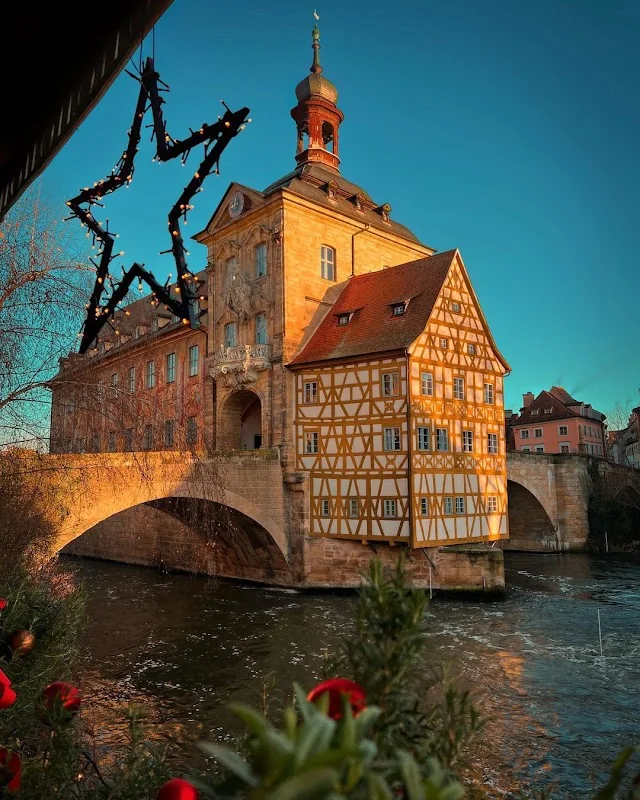
Among the defining attractions are the Old Town Hall in the river area of the Regnitz, the Imperial Cathedral with its four towers, and the famous Bamberg Rider, the narrow alleys of the old town, as well as the baroque houses that lend a special elegance to the cityscape. Bamberg itself emphasizes that more than a thousand years of city history come together here in an urban synthesis. The city was the second place in the German-speaking area after Mainz where printing was practiced, and it remains a place where culture and education are concentrated in close proximity. This is why Bamberg is suitable not only for classical city walks but also for thematic tours: architecture, religion, trade, printing history, beer culture, and gardening can be excellently combined. Particularly for visitors looking for Bamberg maps, Bamberg river, or Bamberg weather, the city center is compact enough to experience many motifs in one day, yet large enough to discover new things even on multiple visits. The World Heritage character turns every route into a small time travel. Those walking through the city quickly feel that Bamberg is not only preserved but lived. This connection of protection, everyday life, and open urban culture is one of the main reasons why Bamberg is so highly regarded internationally. ([stadt.bamberg.de](https://www.stadt.bamberg.de/Unsere-Stadt/Stadtinfo/?utm_source=openai))
Bamberg Cathedral, Rider, and Historical Old Town
When Bamberg is mentioned, the Imperial Cathedral is almost always at the center of attention. The city describes it as a four-towered cathedral that, along with the Bamberg Rider, is among the world-renowned symbols of the city. The cathedral hill was, for many centuries, a spiritual and political center, and this long continuity still shapes the image of the city today. The sacred architecture should not be viewed in isolation but forms a whole cultural landscape with monasteries, churches, and historical administrative buildings. The World Heritage Visitor Centre and the official World Heritage site make it clear that Bamberg is an important testimony to human settlement history. For travelers searching for Bamberg Cathedral or Bamberg Rider, this means that both terms represent not only individual attractions but also the spiritual and architectural center of a city that has shaped European history for centuries. Particularly impressive is how the religious and civic dimensions stand in contrast yet complement each other. The cathedral dominates the hill, while the civic buildings of the island city and the town halls refer to trade, administration, and communal self-assertion. This tension gives Bamberg its depth. Especially on clear days, the path between the cathedral, square, and old town appears like a series of successive stage sets telling different chapters of the city's history. ([stadt.bamberg.de](https://www.stadt.bamberg.de/digitalWirtschaft/English-Pages/Exquisite-world-culture/?utm_source=openai))
The historical old town of Bamberg is not only beautiful but also structurally unusual. The Old Town Hall stands in the river area of the Regnitz and is only connected to the shore by bridges; Bamberg Tourism describes the old town as a place where everything is very close together. This is complemented by the narrow, winding alleys, the baroque facades, and the well-preserved townhouses that make the city center so distinctive. The city of Bamberg emphasizes the beauty of the urban unity of Gothic and civic Baroque and refers to the harmonious coexistence of history and the present. This is why Bamberg is attractive for travelers who do not just want to see a single building but want to experience an entire historical city landscape. Even in changeable weather, the old town works well as a travel destination because many things are within walking distance and cultural, culinary, and architectural impressions can be combined. For visitors looking for Bamberg attractions, Bamberg Rider, Bamberg maps, or Bamberg river, the old town is the best starting point. Here one encounters the most compact form of the city and quickly understands why Bamberg has been perceived as a special overall image for centuries. The mix of dignity and liveliness is precisely what characterizes Bamberg. ([stadt.bamberg.de](https://www.stadt.bamberg.de/Unsere-Stadt/Stadtinfo/Stadtportr%C3%A4t/?utm_source=openai))
Bamberg Events, Culture, and Program
Those looking for Bamberg events will encounter an astonishingly dense and diverse cultural offering. The cultural office of the city of Bamberg publishes the official event calendar for the city and district, and the monthly updated information also appears as Kultur.Bamberg on the internet. Bamberg Tourism describes the offering as diverse: theater, cabaret, concerts, exhibitions, and children's events make it clear that the city does not only live off its past but is an active cultural location. The municipal cultural page also refers to festivals and the Bamberg Symphony Orchestra, which is known regionally as the Bavarian State Philharmonic. In addition, Villa Concordia has been established as an international artists' house in Bamberg since 1998. For visitors, this is important because Bamberg thus offers attractive events year-round that can be wonderfully combined with a city stay. Those planning their trip can use the official program as a basis for tickets, guided tours, and weekend trips. Particularly interesting are also the tourist highlight offerings, such as guided tours of the World Heritage site or musical formats in the monastery complex. This creates a city that appears historically on paper but regularly sets new cultural impulses in reality. This is precisely Bamberg's strength: the city not only preserves but also organizes the present. ([stadt.bamberg.de](https://www.stadt.bamberg.de/B%C3%BCrgerservice/%C3%84mter/Kulturamt/Veranstaltungskalender/?utm_source=openai))
The city's event life extends far beyond classical high culture. On the official city page, Bamberg is described as a lively city with a rich history, where current news, festivals, and participatory offerings are regularly published. For the target audience searching for events, tickets, or programs, this is relevant because both large and smaller formats can be found here. These include city festivals, thematic weeks, musical series, family offerings, and events in different districts. It is precisely the mix of the official calendar, tourist ticket offerings, and municipal cultural communication that makes planning easy. Therefore, those searching with keywords such as Bamberg events, Bamberg maps, or Bamberg Symphony Orchestra quickly get the impression that the city is a very active cultural space. Bamberg is not only a destination for single visits but also for recurring stays because the program is constantly changing. The old town serves as a stage where concerts, readings, exhibitions, and traditional festivals are particularly well presented. This is pleasant for guests because one experiences culture not only in halls but in the cityscape itself. Bamberg connects official program structure, international appeal, and local roots in a way that only a few cities manage so consistently. ([stadt.bamberg.de](https://www.stadt.bamberg.de/B%C3%BCrgerservice/%C3%84mter/Kulturamt/Veranstaltungskalender/?utm_source=openai))
Bamberg River, Little Venice, Maps, and Arrival
The river is not only part of the backdrop in Bamberg but also part of the city's identity. Bamberg Tourism describes the city as an island city with Little Venice, and the city administration refers to a beautiful natural and river landscape that shapes the quality of life. The Old Town Hall in the river area of the Regnitz is one of the most distinctive images, and the riverbanks quickly make it clear that Bamberg is particularly connected to the water. Those searching for Bamberg river are therefore not just looking for a geographical information but the feeling of a city that unfolds between hills and waterways. Little Venice conveys this impression very impressively because the former fishermen's houses stand close to the Regnitz, almost forming their own little scenery. It fits that the old town, according to the tourism page, is very close together and many highlights can be explored on foot. For orientation, city maps and downloadable maps are also available; Bamberg Tourism offers a city map, thematic brochures, and map material for visitors. Those interested in Bamberg maps will thus find both digital and classic planning paths. This is particularly practical for first-time visitors, families, and short-term travelers who want to quickly recognize how the old town, parking garages, tourist information, and the most important attractions are interconnected. Bamberg is thus a city that can not only be looked at but also planned well. ([stadt.bamberg.de](https://www.stadt.bamberg.de/Unsere-Stadt/Stadtinfo/Stadtportr%C3%A4t/?utm_source=openai))
The arrival is also well organized. Bamberg Tourism mentions the ICE route Munich-Nuremberg-Berlin and points out that Bamberg can be reached from Berlin in about 2.5 hours and from Munich in less than 2 hours. For arrival by car, the A73 and A70 are mentioned, which intersect in Bamberg. Particularly important for visiting the city center are the Park & Ride offers, the municipal parking guidance system, and the recommendation to avoid driving directly into the city center if possible. The City-Old Town parking garage is open 24 hours according to the tourism page, offers 344 parking spaces, and is only about 2 minutes from the city center. The city and the tourism organization also recommend Park & Ride from Monday to Saturday and switching to public transport in the city area. Those connecting Bamberg weather or Bamberg maps with arrival can plan very flexibly: on good weather days, walking through the old town, and on changeable weather days with clear navigation and central parking solutions. There are also indications and infrastructure for cyclists and travelers with campers. This mix of good accessibility and historical compactness makes Bamberg so pleasant. The city is large enough for a rich cultural life but small enough to allow visitors a clear arrival. ([en.bamberg.info](https://en.bamberg.info/anreise/?utm_source=openai))
Bamberg Restaurant, Beer Culture, and Regional Specialties
Few topics are as closely associated with Bamberg as its cuisine and beer culture. Bamberg Tourism explicitly describes the city as a beer city with traditional craftsmanship and traditional brewery taverns. Particularly impressive is the historical depth: Bamberg has nine breweries within its city limits that produce more than 50 different beers. The most famous chapter is the smoked beer, whose production and tradition are deeply rooted in the city. The official tourism page explains that especially the breweries Schlenkerla and Spezial have maintained this tradition without interruption and are therefore also considered part of the Slow Food Arc of Taste. For guests searching for Bamberg restaurant, Bamberg horn or Bamberg culinary, this is a strong message because Bamberg offers not only classic gastronomy but also an independent culture of enjoyment. This is complemented by the typical beer gardens and brewery taverns, which have a fixed place in city life in both summer and winter. The culinary tours are also strong: tours with themes such as Hörnla, beer, and onion cake combine city history with regional cuisine. The Bamberg Hörnla itself is doubly interesting because the name describes both a type of potato and a fine butter pastry reminiscent of a croissant. This shows that Bamberg is not culinarily one-dimensional but offers a great variety between hearty dishes, baked goods, beer tradition, and fine regionality. ([en.bamberg.info](https://en.bamberg.info/rauchbier/?utm_source=openai))
Particularly exciting in Bamberg is the proximity of beer and wine culture. Bamberg Tourism describes the city as a place on the border between wine and beer, where the so-called Häcker, i.e., the Franconian winemakers, are historically anchored. Wine is still grown on the Michaelsberg and in other locations, and the culinary landscape of the city ranges from traditional inns to cellars to specialty shops. For visitors, this means that Bamberg restaurant is not just a search term for food but an entry into a whole world of enjoyment. Those exploring the city will find brewery tours, tastings, beer hikes, and culinary city tours that are regularly offered. Especially on a weekend or during a short trip, the old town can be excellently combined with food and drink. This makes Bamberg attractive for groups, families, and couples who want to not only check off sights but also taste local culture. Even the weather plays a role because depending on the season, one can switch between indoor spaces, beer gardens, and outdoor terraces. The culinary identity of the city is thus not a minor matter but a core part of its tourist profile. Bamberg is a place where history is not only visible but also tastefully experienced. ([en.bamberg.info](https://en.bamberg.info/gastronomie/spezialitaeten/wein/?utm_source=openai))
Bamberg Residents, Baskets, and Sports City
Bamberg is not only a World Heritage site but also a vibrant city with a strong present. The municipal basic data for December 2024 lists 77,150 residents, and the city describes Bamberg as a young university city and a prosperous economic location. This mix of historical backdrop and urban everyday life makes the city so versatile. Those searching for Bamberg residents will therefore encounter a city that is large enough for a broad educational, cultural, and leisure offering but remains manageable at the same time. The university, administration, economy, and cultural institutions ensure that Bamberg is much more than a destination for day visitors. This is particularly visible in sports. The city refers to itself as Freak-City and emphasizes the importance of basketball players who have achieved great success over many years. In addition, there is a broad club culture with over 60 sports in around 100 clubs. For those searching with the keyword Bamberg Baskets, this is important because the term stands not only for basketball but for a true urban identity. The brose ARENA is the central place where games, events, and home games take place. That tickets there also serve as tickets for certain bus lines and shuttle services from Park & Ride facilities shows how closely sports, mobility, and city organization are interconnected. Bamberg thus connects historical prominence and modern leisure culture in a compact space. ([stadt.bamberg.de](https://www.stadt.bamberg.de/Wirtschaft/Infos-Wirtschaftsstandort/Daten-f%C3%BCr-Investoren/index.php?La=1&NavID=1829.798&object=tx%2C2730.2998.1&utm_source=openai))
However, the sports city of Bamberg does not only thrive on basketball. The official city page also mentions the bowlers from Victoria Bamberg, other club structures, and an active citizenry that shapes the city's sports profile. For guests, this is interesting because Bamberg conveys a sense of movement, community, and public life in many places. Those moving around the city quickly notice that culture, sports, and everyday life do not function separately but complement each other. Families and active travelers particularly benefit from this because they can combine several levels in Bamberg: a historical old town, cultural programs, culinary offerings, and sporting events. The arena is also important for the event sector because it combines concert and event character with a strong local connection. Thus, Bamberg becomes a city where visitors do not just consume history but have a real city experience. This also explains why the search terms Bamberg baskets, Bamberg events, and Bamberg residents complement each other so well: they describe different facets of the same vibrant city. Bamberg is not a backdrop but a place with a strong social, cultural, and sporting life. This is what makes the city so attractive for recurring visits. ([stadt.bamberg.de](https://www.stadt.bamberg.de/Unsere-Stadt/Sport-und-Freizeit/index.php?utm_source=openai))
Sources:
- UNESCO World Heritage Centre - Town of Bamberg ([whc.unesco.org](https://whc.unesco.org/en/list/624/?utm_source=openai))
- Bamberg Tourism - Homepage and World Heritage Information ([en.bamberg.info](https://en.bamberg.info/?utm_source=openai))
- City of Bamberg - Cultural City Bamberg and City Portrait ([stadt.bamberg.de](https://www.stadt.bamberg.de/Unsere-Stadt/Stadtinfo/?utm_source=openai))
- Bamberg Tourism - Arrival and Parking ([en.bamberg.info](https://en.bamberg.info/anreise/?utm_source=openai))
- Bamberg Tourism - Beer, Smoked Beer, and Hörnla ([en.bamberg.info](https://en.bamberg.info/rauchbier/?utm_source=openai))
- City of Bamberg - Events and Cultural Calendar ([stadt.bamberg.de](https://www.stadt.bamberg.de/B%C3%BCrgerservice/%C3%84mter/Kulturamt/Veranstaltungskalender/?utm_source=openai))
- City of Bamberg - Sports and Resident Data ([stadt.bamberg.de](https://www.stadt.bamberg.de/Wirtschaft/Infos-Wirtschaftsstandort/Daten-f%C3%BCr-Investoren/index.php?La=1&NavID=1829.798&object=tx%2C2730.2998.1&utm_source=openai))
Mehr anzeigenWeniger anzeigen
Bamberg | Attractions & Events
Bamberg is a city that, at first glance, conveys the impression that history, everyday life, and a sense of life do not stand side by side, but rather connect to form a harmonious whole. The UNESCO World Heritage Site was awarded in 1993 and is considered an outstanding example of an early medieval city with preserved ecclesiastical and secular buildings. Particularly fascinating is that Bamberg does not appear as a single monument, but as a vibrant cityscape with multiple historical layers: the hill city, the island city, and the gardener city still form a compact urban space where architecture, religion, trade, craftsmanship, and enjoyment meet in close proximity. This is precisely why Bamberg is so attractive to visitors, as one experiences not only sights but a dense atmosphere that extends from the old town to the Regnitz River. Those looking for Bamberg attractions, Bamberg events, or Bamberg restaurants will find a city that is culturally deeply rooted yet still very lively. Bamberg is simultaneously a World Heritage city, a university city, a beer city, and a sports city, and it is this mix that makes it appealing. One can walk through medieval alleys in the morning, take a look at the cathedral hill at noon, stroll along the river in the afternoon, and end the evening at concerts, theaters, or in a brewery tavern. ([whc.unesco.org](https://whc.unesco.org/en/list/624/?utm_source=openai))
Bamberg Attractions and UNESCO World Heritage
The old town of Bamberg has been a UNESCO World Heritage Site since 1993 because it represents an exceptionally well-preserved example of an early medieval city in Central Europe. UNESCO highlights the planned medieval structure, the numerous preserved sacred and secular buildings, and the close connection between the city and the landscape. Particularly noteworthy is that the World Heritage area, with 142 hectares and a buffer zone of 444 hectares, protects not just individual buildings but an entire historical urban structure. This is what makes Bamberg so exciting for culture-interested guests: one does not walk through a museum but through a city where history can be read in the layouts of streets, facades, bridges, courtyards, and sightlines. Bamberg Tourism describes the city as Franconian Rome, an island city with Little Venice, a shopping district, and a gardener city. These images are more than marketing; they encapsulate the different identities of the city well. The official World Heritage institutions also emphasize the long-term restoration practice, often referred to as the Bamberg model, which has contributed to the high preservation quality for decades. Therefore, those who want to see Bamberg should not limit themselves to individual postcard motifs but take time for the ensemble. The World Heritage Visitor Centre conveys the special features of the World Heritage site over approximately 220 square meters and is thus a good starting point for anyone wishing to explore the city systematically. ([whc.unesco.org](https://whc.unesco.org/en/list/624/?utm_source=openai))
Among the defining attractions are the Old Town Hall in the river area of the Regnitz, the Imperial Cathedral with its four towers, and the famous Bamberg Rider, the narrow alleys of the old town, as well as the baroque houses that lend a special elegance to the cityscape. Bamberg itself emphasizes that more than a thousand years of city history come together here in an urban synthesis. The city was the second place in the German-speaking area after Mainz where printing was practiced, and it remains a place where culture and education are concentrated in close proximity. This is why Bamberg is suitable not only for classical city walks but also for thematic tours: architecture, religion, trade, printing history, beer culture, and gardening can be excellently combined. Particularly for visitors looking for Bamberg maps, Bamberg river, or Bamberg weather, the city center is compact enough to experience many motifs in one day, yet large enough to discover new things even on multiple visits. The World Heritage character turns every route into a small time travel. Those walking through the city quickly feel that Bamberg is not only preserved but lived. This connection of protection, everyday life, and open urban culture is one of the main reasons why Bamberg is so highly regarded internationally. ([stadt.bamberg.de](https://www.stadt.bamberg.de/Unsere-Stadt/Stadtinfo/?utm_source=openai))
Bamberg Cathedral, Rider, and Historical Old Town
When Bamberg is mentioned, the Imperial Cathedral is almost always at the center of attention. The city describes it as a four-towered cathedral that, along with the Bamberg Rider, is among the world-renowned symbols of the city. The cathedral hill was, for many centuries, a spiritual and political center, and this long continuity still shapes the image of the city today. The sacred architecture should not be viewed in isolation but forms a whole cultural landscape with monasteries, churches, and historical administrative buildings. The World Heritage Visitor Centre and the official World Heritage site make it clear that Bamberg is an important testimony to human settlement history. For travelers searching for Bamberg Cathedral or Bamberg Rider, this means that both terms represent not only individual attractions but also the spiritual and architectural center of a city that has shaped European history for centuries. Particularly impressive is how the religious and civic dimensions stand in contrast yet complement each other. The cathedral dominates the hill, while the civic buildings of the island city and the town halls refer to trade, administration, and communal self-assertion. This tension gives Bamberg its depth. Especially on clear days, the path between the cathedral, square, and old town appears like a series of successive stage sets telling different chapters of the city's history. ([stadt.bamberg.de](https://www.stadt.bamberg.de/digitalWirtschaft/English-Pages/Exquisite-world-culture/?utm_source=openai))
The historical old town of Bamberg is not only beautiful but also structurally unusual. The Old Town Hall stands in the river area of the Regnitz and is only connected to the shore by bridges; Bamberg Tourism describes the old town as a place where everything is very close together. This is complemented by the narrow, winding alleys, the baroque facades, and the well-preserved townhouses that make the city center so distinctive. The city of Bamberg emphasizes the beauty of the urban unity of Gothic and civic Baroque and refers to the harmonious coexistence of history and the present. This is why Bamberg is attractive for travelers who do not just want to see a single building but want to experience an entire historical city landscape. Even in changeable weather, the old town works well as a travel destination because many things are within walking distance and cultural, culinary, and architectural impressions can be combined. For visitors looking for Bamberg attractions, Bamberg Rider, Bamberg maps, or Bamberg river, the old town is the best starting point. Here one encounters the most compact form of the city and quickly understands why Bamberg has been perceived as a special overall image for centuries. The mix of dignity and liveliness is precisely what characterizes Bamberg. ([stadt.bamberg.de](https://www.stadt.bamberg.de/Unsere-Stadt/Stadtinfo/Stadtportr%C3%A4t/?utm_source=openai))
Bamberg Events, Culture, and Program
Those looking for Bamberg events will encounter an astonishingly dense and diverse cultural offering. The cultural office of the city of Bamberg publishes the official event calendar for the city and district, and the monthly updated information also appears as Kultur.Bamberg on the internet. Bamberg Tourism describes the offering as diverse: theater, cabaret, concerts, exhibitions, and children's events make it clear that the city does not only live off its past but is an active cultural location. The municipal cultural page also refers to festivals and the Bamberg Symphony Orchestra, which is known regionally as the Bavarian State Philharmonic. In addition, Villa Concordia has been established as an international artists' house in Bamberg since 1998. For visitors, this is important because Bamberg thus offers attractive events year-round that can be wonderfully combined with a city stay. Those planning their trip can use the official program as a basis for tickets, guided tours, and weekend trips. Particularly interesting are also the tourist highlight offerings, such as guided tours of the World Heritage site or musical formats in the monastery complex. This creates a city that appears historically on paper but regularly sets new cultural impulses in reality. This is precisely Bamberg's strength: the city not only preserves but also organizes the present. ([stadt.bamberg.de](https://www.stadt.bamberg.de/B%C3%BCrgerservice/%C3%84mter/Kulturamt/Veranstaltungskalender/?utm_source=openai))
The city's event life extends far beyond classical high culture. On the official city page, Bamberg is described as a lively city with a rich history, where current news, festivals, and participatory offerings are regularly published. For the target audience searching for events, tickets, or programs, this is relevant because both large and smaller formats can be found here. These include city festivals, thematic weeks, musical series, family offerings, and events in different districts. It is precisely the mix of the official calendar, tourist ticket offerings, and municipal cultural communication that makes planning easy. Therefore, those searching with keywords such as Bamberg events, Bamberg maps, or Bamberg Symphony Orchestra quickly get the impression that the city is a very active cultural space. Bamberg is not only a destination for single visits but also for recurring stays because the program is constantly changing. The old town serves as a stage where concerts, readings, exhibitions, and traditional festivals are particularly well presented. This is pleasant for guests because one experiences culture not only in halls but in the cityscape itself. Bamberg connects official program structure, international appeal, and local roots in a way that only a few cities manage so consistently. ([stadt.bamberg.de](https://www.stadt.bamberg.de/B%C3%BCrgerservice/%C3%84mter/Kulturamt/Veranstaltungskalender/?utm_source=openai))
Bamberg River, Little Venice, Maps, and Arrival
The river is not only part of the backdrop in Bamberg but also part of the city's identity. Bamberg Tourism describes the city as an island city with Little Venice, and the city administration refers to a beautiful natural and river landscape that shapes the quality of life. The Old Town Hall in the river area of the Regnitz is one of the most distinctive images, and the riverbanks quickly make it clear that Bamberg is particularly connected to the water. Those searching for Bamberg river are therefore not just looking for a geographical information but the feeling of a city that unfolds between hills and waterways. Little Venice conveys this impression very impressively because the former fishermen's houses stand close to the Regnitz, almost forming their own little scenery. It fits that the old town, according to the tourism page, is very close together and many highlights can be explored on foot. For orientation, city maps and downloadable maps are also available; Bamberg Tourism offers a city map, thematic brochures, and map material for visitors. Those interested in Bamberg maps will thus find both digital and classic planning paths. This is particularly practical for first-time visitors, families, and short-term travelers who want to quickly recognize how the old town, parking garages, tourist information, and the most important attractions are interconnected. Bamberg is thus a city that can not only be looked at but also planned well. ([stadt.bamberg.de](https://www.stadt.bamberg.de/Unsere-Stadt/Stadtinfo/Stadtportr%C3%A4t/?utm_source=openai))
The arrival is also well organized. Bamberg Tourism mentions the ICE route Munich-Nuremberg-Berlin and points out that Bamberg can be reached from Berlin in about 2.5 hours and from Munich in less than 2 hours. For arrival by car, the A73 and A70 are mentioned, which intersect in Bamberg. Particularly important for visiting the city center are the Park & Ride offers, the municipal parking guidance system, and the recommendation to avoid driving directly into the city center if possible. The City-Old Town parking garage is open 24 hours according to the tourism page, offers 344 parking spaces, and is only about 2 minutes from the city center. The city and the tourism organization also recommend Park & Ride from Monday to Saturday and switching to public transport in the city area. Those connecting Bamberg weather or Bamberg maps with arrival can plan very flexibly: on good weather days, walking through the old town, and on changeable weather days with clear navigation and central parking solutions. There are also indications and infrastructure for cyclists and travelers with campers. This mix of good accessibility and historical compactness makes Bamberg so pleasant. The city is large enough for a rich cultural life but small enough to allow visitors a clear arrival. ([en.bamberg.info](https://en.bamberg.info/anreise/?utm_source=openai))
Bamberg Restaurant, Beer Culture, and Regional Specialties
Few topics are as closely associated with Bamberg as its cuisine and beer culture. Bamberg Tourism explicitly describes the city as a beer city with traditional craftsmanship and traditional brewery taverns. Particularly impressive is the historical depth: Bamberg has nine breweries within its city limits that produce more than 50 different beers. The most famous chapter is the smoked beer, whose production and tradition are deeply rooted in the city. The official tourism page explains that especially the breweries Schlenkerla and Spezial have maintained this tradition without interruption and are therefore also considered part of the Slow Food Arc of Taste. For guests searching for Bamberg restaurant, Bamberg horn or Bamberg culinary, this is a strong message because Bamberg offers not only classic gastronomy but also an independent culture of enjoyment. This is complemented by the typical beer gardens and brewery taverns, which have a fixed place in city life in both summer and winter. The culinary tours are also strong: tours with themes such as Hörnla, beer, and onion cake combine city history with regional cuisine. The Bamberg Hörnla itself is doubly interesting because the name describes both a type of potato and a fine butter pastry reminiscent of a croissant. This shows that Bamberg is not culinarily one-dimensional but offers a great variety between hearty dishes, baked goods, beer tradition, and fine regionality. ([en.bamberg.info](https://en.bamberg.info/rauchbier/?utm_source=openai))
Particularly exciting in Bamberg is the proximity of beer and wine culture. Bamberg Tourism describes the city as a place on the border between wine and beer, where the so-called Häcker, i.e., the Franconian winemakers, are historically anchored. Wine is still grown on the Michaelsberg and in other locations, and the culinary landscape of the city ranges from traditional inns to cellars to specialty shops. For visitors, this means that Bamberg restaurant is not just a search term for food but an entry into a whole world of enjoyment. Those exploring the city will find brewery tours, tastings, beer hikes, and culinary city tours that are regularly offered. Especially on a weekend or during a short trip, the old town can be excellently combined with food and drink. This makes Bamberg attractive for groups, families, and couples who want to not only check off sights but also taste local culture. Even the weather plays a role because depending on the season, one can switch between indoor spaces, beer gardens, and outdoor terraces. The culinary identity of the city is thus not a minor matter but a core part of its tourist profile. Bamberg is a place where history is not only visible but also tastefully experienced. ([en.bamberg.info](https://en.bamberg.info/gastronomie/spezialitaeten/wein/?utm_source=openai))
Bamberg Residents, Baskets, and Sports City
Bamberg is not only a World Heritage site but also a vibrant city with a strong present. The municipal basic data for December 2024 lists 77,150 residents, and the city describes Bamberg as a young university city and a prosperous economic location. This mix of historical backdrop and urban everyday life makes the city so versatile. Those searching for Bamberg residents will therefore encounter a city that is large enough for a broad educational, cultural, and leisure offering but remains manageable at the same time. The university, administration, economy, and cultural institutions ensure that Bamberg is much more than a destination for day visitors. This is particularly visible in sports. The city refers to itself as Freak-City and emphasizes the importance of basketball players who have achieved great success over many years. In addition, there is a broad club culture with over 60 sports in around 100 clubs. For those searching with the keyword Bamberg Baskets, this is important because the term stands not only for basketball but for a true urban identity. The brose ARENA is the central place where games, events, and home games take place. That tickets there also serve as tickets for certain bus lines and shuttle services from Park & Ride facilities shows how closely sports, mobility, and city organization are interconnected. Bamberg thus connects historical prominence and modern leisure culture in a compact space. ([stadt.bamberg.de](https://www.stadt.bamberg.de/Wirtschaft/Infos-Wirtschaftsstandort/Daten-f%C3%BCr-Investoren/index.php?La=1&NavID=1829.798&object=tx%2C2730.2998.1&utm_source=openai))
However, the sports city of Bamberg does not only thrive on basketball. The official city page also mentions the bowlers from Victoria Bamberg, other club structures, and an active citizenry that shapes the city's sports profile. For guests, this is interesting because Bamberg conveys a sense of movement, community, and public life in many places. Those moving around the city quickly notice that culture, sports, and everyday life do not function separately but complement each other. Families and active travelers particularly benefit from this because they can combine several levels in Bamberg: a historical old town, cultural programs, culinary offerings, and sporting events. The arena is also important for the event sector because it combines concert and event character with a strong local connection. Thus, Bamberg becomes a city where visitors do not just consume history but have a real city experience. This also explains why the search terms Bamberg baskets, Bamberg events, and Bamberg residents complement each other so well: they describe different facets of the same vibrant city. Bamberg is not a backdrop but a place with a strong social, cultural, and sporting life. This is what makes the city so attractive for recurring visits. ([stadt.bamberg.de](https://www.stadt.bamberg.de/Unsere-Stadt/Sport-und-Freizeit/index.php?utm_source=openai))
Sources:
- UNESCO World Heritage Centre - Town of Bamberg ([whc.unesco.org](https://whc.unesco.org/en/list/624/?utm_source=openai))
- Bamberg Tourism - Homepage and World Heritage Information ([en.bamberg.info](https://en.bamberg.info/?utm_source=openai))
- City of Bamberg - Cultural City Bamberg and City Portrait ([stadt.bamberg.de](https://www.stadt.bamberg.de/Unsere-Stadt/Stadtinfo/?utm_source=openai))
- Bamberg Tourism - Arrival and Parking ([en.bamberg.info](https://en.bamberg.info/anreise/?utm_source=openai))
- Bamberg Tourism - Beer, Smoked Beer, and Hörnla ([en.bamberg.info](https://en.bamberg.info/rauchbier/?utm_source=openai))
- City of Bamberg - Events and Cultural Calendar ([stadt.bamberg.de](https://www.stadt.bamberg.de/B%C3%BCrgerservice/%C3%84mter/Kulturamt/Veranstaltungskalender/?utm_source=openai))
- City of Bamberg - Sports and Resident Data ([stadt.bamberg.de](https://www.stadt.bamberg.de/Wirtschaft/Infos-Wirtschaftsstandort/Daten-f%C3%BCr-Investoren/index.php?La=1&NavID=1829.798&object=tx%2C2730.2998.1&utm_source=openai))
Bamberg | Attractions & Events
Bamberg is a city that, at first glance, conveys the impression that history, everyday life, and a sense of life do not stand side by side, but rather connect to form a harmonious whole. The UNESCO World Heritage Site was awarded in 1993 and is considered an outstanding example of an early medieval city with preserved ecclesiastical and secular buildings. Particularly fascinating is that Bamberg does not appear as a single monument, but as a vibrant cityscape with multiple historical layers: the hill city, the island city, and the gardener city still form a compact urban space where architecture, religion, trade, craftsmanship, and enjoyment meet in close proximity. This is precisely why Bamberg is so attractive to visitors, as one experiences not only sights but a dense atmosphere that extends from the old town to the Regnitz River. Those looking for Bamberg attractions, Bamberg events, or Bamberg restaurants will find a city that is culturally deeply rooted yet still very lively. Bamberg is simultaneously a World Heritage city, a university city, a beer city, and a sports city, and it is this mix that makes it appealing. One can walk through medieval alleys in the morning, take a look at the cathedral hill at noon, stroll along the river in the afternoon, and end the evening at concerts, theaters, or in a brewery tavern. ([whc.unesco.org](https://whc.unesco.org/en/list/624/?utm_source=openai))
Bamberg Attractions and UNESCO World Heritage
The old town of Bamberg has been a UNESCO World Heritage Site since 1993 because it represents an exceptionally well-preserved example of an early medieval city in Central Europe. UNESCO highlights the planned medieval structure, the numerous preserved sacred and secular buildings, and the close connection between the city and the landscape. Particularly noteworthy is that the World Heritage area, with 142 hectares and a buffer zone of 444 hectares, protects not just individual buildings but an entire historical urban structure. This is what makes Bamberg so exciting for culture-interested guests: one does not walk through a museum but through a city where history can be read in the layouts of streets, facades, bridges, courtyards, and sightlines. Bamberg Tourism describes the city as Franconian Rome, an island city with Little Venice, a shopping district, and a gardener city. These images are more than marketing; they encapsulate the different identities of the city well. The official World Heritage institutions also emphasize the long-term restoration practice, often referred to as the Bamberg model, which has contributed to the high preservation quality for decades. Therefore, those who want to see Bamberg should not limit themselves to individual postcard motifs but take time for the ensemble. The World Heritage Visitor Centre conveys the special features of the World Heritage site over approximately 220 square meters and is thus a good starting point for anyone wishing to explore the city systematically. ([whc.unesco.org](https://whc.unesco.org/en/list/624/?utm_source=openai))
Among the defining attractions are the Old Town Hall in the river area of the Regnitz, the Imperial Cathedral with its four towers, and the famous Bamberg Rider, the narrow alleys of the old town, as well as the baroque houses that lend a special elegance to the cityscape. Bamberg itself emphasizes that more than a thousand years of city history come together here in an urban synthesis. The city was the second place in the German-speaking area after Mainz where printing was practiced, and it remains a place where culture and education are concentrated in close proximity. This is why Bamberg is suitable not only for classical city walks but also for thematic tours: architecture, religion, trade, printing history, beer culture, and gardening can be excellently combined. Particularly for visitors looking for Bamberg maps, Bamberg river, or Bamberg weather, the city center is compact enough to experience many motifs in one day, yet large enough to discover new things even on multiple visits. The World Heritage character turns every route into a small time travel. Those walking through the city quickly feel that Bamberg is not only preserved but lived. This connection of protection, everyday life, and open urban culture is one of the main reasons why Bamberg is so highly regarded internationally. ([stadt.bamberg.de](https://www.stadt.bamberg.de/Unsere-Stadt/Stadtinfo/?utm_source=openai))
Bamberg Cathedral, Rider, and Historical Old Town
When Bamberg is mentioned, the Imperial Cathedral is almost always at the center of attention. The city describes it as a four-towered cathedral that, along with the Bamberg Rider, is among the world-renowned symbols of the city. The cathedral hill was, for many centuries, a spiritual and political center, and this long continuity still shapes the image of the city today. The sacred architecture should not be viewed in isolation but forms a whole cultural landscape with monasteries, churches, and historical administrative buildings. The World Heritage Visitor Centre and the official World Heritage site make it clear that Bamberg is an important testimony to human settlement history. For travelers searching for Bamberg Cathedral or Bamberg Rider, this means that both terms represent not only individual attractions but also the spiritual and architectural center of a city that has shaped European history for centuries. Particularly impressive is how the religious and civic dimensions stand in contrast yet complement each other. The cathedral dominates the hill, while the civic buildings of the island city and the town halls refer to trade, administration, and communal self-assertion. This tension gives Bamberg its depth. Especially on clear days, the path between the cathedral, square, and old town appears like a series of successive stage sets telling different chapters of the city's history. ([stadt.bamberg.de](https://www.stadt.bamberg.de/digitalWirtschaft/English-Pages/Exquisite-world-culture/?utm_source=openai))
The historical old town of Bamberg is not only beautiful but also structurally unusual. The Old Town Hall stands in the river area of the Regnitz and is only connected to the shore by bridges; Bamberg Tourism describes the old town as a place where everything is very close together. This is complemented by the narrow, winding alleys, the baroque facades, and the well-preserved townhouses that make the city center so distinctive. The city of Bamberg emphasizes the beauty of the urban unity of Gothic and civic Baroque and refers to the harmonious coexistence of history and the present. This is why Bamberg is attractive for travelers who do not just want to see a single building but want to experience an entire historical city landscape. Even in changeable weather, the old town works well as a travel destination because many things are within walking distance and cultural, culinary, and architectural impressions can be combined. For visitors looking for Bamberg attractions, Bamberg Rider, Bamberg maps, or Bamberg river, the old town is the best starting point. Here one encounters the most compact form of the city and quickly understands why Bamberg has been perceived as a special overall image for centuries. The mix of dignity and liveliness is precisely what characterizes Bamberg. ([stadt.bamberg.de](https://www.stadt.bamberg.de/Unsere-Stadt/Stadtinfo/Stadtportr%C3%A4t/?utm_source=openai))
Bamberg Events, Culture, and Program
Those looking for Bamberg events will encounter an astonishingly dense and diverse cultural offering. The cultural office of the city of Bamberg publishes the official event calendar for the city and district, and the monthly updated information also appears as Kultur.Bamberg on the internet. Bamberg Tourism describes the offering as diverse: theater, cabaret, concerts, exhibitions, and children's events make it clear that the city does not only live off its past but is an active cultural location. The municipal cultural page also refers to festivals and the Bamberg Symphony Orchestra, which is known regionally as the Bavarian State Philharmonic. In addition, Villa Concordia has been established as an international artists' house in Bamberg since 1998. For visitors, this is important because Bamberg thus offers attractive events year-round that can be wonderfully combined with a city stay. Those planning their trip can use the official program as a basis for tickets, guided tours, and weekend trips. Particularly interesting are also the tourist highlight offerings, such as guided tours of the World Heritage site or musical formats in the monastery complex. This creates a city that appears historically on paper but regularly sets new cultural impulses in reality. This is precisely Bamberg's strength: the city not only preserves but also organizes the present. ([stadt.bamberg.de](https://www.stadt.bamberg.de/B%C3%BCrgerservice/%C3%84mter/Kulturamt/Veranstaltungskalender/?utm_source=openai))
The city's event life extends far beyond classical high culture. On the official city page, Bamberg is described as a lively city with a rich history, where current news, festivals, and participatory offerings are regularly published. For the target audience searching for events, tickets, or programs, this is relevant because both large and smaller formats can be found here. These include city festivals, thematic weeks, musical series, family offerings, and events in different districts. It is precisely the mix of the official calendar, tourist ticket offerings, and municipal cultural communication that makes planning easy. Therefore, those searching with keywords such as Bamberg events, Bamberg maps, or Bamberg Symphony Orchestra quickly get the impression that the city is a very active cultural space. Bamberg is not only a destination for single visits but also for recurring stays because the program is constantly changing. The old town serves as a stage where concerts, readings, exhibitions, and traditional festivals are particularly well presented. This is pleasant for guests because one experiences culture not only in halls but in the cityscape itself. Bamberg connects official program structure, international appeal, and local roots in a way that only a few cities manage so consistently. ([stadt.bamberg.de](https://www.stadt.bamberg.de/B%C3%BCrgerservice/%C3%84mter/Kulturamt/Veranstaltungskalender/?utm_source=openai))
Bamberg River, Little Venice, Maps, and Arrival
The river is not only part of the backdrop in Bamberg but also part of the city's identity. Bamberg Tourism describes the city as an island city with Little Venice, and the city administration refers to a beautiful natural and river landscape that shapes the quality of life. The Old Town Hall in the river area of the Regnitz is one of the most distinctive images, and the riverbanks quickly make it clear that Bamberg is particularly connected to the water. Those searching for Bamberg river are therefore not just looking for a geographical information but the feeling of a city that unfolds between hills and waterways. Little Venice conveys this impression very impressively because the former fishermen's houses stand close to the Regnitz, almost forming their own little scenery. It fits that the old town, according to the tourism page, is very close together and many highlights can be explored on foot. For orientation, city maps and downloadable maps are also available; Bamberg Tourism offers a city map, thematic brochures, and map material for visitors. Those interested in Bamberg maps will thus find both digital and classic planning paths. This is particularly practical for first-time visitors, families, and short-term travelers who want to quickly recognize how the old town, parking garages, tourist information, and the most important attractions are interconnected. Bamberg is thus a city that can not only be looked at but also planned well. ([stadt.bamberg.de](https://www.stadt.bamberg.de/Unsere-Stadt/Stadtinfo/Stadtportr%C3%A4t/?utm_source=openai))
The arrival is also well organized. Bamberg Tourism mentions the ICE route Munich-Nuremberg-Berlin and points out that Bamberg can be reached from Berlin in about 2.5 hours and from Munich in less than 2 hours. For arrival by car, the A73 and A70 are mentioned, which intersect in Bamberg. Particularly important for visiting the city center are the Park & Ride offers, the municipal parking guidance system, and the recommendation to avoid driving directly into the city center if possible. The City-Old Town parking garage is open 24 hours according to the tourism page, offers 344 parking spaces, and is only about 2 minutes from the city center. The city and the tourism organization also recommend Park & Ride from Monday to Saturday and switching to public transport in the city area. Those connecting Bamberg weather or Bamberg maps with arrival can plan very flexibly: on good weather days, walking through the old town, and on changeable weather days with clear navigation and central parking solutions. There are also indications and infrastructure for cyclists and travelers with campers. This mix of good accessibility and historical compactness makes Bamberg so pleasant. The city is large enough for a rich cultural life but small enough to allow visitors a clear arrival. ([en.bamberg.info](https://en.bamberg.info/anreise/?utm_source=openai))
Bamberg Restaurant, Beer Culture, and Regional Specialties
Few topics are as closely associated with Bamberg as its cuisine and beer culture. Bamberg Tourism explicitly describes the city as a beer city with traditional craftsmanship and traditional brewery taverns. Particularly impressive is the historical depth: Bamberg has nine breweries within its city limits that produce more than 50 different beers. The most famous chapter is the smoked beer, whose production and tradition are deeply rooted in the city. The official tourism page explains that especially the breweries Schlenkerla and Spezial have maintained this tradition without interruption and are therefore also considered part of the Slow Food Arc of Taste. For guests searching for Bamberg restaurant, Bamberg horn or Bamberg culinary, this is a strong message because Bamberg offers not only classic gastronomy but also an independent culture of enjoyment. This is complemented by the typical beer gardens and brewery taverns, which have a fixed place in city life in both summer and winter. The culinary tours are also strong: tours with themes such as Hörnla, beer, and onion cake combine city history with regional cuisine. The Bamberg Hörnla itself is doubly interesting because the name describes both a type of potato and a fine butter pastry reminiscent of a croissant. This shows that Bamberg is not culinarily one-dimensional but offers a great variety between hearty dishes, baked goods, beer tradition, and fine regionality. ([en.bamberg.info](https://en.bamberg.info/rauchbier/?utm_source=openai))
Particularly exciting in Bamberg is the proximity of beer and wine culture. Bamberg Tourism describes the city as a place on the border between wine and beer, where the so-called Häcker, i.e., the Franconian winemakers, are historically anchored. Wine is still grown on the Michaelsberg and in other locations, and the culinary landscape of the city ranges from traditional inns to cellars to specialty shops. For visitors, this means that Bamberg restaurant is not just a search term for food but an entry into a whole world of enjoyment. Those exploring the city will find brewery tours, tastings, beer hikes, and culinary city tours that are regularly offered. Especially on a weekend or during a short trip, the old town can be excellently combined with food and drink. This makes Bamberg attractive for groups, families, and couples who want to not only check off sights but also taste local culture. Even the weather plays a role because depending on the season, one can switch between indoor spaces, beer gardens, and outdoor terraces. The culinary identity of the city is thus not a minor matter but a core part of its tourist profile. Bamberg is a place where history is not only visible but also tastefully experienced. ([en.bamberg.info](https://en.bamberg.info/gastronomie/spezialitaeten/wein/?utm_source=openai))
Bamberg Residents, Baskets, and Sports City
Bamberg is not only a World Heritage site but also a vibrant city with a strong present. The municipal basic data for December 2024 lists 77,150 residents, and the city describes Bamberg as a young university city and a prosperous economic location. This mix of historical backdrop and urban everyday life makes the city so versatile. Those searching for Bamberg residents will therefore encounter a city that is large enough for a broad educational, cultural, and leisure offering but remains manageable at the same time. The university, administration, economy, and cultural institutions ensure that Bamberg is much more than a destination for day visitors. This is particularly visible in sports. The city refers to itself as Freak-City and emphasizes the importance of basketball players who have achieved great success over many years. In addition, there is a broad club culture with over 60 sports in around 100 clubs. For those searching with the keyword Bamberg Baskets, this is important because the term stands not only for basketball but for a true urban identity. The brose ARENA is the central place where games, events, and home games take place. That tickets there also serve as tickets for certain bus lines and shuttle services from Park & Ride facilities shows how closely sports, mobility, and city organization are interconnected. Bamberg thus connects historical prominence and modern leisure culture in a compact space. ([stadt.bamberg.de](https://www.stadt.bamberg.de/Wirtschaft/Infos-Wirtschaftsstandort/Daten-f%C3%BCr-Investoren/index.php?La=1&NavID=1829.798&object=tx%2C2730.2998.1&utm_source=openai))
However, the sports city of Bamberg does not only thrive on basketball. The official city page also mentions the bowlers from Victoria Bamberg, other club structures, and an active citizenry that shapes the city's sports profile. For guests, this is interesting because Bamberg conveys a sense of movement, community, and public life in many places. Those moving around the city quickly notice that culture, sports, and everyday life do not function separately but complement each other. Families and active travelers particularly benefit from this because they can combine several levels in Bamberg: a historical old town, cultural programs, culinary offerings, and sporting events. The arena is also important for the event sector because it combines concert and event character with a strong local connection. Thus, Bamberg becomes a city where visitors do not just consume history but have a real city experience. This also explains why the search terms Bamberg baskets, Bamberg events, and Bamberg residents complement each other so well: they describe different facets of the same vibrant city. Bamberg is not a backdrop but a place with a strong social, cultural, and sporting life. This is what makes the city so attractive for recurring visits. ([stadt.bamberg.de](https://www.stadt.bamberg.de/Unsere-Stadt/Sport-und-Freizeit/index.php?utm_source=openai))
Sources:
- UNESCO World Heritage Centre - Town of Bamberg ([whc.unesco.org](https://whc.unesco.org/en/list/624/?utm_source=openai))
- Bamberg Tourism - Homepage and World Heritage Information ([en.bamberg.info](https://en.bamberg.info/?utm_source=openai))
- City of Bamberg - Cultural City Bamberg and City Portrait ([stadt.bamberg.de](https://www.stadt.bamberg.de/Unsere-Stadt/Stadtinfo/?utm_source=openai))
- Bamberg Tourism - Arrival and Parking ([en.bamberg.info](https://en.bamberg.info/anreise/?utm_source=openai))
- Bamberg Tourism - Beer, Smoked Beer, and Hörnla ([en.bamberg.info](https://en.bamberg.info/rauchbier/?utm_source=openai))
- City of Bamberg - Events and Cultural Calendar ([stadt.bamberg.de](https://www.stadt.bamberg.de/B%C3%BCrgerservice/%C3%84mter/Kulturamt/Veranstaltungskalender/?utm_source=openai))
- City of Bamberg - Sports and Resident Data ([stadt.bamberg.de](https://www.stadt.bamberg.de/Wirtschaft/Infos-Wirtschaftsstandort/Daten-f%C3%BCr-Investoren/index.php?La=1&NavID=1829.798&object=tx%2C2730.2998.1&utm_source=openai))
Frequently Asked Questions
Reviews
No reviews found