
Bamberg
Mühlwörth 21, 96047 Bamberg, Deutschland
Viewing Platform in the Hain | Hainpark & Bamberg
The viewing platform in the Hain is one of those places that may seem inconspicuous at first glance, and that is precisely why it remains memorable. It is located in the Bamberg Hainpark at Mühlwörth 21 and integrates into a historic park ensemble that is closely connected with the Botanical Garden, Hainweiher, walking paths, and the expansive green spaces of the Bürgerpark. The Hainpark is considered a historic, diverse public park with 48 hectares of area and more than 200 years of history; at the same time, the Botanical Garden there is freely accessible at all times. Those looking for a quiet viewpoint in Bamberg will find here not an overloaded observation temple, but a place with a connection to nature, park character, and genuine local significance. This very mix makes the platform so attractive for walks, quiet breaks, and photo opportunities. ([bamberger-hainpark.de](https://www.bamberger-hainpark.de/))
Location, View, and the Historical Culvert
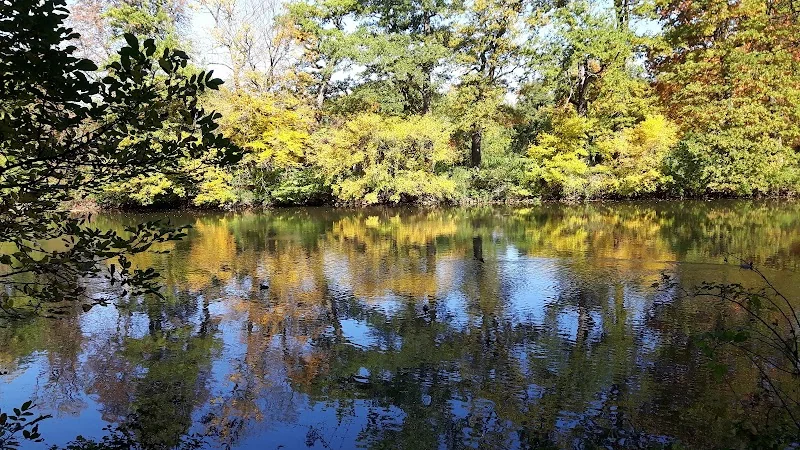
In Hainpark, the viewing platform is not staged as a loud highlight, but as part of a developed environment that connects nature and technology. The Bürgerparkverein describes an old culvert shaft at this location near Südtangente, Schillerwiese, and the left arm of the Regnitz. The shaft is framed with neatly laid bricks, and only the wrought-iron railing makes it visible as a special point in the terrain. Upon entering the site, visitors are granted a view of the opposite bank of the Regnitz. Thus, the viewing platform is not only a place to look but also a small piece of Bamberg's water and park history. The culvert also has a technical function: when the culvert valve is open, the incoming water from the Regnitz flushes the sewage system in Hainpark. This connection of sober infrastructure, park aesthetics, and a surprising perspective makes the location unique. For visitors, it is a beautiful example of how Bamberg works with water, urban greenery, and history even in detail. Those interested in quiet, authentic places will experience here a site with character rather than spectacle. ([bamberger-hainpark.de](https://www.bamberger-hainpark.de/der-hain/denkmaeler))
The special aspect of the viewing platform in the Hain is therefore less its height than its perspective. Unlike classic viewpoints that primarily aim to provide panoramas, this place tells of an urban habitat that has grown over decades. The view across to the opposite bank makes it clear how closely city, water, and greenery are situated in Hainpark. At the same time, the platform serves as a quiet junction in the park's network of paths. One stops, looks over, consciously perceives the surroundings, and then continues the walk. This is precisely what creates the quiet quality of the place. Those who want to experience Bamberg not just as a backdrop but as a vibrant urban space will find here a small but very expressive spot. The viewing platform in the Hain is thus an ideal stop for people who appreciate the unspectacular and seek a special atmosphere in it. ([bamberger-hainpark.de](https://www.bamberger-hainpark.de/der-hain/denkmaeler))
Hainpark, Botanical Garden, and Hainweiher
The viewing platform in the Hain is best understood when viewed in the larger context of the Bamberg Hainpark. The Bürgerparkverein describes Hainpark as a historic public park with over 200 years of history, created in the style of an English landscape garden. With its area of 48 hectares, it is a special place for encounters with nature, and the Botanical Garden is also part of this ensemble. It is important for visitors: entry is free, and the park explicitly invites people to stay in the green. At the same time, Hainpark is not just a classic city park but a garden monument where history, nature conservation, and recreational use play together in close quarters. This is precisely why the viewing platform fits so well in this place: it is not a foreign body but part of a park space designed for quiet contemplation and slow exploration. ([bamberger-hainpark.de](https://www.bamberger-hainpark.de/))
The Botanical Garden at Mühlwörth 21 is also part of the identity of the place. The official entry describes it as freely accessible at all times; it also describes its location in the northeastern part of Hainpark in the southern part of the city. In its current form, it was re-established in 2019 and contains numerous plant species from different biotopes. Information panels provide technical and historical backgrounds to the beds. This makes the area around the viewing platform a place where one not only looks but also learns. Additionally, the Hainpark brochure shows that the Hain, as a significant historical garden facility, is also an important Fauna-Flora-Habitat protection area with outstanding biodiversity. It also points out that Hainweiher and the large viewing platform should be thought of together as part of the park's image. This makes it clear that the viewing platform in the Hain should not be viewed in isolation but as part of a landscape space where water bodies, plantings, and paths are consciously connected. ([botanische-gaerten.de](https://www.botanische-gaerten.de/botanischer-garten-hainpark-bamberg.html))
The Hainweiher itself is also one of the defining elements of the park. The Bürgerparkverein describes it as a swan pond, which was expanded into Hainweiher starting in 1933 and is based on a biotope with breeding grounds for birds. It is also noted that after the ongoing renovation work, the requirements for biodiversity should be met more strongly. This information is important for visitors because it shows that the place is not only beautiful but also ecologically sensitive. Those who linger at the viewing platform in the Hain are thus in close proximity to a body of water that is significant for animals and plants. This also explains why the atmosphere there often feels so calm and natural. The mix of water, old park structures, and the botanical environment is one of the reasons why the place is equally interesting for walkers, nature lovers, and families. ([bamberger-hainpark.de](https://www.bamberger-hainpark.de/der-hain/hainweiher?utm_source=openai))
Access and Parking at Mühlwörth
For getting to the viewing platform in the Hain, the Bürgerparkverein provides clear instructions. The city bus line 909 runs from the ZOB to the Wilhelm-Löhe-Heim stop. Those who prefer to walk or ride a bike can also reach Hainpark easily, as the official Hainpark site explicitly describes the visit as per pedes, per pedalis, and barrier-free. Bamberg Tourism also emphasizes that from the former mill district or along the old canal by the Regnitz, one can reach the recreational area in just a few minutes on romantic paths. This is ideal for a short excursion because the path itself becomes part of the experience. One does not arrive at an isolated destination but in an inner-city green space that unfolds step by step. ([bamberger-hainpark.de](https://www.bamberger-hainpark.de/kontakt))
Those arriving by car will find several specific parking options near Hainpark, according to the Bürgerparkverein. These include the Hainparkplatz Theresienhain with an electric car charging station, Galgenfuhr 30 at the Vereinsheim or at Jahnwiese, Mühlwörth 18A by the boathouse with limited parking availability, and P+R Heinrichsdamm, which is also usable for motorhomes and has an electric car charging station. This list is particularly helpful because it does not rely on vague recommendations but on real, named locations. Especially in Bamberg, this is valuable, as inner-city green spaces are often in demand, and one likes to know in advance where to park their vehicle sensibly. Therefore, a short planning session is advisable for visiting the viewing platform, especially if one also wants to include the Botanical Garden or a longer walk in the Hain. ([bamberger-hainpark.de](https://www.bamberger-hainpark.de/kontakt))
The location at Mühlwörth makes access overall pleasantly flexible. Those arriving by bus get on near the park; those coming on foot use the paths along the Regnitz; those driving can choose between several parking points. For SEO and user intent, this is important because many search queries around a viewing platform do not only refer to the view itself but also to the practical questions of accessibility, parking, and path guidance. In Hainpark, all of this comes together: the platform is located in a well-known recreational area that is easily accessible from the city and at the same time offers enough tranquility to not feel rushed. This is a combination that is not found everywhere in Bamberg. ([bamberger-hainpark.de](https://www.bamberger-hainpark.de/kontakt))
Opening Hours, Access, and Barrier-Free Access
A major advantage of the viewing platform in the Hain is its uncomplicated accessibility. The Botanical Garden at Mühlwörth 21 is described on the official site as freely accessible at all times. Hainpark itself states that entry is free, thus inviting visits without tickets, cash registers, or fixed opening logic. This fits well with the character of the place: it is not about a closed event operation but about a public green space that can be used daily. Those looking for spontaneous time slots, for example, for a short walk in the morning or a quiet outing in the evening, benefit precisely from this openness. For many visitors, this is a decisive criterion because a viewpoint in everyday life is only truly usable if it remains accessible without hurdles. ([botanische-gaerten.de](https://www.botanische-gaerten.de/botanischer-garten-hainpark-bamberg.html))
Barrier-free access is also expressly addressed by the Hainpark website. The Bürgerparkverein welcomes visitors per pedes, per pedalis, and barrier-free. While this is not a technical detail description for every path section, it clearly shows the fundamental orientation of the park. Those with strollers, walking, or cycling will find a park designed as an open, accessible recreational area. Additionally, it is important that in Hainpark, dogs must be kept on a leash from March 1 to July 31. In the vicinity of Hainweiher and in the neighboring Botanical Garden, there is even a year-round leash requirement. These rules are not trivial but part of a respectful approach to a sensitive natural and park space, where nesting birds and other animals are to be protected. Those who consciously visit the place will easily take these hints into account. ([bamberger-hainpark.de](https://www.bamberger-hainpark.de/))
In practice, this means: the viewing platform in the Hain is particularly uncomplicated when one wants to use a free moment in Bamberg. No long lead time, no entry planning, no reservation. Especially in conjunction with Hainpark and the Botanical Garden, a place emerges that is suitable for both a short detour and a longer walk. At the same time, the character of the park is preserved because the rules for use are clear and understandable. This makes the facility equally usable for families, couples, individual visitors, and nature lovers. The best visiting strategy is therefore often the simplest: arrive, walk slowly, use the paths, and consciously direct the gaze at the viewpoint towards the water and the opposite bank. ([botanische-gaerten.de](https://www.botanische-gaerten.de/botanischer-garten-hainpark-bamberg.html))
Walking Paths, HainApp, and Nature Observation
Those visiting the viewing platform in the Hain should not only focus on the individual viewpoint but on the entire network of paths in Hainpark. Bamberg Tourism describes the city park Hain as a place with many walking paths. From the former mill district or along the old canal, one can reach this recreational area in just a few minutes. Additionally, the tourism site refers to the HainApp, which offers a wealth of information. The Bürgerparkverein adds that walkers in the Hain can comprehensively inform themselves about the Botanical Garden and Bürgerpark using a modern information system through signs, panels, and printed materials as well as digitally via apps. This is particularly attractive for visitors because one can not only experience the Hain but also understand it better. ([bamberg.info](https://www.bamberg.info/poi/stadtpark_hain-5025/?utm_source=openai))
The information structure in the Hain is more than mere signage. The Bürgerparkverein speaks of themed Hain desks that are placed in Hainpark and of a digital compendium for the Bamberg Hainpark. Additionally, there is a current event program for 2026 on the association's page, featuring member meetings, lectures, guided tours, and excursions. This shows that Hainpark is not only maintained as a backdrop but as a vibrant educational and experiential space. For the viewing platform, this means: it is part of a larger system of places where nature, history, and orientation come together. Therefore, those who take a short break at the platform can easily extend their visit into a longer walk and continue to move through the park along the themed steles. ([bamberger-hainpark.de](https://www.bamberger-hainpark.de/))
Nature observation also plays an important role in the Hain. The Bürgerparkverein points out that waterfowl gather at Hainweiher and that feeding ducks and geese can endanger the health of the animals. This is a small but useful hint for all who visit the place with children or a camera. The proximity of water, trees, and open spaces makes the Hain interesting for observing animals but also in need of protection. Therefore, those standing at the viewing platform in the Hain not only experience a beautiful view but also a very direct contact with an urban ecosystem. This makes the location exciting for people who want to not only observe nature but also think about its protection. ([bamberger-hainpark.de](https://www.bamberger-hainpark.de/))
History, Significance, and Visiting Tips
Hainpark is one of the places in Bamberg where urban history, garden design, and current recreational use particularly clearly overlap. According to the Bürgerparkverein, the Hain is a park facility with over 200 years of history, created in the style of an English landscape garden. As a garden monument with 48 hectares of area, it is not simply an additional green space but a defining part of the cityscape. The Hain brochure additionally emphasizes that the Hain is considered a significant historical garden facility and an important Fauna-Flora-Habitat protection area with outstanding biodiversity. For visitors, this means that they are not only moving in a beautiful park but in a space with cultural and ecological depth. This is precisely where the viewing platform has its quality: it makes the park readable and directs the gaze to the relationship between water, banks, paths, and vegetation. ([bamberger-hainpark.de](https://www.bamberger-hainpark.de/))
Particularly exciting is the development of the Botanical Garden in the Hain. The official site of the Bürgerparkverein describes its revival as a high-quality showcase facility with thematic focuses, which was completed throughout 2019. The municipal entry adds that numerous plant species from different biotopes are displayed there, and information panels convey both technical and historical backgrounds. Additionally, the history of Hainweiher, which was expanded from a biotope with breeding grounds for birds into Hainweiher starting in 1933, is included. These development lines show how Hainpark has evolved from a historic landscape garden to a modern educational and natural space. Therefore, those visiting the viewing platform in the Hain stand at a place where different layers of time remain visible: old park planning, post-war and renovation processes, current ecological care, and contemporary visitor information. This gives the location more depth than a mere viewpoint ever could. ([bamberger-hainpark.de](https://www.bamberger-hainpark.de/der-hain/botanischer-garten?utm_source=openai))
For a successful visit, it is worthwhile to approach the place without haste. Those coming from the city center can perceive the path through the green axis as part of the experience; those arriving by bike can quickly reach the Hain; those traveling with children can combine the detour with a round at Hainweiher, in the Botanical Garden, or on the walking paths. Particularly pleasant is that the place operates without entry fees and without complicated logistics. The charm lies not in the staging but in the quiet, authentic urban space. This is precisely why the viewing platform in the Hain fits so well with Bamberg: it combines views with everyday life, nature with the city, and history with the present. Those seeking such places will find here a very honest, quiet, and characterful view of the World Heritage City. ([bamberger-hainpark.de](https://www.bamberger-hainpark.de/))
Sources:
Mehr anzeigenWeniger anzeigen
Viewing Platform in the Hain | Hainpark & Bamberg
The viewing platform in the Hain is one of those places that may seem inconspicuous at first glance, and that is precisely why it remains memorable. It is located in the Bamberg Hainpark at Mühlwörth 21 and integrates into a historic park ensemble that is closely connected with the Botanical Garden, Hainweiher, walking paths, and the expansive green spaces of the Bürgerpark. The Hainpark is considered a historic, diverse public park with 48 hectares of area and more than 200 years of history; at the same time, the Botanical Garden there is freely accessible at all times. Those looking for a quiet viewpoint in Bamberg will find here not an overloaded observation temple, but a place with a connection to nature, park character, and genuine local significance. This very mix makes the platform so attractive for walks, quiet breaks, and photo opportunities. ([bamberger-hainpark.de](https://www.bamberger-hainpark.de/))
Location, View, and the Historical Culvert
In Hainpark, the viewing platform is not staged as a loud highlight, but as part of a developed environment that connects nature and technology. The Bürgerparkverein describes an old culvert shaft at this location near Südtangente, Schillerwiese, and the left arm of the Regnitz. The shaft is framed with neatly laid bricks, and only the wrought-iron railing makes it visible as a special point in the terrain. Upon entering the site, visitors are granted a view of the opposite bank of the Regnitz. Thus, the viewing platform is not only a place to look but also a small piece of Bamberg's water and park history. The culvert also has a technical function: when the culvert valve is open, the incoming water from the Regnitz flushes the sewage system in Hainpark. This connection of sober infrastructure, park aesthetics, and a surprising perspective makes the location unique. For visitors, it is a beautiful example of how Bamberg works with water, urban greenery, and history even in detail. Those interested in quiet, authentic places will experience here a site with character rather than spectacle. ([bamberger-hainpark.de](https://www.bamberger-hainpark.de/der-hain/denkmaeler))
The special aspect of the viewing platform in the Hain is therefore less its height than its perspective. Unlike classic viewpoints that primarily aim to provide panoramas, this place tells of an urban habitat that has grown over decades. The view across to the opposite bank makes it clear how closely city, water, and greenery are situated in Hainpark. At the same time, the platform serves as a quiet junction in the park's network of paths. One stops, looks over, consciously perceives the surroundings, and then continues the walk. This is precisely what creates the quiet quality of the place. Those who want to experience Bamberg not just as a backdrop but as a vibrant urban space will find here a small but very expressive spot. The viewing platform in the Hain is thus an ideal stop for people who appreciate the unspectacular and seek a special atmosphere in it. ([bamberger-hainpark.de](https://www.bamberger-hainpark.de/der-hain/denkmaeler))
Hainpark, Botanical Garden, and Hainweiher
The viewing platform in the Hain is best understood when viewed in the larger context of the Bamberg Hainpark. The Bürgerparkverein describes Hainpark as a historic public park with over 200 years of history, created in the style of an English landscape garden. With its area of 48 hectares, it is a special place for encounters with nature, and the Botanical Garden is also part of this ensemble. It is important for visitors: entry is free, and the park explicitly invites people to stay in the green. At the same time, Hainpark is not just a classic city park but a garden monument where history, nature conservation, and recreational use play together in close quarters. This is precisely why the viewing platform fits so well in this place: it is not a foreign body but part of a park space designed for quiet contemplation and slow exploration. ([bamberger-hainpark.de](https://www.bamberger-hainpark.de/))
The Botanical Garden at Mühlwörth 21 is also part of the identity of the place. The official entry describes it as freely accessible at all times; it also describes its location in the northeastern part of Hainpark in the southern part of the city. In its current form, it was re-established in 2019 and contains numerous plant species from different biotopes. Information panels provide technical and historical backgrounds to the beds. This makes the area around the viewing platform a place where one not only looks but also learns. Additionally, the Hainpark brochure shows that the Hain, as a significant historical garden facility, is also an important Fauna-Flora-Habitat protection area with outstanding biodiversity. It also points out that Hainweiher and the large viewing platform should be thought of together as part of the park's image. This makes it clear that the viewing platform in the Hain should not be viewed in isolation but as part of a landscape space where water bodies, plantings, and paths are consciously connected. ([botanische-gaerten.de](https://www.botanische-gaerten.de/botanischer-garten-hainpark-bamberg.html))
The Hainweiher itself is also one of the defining elements of the park. The Bürgerparkverein describes it as a swan pond, which was expanded into Hainweiher starting in 1933 and is based on a biotope with breeding grounds for birds. It is also noted that after the ongoing renovation work, the requirements for biodiversity should be met more strongly. This information is important for visitors because it shows that the place is not only beautiful but also ecologically sensitive. Those who linger at the viewing platform in the Hain are thus in close proximity to a body of water that is significant for animals and plants. This also explains why the atmosphere there often feels so calm and natural. The mix of water, old park structures, and the botanical environment is one of the reasons why the place is equally interesting for walkers, nature lovers, and families. ([bamberger-hainpark.de](https://www.bamberger-hainpark.de/der-hain/hainweiher?utm_source=openai))
Access and Parking at Mühlwörth
For getting to the viewing platform in the Hain, the Bürgerparkverein provides clear instructions. The city bus line 909 runs from the ZOB to the Wilhelm-Löhe-Heim stop. Those who prefer to walk or ride a bike can also reach Hainpark easily, as the official Hainpark site explicitly describes the visit as per pedes, per pedalis, and barrier-free. Bamberg Tourism also emphasizes that from the former mill district or along the old canal by the Regnitz, one can reach the recreational area in just a few minutes on romantic paths. This is ideal for a short excursion because the path itself becomes part of the experience. One does not arrive at an isolated destination but in an inner-city green space that unfolds step by step. ([bamberger-hainpark.de](https://www.bamberger-hainpark.de/kontakt))
Those arriving by car will find several specific parking options near Hainpark, according to the Bürgerparkverein. These include the Hainparkplatz Theresienhain with an electric car charging station, Galgenfuhr 30 at the Vereinsheim or at Jahnwiese, Mühlwörth 18A by the boathouse with limited parking availability, and P+R Heinrichsdamm, which is also usable for motorhomes and has an electric car charging station. This list is particularly helpful because it does not rely on vague recommendations but on real, named locations. Especially in Bamberg, this is valuable, as inner-city green spaces are often in demand, and one likes to know in advance where to park their vehicle sensibly. Therefore, a short planning session is advisable for visiting the viewing platform, especially if one also wants to include the Botanical Garden or a longer walk in the Hain. ([bamberger-hainpark.de](https://www.bamberger-hainpark.de/kontakt))
The location at Mühlwörth makes access overall pleasantly flexible. Those arriving by bus get on near the park; those coming on foot use the paths along the Regnitz; those driving can choose between several parking points. For SEO and user intent, this is important because many search queries around a viewing platform do not only refer to the view itself but also to the practical questions of accessibility, parking, and path guidance. In Hainpark, all of this comes together: the platform is located in a well-known recreational area that is easily accessible from the city and at the same time offers enough tranquility to not feel rushed. This is a combination that is not found everywhere in Bamberg. ([bamberger-hainpark.de](https://www.bamberger-hainpark.de/kontakt))
Opening Hours, Access, and Barrier-Free Access
A major advantage of the viewing platform in the Hain is its uncomplicated accessibility. The Botanical Garden at Mühlwörth 21 is described on the official site as freely accessible at all times. Hainpark itself states that entry is free, thus inviting visits without tickets, cash registers, or fixed opening logic. This fits well with the character of the place: it is not about a closed event operation but about a public green space that can be used daily. Those looking for spontaneous time slots, for example, for a short walk in the morning or a quiet outing in the evening, benefit precisely from this openness. For many visitors, this is a decisive criterion because a viewpoint in everyday life is only truly usable if it remains accessible without hurdles. ([botanische-gaerten.de](https://www.botanische-gaerten.de/botanischer-garten-hainpark-bamberg.html))
Barrier-free access is also expressly addressed by the Hainpark website. The Bürgerparkverein welcomes visitors per pedes, per pedalis, and barrier-free. While this is not a technical detail description for every path section, it clearly shows the fundamental orientation of the park. Those with strollers, walking, or cycling will find a park designed as an open, accessible recreational area. Additionally, it is important that in Hainpark, dogs must be kept on a leash from March 1 to July 31. In the vicinity of Hainweiher and in the neighboring Botanical Garden, there is even a year-round leash requirement. These rules are not trivial but part of a respectful approach to a sensitive natural and park space, where nesting birds and other animals are to be protected. Those who consciously visit the place will easily take these hints into account. ([bamberger-hainpark.de](https://www.bamberger-hainpark.de/))
In practice, this means: the viewing platform in the Hain is particularly uncomplicated when one wants to use a free moment in Bamberg. No long lead time, no entry planning, no reservation. Especially in conjunction with Hainpark and the Botanical Garden, a place emerges that is suitable for both a short detour and a longer walk. At the same time, the character of the park is preserved because the rules for use are clear and understandable. This makes the facility equally usable for families, couples, individual visitors, and nature lovers. The best visiting strategy is therefore often the simplest: arrive, walk slowly, use the paths, and consciously direct the gaze at the viewpoint towards the water and the opposite bank. ([botanische-gaerten.de](https://www.botanische-gaerten.de/botanischer-garten-hainpark-bamberg.html))
Walking Paths, HainApp, and Nature Observation
Those visiting the viewing platform in the Hain should not only focus on the individual viewpoint but on the entire network of paths in Hainpark. Bamberg Tourism describes the city park Hain as a place with many walking paths. From the former mill district or along the old canal, one can reach this recreational area in just a few minutes. Additionally, the tourism site refers to the HainApp, which offers a wealth of information. The Bürgerparkverein adds that walkers in the Hain can comprehensively inform themselves about the Botanical Garden and Bürgerpark using a modern information system through signs, panels, and printed materials as well as digitally via apps. This is particularly attractive for visitors because one can not only experience the Hain but also understand it better. ([bamberg.info](https://www.bamberg.info/poi/stadtpark_hain-5025/?utm_source=openai))
The information structure in the Hain is more than mere signage. The Bürgerparkverein speaks of themed Hain desks that are placed in Hainpark and of a digital compendium for the Bamberg Hainpark. Additionally, there is a current event program for 2026 on the association's page, featuring member meetings, lectures, guided tours, and excursions. This shows that Hainpark is not only maintained as a backdrop but as a vibrant educational and experiential space. For the viewing platform, this means: it is part of a larger system of places where nature, history, and orientation come together. Therefore, those who take a short break at the platform can easily extend their visit into a longer walk and continue to move through the park along the themed steles. ([bamberger-hainpark.de](https://www.bamberger-hainpark.de/))
Nature observation also plays an important role in the Hain. The Bürgerparkverein points out that waterfowl gather at Hainweiher and that feeding ducks and geese can endanger the health of the animals. This is a small but useful hint for all who visit the place with children or a camera. The proximity of water, trees, and open spaces makes the Hain interesting for observing animals but also in need of protection. Therefore, those standing at the viewing platform in the Hain not only experience a beautiful view but also a very direct contact with an urban ecosystem. This makes the location exciting for people who want to not only observe nature but also think about its protection. ([bamberger-hainpark.de](https://www.bamberger-hainpark.de/))
History, Significance, and Visiting Tips
Hainpark is one of the places in Bamberg where urban history, garden design, and current recreational use particularly clearly overlap. According to the Bürgerparkverein, the Hain is a park facility with over 200 years of history, created in the style of an English landscape garden. As a garden monument with 48 hectares of area, it is not simply an additional green space but a defining part of the cityscape. The Hain brochure additionally emphasizes that the Hain is considered a significant historical garden facility and an important Fauna-Flora-Habitat protection area with outstanding biodiversity. For visitors, this means that they are not only moving in a beautiful park but in a space with cultural and ecological depth. This is precisely where the viewing platform has its quality: it makes the park readable and directs the gaze to the relationship between water, banks, paths, and vegetation. ([bamberger-hainpark.de](https://www.bamberger-hainpark.de/))
Particularly exciting is the development of the Botanical Garden in the Hain. The official site of the Bürgerparkverein describes its revival as a high-quality showcase facility with thematic focuses, which was completed throughout 2019. The municipal entry adds that numerous plant species from different biotopes are displayed there, and information panels convey both technical and historical backgrounds. Additionally, the history of Hainweiher, which was expanded from a biotope with breeding grounds for birds into Hainweiher starting in 1933, is included. These development lines show how Hainpark has evolved from a historic landscape garden to a modern educational and natural space. Therefore, those visiting the viewing platform in the Hain stand at a place where different layers of time remain visible: old park planning, post-war and renovation processes, current ecological care, and contemporary visitor information. This gives the location more depth than a mere viewpoint ever could. ([bamberger-hainpark.de](https://www.bamberger-hainpark.de/der-hain/botanischer-garten?utm_source=openai))
For a successful visit, it is worthwhile to approach the place without haste. Those coming from the city center can perceive the path through the green axis as part of the experience; those arriving by bike can quickly reach the Hain; those traveling with children can combine the detour with a round at Hainweiher, in the Botanical Garden, or on the walking paths. Particularly pleasant is that the place operates without entry fees and without complicated logistics. The charm lies not in the staging but in the quiet, authentic urban space. This is precisely why the viewing platform in the Hain fits so well with Bamberg: it combines views with everyday life, nature with the city, and history with the present. Those seeking such places will find here a very honest, quiet, and characterful view of the World Heritage City. ([bamberger-hainpark.de](https://www.bamberger-hainpark.de/))
Sources:
Viewing Platform in the Hain | Hainpark & Bamberg
The viewing platform in the Hain is one of those places that may seem inconspicuous at first glance, and that is precisely why it remains memorable. It is located in the Bamberg Hainpark at Mühlwörth 21 and integrates into a historic park ensemble that is closely connected with the Botanical Garden, Hainweiher, walking paths, and the expansive green spaces of the Bürgerpark. The Hainpark is considered a historic, diverse public park with 48 hectares of area and more than 200 years of history; at the same time, the Botanical Garden there is freely accessible at all times. Those looking for a quiet viewpoint in Bamberg will find here not an overloaded observation temple, but a place with a connection to nature, park character, and genuine local significance. This very mix makes the platform so attractive for walks, quiet breaks, and photo opportunities. ([bamberger-hainpark.de](https://www.bamberger-hainpark.de/))
Location, View, and the Historical Culvert
In Hainpark, the viewing platform is not staged as a loud highlight, but as part of a developed environment that connects nature and technology. The Bürgerparkverein describes an old culvert shaft at this location near Südtangente, Schillerwiese, and the left arm of the Regnitz. The shaft is framed with neatly laid bricks, and only the wrought-iron railing makes it visible as a special point in the terrain. Upon entering the site, visitors are granted a view of the opposite bank of the Regnitz. Thus, the viewing platform is not only a place to look but also a small piece of Bamberg's water and park history. The culvert also has a technical function: when the culvert valve is open, the incoming water from the Regnitz flushes the sewage system in Hainpark. This connection of sober infrastructure, park aesthetics, and a surprising perspective makes the location unique. For visitors, it is a beautiful example of how Bamberg works with water, urban greenery, and history even in detail. Those interested in quiet, authentic places will experience here a site with character rather than spectacle. ([bamberger-hainpark.de](https://www.bamberger-hainpark.de/der-hain/denkmaeler))
The special aspect of the viewing platform in the Hain is therefore less its height than its perspective. Unlike classic viewpoints that primarily aim to provide panoramas, this place tells of an urban habitat that has grown over decades. The view across to the opposite bank makes it clear how closely city, water, and greenery are situated in Hainpark. At the same time, the platform serves as a quiet junction in the park's network of paths. One stops, looks over, consciously perceives the surroundings, and then continues the walk. This is precisely what creates the quiet quality of the place. Those who want to experience Bamberg not just as a backdrop but as a vibrant urban space will find here a small but very expressive spot. The viewing platform in the Hain is thus an ideal stop for people who appreciate the unspectacular and seek a special atmosphere in it. ([bamberger-hainpark.de](https://www.bamberger-hainpark.de/der-hain/denkmaeler))
Hainpark, Botanical Garden, and Hainweiher
The viewing platform in the Hain is best understood when viewed in the larger context of the Bamberg Hainpark. The Bürgerparkverein describes Hainpark as a historic public park with over 200 years of history, created in the style of an English landscape garden. With its area of 48 hectares, it is a special place for encounters with nature, and the Botanical Garden is also part of this ensemble. It is important for visitors: entry is free, and the park explicitly invites people to stay in the green. At the same time, Hainpark is not just a classic city park but a garden monument where history, nature conservation, and recreational use play together in close quarters. This is precisely why the viewing platform fits so well in this place: it is not a foreign body but part of a park space designed for quiet contemplation and slow exploration. ([bamberger-hainpark.de](https://www.bamberger-hainpark.de/))
The Botanical Garden at Mühlwörth 21 is also part of the identity of the place. The official entry describes it as freely accessible at all times; it also describes its location in the northeastern part of Hainpark in the southern part of the city. In its current form, it was re-established in 2019 and contains numerous plant species from different biotopes. Information panels provide technical and historical backgrounds to the beds. This makes the area around the viewing platform a place where one not only looks but also learns. Additionally, the Hainpark brochure shows that the Hain, as a significant historical garden facility, is also an important Fauna-Flora-Habitat protection area with outstanding biodiversity. It also points out that Hainweiher and the large viewing platform should be thought of together as part of the park's image. This makes it clear that the viewing platform in the Hain should not be viewed in isolation but as part of a landscape space where water bodies, plantings, and paths are consciously connected. ([botanische-gaerten.de](https://www.botanische-gaerten.de/botanischer-garten-hainpark-bamberg.html))
The Hainweiher itself is also one of the defining elements of the park. The Bürgerparkverein describes it as a swan pond, which was expanded into Hainweiher starting in 1933 and is based on a biotope with breeding grounds for birds. It is also noted that after the ongoing renovation work, the requirements for biodiversity should be met more strongly. This information is important for visitors because it shows that the place is not only beautiful but also ecologically sensitive. Those who linger at the viewing platform in the Hain are thus in close proximity to a body of water that is significant for animals and plants. This also explains why the atmosphere there often feels so calm and natural. The mix of water, old park structures, and the botanical environment is one of the reasons why the place is equally interesting for walkers, nature lovers, and families. ([bamberger-hainpark.de](https://www.bamberger-hainpark.de/der-hain/hainweiher?utm_source=openai))
Access and Parking at Mühlwörth
For getting to the viewing platform in the Hain, the Bürgerparkverein provides clear instructions. The city bus line 909 runs from the ZOB to the Wilhelm-Löhe-Heim stop. Those who prefer to walk or ride a bike can also reach Hainpark easily, as the official Hainpark site explicitly describes the visit as per pedes, per pedalis, and barrier-free. Bamberg Tourism also emphasizes that from the former mill district or along the old canal by the Regnitz, one can reach the recreational area in just a few minutes on romantic paths. This is ideal for a short excursion because the path itself becomes part of the experience. One does not arrive at an isolated destination but in an inner-city green space that unfolds step by step. ([bamberger-hainpark.de](https://www.bamberger-hainpark.de/kontakt))
Those arriving by car will find several specific parking options near Hainpark, according to the Bürgerparkverein. These include the Hainparkplatz Theresienhain with an electric car charging station, Galgenfuhr 30 at the Vereinsheim or at Jahnwiese, Mühlwörth 18A by the boathouse with limited parking availability, and P+R Heinrichsdamm, which is also usable for motorhomes and has an electric car charging station. This list is particularly helpful because it does not rely on vague recommendations but on real, named locations. Especially in Bamberg, this is valuable, as inner-city green spaces are often in demand, and one likes to know in advance where to park their vehicle sensibly. Therefore, a short planning session is advisable for visiting the viewing platform, especially if one also wants to include the Botanical Garden or a longer walk in the Hain. ([bamberger-hainpark.de](https://www.bamberger-hainpark.de/kontakt))
The location at Mühlwörth makes access overall pleasantly flexible. Those arriving by bus get on near the park; those coming on foot use the paths along the Regnitz; those driving can choose between several parking points. For SEO and user intent, this is important because many search queries around a viewing platform do not only refer to the view itself but also to the practical questions of accessibility, parking, and path guidance. In Hainpark, all of this comes together: the platform is located in a well-known recreational area that is easily accessible from the city and at the same time offers enough tranquility to not feel rushed. This is a combination that is not found everywhere in Bamberg. ([bamberger-hainpark.de](https://www.bamberger-hainpark.de/kontakt))
Opening Hours, Access, and Barrier-Free Access
A major advantage of the viewing platform in the Hain is its uncomplicated accessibility. The Botanical Garden at Mühlwörth 21 is described on the official site as freely accessible at all times. Hainpark itself states that entry is free, thus inviting visits without tickets, cash registers, or fixed opening logic. This fits well with the character of the place: it is not about a closed event operation but about a public green space that can be used daily. Those looking for spontaneous time slots, for example, for a short walk in the morning or a quiet outing in the evening, benefit precisely from this openness. For many visitors, this is a decisive criterion because a viewpoint in everyday life is only truly usable if it remains accessible without hurdles. ([botanische-gaerten.de](https://www.botanische-gaerten.de/botanischer-garten-hainpark-bamberg.html))
Barrier-free access is also expressly addressed by the Hainpark website. The Bürgerparkverein welcomes visitors per pedes, per pedalis, and barrier-free. While this is not a technical detail description for every path section, it clearly shows the fundamental orientation of the park. Those with strollers, walking, or cycling will find a park designed as an open, accessible recreational area. Additionally, it is important that in Hainpark, dogs must be kept on a leash from March 1 to July 31. In the vicinity of Hainweiher and in the neighboring Botanical Garden, there is even a year-round leash requirement. These rules are not trivial but part of a respectful approach to a sensitive natural and park space, where nesting birds and other animals are to be protected. Those who consciously visit the place will easily take these hints into account. ([bamberger-hainpark.de](https://www.bamberger-hainpark.de/))
In practice, this means: the viewing platform in the Hain is particularly uncomplicated when one wants to use a free moment in Bamberg. No long lead time, no entry planning, no reservation. Especially in conjunction with Hainpark and the Botanical Garden, a place emerges that is suitable for both a short detour and a longer walk. At the same time, the character of the park is preserved because the rules for use are clear and understandable. This makes the facility equally usable for families, couples, individual visitors, and nature lovers. The best visiting strategy is therefore often the simplest: arrive, walk slowly, use the paths, and consciously direct the gaze at the viewpoint towards the water and the opposite bank. ([botanische-gaerten.de](https://www.botanische-gaerten.de/botanischer-garten-hainpark-bamberg.html))
Walking Paths, HainApp, and Nature Observation
Those visiting the viewing platform in the Hain should not only focus on the individual viewpoint but on the entire network of paths in Hainpark. Bamberg Tourism describes the city park Hain as a place with many walking paths. From the former mill district or along the old canal, one can reach this recreational area in just a few minutes. Additionally, the tourism site refers to the HainApp, which offers a wealth of information. The Bürgerparkverein adds that walkers in the Hain can comprehensively inform themselves about the Botanical Garden and Bürgerpark using a modern information system through signs, panels, and printed materials as well as digitally via apps. This is particularly attractive for visitors because one can not only experience the Hain but also understand it better. ([bamberg.info](https://www.bamberg.info/poi/stadtpark_hain-5025/?utm_source=openai))
The information structure in the Hain is more than mere signage. The Bürgerparkverein speaks of themed Hain desks that are placed in Hainpark and of a digital compendium for the Bamberg Hainpark. Additionally, there is a current event program for 2026 on the association's page, featuring member meetings, lectures, guided tours, and excursions. This shows that Hainpark is not only maintained as a backdrop but as a vibrant educational and experiential space. For the viewing platform, this means: it is part of a larger system of places where nature, history, and orientation come together. Therefore, those who take a short break at the platform can easily extend their visit into a longer walk and continue to move through the park along the themed steles. ([bamberger-hainpark.de](https://www.bamberger-hainpark.de/))
Nature observation also plays an important role in the Hain. The Bürgerparkverein points out that waterfowl gather at Hainweiher and that feeding ducks and geese can endanger the health of the animals. This is a small but useful hint for all who visit the place with children or a camera. The proximity of water, trees, and open spaces makes the Hain interesting for observing animals but also in need of protection. Therefore, those standing at the viewing platform in the Hain not only experience a beautiful view but also a very direct contact with an urban ecosystem. This makes the location exciting for people who want to not only observe nature but also think about its protection. ([bamberger-hainpark.de](https://www.bamberger-hainpark.de/))
History, Significance, and Visiting Tips
Hainpark is one of the places in Bamberg where urban history, garden design, and current recreational use particularly clearly overlap. According to the Bürgerparkverein, the Hain is a park facility with over 200 years of history, created in the style of an English landscape garden. As a garden monument with 48 hectares of area, it is not simply an additional green space but a defining part of the cityscape. The Hain brochure additionally emphasizes that the Hain is considered a significant historical garden facility and an important Fauna-Flora-Habitat protection area with outstanding biodiversity. For visitors, this means that they are not only moving in a beautiful park but in a space with cultural and ecological depth. This is precisely where the viewing platform has its quality: it makes the park readable and directs the gaze to the relationship between water, banks, paths, and vegetation. ([bamberger-hainpark.de](https://www.bamberger-hainpark.de/))
Particularly exciting is the development of the Botanical Garden in the Hain. The official site of the Bürgerparkverein describes its revival as a high-quality showcase facility with thematic focuses, which was completed throughout 2019. The municipal entry adds that numerous plant species from different biotopes are displayed there, and information panels convey both technical and historical backgrounds. Additionally, the history of Hainweiher, which was expanded from a biotope with breeding grounds for birds into Hainweiher starting in 1933, is included. These development lines show how Hainpark has evolved from a historic landscape garden to a modern educational and natural space. Therefore, those visiting the viewing platform in the Hain stand at a place where different layers of time remain visible: old park planning, post-war and renovation processes, current ecological care, and contemporary visitor information. This gives the location more depth than a mere viewpoint ever could. ([bamberger-hainpark.de](https://www.bamberger-hainpark.de/der-hain/botanischer-garten?utm_source=openai))
For a successful visit, it is worthwhile to approach the place without haste. Those coming from the city center can perceive the path through the green axis as part of the experience; those arriving by bike can quickly reach the Hain; those traveling with children can combine the detour with a round at Hainweiher, in the Botanical Garden, or on the walking paths. Particularly pleasant is that the place operates without entry fees and without complicated logistics. The charm lies not in the staging but in the quiet, authentic urban space. This is precisely why the viewing platform in the Hain fits so well with Bamberg: it combines views with everyday life, nature with the city, and history with the present. Those seeking such places will find here a very honest, quiet, and characterful view of the World Heritage City. ([bamberger-hainpark.de](https://www.bamberger-hainpark.de/))
Sources:
Frequently Asked Questions
Reviews
No reviews found