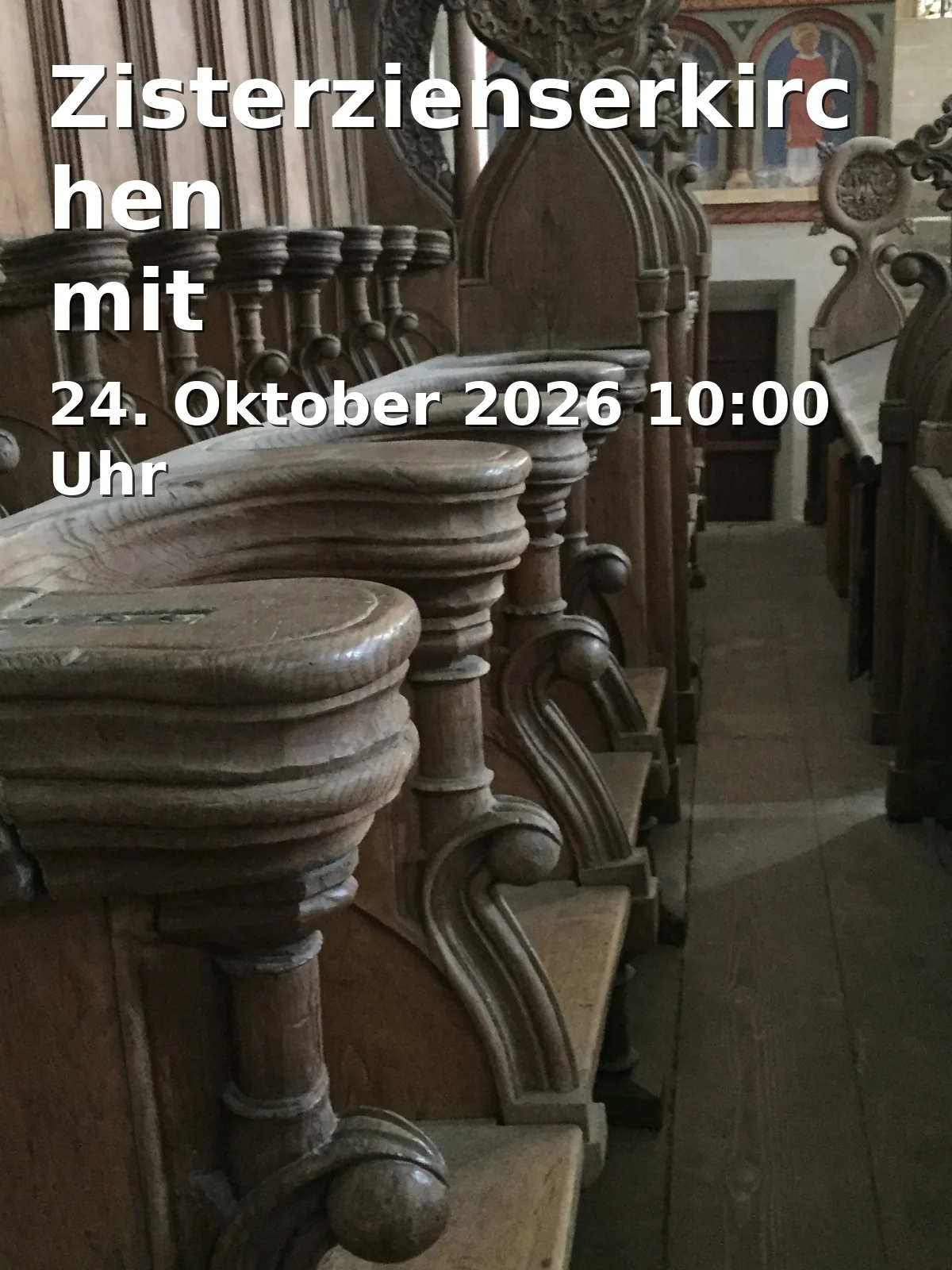
Cistercian Churches with Far-Reaching Effects?! Faith, Pilgrimage, and Baroque in Burgwindheim
Date and Time
Location
About this Event
Mood
Venue Type
Pilgrimage, Baroque, and Cistercian Landscapes in Burgwindheim
Where monastic seclusion meets visibly prominent pilgrimage churches, a special perspective on the religious cultural history of Franconia opens up. The event invites participants to rediscover Cistercian landscapes as spiritual, architectural, and community-shaped spaces.
Between Silence and Far-Reaching Effects
The Cistercians are traditionally associated with retreat, prayer, and concentrated spirituality. At the same time, significant pilgrimage routes and sacred places developed around their monasteries. The event explores the intriguing question of how monastic seclusion and public pilgrimage are interconnected.
Baroque Central Buildings as Signs of Faith
Prominent churches like Vierzehnheiligen, the Chapel near Waldsassen, the pilgrimage site Zdar nad Sazavou, and Maria Teinitz near Plasy take center stage. Their central buildings differ significantly from the more understated monastery complexes. Architects such as Balthasar Neumann, the Dientzenhofers, and Jan Blažej Santini-Aichel created impressive spaces where liturgy, architecture, and religious experience form a unity.
Expert Insights into a Living Tradition
Prof. Dr. Günter Dippold, district homeland curator of Upper Franconia, Dr. Rosa Karl, and Christian Malzer will explain the phenomenon of pilgrimage in the context of Cistercian cultural landscapes. The discussion will encompass theological and historical connections as well as the significance of the routes, chapels, and churches for the spiritual community.
Burgwindheim as a Historical Venue
The former Ebrach government castle Burgwindheim provides the suitable framework for this morning dedicated to religious and cultural history. The event gains particular relevance through the inclusion of the blood pilgrimage in Burgwindheim in the list of intangible cultural heritage of Bavaria in 2026.
Local Tour to the Holy Blood Chapel
To conclude, a local tour with Sigrun Philipp to the Holy Blood Chapel will take place. Onion pie and Federweißer create space for encounters, exchange, and shared resonances. Participation in the walk should be mentioned at registration.
The event combines historical research, religious architecture, pilgrimage tradition, and communal experience. Visitors can expect an inspiring faith experience between architecture, history, and lived spirituality. Registration is requested at cisterscapes@lra-ba.bayern.de, preferably by October 22, 2026.