
Karlheinz Böhm
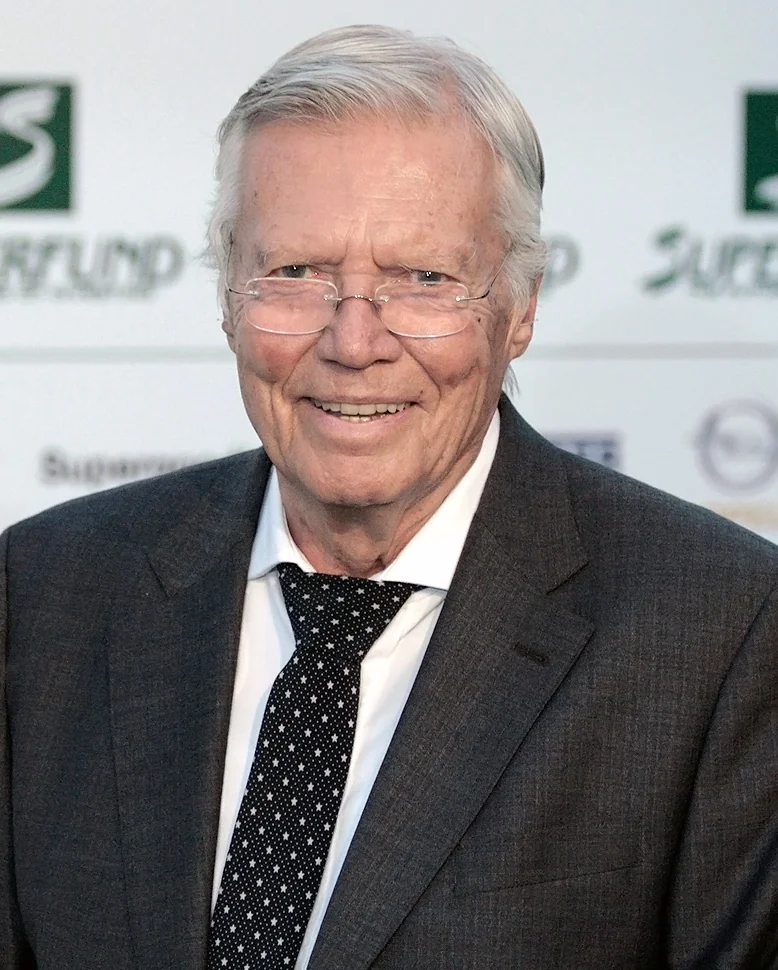
Image from Wikipedia
Image from Wikipedia
Karlheinz Böhm – The Emperor of Cinema and the Conscience of a Generation
A Life Between Stage, Screen, and Humanitarian Responsibility
Karlheinz Böhm was one of those personalities whose impact extends far beyond their actual career. Born on March 16, 1928, in Darmstadt and passing away on May 29, 2014, in Grödig, he became internationally renowned as an Austrian actor through his portrayal of Emperor Franz Joseph in the Sissi trilogy alongside Romy Schneider. At the same time, after his film career, he evolved into an engaged founder and humanitarian, creating a life’s work with Menschen für Menschen in Austria that continues to set standards today.
His biography connects artistic origins, international popularity, and social responsibility with a rare intensity. As the son of conductor Karl Böhm and soprano Thea Linhard-Böhm, he grew up in an environment shaped by music, travel, and the stage. However, his path was not straightforward towards a great career, but rather through detours, setbacks, and a remarkable transformation from screen star to charity founder.
Background, Childhood, and Early Influences
Karlheinz Böhm was born as the only child of a musically esteemed family. His father was one of the most famous conductors of the 20th century, and his mother a soprano, and yet the young Böhm lacked a sense of home in the classical sense for a long time. The family traveled extensively, while he spent parts of his youth in a boarding school in Switzerland, shielded from the war and distanced from his parents.
His closeness to music became evident early on: As a teenager, he took piano lessons and originally aspired to become a pianist. However, this ambition failed, leading him to turn to another artistic field. This biographical break resulted in one of the most formative turns in his life, for acting became not only a profession for him but also an expression of his own identity beyond the famous family name.
The Breakthrough on Stage and Screen
Karlheinz Böhm took his first steps as an actor not immediately as a film star but initially on the theater stage. Engagements at the Burgtheater and the Theater in der Josefstadt in Vienna sharpened his performance and laid the groundwork for a career that would soon conquer cinema as well. In the 1950s, he became a sought-after actor whose elegance, controlled presence, and aristocratic aura perfectly matched the audience's ideal of the time.
The big breakthrough came with the Sissi trilogy from 1955 to 1957. Alongside Romy Schneider, he embodied Emperor Franz Joseph and overnight became a beloved favorite of the audience. This role profoundly shaped his public image: the courtly charm, the restrained masculinity, and the romanticized imperial figure made him an icon of German-language post-war cinema.
Break with the Image and Artistic Reorientation
An important turning point in his film biography followed in 1960 with Michael Powell's psychological drama Peeping Tom. The film set a radical counterpoint to his Sissi image and showcased Böhm in a disturbing, psychologically dark role. Although the film was initially heavily criticized, it is now considered a significant work of psychological cinema and evidence of Böhm as an actor with a much greater range than his popular imperial image suggested.
In the following years, his film career became quieter. He did not receive any film offers for more than ten years before Rainer Werner Fassbinder brought him back in front of the camera. Overall, Böhm appeared in 45 feature films over three decades, including several productions by Fassbinder. This later phase displayed a matured performer who left his early star image behind and adapted to more complex, artistically demanding work.
From Actor to Founder of Menschen für Menschen
In 1981, Karlheinz Böhm undertook perhaps the most significant transformation of his life. His engagement for people in Ethiopia stemmed from a bet on the television show Wetten, dass..? The experience of hunger, injustice, and lack of future opportunities led to the founding of Menschen für Menschen, a charity that focused on sustainable development and the idea of "help for self-development."
The actor became an internationally noted social entrepreneur who consistently devoted his reputation to the service of others. He traveled to Ethiopia, helping to build structures for education, health, agriculture, and access to water and remained a significant voice for the organization into old age. This second career made him even more impressive to many than his role on screen.
Impact, Awards, and Cultural Significance
Karlheinz Böhm's cultural significance lies not only in his filmography but also in the connection between star status and moral consequence. As Emperor Franz Joseph, he became part of collective popular culture in the German-speaking world; as an actor in Peeping Tom and later works, he demonstrated artistic versatility. His fame opened doors, but his credibility arose from the consistency with which he translated his privileges into social responsibility.
Menschen für Menschen developed into a recognized charity in Ethiopia under his involvement. The impact of his commitment was also visible through public recognition, such as the honorary citizenship of Ethiopia awarded to him in 2003. Böhm thus remains an example of a personality who not only managed cultural prominence but transformed it into social authority.
Style, Personality, and Public Perception
As an actor, Böhm possessed a unique mix of discipline, restraint, and presence. His performance often appeared controlled and precise, fitting both the imperial dignity in the Sissi trilogy and the broken, psychologically nuanced characters of later years. This complexity is what makes him interesting to film historians and cultural critics.
As a public figure, he embodied seriousness, sense of duty, and moral urgency. His biography tells not only of fame but also of the ability to leave behind a well-known image. In a media world that often reduces prominence to superficialities, Böhm remains a counter-model: a star who understood responsibility not as a side note but as a life mission.
Conclusion: Why Karlheinz Böhm continues to Fascinate
Karlheinz Böhm remains intriguing because he united two seemingly opposing life concepts in one person: the popular film star and the uncompromising helper. His career demonstrates how profoundly artistic fame can impact when coupled with attitude, self-criticism, and social engagement. Those interested in film history, European post-war culture, and humanitarian biographies will find in him an extraordinary figure.
His legacy lives on in the films, in the memory of the Sissi era, and above all in Menschen für Menschen. Karlheinz Böhm serves as an example that cultural radiance and lived responsibility do not exclude each other, but ideally complement one another. That is why it is worth rediscovering his work and his life.
Official Channels of Karlheinz Böhm:
- Instagram: no official profile found
- Facebook: no official profile found
- YouTube: no official profile found
- Spotify: no official profile found
- TikTok: no official profile found