
Gewandhausorchester
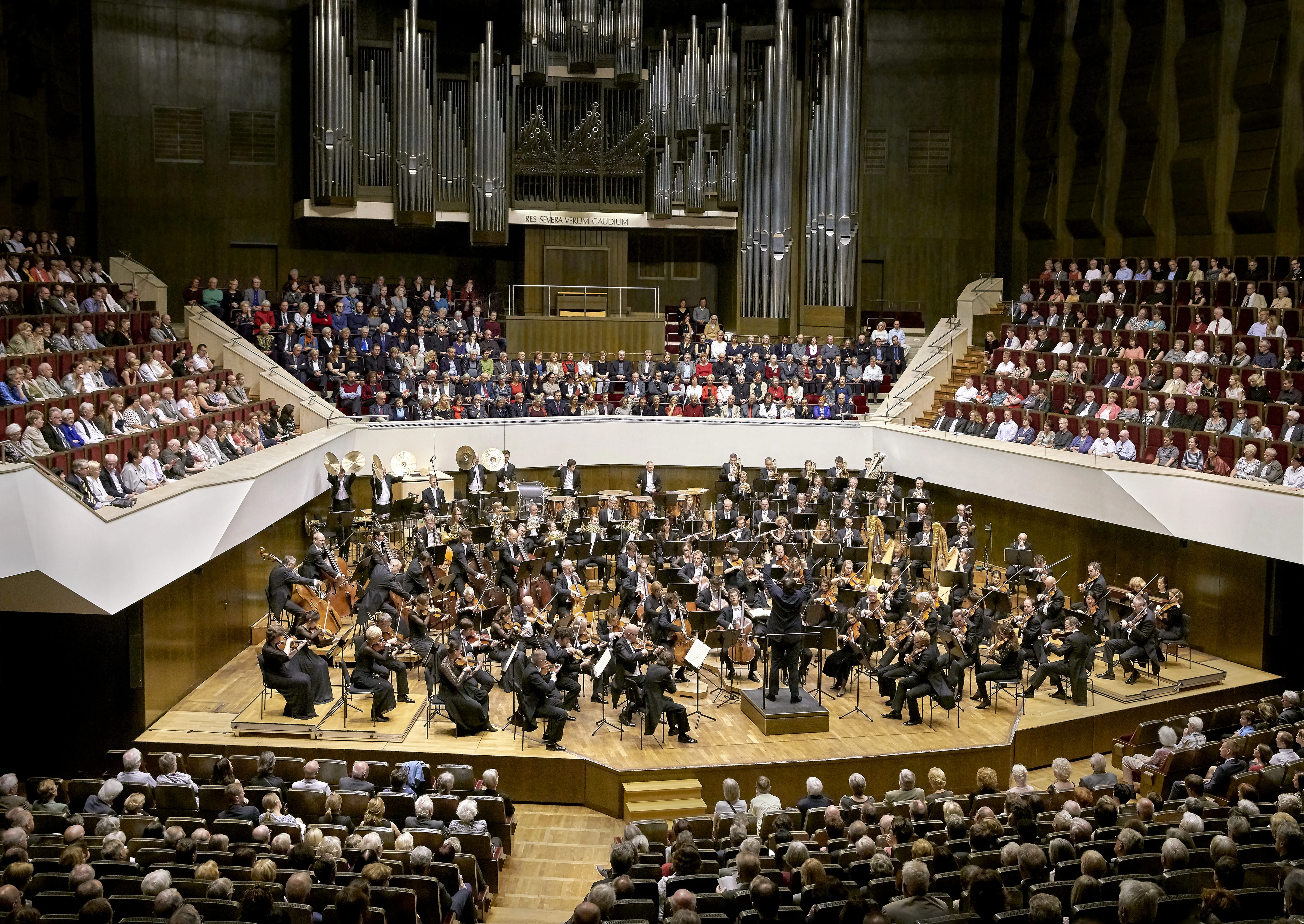
Image from Wikipedia
Image from Wikipedia
Gewandhaus Orchestra: Sound Tradition, Leipzig Identity, and World-Class Excellence at the Highest Level
An orchestra that not only preserves music history but also continues it
The Gewandhaus Orchestra from Leipzig is among the great names in European music history, merging historical depth with vibrant present-day relevance. As the oldest civic symphony orchestra in the world, it embodies an exceptionally long tradition that dates back to the concert society "Das Große Concert" of 1743. Today, the ensemble, comprising around 185 professional musicians and nearly 300 performances per year, creates a sound that is regarded worldwide as warm, dark, and unmistakable. Since February 2018, Andris Nelsons has held the title of Gewandhauskapellmeister, influencing the artistic development of the orchestra during a phase of international visibility and broad programming. ([gewandhausorchester.de](https://www.gewandhausorchester.de/orchester/?utm_source=openai))
The Origin: From Civic Concert Spirit to a World-Class Institution
The history of the Gewandhaus Orchestra begins with a cultural-historical motif that remains palpable today: music as a civic common good. In 1743, 16 nobles and citizens founded the Leipzig Concert Society, from which the orchestra developed. With the move to the clothiers' trading house in 1781, the ensemble not only acquired its first high-quality concert hall but also the name under which it became world-famous. This anchoring in Leipzig is not merely a label of tradition but the core of an orchestral identity that closely connects the city, its audience, and its repertoire. ([gewandhausorchester.de](https://www.gewandhausorchester.de/orchester/?utm_source=openai))
As an institutional constant, the Gewandhaus Orchestra still performs today in three musical homes: at the Gewandhaus, in the Leipzig Opera, and in the St. Thomas Church alongside the St. Thomas Boys Choir. This triple role lends a remarkable depth to the ensemble's musical career, as symphonic work, operatic repertoire, and sacred music do not simply coexist but complement each other. The resulting stylistic range is one of the reasons why the orchestra holds such authority in the international context. The sound arises not only on stage but in a lived Leipzig musical ecology. ([gewandhausorchester.de](https://www.gewandhausorchester.de/orchester/?utm_source=openai))
Gewandhauskapellmeister and Influential Artistic Development
The title of Gewandhauskapellmeister signifies more than just a conductor's role within the orchestra. It embodies tradition, continuity, and a specific responsibility toward the acoustic ideal of the institution. Among the influential names of the past are personalities who shaped the ensemble's musical profile across generations; currently, Andris Nelsons continues this lineage with international renown. The Gewandhaus Orchestra itself points to projects that have emerged under his leadership, including collaborations with the Boston Symphony Orchestra, the complete recording of Bruckner's symphonies, and the Shostakovich Festival in 2025. ([gewandhausorchester.de](https://www.gewandhausorchester.de/artikel/andris-nelsons-511/?utm_source=openai))
It is precisely this connection between tradition and the present that makes the orchestra's artistic development so exciting. The ensemble cultivates a distinctive sound, characterized in official descriptions as warm and dark, and utilizes it for a repertoire spanning from Bach to contemporary music. As a result, the audience experiences an orchestra that not only possesses historical authority but also actively engages with current musical life. This continuity is a central feature of its international reputation. ([gewandhausorchester.de](https://www.gewandhausorchester.de/orchester/?utm_source=openai))
Discography, Recordings, and Critical Reception
The Gewandhaus Orchestra's discography is closely tied to its profile, as the ensemble sets artistic standards not only on stage but also in the studio. Among the official projects are the recordings of Bruckner and Strauss, which were compiled into a box set in 2024, as well as the recording of Saint-Saëns’ "Carnival of the Animals" and Piano Concerto No. 2 in g minor with Lang Lang and Gina Alice. These productions demonstrate how the orchestra translates its sound culture into media form while simultaneously expanding its repertoire profile. Recordings here are not merely documents but part of a strategic musical self-description. ([gewandhausorchester.de](https://www.gewandhausorchester.de/en/artikel/neue-einspielungen-von-bruckner-strauss-357/?utm_source=openai))
The critical reception further underscores this standing. The Guardian described the orchestra as an ensemble that has established itself "among the greatest in Europe" under Riccardo Chailly back in 2013, indicating its ascent to the very top tier of European orchestras. This categorization convincingly complements the institution’s self-presentation: historical depth, tonal individuality, and high repertoire flexibility meet international recognition. As a result, the music press paints a picture of an orchestra that sets benchmarks rather than follows them. ([theguardian.com](https://www.theguardian.com/music/2013/oct/23/gewandhausorchester-leipzig-chailly-review?utm_source=openai))
Current Projects: Festivals, Tours, and New Program Lines
Recent activities reveal an orchestra that does not merely manage its tradition but translates it into new formats. For the 2025/2026 season, the Gewandhaus is announcing diverse series and programs, including the Musica Nova series, premieres, and thematic focus projects. Particularly visible in 2025 was the Shostakovich Festival Leipzig, which featured several performances of the "Leningrad Symphony" as well as chamber music with internationally renowned soloists. The festival connected the Gewandhaus Orchestra with the Boston Symphony Orchestra, showcasing how strongly the transatlantic alliance is now woven into the artistic profile. ([gewandhausorchester.de](https://www.gewandhausorchester.de/artikel/die-245-spielzeit-2025-2026-506/?utm_source=openai))
The seasonal preview for 2024/2025 and ongoing announcements for 2025/2026 also indicate a high density of programming. In addition to large symphonic concerts, educational formats, family concerts, crossover offerings, and thematic festivals focusing on Mendelssohn, Shostakovich, or Arvo Pärt will be included. This diversity is not merely an event logic but an expression of a curatorial concept that intertwines musical education, artistic excellence, and audience engagement. As a result, the Gewandhaus Orchestra remains a vibrant organism at the center of the Leipzig music city. ([leipzig.travel](https://www.leipzig.travel/en/fileadmin/Mediendatenbank/4_B2B/2_Medien/2_Pressemitteilungen/Gewandhaus-zu-Leipzig-leipzig-travel.pdf?utm_source=openai))
Musical Language, Repertoire, and Sound Ideal
Perhaps the most fascinating aspect of the Gewandhaus Orchestra lies in its sound aesthetics. Official texts describe an "individually warm, dark sound" that distinctly sets the ensemble apart from other top orchestras. This colorfulness emerges from centuries of performance practice, the cultivation of the German repertoire, and a tradition-conscious yet open playing culture. In Leipzig, historical interpretation, orchestral discipline, and a specific communal sound understanding converge. ([gewandhausorchester.de](https://www.gewandhausorchester.de/orchester/?utm_source=openai))
The repertoire spans from Bach cantatas through classical and romantic symphonies to modern and contemporary music. Particularly striking is the institutional connection between concerts, opera, and church music, which grants the orchestra an unusual stylistic range. The teaching activities of orchestra members at the Hochschule für Musik und Theater "Felix Mendelssohn Bartholdy" in Leipzig further stabilize this sound ideal, as experience and the next generation are directly integrated. This creates not a static legacy but an ever-renewing body of musical knowledge. ([de.wikipedia.org](https://de.wikipedia.org/wiki/Gewandhausorchester?utm_source=openai))
Cultural Influence and International Authority
The Gewandhaus Orchestra holds cultural significance that extends far beyond the concert hall. It is considered part of European and intangible cultural heritage and is closely linked with city identity, education, and public musical life in Leipzig. This role explains why the ensemble is perceived not just as an orchestra but as a cultural institution. Its history vividly illustrates how civic engagement, musical excellence, and social relevance can intertwine. ([gewandhausorchester.de](https://www.gewandhausorchester.de/impressum/))
Internationally, the orchestra also serves as a reference point. Collaborations with the Boston Symphony Orchestra, participation in the Salzburg Easter Festival, and numerous festivals and special projects bolster the ensemble's reputation as a globally active sound body with local roots. This represents a rare tension in the realm of classical music: worldwide visibility without losing its origins. It is from this that the Gewandhaus Orchestra draws its authority. ([gewandhausorchester.de](https://www.gewandhausorchester.de/artikel/andris-nelsons-511/?utm_source=openai))
Voices of the Fans
The official channels of the Gewandhaus Orchestra showcase a wide reach and a clearly identifiable, active community. On the official YouTube channel, the institution itself refers to new video formats, while the social media presence explicitly includes Facebook, Instagram, YouTube, Soundcloud, and other channels, as stated in the imprint. The feedback there is characterized by enthusiasm for live experiences, depth of repertoire, and Leipzig's musical tradition; however, specific fan quotes are not provided here, as only clearly verifiable information is used. ([gewandhausorchester.de](https://www.gewandhausorchester.de/artikel/neue-video-serie-sound-science-352/?utm_source=openai))
Conclusion: An Orchestra with Past, Present, and Future
The Gewandhaus Orchestra captivates through its rare fusion of historical authority, stylistic breadth, and current relevance. It represents a European concept of orchestras that transforms tradition into a dynamic artistic process, rather than making it static. Those who experience this ensemble encounter not only great symphonies but also a sound body that tells the story of music history in real-time. Especially on stage, its full grandeur unfolds: precise, richly colored, sovereign, and deeply Leipzigian. Attending a concert is not just a mandatory date but an immediate encounter with one of the most significant orchestral personalities of our time. ([gewandhausorchester.de](https://www.gewandhausorchester.de/orchester/?utm_source=openai))
Official Channels of Gewandhaus Orchestra:
- Instagram: https://www.instagram.com/gewandhausorchester/
- Facebook: https://www.facebook.com/gewandhausorchester/
- YouTube: https://www.youtube.com/gewandhausleipzig
- Spotify: No official profile found
- TikTok: No official profile found
Sources:
- Gewandhaus Leipzig – The Gewandhaus Orchestra
- Gewandhaus Leipzig – History of the Gewandhaus Orchestra
- Gewandhaus Leipzig – Gewandhaus Orchestra (English)
- Gewandhaus Leipzig – At the Gewandhaus
- Gewandhaus Leipzig – Imprint
- Gewandhaus Leipzig – Recordings
- Gewandhaus Leipzig – New Video Series "Sound & Science"
- Gewandhaus Leipzig – Gewandhaus Orchestra and Lang Lang
- Gewandhaus Leipzig – Andris Nelsons extends as Gewandhauskapellmeister until 2032
- Gewandhaus Leipzig – Shostakovich Festival Packages
- Gewandhaus Leipzig – Shostakovich Festival Soloists
- Gewandhaus Leipzig – Alliance / Boston Symphony Orchestra
- The Guardian – Gewandhaus Orchestra Leipzig/Chailly – review
- miz – Gewandhaus Orchestra
- Wikipedia: Image and text source