
Chris Paul
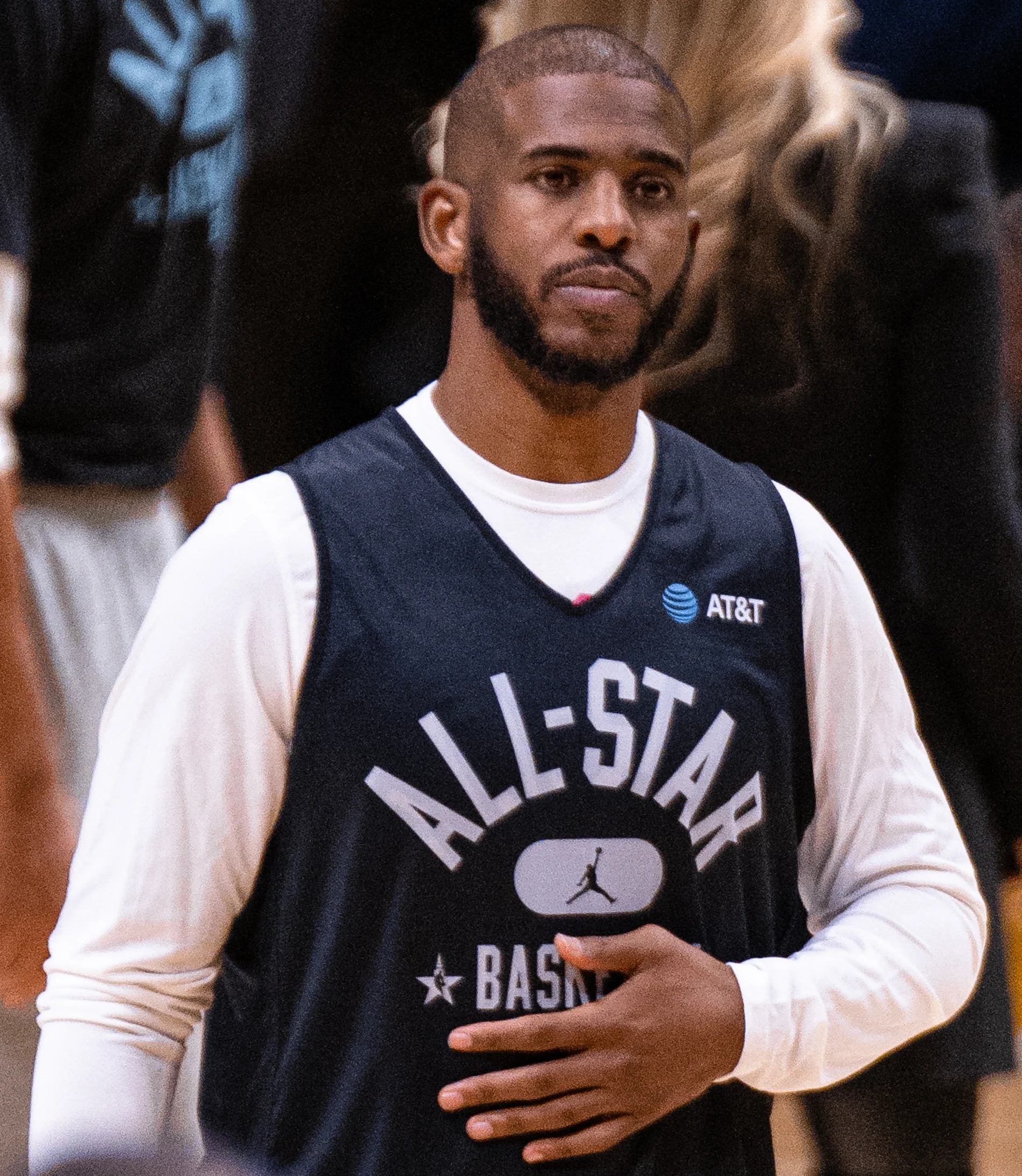
Image from Wikipedia
Image from Wikipedia
Chris Paul: The Point Guard Icon Who Defined an Era
From High School Wonder Kid to NBA Legend
Christopher Emmanuel "Chris" Paul, born on May 6, 1985, in Lewisville, North Carolina, is one of the most influential point guards in basketball history. The point guard, nicknamed "CP3," embodies game control, precision, and a rare mix of vision, aggression, and leadership. His career took him from Wake Forest to the NBA, where he became a benchmark for game organization, defensive intelligence, and competitive spirit over 21 seasons. ([nba.com](https://www.nba.com/news/chris-paul-10-things-to-know?utm_source=openai))
Early Years and the Path to Wake Forest
Paul first gained national attention at West Forsyth High School in Clemmons, North Carolina. A pivotal moment was his 61-point game, dedicated to his deceased grandfather, which early on showcased how much emotion, responsibility, and performance were interconnected throughout his career. He then chose Wake Forest, consciously staying close to home and developing into one of the country's top guard talents over two college years. ([nba.com](https://www.nba.com/news/chris-paul-10-things-to-know?utm_source=openai))
In Winston-Salem, Paul matured both athletically and personally. As a freshman, he was named ACC Rookie of the Year and led the Demon Deacons to the NCAA tournament; as a sophomore, he received Consensus First-Team All-American honors and made another return to March Madness. Wake Forest later retired his jersey number 3, a testament to his significance to the program even today. ([nba.com](https://www.nba.com/news/chris-paul-10-things-to-know?utm_source=openai))
The NBA Breakthrough and the Birth of the "Point God"
In the 2005 NBA Draft, Paul was selected and quickly found his sporting identity with the New Orleans Hornets. In his early professional years, he combined high tempo with controlled ball handling, precise pick-and-roll play, and an exceptional production of assists and steals. His development was not linear but consistent: the talented rookie transformed rapidly into a dominant playmaker who dictated both offensive rhythm and defensive pressure. ([nba.com](https://www.nba.com/news/chris-paul-10-things-to-know?utm_source=openai))
Especially in New Orleans, Paul established himself as the face of a franchise. In his third season, he made his first appearance in the All-Star Game, entered the MVP discussion, and led the Hornets to one of the best records in the Western Conference. His ability to read tight games, minimize errors, and set up teammates made him the prototype of the modern floor general. ([britannica.com](https://www.britannica.com/biography/Chris-Paul?utm_source=openai))
Clippers Years, Lob City, and the Art of Control
From 2011 to 2017, Paul shaped the Los Angeles Clippers, turning the team into a "Lob City" attraction alongside Blake Griffin and DeAndre Jordan. This phase combined spectacle with structure: Paul organized the tempo, made impactful plays in half-court situations, and brought nearly surgical calm to the game in crucial moments. His years with the Clippers are considered one of the most visible phases of his career, showcasing his talent to a mass audience within an offensively charged team environment. ([nba.com](https://www.nba.com/news/chris-paul-10-things-to-know?utm_source=openai))
Particularly in Los Angeles, his style of play was seen as a mix of relentlessness and elegance. His small-guard physique at 6'1" never hindered him from controlling the game physically, closing lanes, and leveraging tactical intelligence to create advantages. His leadership extended far beyond statistics: Paul structured lineups, set defensive standards, and established a tone that influenced the entire team culture. ([nba.com](https://www.nba.com/news/chris-paul-10-things-to-know?utm_source=openai))
Stints in Houston, Oklahoma City, Phoenix, Golden State, San Antonio, and Back to Los Angeles
After the Clippers, Paul had stints with the Houston Rockets, Oklahoma City Thunder, Phoenix Suns, Golden State Warriors, and San Antonio Spurs. Each of these stages revealed another facet of his profile: in Houston as a precise facilitator in an analytics-driven system, in Oklahoma City as a seasoned mentor, and in Phoenix as a stabilizing veteran alongside an emerging core team. Later, he had brief but closely watched appearances with the Warriors and Spurs. ([nba.com](https://www.nba.com/news/chris-paul-10-things-to-know?utm_source=openai))
His return to the Clippers in the 2025/26 season carried symbolic weight, as it brought his career full-circle in a competitive and emotionally charged loop. In February 2026, NBA and media reports finally confirmed his retirement after 21 seasons, marking the end of a career characterized by consistency, professionalism, and enormous longevity. Paul concluded his playing career ranked among the absolute elite in NBA history in assists and steals. ([nba.com](https://www.nba.com/player/101108/chris_paul?utm_source=openai))
Olympic Success and International Authority
Even in the USA jersey, Paul left a clear mark. With the national team, he won bronze at the 2006 World Championship in Japan and Olympic gold in both Beijing 2008 and London 2012. These successes underscored his significance not only as an NBA professional but also as an international performer in a golden generation of US basketball. ([nba.com](https://www.nba.com/news/chris-paul-10-things-to-know?utm_source=openai))
Especially on the international stage, his basketball intelligence shone brightly. In high-pressure tournament situations, Paul excelled as a facilitator who minimized turnovers, controlled tempo, and remained reliable in defense. The Olympic titles enhanced his reputation from NBA star to globally respected basketball authority. ([olympedia.org](https://www.olympedia.org/athletes/113624?utm_source=openai))
Playing Style, Basketball IQ, and Defensive Impact
Chris Paul's basketball profile thrives on details that often form the essence of great careers. His ball handling is considered elite, his passing precise, and his sense for space, angles, and timing exceptional. Complementing this is a defense based on anticipation, active hands, and constant pressure on the ball handler. ([nba.com](https://www.nba.com/news/chris-paul-10-things-to-know?utm_source=openai))
What’s particularly noteworthy is the combination of productivity and efficiency. Paul accumulated assists, steals, and in many phases, leadership minutes at a density rarely seen in the NBA. His career became a textbook example of how a point guard can dominate games through quality decision-making, rhythm control, and intellectual presence. ([nba.com](https://www.nba.com/player/101108/chris_paul?utm_source=openai))
Awards, Records, and Cultural Standing
Paul's accolades and references include numerous All-Star nominations, All-NBA awards, and an All-Star Game MVP in 2013. NBA.com described his career end as that of one of the greatest point guards in the league, while Britannica highlights his nickname "Point God." These labels are not exaggerations but expressions of a rare consensus regarding his significance. ([nba.com](https://www.nba.com/news/chris-paul-10-things-to-know?utm_source=openai))
Beyond official honors, Paul solidified his status as a cultural figure in basketball. His presence in various team contexts, his role as a mentor to younger players, and his constant relevance over nearly two decades made him a fixture in the league. Particularly, his ability to immediately impact different basketball ecosystems defines his lasting influence. ([britannica.com](https://www.britannica.com/biography/Chris-Paul?utm_source=openai))
Current Developments and the End of a Career
Recent reports mark the end of an extraordinary player career: after the 2025/26 season, Chris Paul officially called it quits. The news surrounding his departure focuses less on the loss of an individual player and more on the end of an era, in which a classic point guard found repeated relevance in a constantly changing league. ([espn.com](https://www.espn.com/nba/story/_/id/47920879/chris-paul-announces-retirement-nba-21-seasons?utm_source=openai))
For this reason, Paul remains an exciting name in basketball history. He embodies discipline, basketball intelligence, and competitive energy in its purest form, and his career provides material for any serious analysis of modern guard development. Anyone who understands basketball not only as a highlight sport but as a tactical art form must reckon with Chris Paul. ([nba.com](https://www.nba.com/news/chris-paul-s-extraordinary-basketball-journey-paved-by-relentless-pursuit-of-perfection?lid=3crnwh0rnga0&utm_source=openai))
Conclusion: A Player for the History Books
Chris Paul's legacy consists of more than points, assists, and steals. He represents the highest level of point guard play: control, responsibility, defensive awareness, and the ability to organize entire teams. His career intertwines high school myth, college maturity, NBA dominance, and international successes into a body of work that will resonate permanently within the league. ([nba.com](https://www.nba.com/news/chris-paul-10-things-to-know?utm_source=openai))
For those wishing to understand the essence of modern basketball, Chris Paul should be remembered as a player who did not just play the game but read it, shaped it, and mastered it. His name remains a benchmark for guard excellence, for leadership, and for the art of playing basketball with a clear mind and unwavering presence. Witnessing him live meant watching a master of the small decisions that determine great games. ([nba.com](https://www.nba.com/player/101108/chris_paul?utm_source=openai))
Official Channels of Chris Paul:
- Instagram: https://www.instagram.com/cp3/
- Facebook: No official profile found
- YouTube: No official profile found
- Spotify: No official profile found
- TikTok: No official profile found