
Anton Pawlowitsch Tschechow
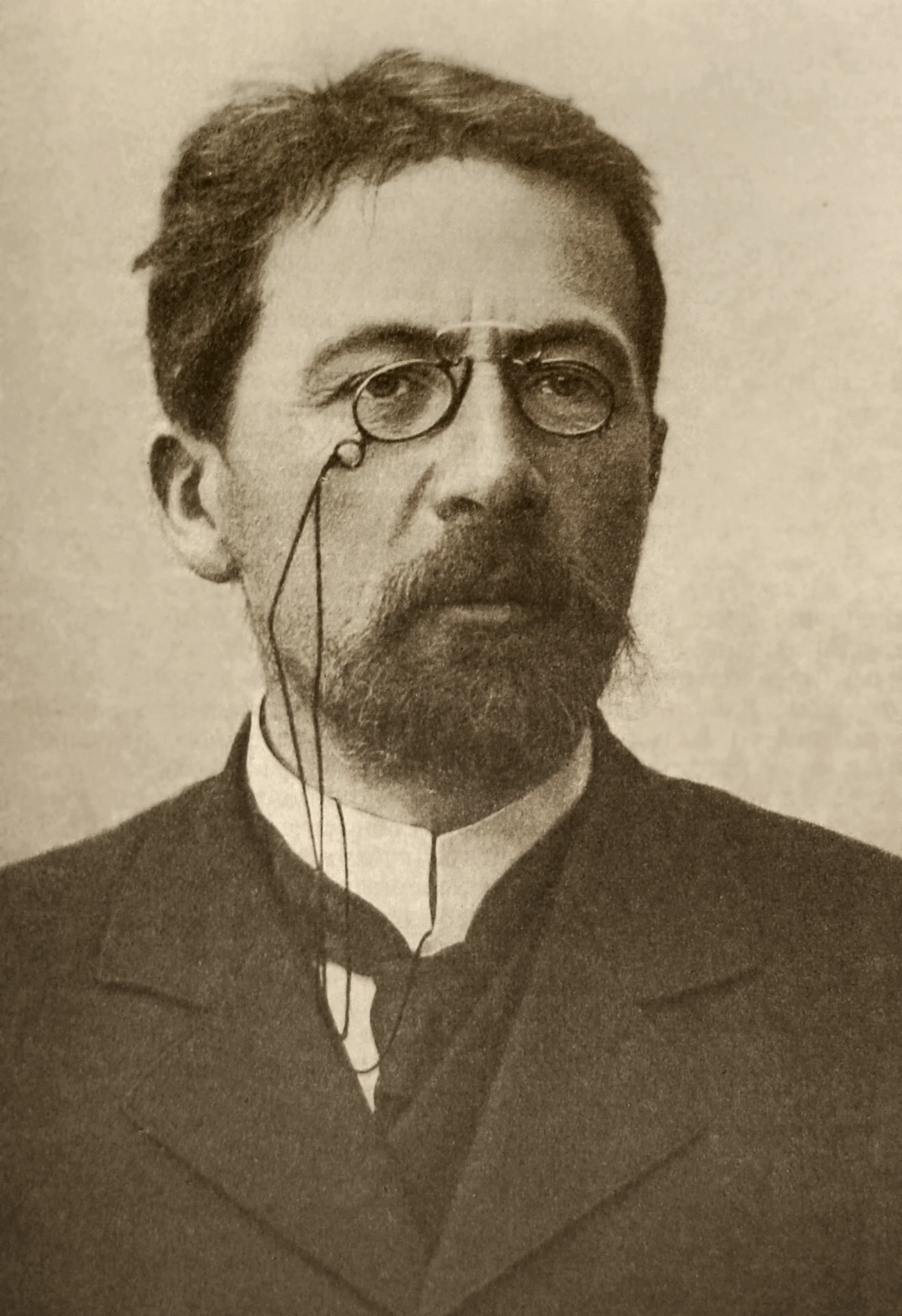
Image from Wikipedia
Image from Wikipedia
Anton Pavlovich Chekhov – the Master of Subtlety Who Shaped Modern Literature
A Life Between Medicine, Observational Skills, and Literary Revolution
Anton Pavlovich Chekhov is one of the most significant writers in Russian literature and is considered globally as one of the great innovators of storytelling and drama. Born on January 29, 1860, in Taganrog and died on July 15, 1904, in Badenweiler, he combined a medical education with an extraordinarily productive literary career: His "compositions" of characters, dialogues, and suggestions have profoundly changed the perception of prose and theater. Early on, he wrote for humorous journals, later developing a distinctive, sober yet sensitive language that makes the everyday life in the Russian provinces visible with psychological precision. (britannica.com)
Coming from a lower-middle-class family in southern Russia, Chekhov studied medicine and worked as a doctor from 1884, although he primarily practiced medicine on a voluntary basis. Concurrently, he created a literary oeuvre of more than 600 texts between 1880 and 1903, including short stories, novellas, and plays, which are now considered part of the canon of world literature. It is precisely in this dual role as a physician and author that a key to his work lies: Chekhov observed people not from the distance of a theorist, but with the perspective of a practitioner who intimately knew suffering, routines, and social tensions. (britannica.com)
Biographical Roots: Taganrog, Studies, and the Path to Literature
The early years in Taganrog shaped Chekhov's view of social differences, provincial environments, and quiet conflicts. His background in a family without cultural privileges grounded his writing in a way that remained palpable even in his most famous dramas. From this perspective, he developed a literature that does not rely on grand gestures, but rather on nuances, pauses, and the subtle precision of observation. (britannica.com)
The medical profession was not a mere footnote for Chekhov, but part of his artistic identity. The German Chekhov Society emphasizes that his medical interest and his desire to participate in public life led him to Sakhalin in 1890; this journey left a lasting impact on his work. Such experiences intensified his socially critical perspective on exclusion, poverty, and the silent exhaustion of individuals in a merciless environment. (deutsche-tschechow-gesellschaft.de)
The Literary Breakthrough: From Humorous Pieces to Masterworks
Chekhov's literary start began in humorous magazines, and by 1888 he was known to a wide audience. Britannica describes that he started his career with short, anecdotal texts and quickly presented a body of work that was already quite extensive. This early productivity explains why Chekhov is regarded not only as the author of individual classics but as the architect of an entire narrative tone that significantly shaped modern short stories. (britannica.com)
Particularly important is the balance between brevity and depth. Chekhov's prose unfolds conflicts not through loud escalation, but through allusion, rhythm, and what remains unspoken. This technique made him influential for later generations of readers, theater makers, and writers: His texts appear calm, yet beneath the surface, they operate with enormous psychological tension. (britannica.com)
The Great Dramas: Stage, Subtext, and Modern Theater History
Internationally, Chekhov is especially renowned as a playwright. His central works include The Seagull, Three Sisters, Uncle Vanya, and The Cherry Orchard, pieces that have shaped modern drama with a new sensitivity to everyday movements, stagnation, and inner emptiness. Britannica describes him as the outstanding Russian dramatist of an era in which characters often exist in a state of decay of social orders. (britannica.com)
The effectiveness of these plays also stems from the finely crafted dialogue structure. Chekhov wrote theater not as a moral lesson but as a vibrant score of human relationships, in which pauses, speech breaks, and subordinate clauses often have a stronger impact than open conflicts. Collaborations and the later reception by the Moscow Art Theater significantly contributed to making his dramas symbols of a new, psychologically precise art of theater. (en.wikipedia.org)
Storytelling and Stylistic Signature
Even as a short story writer, Chekhov remains an exceptional figure. His short stories blend social observation, irony, and quiet tragedy without tipping into pathos. In literary history, he is often associated with the invention or significant shaping of the modern short story, as he elevated the open ending, ambiguity, and seemingly incidental scenes to an art form. (cambridge.org)
His style is characterized by economical precision. No sentence feels overloaded, no character appears merely as a function of a thesis. Instead, scenes emerge in which characters reveal themselves through gestures, silence, and small shifts; it is precisely from this that the literary authority that makes Chekhov unmistakable today arises. Critical reception often emphasizes that his texts do not trivialize the mundane, but transform it into a form of quiet existential insight. (britannica.com)
Critical Reception, Influence, and Cultural Legacy
Chekhov's impact extends far beyond Russia. His works found an English-speaking audience through translations early on and influenced writers such as James Joyce, Virginia Woolf, and Katherine Mansfield. At the same time, through theater, he shaped the development of modern acting, as his dramas forced acting and directing into an art of subtext. (en.wikipedia.org)
Today, Chekhov is still regarded as one of the most important pioneers of psychological theater. Britannica highlights that his plays focus on the lives of unobtrusive, sensitive people and make visible the emptiness of a crumbling social order. It is precisely in this tension between external calm and inner pressure that his modernity lies: Chekhov depicts people who speak but simultaneously withdraw; who want to act but remain trapped in stagnation. (britannica.com)
Current Projects and Publications
For Anton Pavlovich Chekhov himself, there are naturally no new albums, singles, or tours, as he died in 1904. Current projects thus relate to the ongoing impact of his works in museums, stage programs, and scholarly editions. The state literary and memorial museum "Melikhovo" documents this enduring presence with exhibitions, theater formats, and events that anchor his work in contemporary cultural life. (chekhovmuseum.com)
The fact that Chekhov will still be present in 2026 on theater schedules, in special exhibitions, and in research contexts demonstrates his lasting relevance. Recent museum announcements in Melikhovo refer to ongoing exhibitions such as “Levitan and Chekhov: Poetics of Landscape,” as well as theater and educational programs that keep his name visible in contemporary culture. His work thus remains not a historical monument, but an active reference point for literature, stage, and cultural memory. (chekhovmuseum.com)
Discography of the Works? The Central Overview of an Author Without an Album Catalog
A discography in the musical sense does not exist for Chekhov; his catalog of works is rather to be read literarily. Among his most famous texts are the plays The Seagull, Three Sisters, Uncle Vanya, and The Cherry Orchard, as well as short stories like The Black Monk, A Boring Story, and numerous other tales that have been present in literature classes, on stage, and in research for generations. These works form the heart of his “discography” in a figurative sense: a cohesive, stylistically distinctive oeuvre that is read anew in every era. (kids.britannica.com)
The critical reception particularly highlights two lines: the masterful short prose and the revolutionary theater. Cambridge and Britannica emphasize in agreement that Chekhov's influence continues to shape the modern narrative form and contemporary stage. Those who read or stage his texts encounter not just a classic, but an author who derives maximum emotional depth from minimal means. (cambridge.org)
Conclusion: Why Anton Pavlovich Chekhov Continues to Fascinate Today
Anton Pavlovich Chekhov remains captivating because he makes human uncertainty visible without sensationalism. His strength lies in the quiet intensity, in the precision of his gaze, and in an artistic development that connects medicine, social observation, and literary form into a distinctive signature. Those who read Chekhov or experience him on stage encounter an art that does not explain, but reveals. (britannica.com)
For this reason, it is worth discovering his plays and stories anew time and again. Chekhov shows how great literature can become when it listens to the quiet movements of life. His work does not call loudly, but it lingers long in memory – making him one of the indispensable names in world literature. (britannica.com)
Official Channels of Anton Pavlovich Chekhov:
- Instagram: No official profile found
- Facebook: No official profile found
- YouTube: No official profile found
- Spotify: No official profile found
- TikTok: No official profile found
Sources:
- Wikipedia – Anton Pavlovich Chekhov
- Britannica – Anton Chekhov: Biography, Plays, Short Stories, & Facts
- Britannica – Why is Anton Chekhov so influential?
- Britannica – Dramatic literature: Drama in Western cultures
- Britannica – Tragedy and modern drama
- State Literary and Memorial Museum-Reserve A.P. Chekhov “Melikhovo”
- Museum-Reserve A.P. Chekhov “Melikhovo” – English version
- German Chekhov Society – Life and Work
- Wikipedia: Image and text source