Dog Exercise in Bamberg: Routes, Fountains & City Walk
Dog Exercise & Pet-Friendly Places in Bamberg: Ideas for Your Next Walks
Are you planning to spend time with your dog in Bamberg in the coming days or weeks? Then a route that combines exercise, rest, and consideration will help your dog relax and "be a dog"—while you experience the city in a pleasant atmosphere.
This guide shows you concrete suggestions for upcoming walks (short to half-day), including times of day, stimulus management, and a practical checklist to make your next outing easy to plan.
How to Plan Your Next Walk in Bamberg
For your next walk, a short plan is worthwhile—especially if you don't know Bamberg well yet or are out with a sensitive dog:
- Set a time window: Consciously plan your walk during quieter off-peak hours (early or late) if you want to reduce hustle and bustle.
- Think in stages: Instead of "one long walk," it's often better to have a calm starting phase, a movement phase, and a cool-down phase.
- Plan for water & shade: For the next warm days, choose routes that allow for breaks in the shade and bring drinking water.
- Manage stimuli: If your dog reacts to people, bicycles, or narrow alleys, plan alternatives (short detours, side streets, pause islands).
- Check rules in advance: Before you set off, find out about leash requirements and nature conservation rules on your planned route (e.g., in parks, by bodies of water, or in protected areas).
Four Route Ideas for the Coming Days
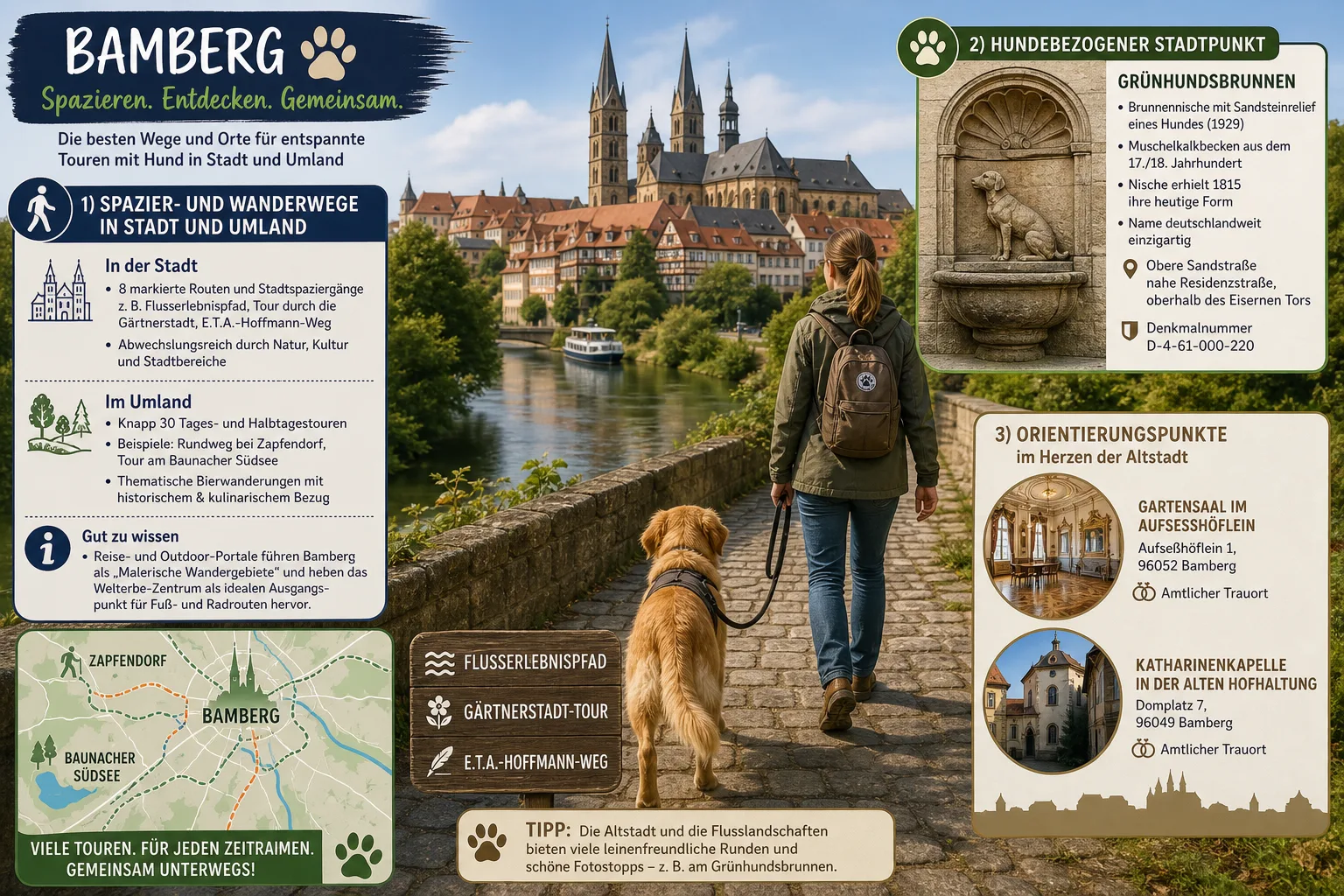
1) "Old Town Off-Peak" Walk (short, but atmospheric)
If you want to experience the old town in the coming days, choose a quiet time window and plan a short walk with many micro-breaks: stop, let your dog sniff, create distance.
- Suitable for: City dogs, training walks, visits with little time
- How to keep it relaxed: short stages, prefer side paths, stops at quiet corners
- Your goal for the next walk: "Less is more"—better 30–60 pleasant minutes than 2 hours of constant stress
2) Water-Side Relaxation Walk (medium, with a good "cool-down" component)
For the coming weeks, a water-side route is ideal if your dog can regulate more easily on the go: even surfaces, clear lines of sight, less narrowness. Consciously plan a calm final phase where your dog can "wind down" at the end.
- Suitable for: Dogs who need help relaxing after action
- Focus: relaxed walking, sniffing time, short impulse control stops (e.g., "Wait," "Look at me")
- Practical tip: Bring water for your dog—not every route offers reliable drinking opportunities.
3) "Gardener's Town" Feeling (mostly flat, good for quiet afternoons)
If you are looking for a steady, mostly flat walk for the next few days, plan a route with little incline and clear orientation. This is especially suitable if your dog is older or you want to walk consciously relaxed.
- Suitable for: Senior dogs, recovery phases (after consulting a vet), "active recovery"
- Focus: slow pace, many sniffing zones, little crowding
- Practical tip: Plan a fixed "turnaround point" so you can flexibly adjust the route to your daily form and the weather.
4) Half-Day Excursion to the Surroundings (for your next free days)
If you want to consciously avoid the city hustle in the coming weeks, a half-day excursion to the surrounding area makes sense: more space, more nature, often easier loose-leash training. Choose routes that you can shorten if necessary.
- Suitable for: Active dogs, human-dog teams who enjoy nature
- Focus: steady pace, break rhythm, anticipate wildlife/dog encounters
- Practical tip: Use a long leash only where it is allowed and safe, and practice handling (tangling, stops, recall) beforehand.
Old Town with Less Stress: Time Windows & Stimulus Management
For your next walks: The old town can be very stimulating for many dogs (people, noises, narrow paths). With two adjustments, it becomes much easier:
- Timing: Plan the old town for times when you expect less crowding. This reduces conflicts and gives your dog more space.
- Route logic: Start with some "buffer" (quieter route), only then go into busier areas, and finish calmly again. This keeps your dog more responsive.
If your dog gets overstimulated quickly, choose a clear task for the next times: "Today we practice calm walking and two relaxed encounters—nothing more." This is often more sustainable than "seeing as much as possible."
Consideration & Safety: So It Works for Everyone
To ensure your upcoming walks in Bamberg work for people, dogs, and the environment, these principles help:
- Leash management: In encounters (children, cyclists, other dogs), a short but loose leash is often the safest choice. Avoid "constant tension"—it increases stress in many dogs.
- Cleanliness: Bring poop bags and dispose of them properly. This is a key factor for the long-term acceptance of dogs in public spaces.
- Heat and cold protection: For warmth, plan shorter routes, more shade breaks, and enough water. In cold, check paws (road salt) and keep your dog moving without overexertion.
- Parasite check: Expect tick risk in the coming season—depending on the weather. Check your dog after nature sections and get veterinary advice on prevention.
- Training instead of conflict: If your dog reacts quickly in the city, consciously plan for distance and reward calm behavior early. This increases safety and reduces stress.
Note: This article does not replace individual advice from a veterinarian or certified dog trainer. If you are unsure (e.g., aggression, anxiety, health restrictions), please plan your next outings with professional support.
Checklist for Your Next Outing
- Basic equipment: Leash, well-fitting harness if needed, poop bags, water + bowl
- Safety: Phone number on collar/harness, light/reflector for dusk if needed
- Training: small, easy-to-swallow treats; clear goals ("Today we practice ...")
- Breaks: 1–2 planned rest spots (bench, quiet corner, shade)
- Weather: Check temperature; adjust route (shorter, shadier, more sheltered)
- Rules: Check leash requirements/nature conservation rules for the planned route in advance
Sources
- Animal Welfare Dog Ordinance (TierSchHuV) — Requirements for keeping/caring for dogs, including exercise & handling (accessed 2026-10-28)
- German Weather Service (DWD) — Weather and warning information for planning walks in heat/storms (accessed 2026-10-28)
- Robert Koch Institute (RKI) — Background information on ticks and seasonal risks (accessed 2026-10-28)
- World Small Animal Veterinary Association (WSAVA) — General veterinary advice on health, prevention, and animal welfare (accessed 2026-10-28)